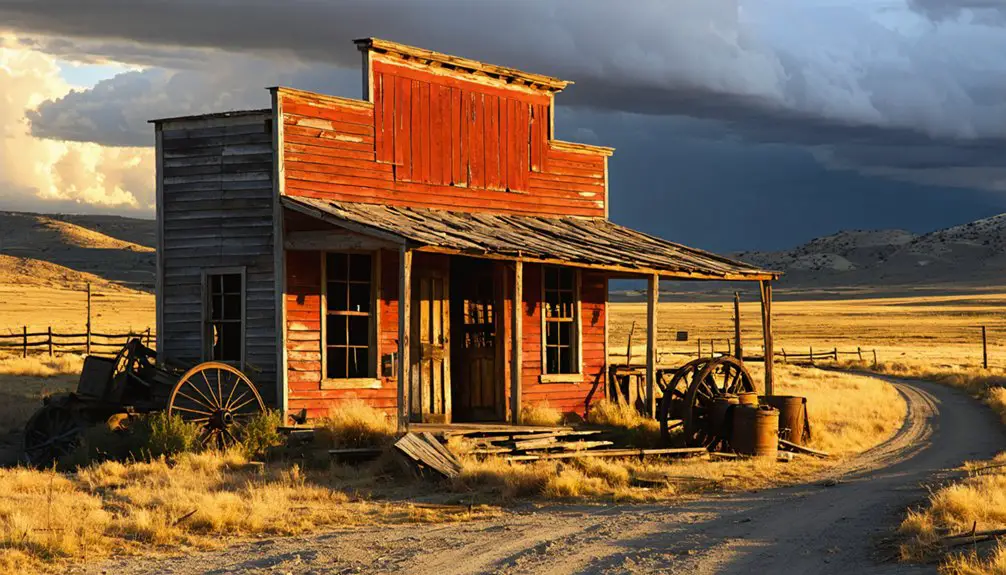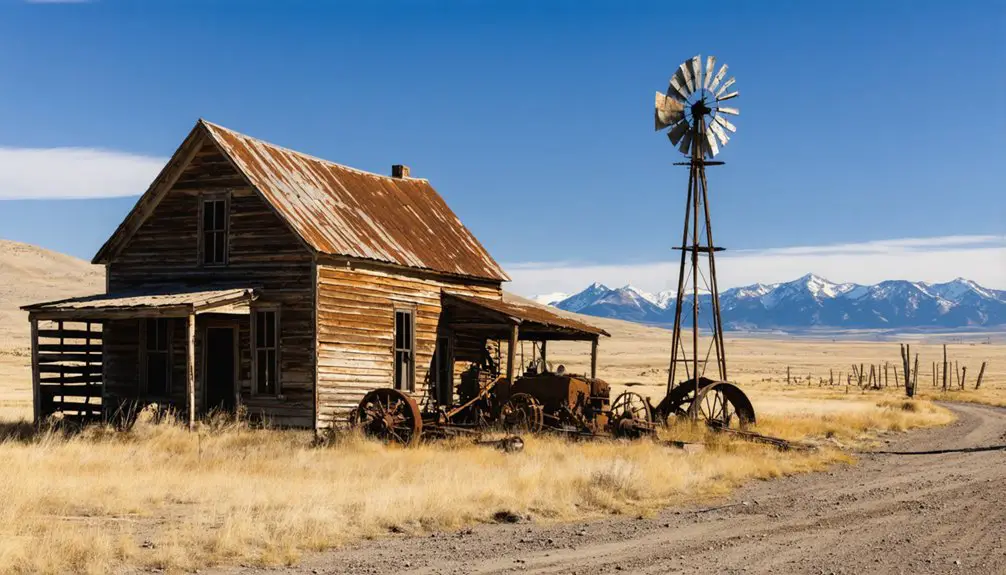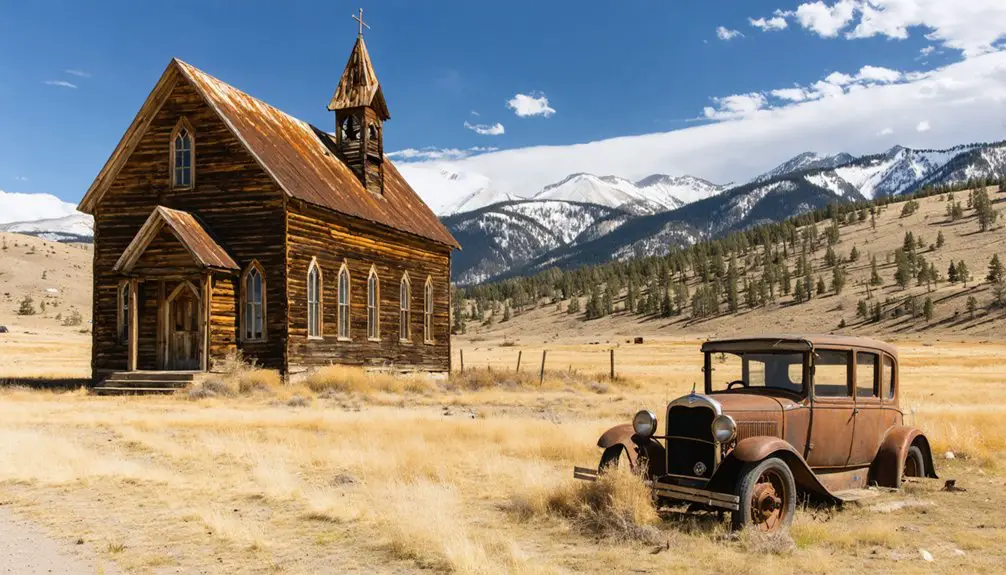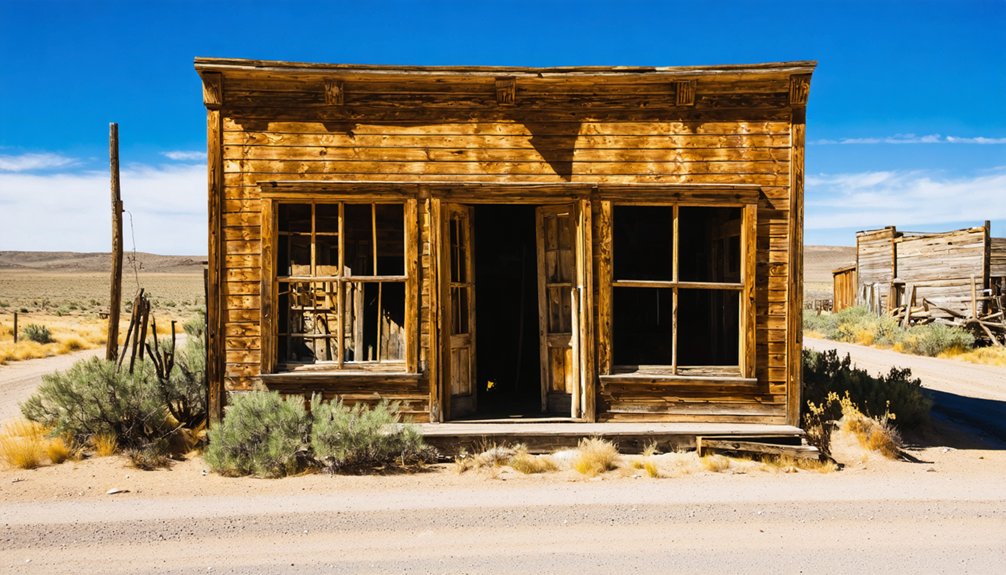
To visit Fort Steele, take I-80 to Exit 228, about 12 miles east of Rawlins, Wyoming, then drive 1.25 miles north toward the North Platte River. This unmanned ghost town preserves crumbling officers’ quarters, a restored powder magazine, and a windswept cemetery holding 80 graves — quiet relics of a frontier army post that once housed 300 soldiers. Check wyoparks.wyo.gov before you go, wear sturdy shoes, and keep exploring — there’s far more history here than first meets the eye.
Key Takeaways
- Fort Steele is located 12 miles east of Rawlins, Wyoming, accessible via I-80 Exit 228, then 1.25 miles north toward the North Platte River.
- The unmanned site features crumbling officers’ quarters, a restored powder magazine, and interpretive plaques for self-guided exploration.
- A cemetery with 80 graves, including soldiers, offers a sobering glimpse into the human cost of westward expansion.
- Wear sturdy shoes, allow ample exploration time, and check wyoparks.wyo.gov or call 307-320-3013 for seasonal access conditions.
- Founded in 1868 and abandoned in 1886, Fort Steele played a pivotal role in the Indian Wars and frontier Wyoming’s economy.
Why Fort Steele Is Worth the Detour
When you pull off I-80 at Exit 228, just 12 miles east of Rawlins, you’re stepping into a slice of Wyoming’s frontier past that most road-trippers blow right past at 75 miles per hour.
Fort Steele’s significance runs deep — this outpost once protected transcontinental railroad workers, supplied military expeditions against High Plains tribes, and even helped quell the violent 1885 Rock Springs Riot.
Fort Steele’s roots run deep — railroad guardian, military staging ground, and riot queller all in one.
What’s left today tells that story quietly but powerfully. You’ll walk among visible foundations, study historical artifacts through interpretive exhibits, and feel the weight of lives once lived here.
Wyoming State Parks manages the unmanned site with plaques guiding your exploration. It’s raw, honest history — no theme park polish, just open land and real frontier echoes.
How to Get to Fort Steele
If you’re cruising I-80 through southern Wyoming, Fort Steele is easier to reach than you might think.
Take Exit 228, just 12 miles east of Rawlins, and you’ll find yourself heading 1.25 miles north toward the North Platte River’s west bank.
It’s a quick detour off the interstate, but the moment the ruins come into view, you’ll feel like you’ve stepped off the highway and straight into 1868.
Interstate 80 Access
Reaching Fort Steele is pleasantly straightforward — you’ll take I-80 to Exit 228, just 12 miles east of Rawlins in Carbon County, Wyoming. From there, head 1.25 miles north toward the Fort Steele Rest Area, and you’ll find yourself standing where history once roared with military activity and railroad ambition.
The drive itself rewards you with scenic views of southern Wyoming’s wide-open landscape — rolling terrain meeting the North Platte River’s western bank. It’s the kind of countryside that reminds you why the West still calls to free spirits.
Don’t underestimate this short detour’s historical significance. The original Lincoln Highway once passed directly through here, connecting a nation still stitching itself back together after the Civil War.
That legacy lingers in every crumbling foundation you’ll encounter.
Exit 228 Directions
Three simple steps separate you from Fort Steele’s weathered ghost town magic: take I-80 to Exit 228, turn north, and drive 1.25 miles until the past materializes before you.
Among exit 228 attractions, nothing compares to this forgotten frontier outpost rising from Wyoming’s high desert.
Your road trip tips start here: watch for the Fort Steele Rest Area as your landmark, then continue north along the North Platte River‘s western bank.
The isolation hits immediately — no strip malls, no development, just wind-swept ruins where 300 soldiers once stood guard over transcontinental railroad progress.
You’ll find interpretive plaques awaiting you at an unmanned site that rewards curious travelers willing to step off the interstate and reclaim a piece of America’s untamed, unfiltered history.
How Fort Steele Went From Army Post to Ghost Town
When you stand among Fort Steele’s crumbling foundations, you’re walking through a story that began in 1868, when 300 troops raised this post to shield Union Pacific Railroad workers from Native American raids.
The army’s mission faded as the Indian wars wound down, and by 1886 the soldiers had packed up and left, surrendering the grounds to loggers, sawmill workers, and eventually silence.
Once the Lincoln Highway rerouted away from the site, the last thread of commerce snapped, and what had been a thriving military hub transformed into the weathered ghost town you’re exploring today.
Military Origins and Purpose
Though it’s easy to dismiss Fort Steele as just another crumbling relic off I-80, the post’s origins run straight through one of the most turbulent chapters in American history.
Built in 1868 by 300 troops and civilian laborers, the fort’s military strategy centered on one urgent mission: protect Union Pacific Railroad workers pushing iron rails westward across Wyoming’s open terrain.
You’re standing where soldiers once guarded the arteries of a nation stitching itself back together after the Civil War.
Named for General Frederick Steele, a war hero who died that same founding year, the post carried real historical significance.
It wasn’t ceremonial — it was a frontier shield, a supply hub, and a stronghold against conflict that shaped how the American West ultimately opened up.
Decline and Abandonment
By 1886, the soldiers were gone — and Fort Steele’s slow fade into silence had already begun. The Indian wars had quieted, railroad threats had dissolved, and the military simply had no reason to stay.
What followed was a textbook economic decline: without the army’s payroll and supply contracts, the surrounding settlement hollowed out fast.
The cultural impact, though, lingered longer than the buildings did. The original Lincoln Highway once ran through here, keeping a thread of life alive.
But when that road was rerouted, Fort Steele lost its last reason for travelers to stop. Businesses shuttered. Families scattered. Fire took what time didn’t.
What you’re walking through today isn’t just ruins — it’s the blueprint of how quickly freedom’s frontier could be abandoned once the mission was over.
Ghost Town Transformation
Once the army packed up and marched out in 1886, Fort Steele didn’t vanish overnight — it unraveled thread by thread.
Settlers and entrepreneurs moved in briefly, drawn by the sawmill operations and open land. Then the Lincoln Highway rerouted, and the last reason to stay evaporated.
Buildings weathered, burned from locomotive sparks, and collapsed into foundations. What remained became the stuff of ghost town legends — hollow walls, crumbling chimneys, and a cemetery where only a handful of markers still stand.
Today, historical preservation efforts keep Fort Steele from disappearing entirely. Wyoming State Parks manages the site, installing interpretive plaques and stabilizing ruins so you can walk through what the army left behind.
It’s raw, windswept, and authentically forgotten — exactly the kind of place that rewards the curious traveler.
What You’ll Actually See at Fort Steele Today
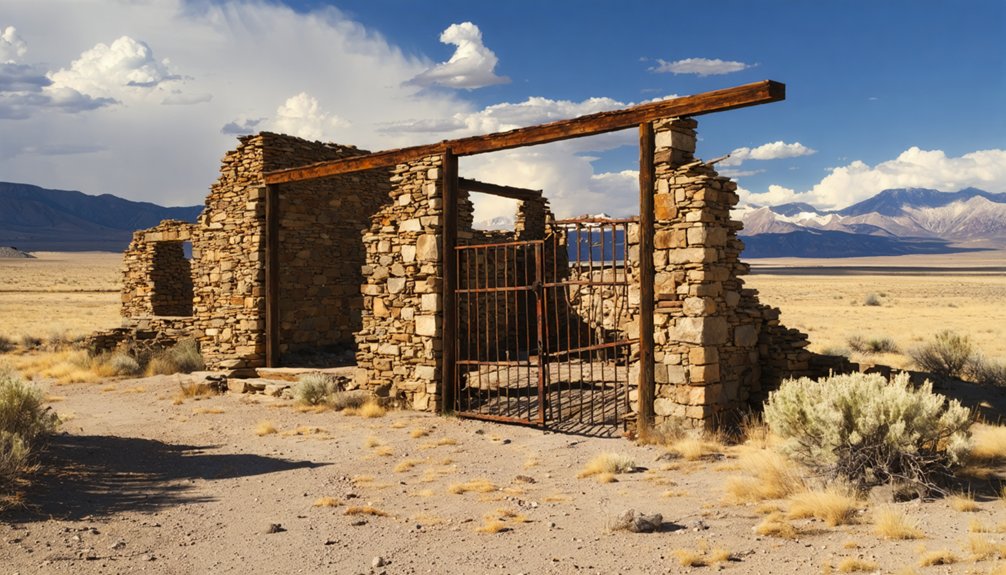
Stepping onto the grounds of Fort Fred Steele, you’ll find a quiet, windswept landscape where foundations and crumbling walls speak louder than any museum exhibit could.
The historic structures that remain carry the weight of 1868, telling stories of soldiers, railroad workers, and frontier survival. You’ll wander past remnants of officers’ quarters, a restored powder magazine, and scattered foundations reclaimed by sagebrush.
Interpretive exhibits mounted on weathered plaques guide you through each site without a tour guide shadowing your steps. The cemetery, holding memories of 80 souls, stands quietly nearby.
Nobody’s rushing you here. The site is unmanned, letting you move freely through history at your own pace, absorbing the raw, unfiltered atmosphere of a place time quietly surrendered.
The Cemetery, the Ruins, and the Stories They Tell
The cemetery at Fort Fred Steele holds 80 souls — one officer, 24 enlisted men, and others whose connections to this outpost wrote short, hard chapters in Wyoming’s frontier story.
Few markers remain, but the cemetery’s significance isn’t lost — it anchors you to the human cost of westward expansion. You’ll feel it standing there, wind cutting across the North Platte, nothing softening the silence.
Beyond the graves, ruins exploration rewards the curious. Walk the crumbling foundations and you’re retracing paths soldiers wore into the earth.
Officers’ quarters, supply buildings, a sawmill that kept post-military commerce alive — their bones are still here. Each collapsed wall carries a story the plaques try to tell.
Let yourself slow down and actually listen.
What to Know Before You Pull Off I-80
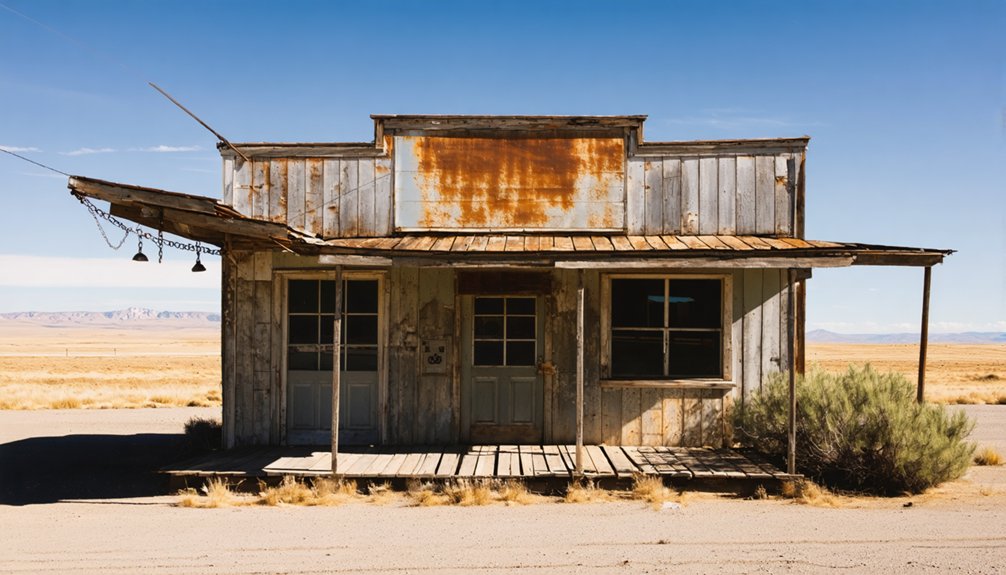
Fort Fred Steele sits 1.25 miles north of the Fort Steele Rest Area off I-80 Exit 228, roughly 12 miles east of Rawlins — close enough that you’ve practically already committed just by reading this.
The site’s historical significance runs deep, so give yourself at least an hour to absorb it properly.
A few visitor tips worth knowing: the site is unmanned, so don’t expect a gift shop or guided tours waiting for you.
Interpretive plaques do the talking. There’s no entrance fee, but conditions change seasonally. Before you detour, call 307-320-3013 or check wyoparks.wyo.gov for current access and special events.
Wear sturdy shoes — you’re walking on frontier ground, and the ruins and scattered foundations demand your full attention.
Fort Steele’s Place in Wyoming’s Frontier History
When you pull up to Fort Fred Steele, you’re standing on ground that absorbed the full weight of Wyoming’s post-Civil War transformation. Established in 1868, this outpost protected Union Pacific railroad crews pushing west, anchoring frontier life along the North Platte River.
Its historical significance stretches beyond railroad protection. Soldiers here supplied expeditions against High Plains tribes, quelled the violent 1885 Rock Springs riots, and responded to the deadly Meeker Massacre. Major Thornburgh rode out from these grounds and never returned.
Fort Fred Steele wasn’t just a railroad post — it was a launching point for the defining conflicts of the frontier West.
The fort also fueled Wyoming’s early economy through logging and livestock operations. When the military abandoned it in 1886, an entire settlement dissolved with it.
What remains isn’t just ruins — it’s the actual architecture of American expansion, waiting for you to walk through it.
Frequently Asked Questions
Is Fort Fred Steele Open Year-Round or Only Certain Seasons?
Built in 1868, Fort Fred Steele’s Fort Steele history awaits you year-round! You’ll discover seasonal activities that breathe life into these frontier ruins. Contact wyoparks.wyo.gov or 307-320-3013 to confirm hours before your liberating adventure begins.
Are Pets Allowed at the Fort Fred Steele State Historic Site?
The knowledge doesn’t specify pet policies at Fort Fred Steele. Contact Wyoming State Parks at 307-320-3013 before you roam these grounds, where the site’s historical significance echoes freedom’s untamed spirit across Wyoming’s frontier landscape.
Is There an Admission Fee to Visit Fort Fred Steele?
History’s open door welcomes you freely — there’s no admission pricing to visit Fort Fred Steele! You’ll explore its profound historical significance without spending a dime, wandering ruins where frontier spirits once roamed untamed Wyoming’s wide-open landscape.
Are There Picnic Areas or Restrooms Available at the Site?
The knowledge doesn’t confirm picnic facilities or restroom accessibility at Fort Steele. You’d want to contact Wyoming State Parks directly at 307-320-3013 or wyoparks.wyo.gov before rolling down that open, sun-baked frontier road.
Can Visitors Attend Living History Events at Fort Fred Steele?
You can attend living history demonstrations at Fort Fred Steele, where the visitor experience transports you back to frontier days. You’ll witness reconstructed buildings and evocative exhibits that’ll awaken your spirit of freedom and adventure.
References
- https://en.wikipedia.org/wiki/Fort_Fred_Steele_State_Historic_Site
- https://www.youtube.com/shorts/b-MpTiVspwk
- https://wyoparks.wyo.gov/index.php/places-to-go/fort-fred-steele
- https://www.legendsofamerica.com/wy-fortfredsteele/
- https://www.wyomingcarboncounty.com/things-to-do/museums/fort-steele-museum
- http://www.wyomingtalesandtrails.com/lincoln3.html
- https://historicwyoming.org/profiles/onwardtofortsteele/
- https://www.tripadvisor.com/Attraction_Review-g60555-d292673-Reviews-Fort_Fred_Steele_State_Historic_Site-Sinclair_Wyoming.html
- https://travelwyoming.com/listing/fort-fred-steele-state-historic-site/419/