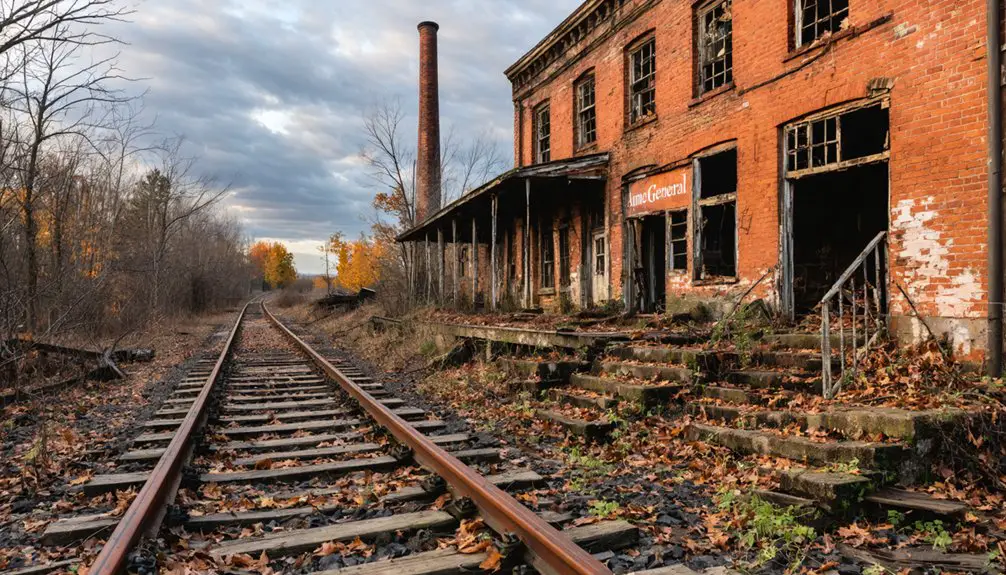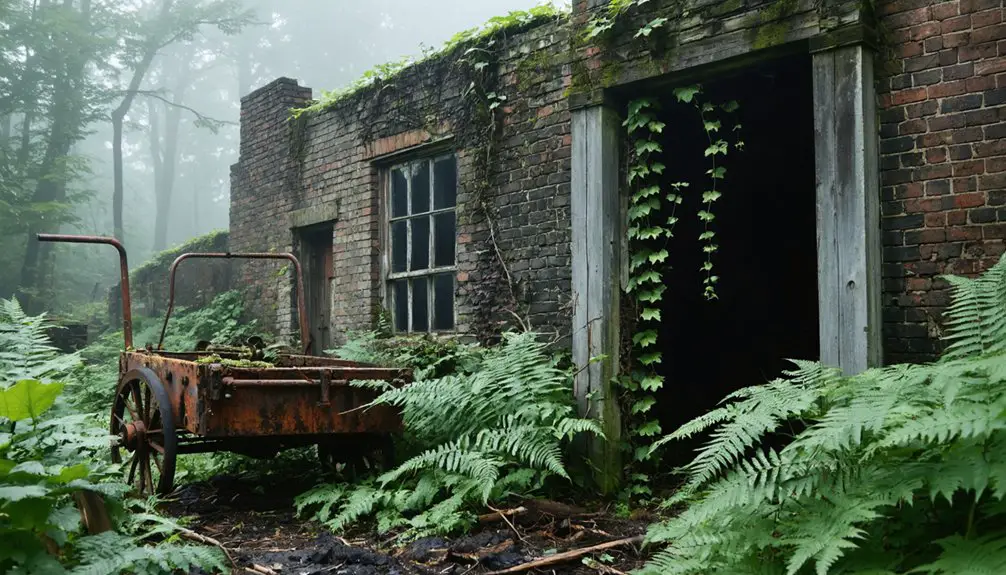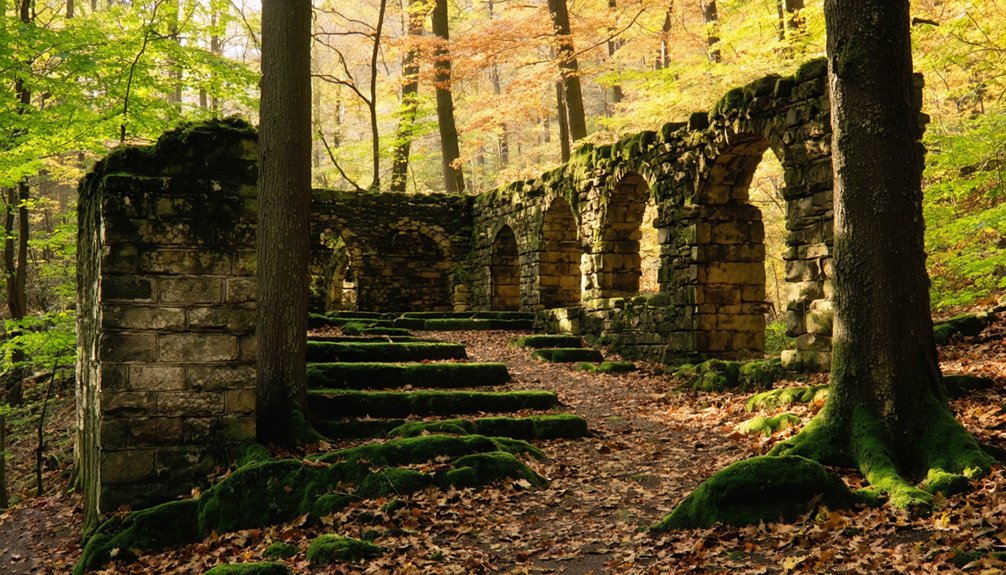
Rausch Gap sits deep in Saint Anthony’s Wilderness, where a coal town of nearly 1,000 people simply vanished by 1910. You’ll hike 3.5 flat miles from Gold Mine Road to reach stone foundations, crumbling cellar holes, abandoned wells, and a weathered cemetery with only four headstones. There’s no gift shop, no guided tour — just forest reclaiming what industry left behind. Everything you need to plan your trip, from seasonal timing to overnight camping, is ahead.
Key Takeaways
- Start at Gold Mine Road in Cold Spring Township, hiking 3.5 miles west along a flat, well-graded rail trail to reach Rausch Gap.
- Visit between spring and fall for the best access, as winter snow and cold can make the trail hazardous.
- Explore remnants including stone foundations, abandoned wells, cellar holes, and a small cemetery with four headstones.
- Camp overnight at the Appalachian Trail shelter, which offers a cold spring, outhouse, and an atmospheric wilderness experience.
- Pack sturdy boots, layered clothing, rain gear, water treatment supplies, bear-aware food storage, a headlamp, and a trail map.
What Is Rausch Gap and Why Visit This Ghost Town?
Deep in Saint Anthony’s Wilderness, where Rausch Creek cuts through Sharp Mountain‘s southern slopes, the ghost town of Rausch Gap stands frozen in time — a once-thriving coal and railroad hub that nature has quietly swallowed whole.
Deep in Saint Anthony’s Wilderness, Rausch Gap stands frozen in time — a ghost town nature has quietly swallowed whole.
At its peak, nearly 1,000 people called this Lebanon County settlement home. By 1910, everyone had left.
What remains are stone foundations, ruined wells, a crumbling railroad bridge, and a small cemetery with only four headstones.
Local legends whisper through these woods as persistently as the creek itself, and urban legends have earned Rausch Gap a spot on Pennsylvania’s top ten spookiest ghost towns list.
If you crave open wilderness, raw history, and roads less traveled, this forgotten place delivers something most destinations simply can’t — authentic, unfiltered solitude.
How Coal Mining Built: and Destroyed: Rausch Gap
When you walk the rail trail to Rausch Gap, you’re tracing the arc of a town that anthracite coal built almost overnight, growing from a shantytown in 1828 to a thriving community of nearly 1,000 residents by the 1850s.
The Dauphin and Susquehanna Coal Company drove that prosperity, but the region’s coal seams ran shallow and produced low-quality ore, making the boom unsustainable.
Coal Mining Sparks Growth
Though it started as little more than a rough-edged shantytown in 1828, Rausch Gap‘s fate was tied directly to anthracite coal from the moment the Dauphin and Susquehanna Coal Company sank its first mine shaft in 1823.
Railroad construction between 1851 and 1854 transformed the settlement, producing nearly 24 stone houses — industrial architecture built to last, now frozen in ruin for you to explore.
At its peak, roughly 1,000 people called this mountain hollow home. Local legends echo through those stone foundations today.
Here’s what fueled Rausch Gap’s explosive growth:
- Anthracite coal mining operations launched in 1823
- Railroad shops relocated directly to the settlement
- Stone housing construction supported a booming workforce
Coal didn’t just build Rausch Gap — it owned it completely.
Peak Population And Prosperity
At its peak, Rausch Gap’s 1,000 residents built something rare in these Pennsylvania mountains — a self-contained industrial community where railroad shops hummed alongside active mine shafts. Stone houses lined dirt streets, and steady paychecks kept families rooted in a hollow that had no business thriving.
Between 1851 and 1854, workers quarried and stacked the stone houses you’ll still find foundations of today. The railroad and coal company provided everything — employment, structure, purpose.
Local legends describe a town buzzing with working-class ambition, carving prosperity from an unforgiving landscape. Urban legends now haunt those same streets, whispering about a community that burned bright precisely because its fuel was finite.
Coal and rail built Rausch Gap fast — and that same dependency guaranteed it wouldn’t last.
Mining Decline Dooms Town
The same coal that built Rausch Gap ultimately destroyed it. By 1872, the mines yielded only low-quality coal, stripping the town of its purpose. The railroad pulled its headquarters to Schuylkill County, silencing the mining machinery and severing Rausch Gap’s economic lifeline.
Without railroad history anchoring the community, workers followed the company out, and by 1910, the town stood empty.
Three brutal realities sealed Rausch Gap’s fate:
- Coal quality collapsed, making extraction economically impossible
- Railroad relocation eliminated every remaining job overnight
- Rocky, infertile soil offered no agricultural fallback for desperate residents
You’ll walk those same abandoned streets today, reading the landscape like a historical document. The forest reclaimed what ambition built, leaving only stone foundations as silent witnesses.
What’s Left to See at Rausch Gap Today
When you arrive at Rausch Gap, nature has done most of the talking for over a century, yet the land still holds unmistakable traces of the 1,000 people who once called it home. Natural reclamation has been thorough — forests now blanket former streets, and rocky soil swallows what industry left behind.
Still, historical artifacts surface if you look carefully. Stone foundations anchor the upper town alongside cellar holes, while the lower town reveals foundations alone. Ruined wells dot the landscape, and a deteriorating stone arch railroad bridge stands nearby as a quiet monument to the coal era.
The small cemetery delivers the sharpest emotional punch — four headstones remain, only two still legible. These fragments don’t just mark a place; they mark lives that built something real here.
How to Get to Rausch Gap, Pennsylvania
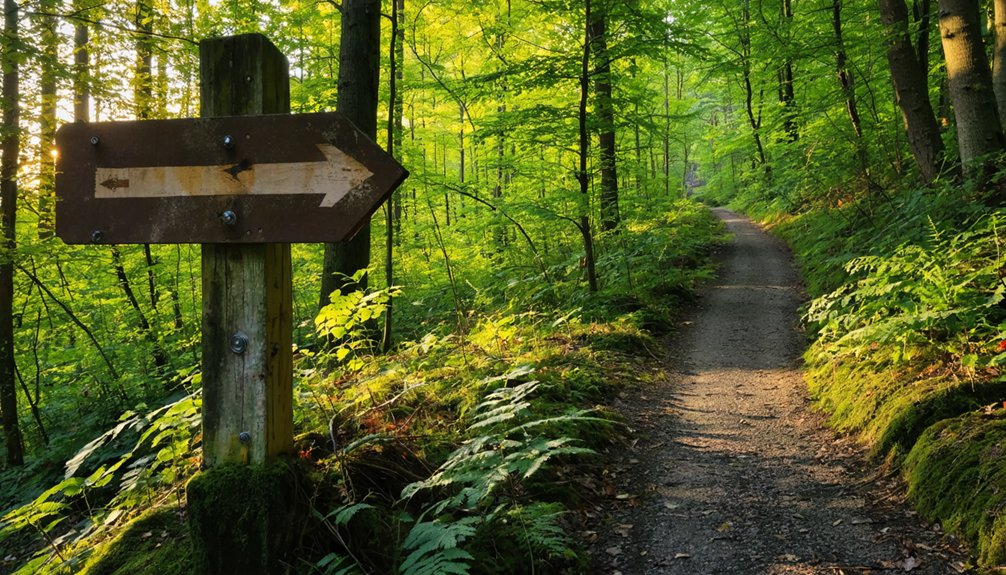
To reach Rausch Gap, you’ll start at Gold Mine Road in Cold Spring Township and head west along the rail trail for 3.5 miles until the ghost town emerges from the surrounding wilderness.
The trail’s relatively flat grade makes it manageable for most hikers, though you’ll want sturdy footwear for the rocky terrain through Stony Creek Valley.
Plan your visit between spring and fall, as winter’s cold and snow can make the trek genuinely treacherous.
Starting Point: Gold Mine Road
Getting to Rausch Gap starts at Gold Mine Road in Cold Spring Township, where you’ll find the rail trail heading west. You’ll travel 3.5 miles through Saint Anthony’s Wilderness, tracing the same path that once carried coal and workers deep into Pennsylvania’s mining history.
Forest renewal has transformed what was once a bustling industrial corridor into a quiet, tree-lined trail worth every step.
Pack these essentials before you leave your vehicle:
- Water and snacks — the trail offers no modern amenities
- Sturdy footwear — rocky terrain defines this wilderness stretch
- A trail map — cell service is unreliable this deep in the wilderness
Your 2WD vehicle handles Gold Mine Road without trouble, making this ghost town surprisingly accessible for any determined traveler.
Trail Distance And Conditions
The 3.5-mile rail trail stretching west from Gold Mine Road follows a path that once carried anthracite coal and railroad workers through the heart of Saint Anthony’s Wilderness. You’ll walk a well-graded, 2WD-accessible route through remarkable forest restoration, where trees have quietly swallowed a century of human ambition.
Industrial relics appear gradually — stone foundations, ruined wells, a crumbling arch bridge — rewarding your patience with tangible history rather than museum replicas.
Plan your visit between spring and fall, as winter conditions make the trail genuinely unforgiving. The Appalachian Trail crosses directly through the site, meaning you’ll likely encounter serious long-distance hikers alongside curious day-trippers.
The trail demands no technical skill, just steady legs and enough time to absorb what silence replaced when the last residents walked out in 1910.
Seasonal Access Considerations
Reaching Rausch Gap starts with Gold Mine Road in Cold Spring Township, where you’ll pick up the rail trail heading west for 3.5 miles into Saint Anthony’s Wilderness. Timing your visit matters when you’re exploring industrial relics reclaimed by wilderness preservation.
- Spring through fall offers the most accessible conditions, with clear trails and manageable temperatures for examining stone foundations and ruined wells.
- Winter visits bring snow and cold that make the 3.5-mile trail genuinely hazardous, cutting off access to the cemetery and arch bridge.
- Spring visits reward early-season hikers with high creek flow through Rausch Gap and uncrowded access to the Appalachian Trail shelter, complete with spring water and outhouse facilities.
Plan accordingly, pack appropriately, and respect what the wilderness has quietly swallowed.
Why Appalachian Trail Hikers Stop at Rausch Gap
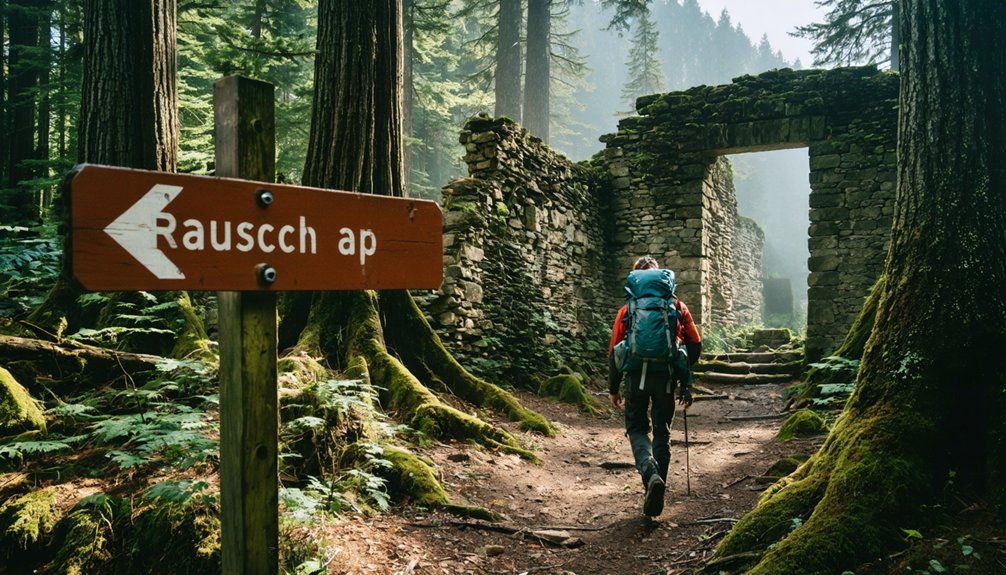
Rausch Gap offers Appalachian Trail hikers three practical reasons to pause: an overnight shelter, cold spring water, and a decent outhouse. When you’re covering serious miles through Saint Anthony’s Wilderness, these basics matter. But the stop delivers more than logistics.
You’ll find yourself walking through a former coal town where historical artifacts—stone foundations, ruined wells, and a small cemetery with four remaining headstones—surface between the trees. The forest has reclaimed nearly everything, yet remnants still break through the undergrowth, grounding you in a settlement that once held 1,000 people.
Wildlife observation here rewards patience. The wilderness surrounding the old townsite stays largely undisturbed, drawing deer, birds, and other animals through the same gap where Rausch Creek cuts Sharp Mountain. You’re moving through living history.
Where to Camp Overnight at Rausch Gap
Campers stopping at Rausch Gap find one established option: the Appalachian Trail shelter, which sits alongside a cold spring and a functional outhouse. You’re sleeping where a coal town once hummed with nearly 1,000 lives, surrounded by historic architecture reduced to stone foundations and cellar holes. Local legends cling to this wilderness, making nightfall here feel genuinely different.
Sleep where a coal town once thrived — ruins, legends, and cold spring water your only companions.
Before you settle in, know what you’re working with:
- Water: Cold spring water is available, but always filter or treat it
- Shelter: The AT overnight shelter accommodates hikers and campers passing through
- Season: Visit spring through fall — winters here are cold and isolating
You won’t find crowds. You’ll find silence, ruins, and stars above Saint Anthony’s Wilderness.
What to Pack for Hiking and Camping at Rausch Gap

Because you’re hiking 3.5 miles along a rail trail to reach a genuine ghost town in Saint Anthony’s Wilderness, every item you carry earns its weight. Pack sturdy boots for rocky terrain, layered clothing for unpredictable temperatures, and rain gear regardless of forecasts.
Bring enough water until you reach the Appalachian Trail spring, since Rausch Creek isn’t a reliable drinking source. Carry a camera to document historical artifacts like stone foundations, ruined wells, and weathered cemetery headstones before forest reclaims them further.
Wildlife encounters are real here — black bears and deer roam freely through these woods. Pack bear-aware food storage accordingly. A headlamp, first aid kit, and detailed trail map round out your essentials.
You’re entering true wilderness, so prepare like it matters.
The Best Time of Year to Visit Rausch Gap
Once you’ve packed your gear and you’re ready to commit to the trail, timing your visit makes all the difference between a rewarding trip and a miserable slog. Spring through fall offers the clearest access to historical artifacts and the most immersive experience of forest regeneration swallowing what remains of Rausch Gap.
Winter brings brutal cold and snow that make the 3.5-mile rail trail punishing.
Plan your visit around these seasonal advantages:
- Spring: Wildflowers frame exposed stone foundations before full canopy cover returns
- Summer: Long daylight hours maximize exploration of both upper and lower town ruins
- Fall: Thinning foliage reveals cellar holes and ruined wells otherwise hidden by dense growth
You’ll move freely, see more, and understand exactly why this wilderness reclaimed everything.
How Rausch Gap Compares to Other Pennsylvania Ghost Towns
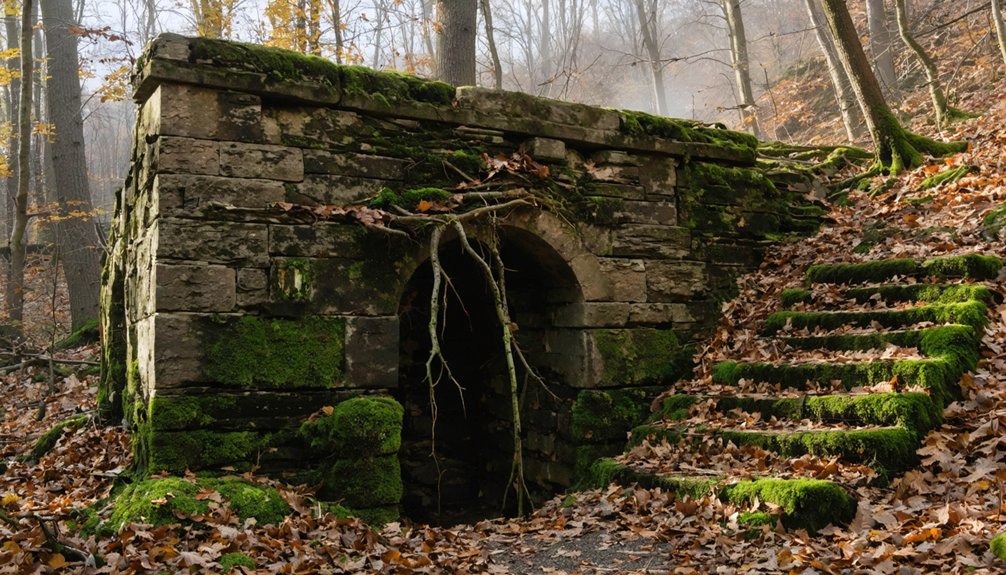
Rausch Gap earns its place among Pennsylvania’s most compelling ghost towns not through dramatic legend but through sheer physical honesty — stone foundations, ruined wells, and four weathered headstones tell a story that more famous sites have long since paved over or prettied up.
Unlike tourist-polished destinations built on urban legends and manufactured ghost stories, Rausch Gap offers you something rarer: unmediated wilderness archaeology. You’re not reading a placard — you’re stepping into cellar holes and tracing the outline of a community that simply ceased.
Saint Anthony’s Wilderness swallowed it whole. No gift shop, no guided haunting tour. The forest reclaimed what 1,000 people once called home, and that quiet erasure hits harder than any contrived legend ever could.
That’s what separates Rausch Gap — it’s genuinely, unapologetically abandoned.
Frequently Asked Questions
Are Pets Allowed on the Rail Trail Leading to Rausch Gap?
Like pioneers forging new paths, you’re free to bring your pet! Trail regulations aren’t specified in available data, but prioritize pet safety on the 3.5-mile rail trail journey—check with local authorities before adventuring.
Is There Cell Phone Service Available Near Rausch Gap?
Don’t count on cell service at Rausch Gap. Deep within Saint Anthony’s Wilderness, signal strength fades as civilization does. You’ll embrace true freedom here, disconnected from the modern world, just like the abandoned souls of 1910.
Can Visitors Legally Remove Artifacts or Souvenirs From Rausch Gap?
Like guardians of a sacred tomb, leave everything untouched. You shouldn’t remove artifacts from Rausch Gap, as artifact preservation laws and souvenir regulations protect this historic site. Respect its story — take only memories, leave only footprints.
Are There Guided Tours Available Specifically for Rausch Gap Visits?
No formal guided tour options exist for Rausch Gap, but you’ll uncover its historical significance independently via the Appalachian Trail. Explore stone foundations, rusted wells, and forgotten headstones at your own untamed, liberating pace.
What Wildlife Might Visitors Encounter While Exploring Rausch Gap?
You’ll discover rich wildlife habitats teeming with deer, black bears, and wild turkey. Animal sightings thrive where nature’s reclaimed this ghost town’s wilderness, letting you roam freely through Saint Anthony’s untamed forests surrounding Rausch Gap’s haunting stone ruins.
References
- https://en.wikipedia.org/wiki/Rausch_Gap
- https://www.youtube.com/watch?v=DZi8ckyxCpU
- https://pennsylvaniaparanormal.tumblr.com/post/136946726103/rausch-gap-rausch-gap-is-a-ghost-town-in-lebanon
- https://stuofdoom.com/main/?p=1889
- https://www.ghosttowns.com/states/pa/rauschgap.html
- https://www.youtube.com/watch?v=oEiI3cpB15I
- https://scenicstates.com/ghost-towns-in-pa/
- https://www.youtube.com/watch?v=z2xj2ShMcqU
- https://en.wikipedia.org/wiki/List_of_ghost_towns_in_Pennsylvania