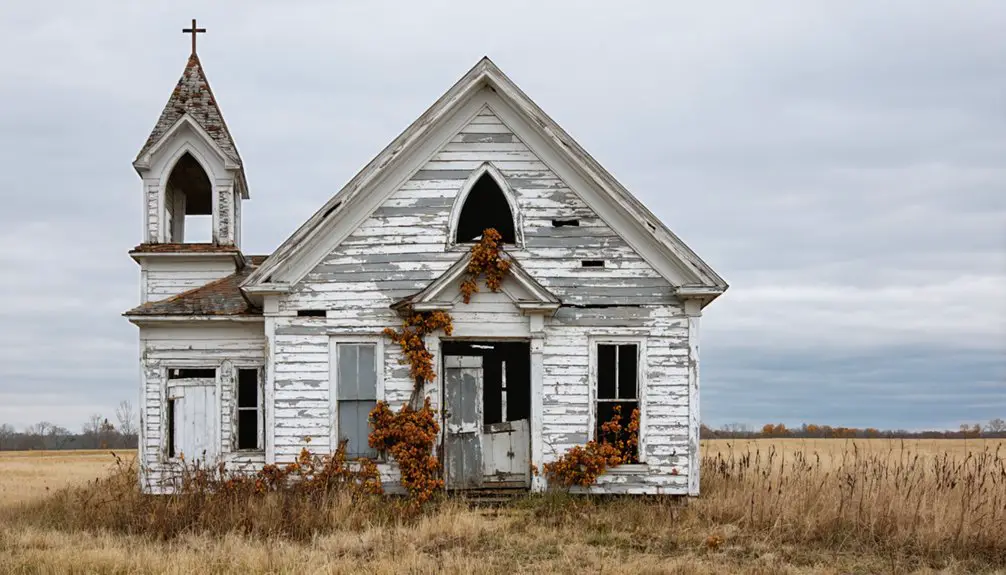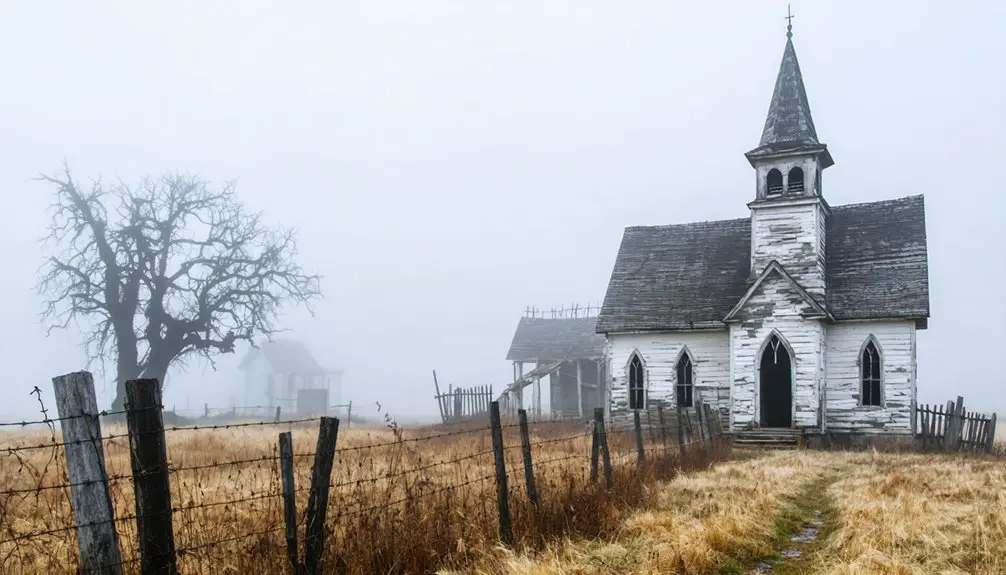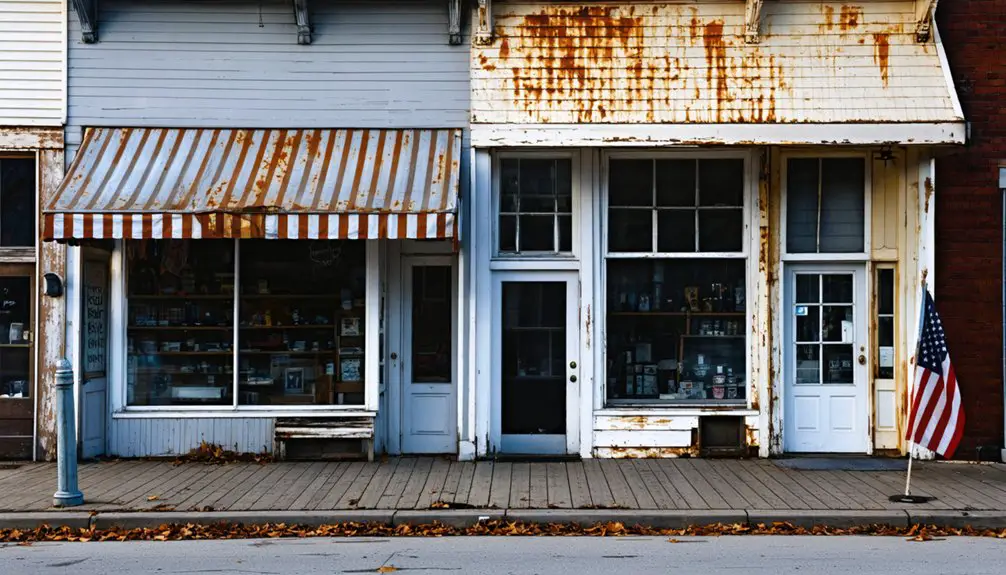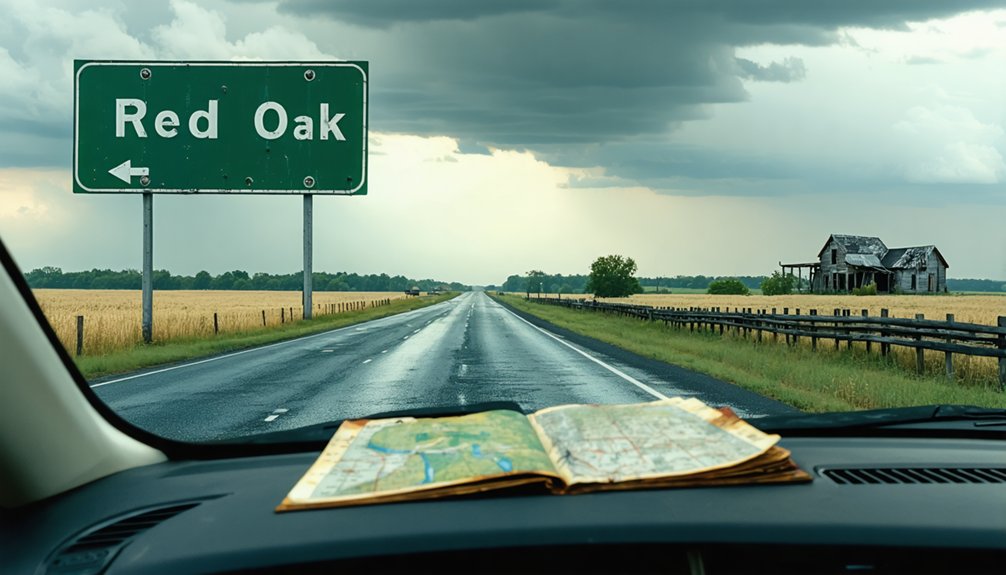
You’ll find Red Oak II two miles north of Route 66‘s Flying W Truck Stop, where artist Lowell Davis spent decades reconstructing a vanished town across sixty cornfield acres. Navigate County Road 130 to Kafir Road, following signs to this collection of forty rescued buildings—including a working Phillips 66 station and the Belle Starr House. Visit during late spring or early fall for comfortable exploring, and time your trip around Saturday evening jam sessions when Davis’s ghostly village springs to life with music echoing through authentic storefronts and churches.
Key Takeaways
- Red Oak II sits near Route 66 in Missouri, accessible via County Road 130 north from the Flying W Truck Stop’s “Crap Duster” sculpture.
- Lowell Davis restored this authentic early 1900s village by relocating over 40 vintage buildings from abandoned towns to his family farmland.
- Explore sixty acres featuring a Phillips 66 station, Belle Starr House, blacksmith shop, and Salem Country Church with Saturday jam sessions.
- Visit during late spring or early fall for ideal weather conditions and clearer exploration without summer humidity or winter harshness.
- Enhance your trip by timing it with Missouri’s Route 66 festivals for a complete nostalgic ghost town experience.
The Story Behind Red Oak II’s Creation
The original Red Oak fell silent in the decades following World War II, its population bleeding away as post-war urbanization pulled residents toward the promise of steady paychecks in larger cities. By the 1980s, only eight souls remained where 250 once thrived.
That’s when native son Lowell Davis returned to find his birthplace crumbling into memory. The internationally recognized artist couldn’t let his heritage vanish. In 1987, he launched ambitious community restoration efforts, purchasing weathered structures from Red Oak and surrounding ghost towns. He hauled them to his family’s farmland near Carthage, treating the empty field as his canvas.
Through meticulous architectural preservation techniques, Davis reconstructed an authentic early 20th-century village—complete with his father’s general store and great-grandfather’s blacksmith shop—giving forgotten buildings defiant new life.
How to Find Red Oak II From Route 66
Finding Red Oak II requires leaving Route 66’s well-worn path for Missouri’s quieter back roads, but the detour rewards those willing to venture just a mile north of America’s Mother Road.
From Carthage, head east on Highway 96 for approximately one mile. You’ll spot the Flying W Truck Stop‘s quirky “Crap Duster” sculpture—a green barnstormer with a manure spreader fuselage marking your landmark. Turn north onto County Road 130, then continue nearly two miles before turning right onto Kafir Road.
While traversing rural county roads might feel like getting lost on backroads, GPS coordinates 37.212788, -94.277045 keep you on track. Look for signage at key intersections. The gravel approach confirms you’re close—Red Oak II sits at 12,275 Kafir Road, deliberately tucked away from highway traffic.
What to See in This Recreated Ghost Town
Once you arrive at Red Oak II, gravel crunches beneath your feet as you step into Lowell Davis‘s reimagined vision of 1930s small-town Missouri. You’ll wander freely past the cottage-style Phillips 66 station, peer into the blacksmith shop where Davis’s great-grandfather Weber once worked, and discover the Belle Starr House where the artist himself lived until 2020.
This curated artistic experience blends preservation challenges with creative liberty—authentic buildings relocated from the original ghost town mingle with Davis’s sculptures scattered across sixty acres. The Salem Country Church still hosts Sunday services, while the cemetery holds Davis’s final resting place.
Saturday evening jam sessions pulse with music, transforming empty structures into a living museum that defies conventional boundaries.
Lowell Davis: The Artist Who Rebuilt a Town
Born in the cornfields near Carthage, Lowell Davis absorbed the rhythms of 1930s rural Missouri like sunlight soaking into weathered barn wood. His father’s general store became his first studio, where he learned to transform ordinary materials into extraordinary art. After discovering his childhood home had become a ghost town, Davis channeled personal challenges—including divorce—into an artistic legacy that would captivate America.
From weathered barn wood to America’s heart—one artist transformed rural ruins and personal struggle into an enduring masterpiece.
Starting in 1987, he orchestrated an audacious vision:
- Relocated over 40 vintage buildings to a cornfield on Fox Fire Farm
- Created 2,000+ gift shop partnerships across North America with his rural-themed work
- Designed 40+ outdoor signs throughout Carthage and along Route 66
You’ll find his masterpiece waiting where gravel meets memory—a three-dimensional painting sculpted from America’s discarded dreams.
Best Times to Visit Red Oak II
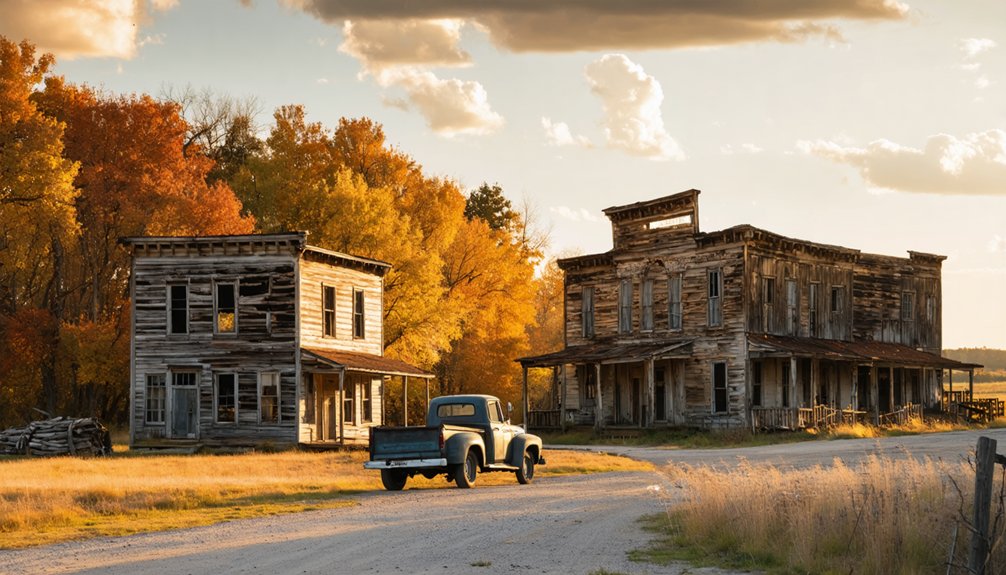
You’ll want to time your Red Oak II adventure carefully—I learned this the hard way during a sweltering July visit when the metal sculptures practically shimmered with heat.
The annual Route 66 Festival in September offers the perfect sweet spot: mild temperatures, autumn colors, and the town buzzing with costumed performers and live bluegrass music.
Skip the brutal Missouri winter months unless you’re prepared for bone-chilling winds whipping through the empty streets, and aim instead for spring wildflower season or the comfortable days of early fall.
Seasonal Weather Considerations
- Late spring delivers warming temperatures without summer’s oppressive humidity, perfect for photographing weathered buildings
- Early fall provides crisp air and clear skies, ideal for extended outdoor exploration
- Mid-summer grants longest daylight hours despite heat—arrive early morning to beat afternoon swelter
Avoid winter’s harsh conditions unless you’re equipped for snow and wind. Recent droughts since 2013 mean unpredictable conditions, so check forecasts before departing.
Route 66 Festival Timing
While Red Oak II welcomes visitors year-round, timing your trip around Missouri’s Route 66 festivals transforms a simple ghost town visit into a full-blown nostalgia experience.
The Route 66 Summerfest in Rolla (June 4-6, 2026) offers ideal festival timing with its Thursday night parade and classic car displays celebrating the Mother Road’s 100th birthday.
Springfield’s Birthplace Festival (August 7-8, 2026) kicks off the centennial with poker runs and live music lineups.
The importance of centennial events can’t be overstated—2026 marks a once-in-a-lifetime celebration.
Hit the road during peak June-August festivals to witness hundreds of events across eight states. You’ll experience genuine Americana freedom: chrome bumpers gleaming, engines rumbling, and neon signs buzzing back to life through re-lighting ceremonies.
Avoiding Extreme Temperature Months
Missouri’s extreme temperature swings can transform Red Oak II from an enchanting open-air museum into an uncomfortable endurance test. I’ve witnessed 96-degree May afternoons that cut exploration short and January cold snaps that made building interiors inaccessible. These average temperature fluctuations create significant visitor accessibility challenges you’ll want to avoid.
Target these ideal visiting windows:
- Late April through early May – Before summer heat arrives, buildings open more frequently on weekends
- September through October – Mild temperatures encourage full-property exploration without weather barriers
- Avoid December through February – Extreme cold limits building access and reduces staff presence
Spring and fall shoulder seasons give you the freedom to roam unrestricted, photograph art installations comfortably, and actually encounter the residents who bring this ghost town to life.
Photography Tips for Capturing Authentic Americana
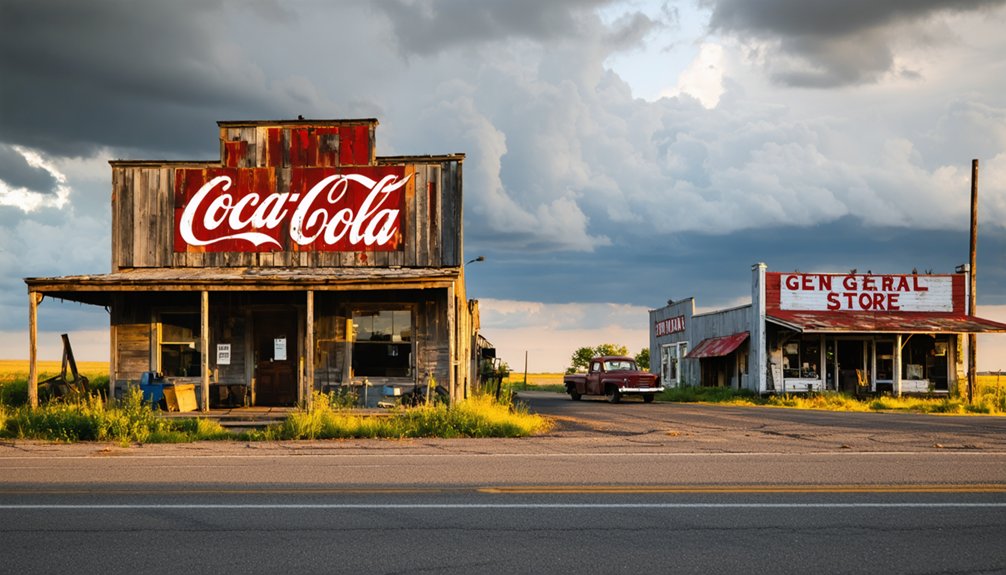
Capturing authentic Americana requires you to slow down and notice what others overlook—the faded Coca-Cola sign peeling on a barn wall, the chrome details of a ’57 Chevy rusting in a cornfield, the way morning light catches dust motes through a diner’s window. Your vintage signage capture improves when you shoot during golden hour, letting warm tones evoke that 1950s nostalgia.
During rural americana exploration in Red Oak, get close to weathered textures—flaking paint, splintered wood, sun-bleached fabrics. Use leading lines from empty streets or fence posts to guide viewers through your frame. Don’t obsess over technical perfection; embrace grain and blur when they serve the story.
If you photograph locals, approach with genuine curiosity. A smile and honest interest yield relaxed portraits that reveal character in weathered hands and sun-creased faces.
Nearby Carthage Attractions to Add to Your Itinerary
After exploring Red Oak’s quiet streets, you’ll find Carthage just fifteen miles southwest—a town that somehow balances quirky roadside charm with genuine historical weight.
Start with the ornate limestone courthouse from 1895, where you can ride the original open-cage elevator—it’s oddly thrilling. Three blocks north, Route 66 cuts through town, leading you to essential stops:
- Precious Moments Chapel – 52 Biblical murals featuring wide eyed religious figures cover 6,400 square feet of sanctuary space (admission’s free)
- 66 Drive-In Theatre – One of the highway’s last operating drive-ins for sunset double features
- Civil War Museum – Mining town battles and guerrilla warfare without the sanitized version
Boots Court Motel serves as your visitors center. Four historic districts contain over 600 Victorian buildings worth wandering.
What Makes Red Oak II Different From Other Ghost Towns
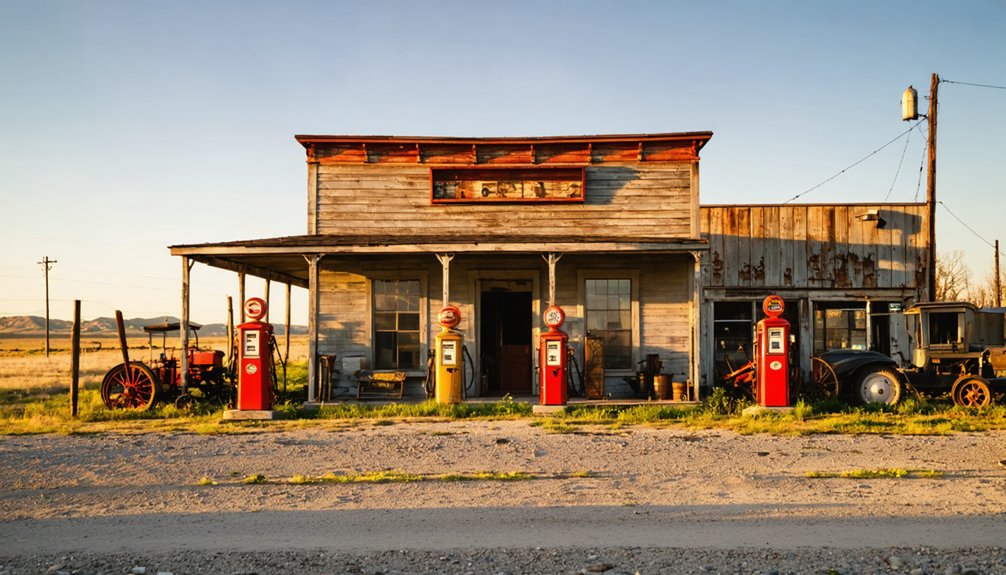
Unlike typical ghost towns where you’ll walk through crumbling ruins and empty doorways, Red Oak II hums with actual life—residents wave from porches of restored homes while the cafe serves lunch and church bells ring on Sundays.
You’re not discovering an abandoned relic frozen in time; you’re stepping into artist Lowell Davis’s living sculpture, where he deliberately reconstructed buildings from multiple vanished Missouri towns starting in 1987.
The blacksmith shop where his great-grandfather worked and the general store his father operated now stand alongside structures salvaged from across the region, creating something that’s never quite existed before—a functioning town built from ghost town bones.
Intentionally Rebuilt, Not Abandoned
Most ghost towns tell stories of abandonment—Main Streets emptied by economic collapse, buildings surrendered to wind and weather. Red Oak II breaks that mold entirely. This isn’t decay you’re witnessing; it’s intentional rebuilding driven by one man’s vision to resurrect preserved history.
When Lowell Davis returned to find his birthplace erased, he didn’t accept that fate. Starting in 1987, he created something radically different:
- Purchased and relocated original structures from Red Oak’s townsite and other dying communities
- Restored each building to its former grandeur on his farm near Carthage
- Transformed a cornfield into a living tribute through imagination, not decline
You’re not exploring ruins here—you’re walking through deliberate preservation, where discarded pieces of rural Missouri found new purpose under Davis’s determined hands.
Living Community Within Relics
Red Oak II doesn’t sit frozen in time like a museum exhibit—it breathes. You’ll hear roosters crowing at dawn and see chickens scratching between rusting tractors and Belle Starr’s restored house. Real people live here, occupying homes that double as art installations adorned with Lowell Davis’s sculptures.
The church holds Sunday services, the diner serves actual meals, and residents navigate daily life among the relics while embracing changing seasons that weather the vintage Phillips 66 station and antique machinery.
This coexistence of residents and visitors creates something rare—a functional neighborhood wrapped in nostalgic authenticity. You’re welcome to explore the gravel road, but respect the privacy of occupied homes. It’s part ghost town, part living community, thriving as both Route 66 attraction and genuine rural homestead.
For those looking for adventure, there are several ghost towns to visit in Mississippi that further illustrate the region’s rich history. Each abandoned structure tells a story, inviting exploration and reflection on the past. As you wander through these forgotten places, you’ll feel the echoes of a time when they were bustling communities.
Frequently Asked Questions
Are There Restrooms or Facilities Available for Visitors at Red Oak II?
Red Oak II doesn’t offer public restrooms—it’s a private community. You’ll want to plan ahead using nearby accommodations in Carthage before arriving. Visitor parking options exist along the gravel road, but facilities remain limited for your spontaneous exploration.
Can Visitors Enter the Buildings or Only View Them From Outside?
Like peering through a window into history, you’ll find restricted building access at Red Oak II. Most structures remain locked, though guided tours available on special Saturdays and September’s festival let you step inside this artistic time capsule.
Is Red Oak II Wheelchair Accessible for Visitors With Mobility Issues?
You’ll find limited wheelchair accessibility at Red Oak II. While there’s accessible parking and restrooms, the site wasn’t designed with strict access requirements in mind. The gravel roads help navigate mobility challenges, though driving through offers your best viewing experience.
Are Pets Allowed When Visiting Red Oak II?
Red Oak II doesn’t state explicit pet policies for its grounds, giving you freedom to explore with your furry companion. However, visitor accommodations are minimal since it’s a private art installation—plan accordingly and respect the property’s boundaries.
How Long Does a Typical Visit to Red Oak II Take?
Like Dorothy’s journey through Oz, you’ll want two hours to explore Red Oak II’s wonders. Plan accordingly for parking availability and weather conditions—spring Saturdays offer the fullest experience when buildings open and magic truly unfolds.