Planning a ghost town road trip to Reefer City means heading into California’s Mojave Desert, about two miles north of Mojave off Backus Road. Built in 1936 from fifty converted Southern Pacific refrigerator rail cars, this unusual mining community once housed 300 residents before dissolving in 1942. Today, little remains on-site, and access is restricted due to active mining operations. Pack water, check the weather, and explore nearby towns like Randsburg to complete your experience — there’s much more to uncover ahead.
Key Takeaways
- Reefer City, near Soledad Mountain in the Mojave Desert, was built in 1936 using fifty converted Southern Pacific refrigerator rail cars for miner housing.
- The site is within an active mining operation, meaning public access is restricted and trespassing carries legal consequences, so research access beforehand.
- Most physical remains are gone, requiring visitors to use imagination, as refrigerator cars were dismantled in 1971 and recent mining removed further ruins.
- Late fall through early spring offers the most comfortable visiting temperatures, as summer heat regularly exceeds 100°F in the Mojave Desert.
- Nearby ghost towns Randsburg, Johannesburg, and Red Mountain offer well-preserved mining history, making excellent additions to a fuller Mojave road trip itinerary.
What Was Reefer City and Why Does It Matter?
Tucked beside Soledad Mountain in California’s Mojave Desert, Reefer City wasn’t your typical mining town — it was a community built entirely from fifty converted Southern Pacific refrigerator rail cars.
The Golden Queen Mining Company established it in 1936, repurposing those steel cars into homes for miners working the nearby gold deposits.
By 1939, 300 residents called it home, making Reefer City a thriving, unconventional settlement during the Mojave District’s mining boom.
Its historical significance lies in what it represents: resourceful, no-frills living built around hard work and independence.
When Executive Order L-208 shuttered the mines in October 1942, the community dissolved almost overnight.
You won’t find much standing there today, but understanding what existed makes visiting this ghost town deeply compelling.
The Gold Rush That Built Reefer City From Train Cars
When you trace Reefer City‘s origins, you find yourself following a gold rush that began on Soledad Mountain in 1894, where miners struck ore rich enough to fuel decades of extraction.
By 1903, the Queen Esther mine alone supported a 75-ton cyanide processing plant, and the Golden Queen mine eventually pulled $3 million in gold from the earth by 1939.
To house the workers flooding into the area, the Golden Queen Mining Company did something ingenious in 1936 — they hauled in fifty retired refrigerator rail cars from Southern Pacific and converted them into homes.
Soledad Mountain Mining Origins
Gold discoveries in 1894 set Soledad Mountain on a path that would eventually give birth to one of the Mojave Desert’s strangest communities.
Soledad mining kicked off with the Queen Esther and Echo mines, both pushing hard into the mountain’s ore-rich geology. By 1903, operators had installed a 75-ton cyanide plant to process Queen Esther’s ore, then doubled its capacity just one year later.
The mines produced roughly $1 million in ore by 1910 before going idle.
Decades later, the Golden Queen mine revived Soledad mining ambitions, pulling $3 million in gold by 1939 and doubling that figure by 1942.
That renewed boom created an urgent housing problem — one that birthed the ghost town known as Reefer City, built entirely from repurposed railroad refrigerator cars.
Refrigerator Cars Became Homes
By 1936, the Golden Queen Mining Company had a problem: miners were flooding into the Mojave Desert faster than anyone could house them. Their solution was brilliantly unconventional.
Rather than constructing traditional homes, they sourced fifty retired refrigerator rail cars from Southern Pacific and hauled them near Soledad Mountain.
This refrigerator transformation turned surplus freight equipment into a functioning mining community almost overnight. Workers gutted the insulated cars, retrofitting them into livable spaces where families could settle without waiting years for proper construction.
How to Get to Reefer City Near Mojave, California
Reaching Reefer City takes you about two miles north of Mojave, California, along Backus Road, which branches off California State Route 14.
This open stretch of Mojave Desert puts you right in the heart of Reefer City’s historical significance, where refrigerator rail cars once sheltered hundreds of gold miners.
Here’s what to keep in mind before heading out:
- Navigation: Use Mojave, CA as your starting point and head north on SR-14 before turning onto Backus Road.
- Terrain: Expect unpaved desert roads, so a vehicle with decent clearance serves you well.
- Expectations: Minimal remains exist today, making research before your visit essential for a rewarding experience.
What You’ll Actually See at the Reefer City Site Today
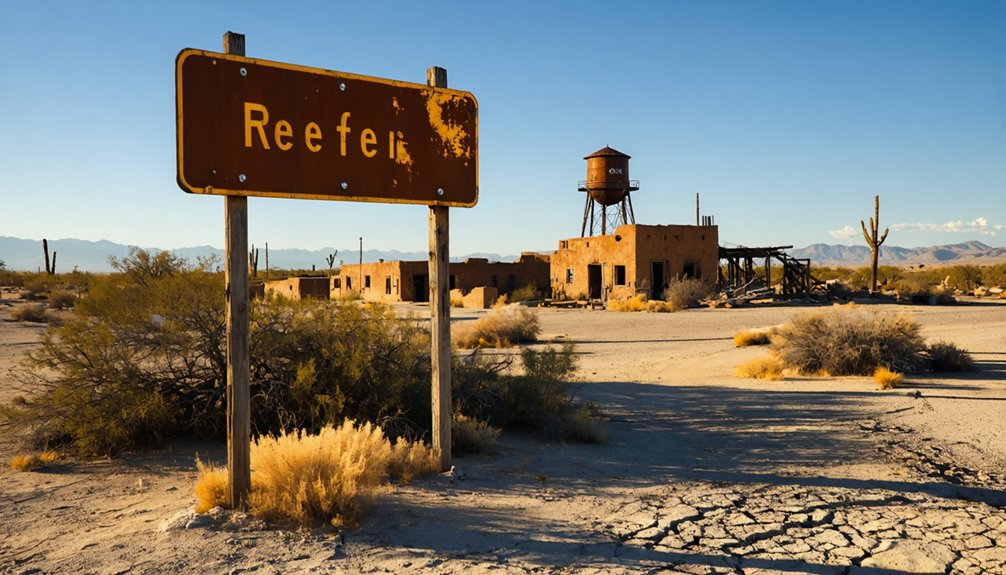
When you arrive at the Reefer City site today, you’ll find little more than open desert and scattered debris where a bustling mining community once stood. The refrigerator cars that once housed 300 miners are long gone, dismantled in late 1971.
Recent Golden Queen mining operations have removed most remaining ruins, wiping away the last physical traces of Reefer City’s mining legacy.
What you’re really experiencing here is absence — a wide-open stretch of Mojave landscape that forces your imagination to do the heavy lifting. The reactivated mine operating since 2015 has reshaped the surrounding terrain considerably.
You won’t find preserved structures or interpretive signs, but standing on this ground connects you directly to a raw, unconventional chapter of California’s gold rush history.
Can You Actually Visit Reefer City, or Is It Off-Limits?
Visiting Reefer City puts you in a genuinely complicated position — the site sits within an active mining operation that’s been reshaping the landscape since 2015, and that changes everything about access.
Unlike freely accessible ghost towns on public land, Reefer City falls within a privately controlled mining zone. Before you hit the road, know what you’re dealing with:
Unlike most ghost towns on public land, Reefer City sits inside a privately controlled mining zone with strictly enforced boundaries.
- No public access: The Golden Queen mine’s active status means trespassing carries real legal consequences.
- No structures remain: Even if you gained entry, the refrigerator cars and buildings are long gone.
- View from public roads: You can glimpse the general area without crossing into restricted territory.
Respect the boundaries, do your research, and appreciate Reefer City for what it truly is — a ghost town that history swallowed completely.
When Is the Best Time to Visit Reefer City?
If you’re planning a road trip to Reefer City, aim for late fall through early spring, when the Mojave Desert temperatures stay manageable rather than scorching.
Summer heat regularly pushes past 100°F, turning a casual ghost town exploration into a grueling ordeal, so you’ll want to avoid peak desert heat from June through August.
Weekdays during the cooler off-season months give you the quietest experience, since weekend visitors and active mining operations near the site can make the area feel less like a remote historical discovery.
Ideal Seasonal Visiting Windows
Timing your visit to Reefer City can make or break the experience, especially given its harsh Mojave Desert setting near Soledad Mountain. The desert’s extreme temperatures demand smart seasonal planning.
Best visiting windows include:
- Spring (March–May): Mild temperatures and blooming wildflowers make exploring the ghost town’s sparse remains comfortable while local wildlife emerges across the landscape.
- Fall (September–November): Cooling temps return after brutal summers, offering crisp air and clear skies perfect for photography and seasonal events happening nearby in Mojave.
- Winter (December–February): Surprisingly manageable daytime temps, though cold nights require preparation.
Avoid summer entirely. July temperatures regularly exceed 100°F, turning your freedom-seeking adventure into a survival situation.
Pack water regardless of season—the desert doesn’t negotiate.
Weather Conditions To Consider
Weather out near Soledad Mountain doesn’t play around—the Mojave Desert swings between punishing extremes that can either enhance your ghost town experience or cut it dangerously short.
Understanding local weather patterns means the difference between a memorable adventure and a miserable retreat.
Summer temperatures regularly exceed 100°F, turning the exposed site into a genuine hazard. Winter brings freezing nights and occasional snow that locks down access roads.
Desert weather patterns shift fast, so you’ll want to check forecasts obsessively before heading out.
Seasonal changes hit hardest during spring and fall, yet these shifting periods deliver the most comfortable conditions.
Strong afternoon winds kick up without warning year-round, so pack layers regardless of your departure temperature.
The desert rewards the prepared and punishes the careless.
Peak Versus Off-Season
Choosing the right season to visit Reefer City dramatically shapes what you’ll experience at the site.
Spring and fall offer mild temperatures, making it easier to explore the ghost town history and mining legacy without battling brutal Mojave heat.
Consider these seasonal advantages before hitting the road:
- Spring (March–May): Comfortable temperatures and occasional wildflowers create ideal conditions for photography and exploration.
- Fall (September–November): Cooler air returns, crowds thin out, and golden desert light enhances the atmosphere.
- Summer: Extreme heat exceeding 100°F makes midday visits dangerous—go only at dawn if you must.
Winter visits are possible but unpredictable winds and cold nights can cut your exploration short.
Plan accordingly, and you’ll maximize every minute at this remarkable desert destination.
What Should You Pack for a Mojave Ghost Town Visit?
Since the Mojave Desert doesn’t forgive the unprepared, packing smart before heading to a ghost town like Reefer City can make the difference between a rewarding adventure and a miserable retreat.
Bring more water than you think you’ll need — at least a gallon per person. Sun protection, sturdy boots, and layers for temperature swings are non-negotiable.
Pack a first aid kit, a paper map, and a fully charged phone, since cell service gets unreliable fast. A camera helps you document the railroad history embedded in this landscape and honor its mining legacy through thoughtful exploration.
Snacks, cash, and an emergency car kit round out your essentials. Freedom tastes best when you’re self-sufficient and ready for whatever the desert throws at you.
Which Ghost Towns Pair Well With a Reefer City Road Trip?
Once your pack’s loaded and you’re ready to roll, it makes sense to stretch a Reefer City visit into a fuller Mojave road trip by pairing it with nearby ghost towns that share its rough-edged mining heritage.
The region’s ghost town history runs deep, and each stop adds another layer to the area’s broader mining legacy.
Consider adding these destinations to your route:
- Randsburg – A well-preserved gold rush town with original storefronts still standing
- Johannesburg – A neighboring camp that boomed alongside Randsburg’s silver and gold strikes
- Red Mountain – Once a rowdy silver mining hub with colorful saloon history
Together, these towns paint a vivid picture of Mojave’s boom-and-bust past without requiring major detours from your main route.
Frequently Asked Questions
Who Originally Owned the Refrigerator Cars Used to Build Reefer City?
Like relics of a forgotten era, Southern Pacific originally owned those iconic refrigerator cars. You’ll find their refrigerator car origins carry real historical significance — Golden Queen Mining Company repurposed them in 1936 to house miners near Soledad Mountain.
How Many Residents Lived in Reefer City at Its Peak Population?
At its peak, you’d have found 300 residents calling Reefer City home by 1939! This ghost town demographics milestone highlights the site’s historical significance, showcasing how Golden Queen’s booming gold operations transformed converted railcars into a thriving desert community.
What Executive Order Forced the Golden Queen Mine to Close in 1942?
You’d think gold could survive anything, but Executive Order L-208 crushed that dream! This ruthless mining regulations mandate slammed Golden Queen’s doors shut on October 8, 1942, halting every last Mojave District operation overnight.
Who Purchased Reefer City in 1943 After the Mines Were Shut Down?
After the mines shut down, you’ll find that Dr. Leroy Schultz and his wife Freda purchased Reefer City in 1943, continuing its mining legacy by renting the historic reefers to Marines, keeping Reefer City history alive.
When Did the Golden Queen Mine Finally Reopen After Decades of Dormancy?
You’ll find the Golden Queen mine finally reopened in 2015, ending over 70 years of dormancy. If you’re into ghost town tourism and mining history, this remarkable revival beautifully connects Reefer City’s fascinating past to its living present.
References
- https://beyond.nvexpeditions.com/california/kern/reefercity.php
- https://www.trainorders.com/discussion/read.php?11,4757978