Trementina sits 50 miles east of Las Vegas, NM, along highways 104 and 65 — a ghost town frozen in time with two dozen roofless stone buildings, rusting windmills, and hand-carved sandstone gravestones. You’ll need a full tank, plenty of water, and a willingness to move carefully through crumbling ruins. Spring and fall offer the best conditions for exploring. Everything you need to make this trip worthwhile is waiting just ahead.
Key Takeaways
- Trementina sits 50 miles east of Las Vegas, NM, via highways 104 and 65, accessible by standard 2WD vehicles.
- Fuel up in Las Vegas before departing, as no gas stations exist along the remote 50-mile route.
- Pack ample water, sun protection, a first aid kit, and layered clothing for the dry desert environment.
- Spring and fall offer the most comfortable temperatures, while summer visits require an early start and extra water.
- The site features roofless rock buildings, adobe ruins, rusting windmills, and a historic walled cemetery with sandstone gravestones.
What’s Left of Trementina’s Ghost Town Today?
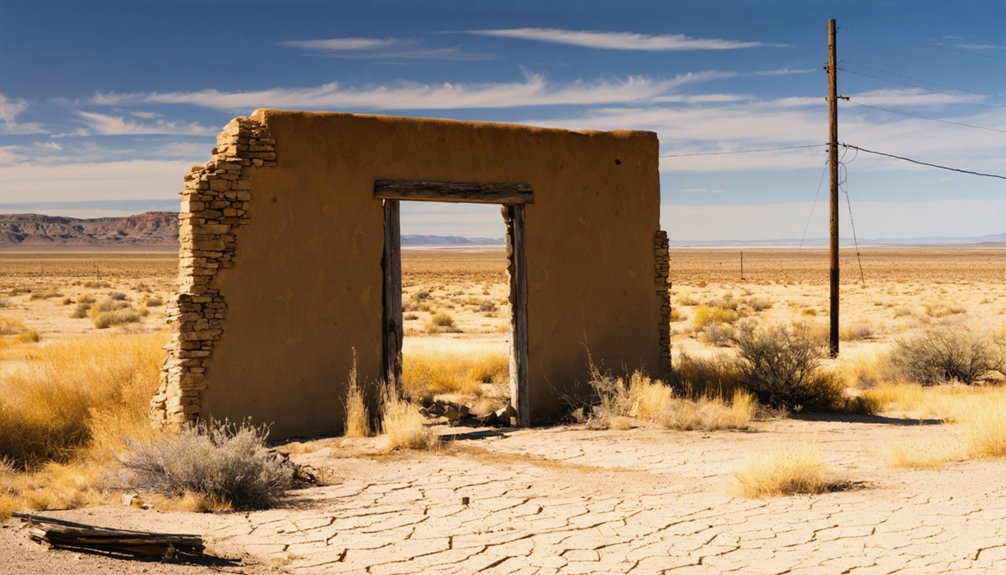
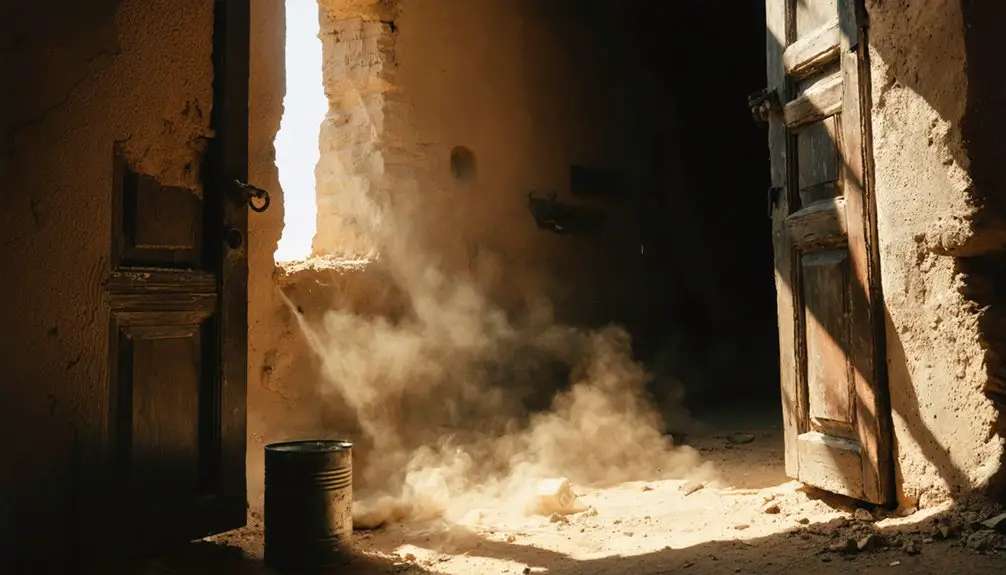
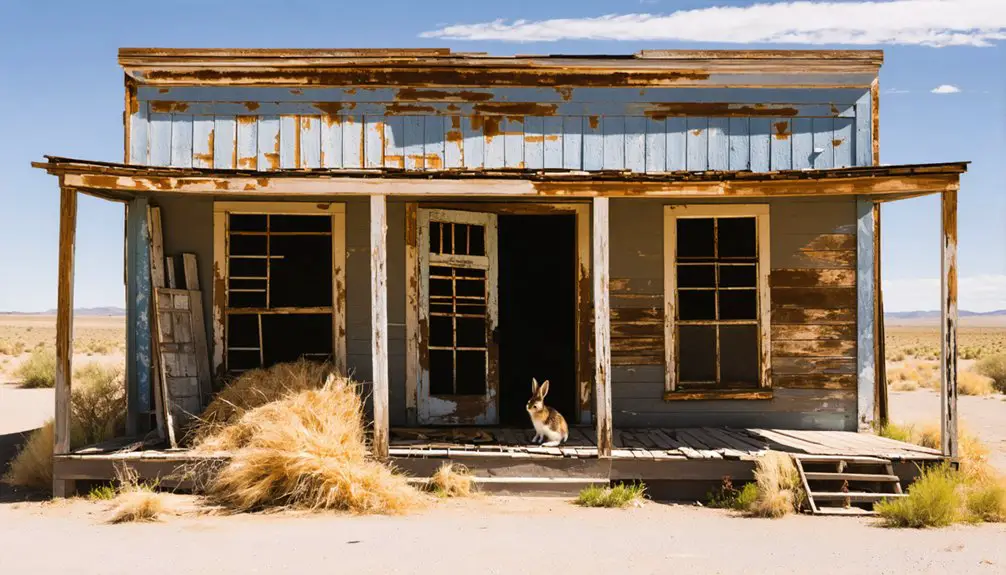
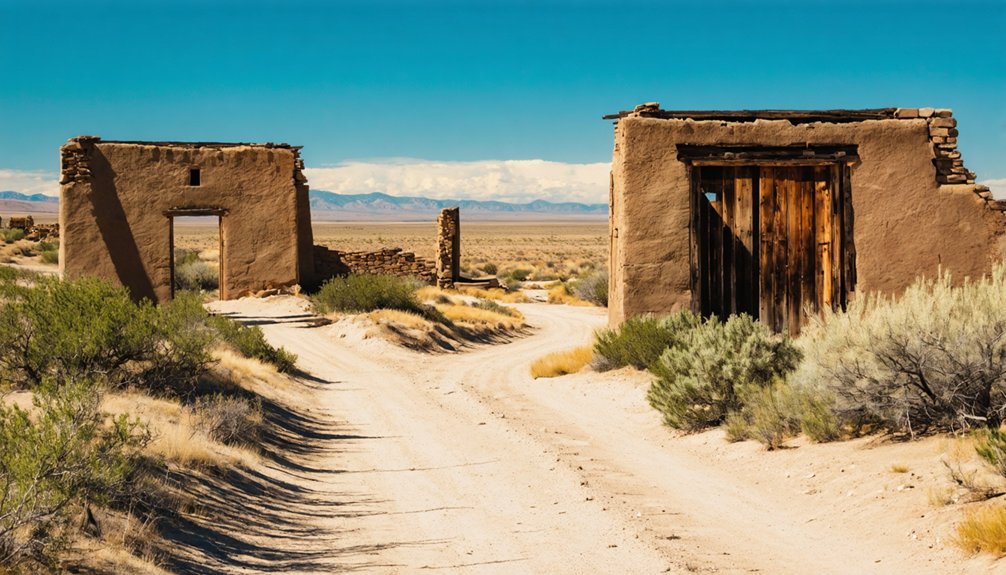
When you arrive at Trementina today, you’ll find at least two dozen rock buildings reduced to roofless, doorless shells scattered across a lonely bluff overlooking Trementina Creek.
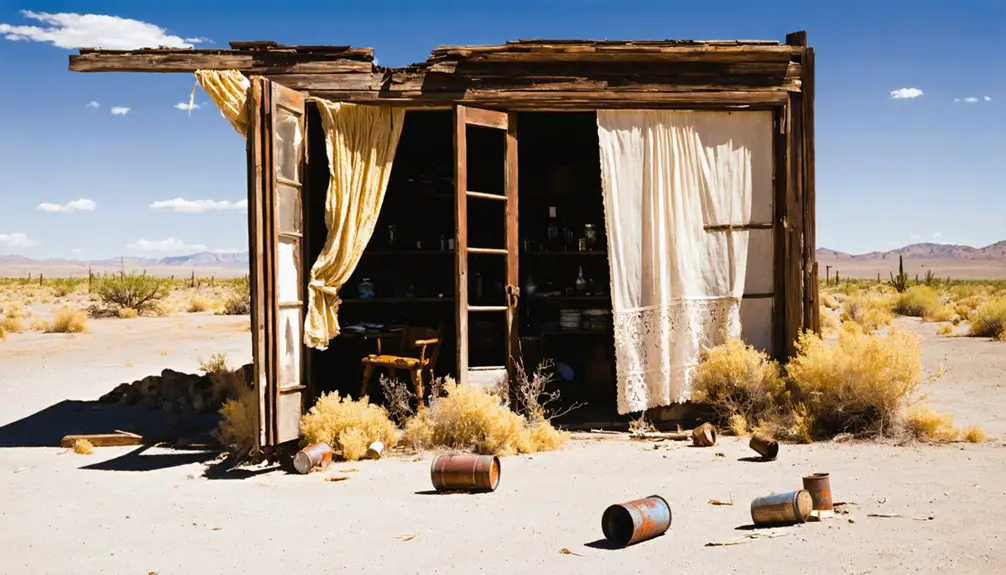
These abandoned structures still hold rusty stoves, bedsprings, and forgotten household items — silent witnesses to lives once fully lived. Adobe ruins crumble alongside rusting windmills, while a walled cemetery preserves hand-carved sandstone gravestones dating back to the 1800s.
Rusty stoves, crumbling adobe, hand-carved gravestones — every detail a quiet testament to lives that were, then weren’t.
These historical remnants aren’t manicured or staged; they’re raw, unfiltered, and completely yours to explore on your own terms. The windswept landscape carries a stillness that feels both heavy and freeing.
You’re walking through a place where families built real lives, then quietly disappeared. Nothing here is reconstructed — what you see is exactly what remains.
How to Get to Trementina From Las Vegas, NM
Getting to Trementina from Las Vegas, New Mexico is a straightforward 50-mile drive east along highways 104 and 65 — a route that gradually trades the town’s familiar storefronts for wide-open ranchland, piñon-studded mesas, and the kind of silence that signals you’re heading somewhere genuinely remote.
This directions overview couldn’t be simpler: your standard 2WD vehicle handles the roads fine, so no specialized gear is required.
That said, a few practical travel tips will serve you well. Fuel up before leaving Las Vegas — gas stations don’t exist out here.
Pack enough water for the day, since you’re dropping roughly 1,000 feet into progressively drier desert terrain.
Spring, summer, and fall offer the most comfortable conditions. Winter visits are possible but cooler.
Arrive ready to explore on your own terms.
How Trementina Went From Boomtown to Ghost Town
Trementina didn’t collapse overnight — it unraveled across decades, each blow landing before the town could fully recover from the last. A diphtheria epidemic struck in 1901, thinning families before the community could stabilize.
Then the Great Depression arrived in 1929, dragging drought conditions behind it and gutting the agricultural economy that sustained everyone’s independence. Economic shifts pulled younger generations toward city wages they couldn’t ignore.
When World War II called men away from their ranches, most families followed, abandoning the cultural heritage they’d built from scratch. Few returned.
The Korean War era sealed Trementina‘s fate as a ghost town. What once held nearly 1,000 souls now shelters fewer than 30 year-round residents — a quiet reminder of how relentlessly time reclaims forgotten places.
When Trementina’s Weather and Crowds Work in Your Favor
Spring, summer, and fall all reward visitors willing to make the drive out to this remote corner of San Miguel County, though each season carries its own character.
Spring brings mild temperatures and quiet weather patterns that make wandering roofless ruins genuinely comfortable.
Spring’s mild temperatures and calm skies make wandering roofless ruins feel unhurried and genuinely comfortable.
Summer warms considerably, so arrive early and pack extra water before the afternoon heat builds.
Fall delivers crisp air and golden light that photography enthusiasts will appreciate.
Crowd seasons here are fundamentally nonexistent year-round, but winter pushes that solitude into something harsher, with cold winds sweeping across the bluff above Trementina Creek.
Whatever season you choose, fuel up before leaving Las Vegas, bring more water than you think you’ll need, and treat the windswept cemetery and crumbling rock buildings with the quiet respect they deserve.
What to Pack for a Remote Ghost Town With No Services?
Packing right separates a memorable ghost town afternoon from a genuinely miserable one, and Trementina offers zero margin for forgetting the basics.
No gas stations, no water sources, no cell towers—just wind, ruins, and open sky. Follow these packing essentials and safety tips before you leave pavement behind:
- Water – Carry more than you think you’ll need; desert heat deceives quickly.
- Full gas tank – The nearest station sits roughly 50 miles away in Las Vegas.
- First aid kit – Crumbling rock structures and rusty metal demand basic wound care.
- Sun protection and layers – Elevation shifts drop temperatures unexpectedly after sunset.
Respect the silence, move carefully through roofless ruins, and you’ll leave with stories worth telling.
Frequently Asked Questions
Who Founded Trementina and What Religious Background Did Settlers Have?
Santiago Blea’s founder history shaped Trementina around 1870, when you’ll discover Presbyterian settlers carried strong religious beliefs, fleeing persecution from nearby settlements seeking freedom across New Mexico’s remote, windswept mesas and piñon-dotted landscapes.
What Does the Name Trementina Actually Mean in Spanish?
Like liquid gold dripping from ancient bark, Trementina’s Spanish etymology tells you it means “turpentine.” You’ll find local legends connecting this resinous name to piñon pine pitch that settlers harvested for folk medicine and chewing gum.
How Large Did Trementina’s Population Grow at Its Peak?
You’d be amazed at Trementina’s population dynamics — nearly 1,000 residents called it home during the early 1900s. That historical significance reflects a thriving community you can still feel echoing through its windswept, abandoned ruins today.
What Economic Activities Sustained Trementina Residents Beyond Sheep Ranching?
Beyond sheep ranching, you’ll find Trementina’s agricultural practices and turpentine resin harvesting from piñon pines sustained residents. With $300 funding their church, their mining history and homesteading spirit fueled a remarkable, self-reliant frontier community.
Who Was Alice Blake and What Role Did She Play?
You’ll discover Alice Blake’s influence was transformative — she’s the Presbyterian medical missionary whose historical significance shaped Trementina’s very soul, actively organizing the town’s development and guiding a freedom-seeking community toward lasting infrastructure and spiritual resilience.
References
- http://www.retired–nowwhat.com/2013/07/ghost-towns-new-mexico.html
- https://newmexicotravelguy.com/new-mexico-ghost-towns/
- https://en.wikipedia.org/wiki/Trementina
- https://trementina1871.wordpress.com/history-to-trementina/
- https://www.ghosttowns.com/states/nm/trementina.html
- https://trementina1871.wordpress.com