Your ghost town road trip to Richland, Kansas starts nine miles southeast of Newton—about a 15-minute drive through flat Harvey County farmland. You won’t find standing buildings here, just abandoned foundations reclaimed by the Kansas prairie, remnants of a town that oil money built almost overnight. The former Missouri Pacific Railroad line runs nearby, adding another layer of history to the silence. Wear sturdy shoes and bring your curiosity—there’s more to this story than meets the eye.
Key Takeaways
- Richland, Kansas, is located nine miles southeast of Newton, making it a quick 15-minute drive through flat Harvey County farmland.
- Only abandoned foundations remain at Richland, offering raw, self-directed exploration of a former oil boom town.
- The former Missouri Pacific Railroad line, abandoned since 2003, runs nearby and adds historical context to the visit.
- Bring sturdy footwear and a county road map; no formal landmarks, guided tours, or GPS navigation are necessary.
- Extend your road trip by exploring nearby ghost towns in Butler County or heading southeast toward Whitewater for additional abandoned structures.
How Oil Built Richland, Kansas: and Left It for Dead
Few towns in Kansas rose and fell as fast as Richland. When oil discovery hit southeastern Kansas in the early 1900s, the economic impact was immediate and explosive. Roughnecks flooded in, businesses sprouted overnight, and money changed hands freely across every establishment in town.
You can almost picture the chaos — derricks rising against the prairie sky while ambitious men chased black gold beneath the soil.
Then the wells dried up.
Then the oil stopped flowing, and so did everything else — the money, the workers, the future.
Companies pulled out as quickly as they’d arrived, taking jobs and residents with them. Buildings that once hummed with activity stood empty against the Kansas wind.
What petroleum built, its absence destroyed. Today, only abandoned foundations remain where Richland once thrived — a stark reminder that resource towns live and die by what’s underground.
What’s Left to See at Richland, Kansas Today?
What you’ll find at Richland today is more absence than presence — abandoned foundations scattered across the Harvey County landscape, silent evidence of a town that once moved fast and loud.
No occupied buildings remain. No residents call it home. Just concrete and stone outlines where ambition once stood.
Yet the abandoned structures carry real historical significance. You’re standing on ground shaped by oil money, railroad ambition, and the brutal honesty of boom-and-bust economics.
The former Missouri Pacific line that once connected Newton and Whitewater runs nearby, its tracks pulled up and gone since 2003.
Bring your camera, your curiosity, and a solid pair of walking shoes. Richland won’t hand you a museum — it’ll hand you silence, and let you figure out the rest.
How to Get to Richland From Newton
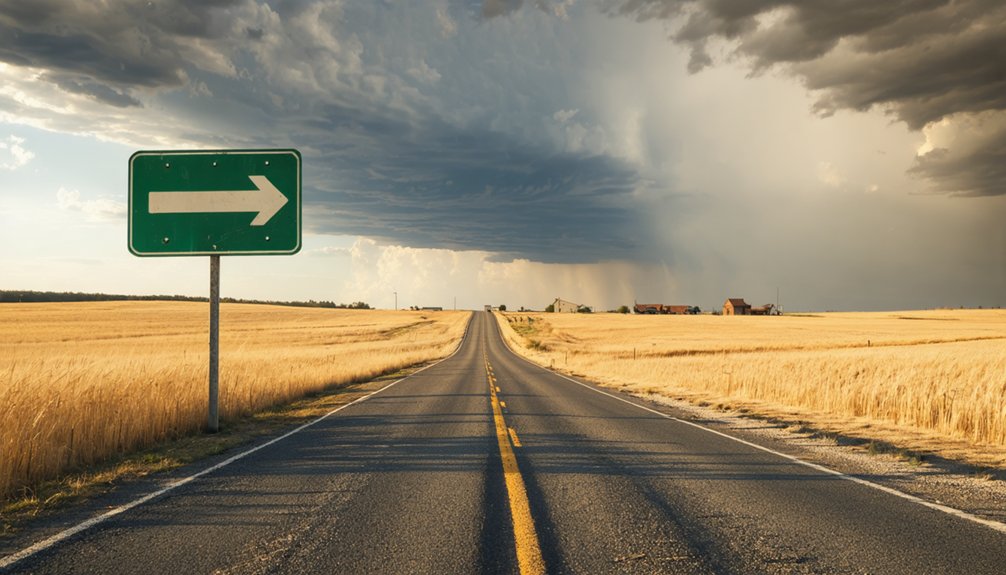
Getting to Richland from Newton takes about 15 minutes and covers nine miles southeast through flat Harvey County farmland.
You’ll follow county roads through open Kansas landscape, where the horizon stretches endlessly in every direction. The scenic routes here reward drivers who appreciate wide skies and unhurried travel.
Watch for historical landmarks along the way, including traces of the old Missouri Pacific Railroad corridor that once connected Newton and Whitewater.
Traces of the old Missouri Pacific Railroad corridor still parallel the route, whispering of the towns it once connected.
The abandoned rail line parallels portions of your route, offering quiet reminders of the transportation network that shaped these communities.
No GPS is required for this straightforward drive, but a county road map keeps you oriented.
Pack water, charge your phone, and embrace the solitude waiting at your destination.
Site Conditions at Richland: What to Expect Before You Go
Richland won’t greet you with standing walls or intact storefronts—you’ll find only abandoned foundations where buildings once rose during the oil boom.
The site sits along the former Missouri Pacific Railroad line, which itself was abandoned in 2003, adding another layer of quiet desolation to explore.
Don’t expect formal historical landmarks or guided tours—Richland rewards self-directed wanderers who prefer raw, unfiltered history.
You’ll walk ground where roughnecks once chased black gold and businessmen once counted profits, now reclaimed by Kansas prairie.
Ghost stories naturally cling to places like this, where communities vanished almost as fast as they appeared.
Come prepared with sturdy footwear, a map, and curiosity.
The freedom to explore this forgotten landscape entirely on your own terms is the real draw.
Ghost Towns Near Richland Worth the Detour
Once you’ve walked Richland’s foundations and absorbed its silence, Kansas has more ghost towns waiting if you’re willing to keep driving. The region rewards curious travelers who push beyond the obvious stops.
Newton itself sits nine miles northwest and serves as a solid launching point for exploring Harvey County’s forgotten corners. Head southeast toward Whitewater along the old Missouri Pacific corridor and you’ll find abandoned structures scattered across the landscape, each carrying its own story of rise and collapse.
Butler County’s Richland Township, first settled in 1868 along Eight Mile Creek, offers a completely different ghost town experience just a short drive away.
Local legends surrounding early settlers like John Steock and James Olmstead give the area genuine historical texture. Kansas rewards those who drive without a rigid itinerary.
Frequently Asked Questions
Was Richland Ever Considered for Harvey County Seat Status?
There’s no record showing Richland’s ever been considered for Harvey County seat status. You’ll find that political dynamics and historical significance shaped many Kansas towns, but Richland’s fate relied on oil, not governmental ambition.
Which Settlers First Established a Community in the Richland Area?
You’ll find that John Steock, James Olmstead, and Harve Henderson were the early settlers who shaped Richland’s community dynamics, establishing their roots along Eight Mile Creek in 1868, igniting a spirit of freedom and frontier independence.
Did Proslavery Politics Influence Richland’s Early Settlement and Development?
You won’t find strong proslavery influence shaping Richland’s story. Kansas became a free state in 1861, and early settlers built their community around oil’s promise, not political division, making freedom’s victory central to the town’s foundation.
When Exactly Did the Missouri Pacific Railroad Stop Serving Richland?
You’ll find that the Missouri Pacific Railroad practically vanished overnight — it stopped serving Richland in 2003. That railroad impact dramatically shaped Richland history, as losing those rails effectively sealed the ghost town’s fate forever.
Are Guided Ghost Town Tours of Richland Currently Available for Visitors?
You won’t find officially guided tours at Richland, but you’re free to explore its abandoned foundations independently. Uncover ghost town history yourself, chase local legends, and experience the raw, untamed spirit of Kansas’s forgotten oil boomtown.
References
- https://en.wikipedia.org/wiki/Richland
- https://lawrencebusinessmagazine.com/2021/07/15/history-washed-away-and-a-personal-account/
- https://legendsofkansas.com/shawnee-county-extinct-towns/
- https://everafterinthewoods.com/abandoned-ghost-towns-in-kansas-that-still-hold-stories-of-the-past/
- https://en.wikipedia.org/wiki/Annelly
- http://kansasoakland.blogspot.com/2012/04/richland-kansas.html
- https://www.kcur.org/arts-life/2022-04-09/ghost-towns-are-all-around-kansas-city-if-you-know-where-to-look
- https://legendsofkansas.com/kansas-ghost-town-list/
- http://genealogytrails.com/kan/butler/historyofbutler12.html
- https://en.wikipedia.org/wiki/List_of_ghost_towns_in_Kansas