Planning a ghost town road trip to Ricker Basin in Waterbury, Vermont drops you into the haunting remnants of a mountain farming community abandoned after catastrophic floods in 1927 and 1934. You’ll navigate cellar holes, weathered stone foundations, and a cemetery where local ghost legends still breathe. Access the site through Little River State Park via Little River Road, pack sturdy boots, and bring a printed map. There’s far more to this eerie destination than first meets the eye.
Key Takeaways
- Ricker Basin in Waterbury, Vermont, offers cellar holes, stone foundations, a cemetery, and one standing structure for ghost town exploration.
- Access Ricker Basin via Little River Road, off River Road between Bolton and Waterbury, with seasonal state park entry fees required.
- Nearby ghost towns include Glastenbury, Greenbank’s Hollow, Somerset, Lewiston, and Woodford, ideal for a multi-stop Vermont road trip.
- Visit during spring or fall for mild temperatures, manageable trails, and the best overall ghost town exploration experience.
- Pack sturdy boots, a printed trail map, water, snacks, insect repellent, and a headlamp for safe backcountry navigation.
What Is the Ricker Basin Ghost Town in Vermont?
Tucked away in the forested hills of Waterbury, Washington County, Ricker Basin is one of Vermont’s most authentic ghost towns — a place where cellar holes, crumbling stone foundations, a lone standing structure, and a quiet cemetery are all that remain of a farming community that survived just over a century before the wilderness swallowed it whole.
Sitting on Ricker Mountain inside Little River State Park, it’s a site where history and nature collide on your terms. You’ll wander past abandoned structures reclaimed by forest, piece together lives once lived along the Little River, and encounter local legends of strange, unsettling happenings after dark.
It’s raw, unfiltered Vermont history — no ropes, no tour guides, just you and the remnants of a vanished world.
The Dark History Behind Ricker Basin’s Abandonment
What makes Ricker Basin more than just a scenic hike is the weight of what happened here. This community endured over a century of harsh Vermont mountain life before nature finally broke it apart.
The 1927 flood killed over 50 people, shattering families who’d already been slowly leaving since the early 1900s. Then, just seven years later, a second flood in 1934 drove out whoever remained.
You’re walking through a place of real historical significance, not manufactured mystery. The ghostly legends surrounding Ricker Basin at night feel earned when you understand what the land absorbed.
The history here is real. The weight of it is what makes the legends feel true.
Florence Ricker, the last soul buried in that cemetery, died in bitter winter cold — a fitting, sobering end to a community that fought hard simply to survive.
What Remains at the Ricker Basin Ruins Today?
The forest has reclaimed most of Ricker Basin, but enough survives to make the hike feel genuinely rewarding.
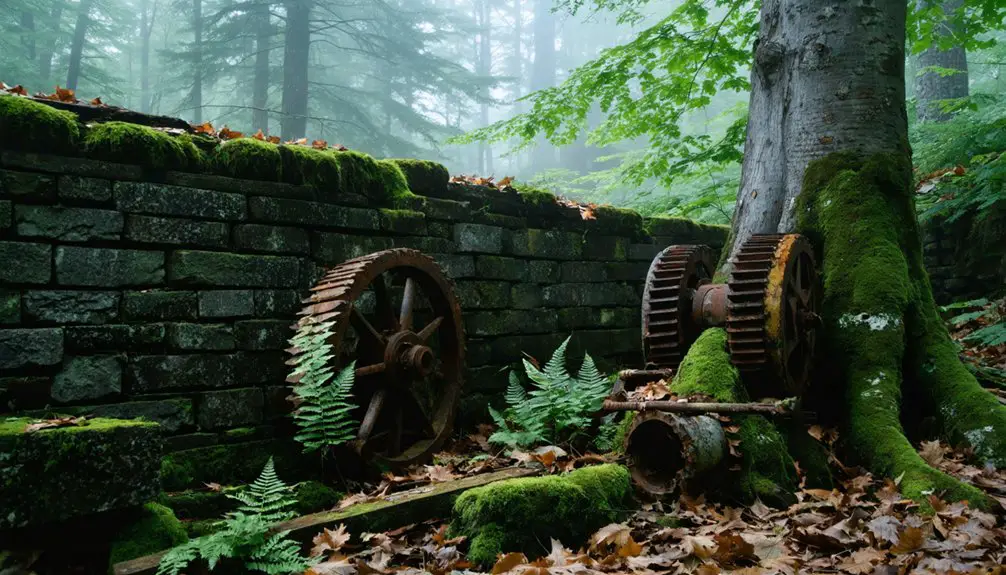
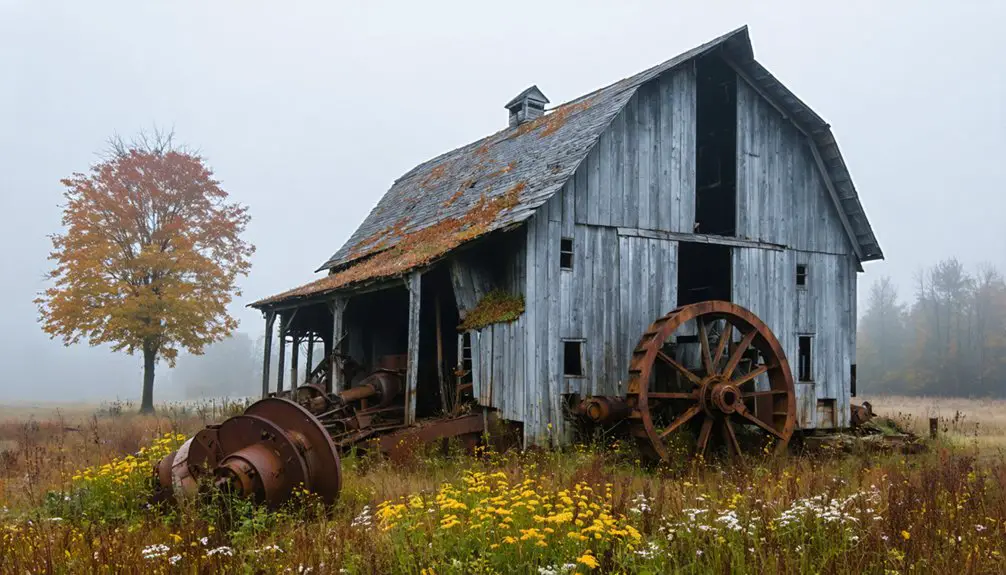
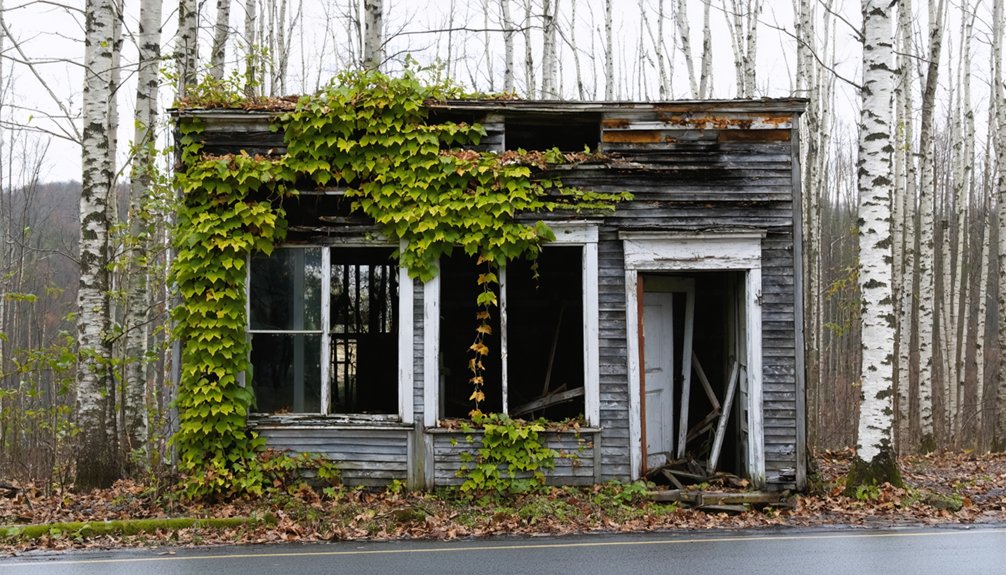
You’ll find cellar holes scattered beneath the overgrowth, stone foundations half-buried by decades of leaf litter, and one weathered structure still standing amid the trees. Each remnant tells a quiet story of lives interrupted by flood and hardship.
The Ricker Cemetery is the site’s emotional anchor.
Walk the trail to find Florence Ricker’s grave, the last burial here, and you’ll understand why visitors report ghostly encounters after dark. The atmosphere carries real weight.
You’re not touring a manicured monument — you’re exploring a place where nature and history collide on equal terms.
Bring your curiosity, respect what remains, and let Ricker Basin speak for itself.
How to Get to Ricker Basin in Little River State Park?
Once you’ve taken in what remains of Ricker Basin, getting there becomes the natural next question.
Head to Little River State Park via Little River Road, just off River Road between Bolton and Waterbury, Vermont. Seasonal entry fees apply, so plan accordingly.
From the parking area, you’ll hike a forest trail leading directly to the ruins and Ricker Cemetery.
Allow one to two hours to explore the site fully. For solid hiking tips, bring water, a map, and sturdy footwear — the mountain terrain demands respect.
The historical significance of this place deepens every step you take toward those silent foundations.
And if ghost stories fuel your curiosity, arrive early. You’ll want daylight while wandering these woods before shadows start doing something unexpected.
Other Vermont Ghost Towns Worth Adding to Your Route
If you’re already mapping out a Vermont ghost town road trip, you might as well stretch your route to include a few other haunted corners of the state.
Glastenbury, tucked in Bennington County, once supported a thriving settlement through 1937 before the forest swallowed it whole.
Meanwhile, Greenbank’s Hollow in Caledonia County offers crumbling mill ruins and a rare covered bridge frozen in time.
Somerset in Windham County and Lewiston in Windsor County round out your itinerary with quieter, more isolated remnants that reward the curious traveler willing to venture off the main roads.
Glastenbury Ghost Town Nearby
While you’re mapping out your Vermont ghost town adventure, Glastenbury deserves a serious look. Tucked in Bennington County, this haunt carries deep Glastenbury history, with the Fayville settlement thriving from the 1790s until its final abandonment in 1937.
Glastenbury legends of strange disappearances and eerie occurrences have kept curious explorers coming back for decades.
Here’s what makes Glastenbury worth the detour:
- Remote wilderness setting that feels genuinely untouched and isolated
- Layered history spanning nearly 150 years of settlement, struggle, and decline
- Persistent mystery surrounding unexplained events that fuel its haunted reputation
Pairing Glastenbury with Ricker Basin gives your road trip serious depth, letting you experience two distinct chapters of Vermont’s forgotten past in a single journey.
Greenbank’s Hollow Mill Ruins
Shifting north from Bennington County, Caledonia County holds another Vermont ghost town that rewards the curious traveler: Greenbank’s Hollow.
This former mill town carries a rich mill history that you can feel in its surviving structures, including a remarkably intact covered bridge that still spans the landscape.
Once a thriving industrial settlement, Greenbank’s Hollow hummed with the energy of workers and machinery before time and economics quietly drained its population away.
Today, you’ll wander through remnants that speak directly to Vermont’s industrial past without the crowds that overwhelm more famous destinations.
The covered bridge alone makes the detour worthwhile, offering that rare combination of historical authenticity and raw, undisturbed atmosphere.
Add it to your route and experience Vermont’s forgotten working-class heritage on your own terms.
Somerset And Lewiston Sites
Two more Vermont ghost towns deserve a place on your route: Somerset in Windham County and Lewiston in Windsor County.
Both sites reward curious travelers willing to venture off the beaten path for authentic Somerset history and Lewiston exploration.
- Somerset sits deep in Windham County’s forests, its abandoned landscape quietly reclaiming what settlers once built.
- Lewiston in Windsor County offers crumbling remnants that tell stories of communities that simply couldn’t hold on.
- Both sites pair well with nearby ghost towns, letting you build a full-day itinerary through Vermont’s forgotten past.
Pack your map, wear sturdy boots, and give yourself time to wander.
These aren’t tourist traps — they’re raw, unfiltered glimpses of lives Vermont’s wilderness eventually swallowed whole.
How to Plan a Vermont Ghost Town Road Trip
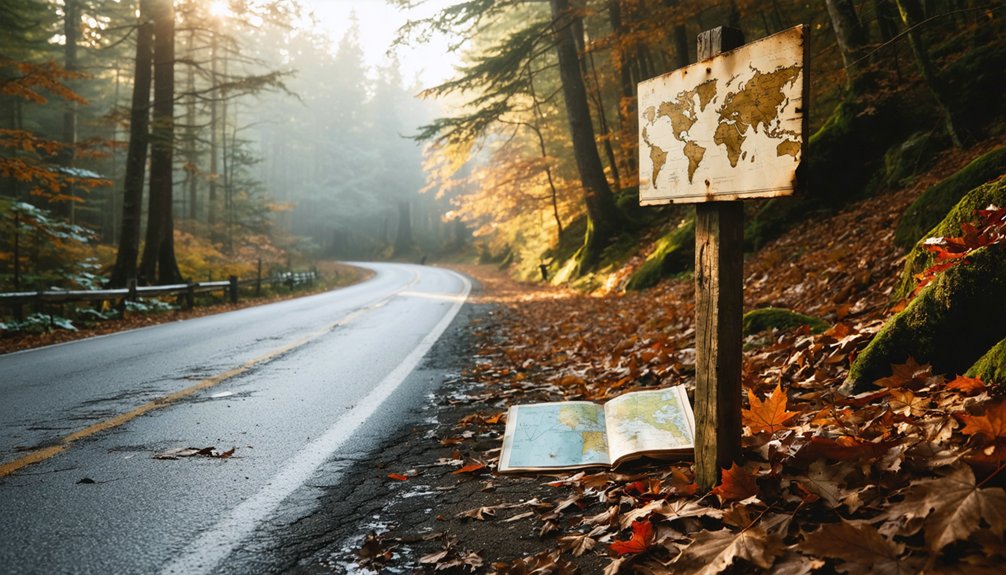
Planning your Vermont ghost town road trip starts with mapping a route that links sites like Ricker Basin, Glastenbury, and Greenbank’s Hollow into one efficient journey.
You’ll want to pack essentials—sturdy boots, water, a detailed trail map, and layered clothing for unpredictable mountain weather.
Aim to visit during daylight hours in late spring through early fall, when trails are accessible and state park entry is available.
Mapping Your Ghost Town Route
Once you’ve explored Ricker Basin’s cellar holes and overgrown foundations, Vermont’s other ghost towns make natural extensions of your road trip.
Ghost town mapping lets you chain sites efficiently, and smart route planning keeps your journey flowing without backtracking.
Consider building your route around these stops:
- Glastenbury (Bennington County) — a remote settlement abandoned by 1937, deep in the southern Green Mountains
- Woodford (off Route 9) — features the haunting Waters Hill Cemetery, with graves dating to 1794
- Greenbank’s Hollow (Caledonia County) — a former mill town preserving a covered bridge amid northern Vermont wilderness
You’re not just driving between coordinates — you’re connecting fragments of lost lives.
Keep a paper map as backup, since cell service disappears quickly in Vermont’s mountain corridors.
Essential Gear and Supplies
Whether you’re exploring overgrown cellar holes at Ricker Basin or pushing deeper into Glastenbury’s remote hollows, the right gear separates a rewarding day from a miserable one.
Your gear essentials start with sturdy hiking boots, since Vermont’s mountain trails turn muddy and uneven fast. Carry a printed trail map — cell service disappears quickly in Little River State Park.
Build your supply checklist around these fundamentals:
- Water (minimum 2 liters per person)
- Snacks for sustained energy on longer loops
- First aid kit for cuts and twists on rocky terrain
- Insect repellent against aggressive Vermont mosquitoes
- Headlamp if your timeline pushes toward dusk
- Camera to document foundations and gravestones
Pack light but pack smart — the backcountry doesn’t forgive unpreparedness.
Best Times To Visit
When you visit matters as much as where you go on a Vermont ghost town road trip. Timing shapes your entire experience at Ricker Basin.
- Spring and fall offer the best visiting seasons — mild temperatures, manageable trails, and stunning natural light for ghost town photography among weathered foundations.
- Summer brings full foliage that obscures cellar holes and stone walls, making ruins harder to spot but trails more comfortable.
- Winter creates haunting, atmospheric scenes perfect for dramatic ghost town photography, though snow makes mountain hiking treacherous.
Always arrive during daylight hours. The trail through Little River State Park demands visibility, and fading light transforms an already eerie landscape into something genuinely disorienting.
Check Vermont State Park seasonal schedules before heading out — entry fees and access vary throughout the year.
What Visitors Actually Experience at Ricker Basin
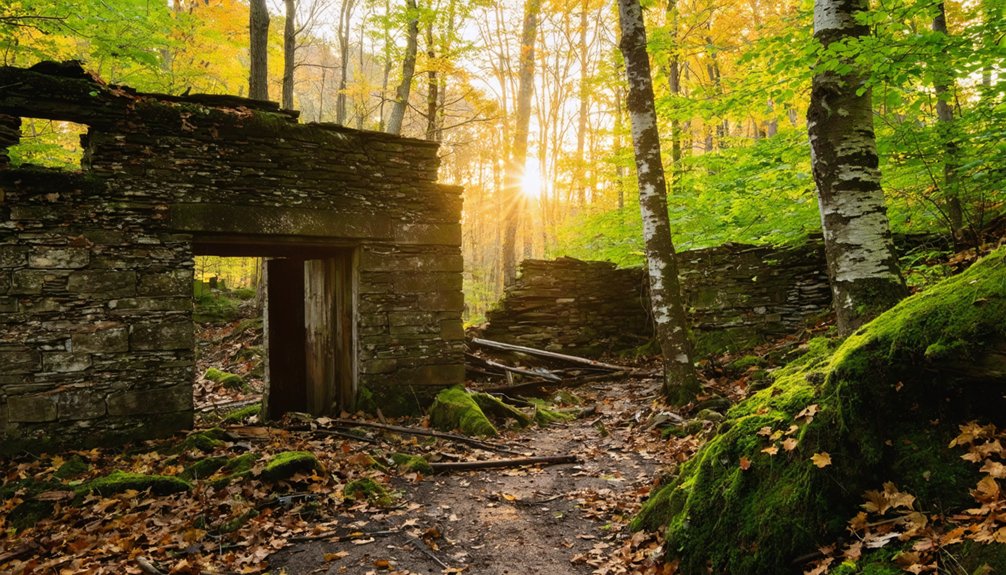
Stepping into Ricker Basin, you’ll find three distinct layers of history unfolding before you: crumbling stone foundations half-swallowed by tree roots, a lone dilapidated structure still standing against the Vermont forest, and the quiet solemnity of Ricker Cemetery, where Florence Ricker’s grave marks the community’s final chapter.
You’ll trace cellar holes where families once gathered, imagining lives cut short by devastating floods. Many visitors report ghostly encounters after dusk, hearing unexplained sounds echoing through the trees.
During daylight, you’ll spot historic artifacts embedded in the overgrowth — scattered stonework, forgotten thresholds, structural remnants frozen in time. The trail rewards curious explorers willing to look closely, connecting you directly to a vanished world that Vermont’s wilderness has quietly, deliberately reclaimed on its own terms.
Frequently Asked Questions
Are Pets Allowed on the Trail to Ricker Basin Ruins?
On the trail to Ricker Basin ruins, you’re free to bring your furry companions! Keep pet safety and trail etiquette top of mind — leash up and leave no trace on Little River State Park’s trails.
Is Ricker Basin Accessible During Winter Months for Visitors?
You can visit Ricker Basin in winter, but you’ll need serious winter preparation. Icy trail conditions make the mountain hike treacherous, so pack proper gear and embrace the hauntingly beautiful, snow-draped ruins awaiting your adventurous spirit.
Can Visitors Legally Take Artifacts or Souvenirs From the Ruins?
Over 19,000 Vermont artifacts are protected annually. You can’t take anything from Ricker Basin — artifact preservation laws guard its historical significance. Respect these rules, and you’ll help keep this hauntingly evocative ghost town alive for future explorers.
Are Guided Tours of Ricker Basin Available Through the Park?
The knowledge doesn’t confirm guided tour options, but you can independently explore Ricker Basin’s historical significance through self-guided hiking trails in Little River State Park, where you’ll discover eerie foundations, cellar holes, and the haunting Ricker Cemetery yourself.
What Is the Difficulty Level of the Ricker Basin Hiking Trail?
Coincidentally, just as you’re craving adventure, Ricker Basin’s mountain trail calls! It’s a moderately challenging hike demanding solid hiking safety awareness. You’ll navigate rugged terrain, so monitor trail conditions carefully and pack essentials before exploring these hauntingly beautiful, freedom-beckoning ruins.
References
- https://www.youtube.com/watch?v=1EI5GR2cDVI
- https://www.youtube.com/watch?v=m8FRx55xICM
- https://www.vermonter.com/ricker-basin-vermont-ghost-town/
- https://en.wikipedia.org/wiki/List_of_ghost_towns_in_Vermont
- https://mysterioushillsdotcom.wordpress.com/2021/02/13/snapshots-of-a-ghost-town-fayville-vt-2004/
- https://vermontcountry.com/2022/09/18/ghost-town/
- https://myfamilytravels.com/supposedly-boring-vermont-towns-hiding-some-truly-strange-landmarks
- https://www.youtube.com/watch?v=JfQfJU6JeuU