To visit Rio Tinto, you’ll head north from Elko on NV-225 toward Mountain City, then continue south about four miles before turning west onto dirt roads. You’re tracing the same route copper miners traveled during WWII, when this remote Nevada town roared with life. Several houses and a striking high school gymnasium still stand frozen in time. Stick around, and there’s far more to this remarkable ghost town‘s story than meets the eye.
Key Takeaways
- Rio Tinto is accessible from Elko or Mountain City via NV-225, then one mile west on dirt roads suitable for two-wheel-drive vehicles.
- Check road conditions before visiting, as rain or snow can make the dirt roads difficult to navigate.
- Explore residential streets, weathered houses, and the school complex, including the historic high school gymnasium.
- The gated mine and mill area has been off-limits since 2009; respect private property boundaries during your visit.
- Avoid disturbing soils, as Rio Tinto is a remediated Superfund site; bring water and inform others of your plans.
How to Reach Rio Tinto From Mountain City or Elko
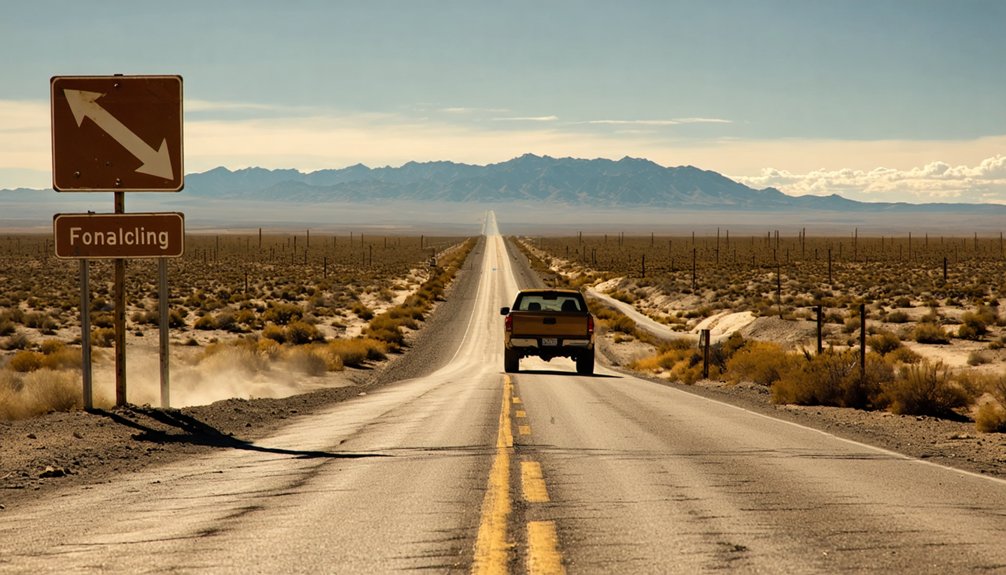
Whether you’re setting out from Elko or the small outpost of Mountain City, reaching Rio Tinto is a straightforward desert drive that rewards a little preparation.
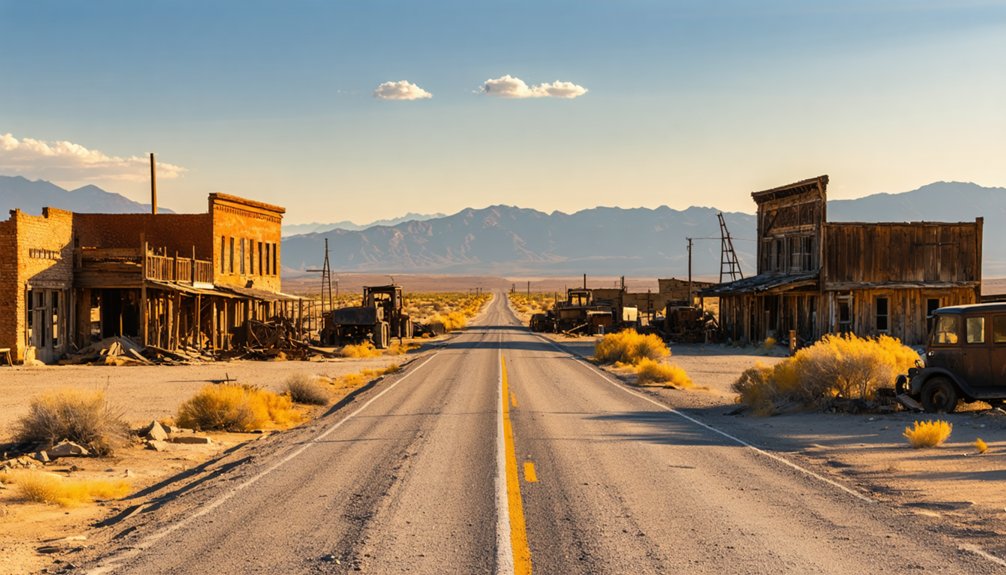
From Elko, head north roughly 30 miles on NV-225 toward Mountain City. Once there, continue south on NV-225 about four miles, then turn west onto local dirt roads for approximately one mile until the ghost town appears.
Road conditions are generally manageable for two-wheel-drive vehicles in dry weather, but rain or snow can quickly complicate things, so time your visit accordingly.
The historical significance of this route runs deep—you’re tracing paths once traveled daily by copper miners fueling a World War II war effort.
Pack water, check your tires, and embrace the open Nevada landscape stretching toward the horizon.
What’s Still Standing at Rio Tinto Ghost Town?
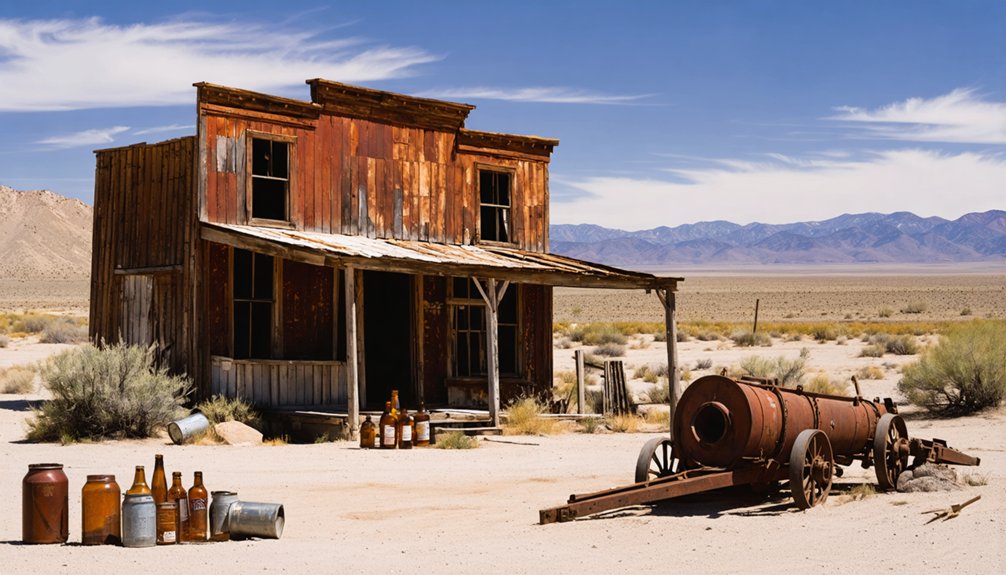
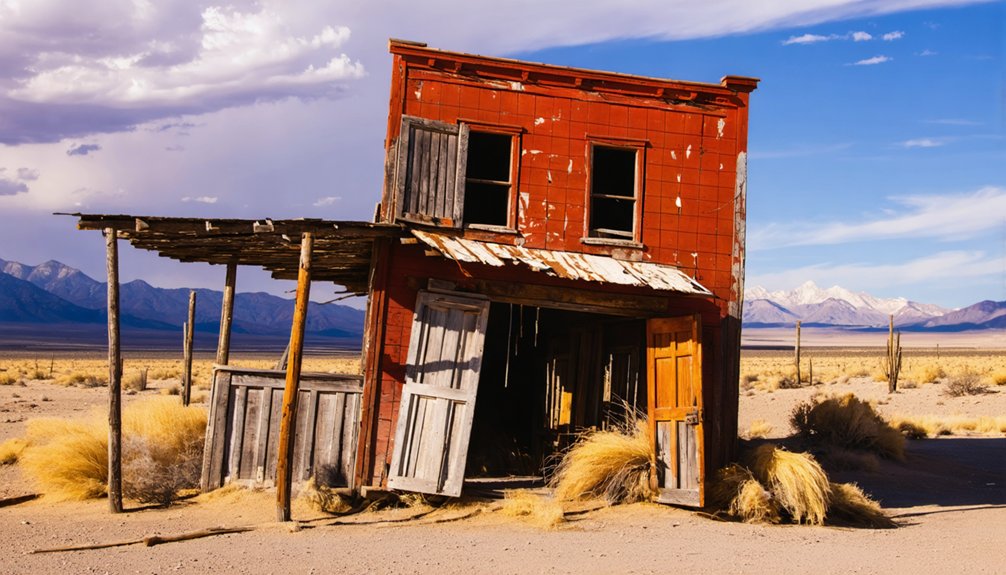
Once you round that final bend on the dirt road, Rio Tinto’s skeleton comes into view—and it’s more substantial than most ghost towns can claim. Several houses still stand alongside the school complex, which remains the crown jewel of this site’s historic structures.
That high school gymnasium especially commands attention—its scale tells you everything about the ambitions this copper camp once carried.
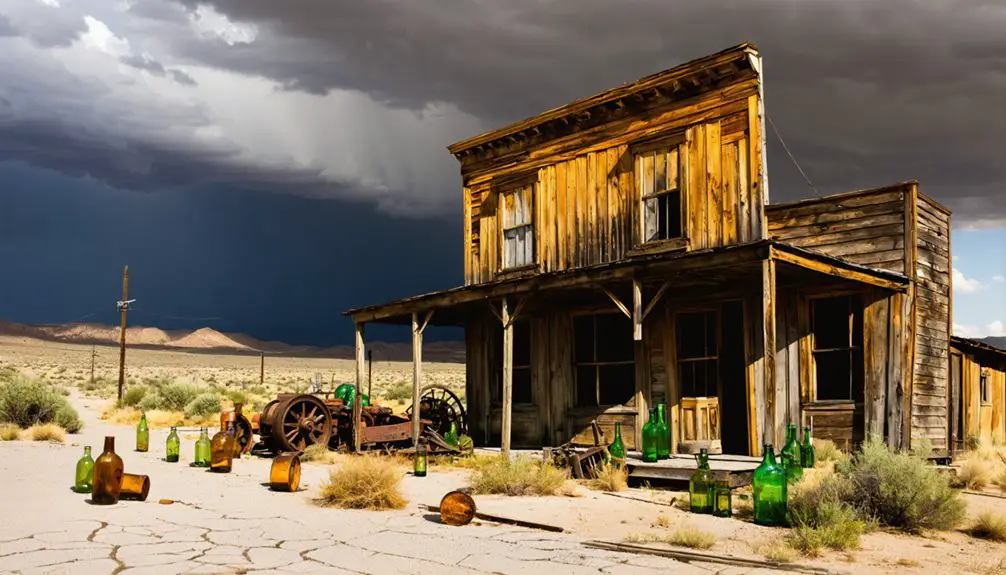
You’ll notice debris scattered through interiors, some dating back to 1970s reprocessing attempts, layering the mining legacy with unexpected depth.
Don’t expect access to the mill or mine ruins though—a private gate has blocked that section since 2009.
What you *can* explore freely rewards the curious traveler willing to read what abandonment leaves behind.
What Can You Actually Access on Site?
Two distinct zones define your Rio Tinto experience—one open, one firmly off-limits. The mine and mill structures sit behind a private gate that’s been locked since at least 2009, so don’t plan on crossing that threshold. Accessibility concerns are real here—respect the boundary.
The open zone, however, rewards your curiosity:
The open zone waits—patient, weathered, and full of stories still worth discovering.
- Residential streets – Walk through scattered houses, weathered but still telling their stories.
- School complex – Explore the grammar school, high school, and that commanding gymnasium.
- Community grounds – Roam the open spaces where workers and families once gathered.
Site preservation matters throughout. You’re standing inside a remediated Superfund area, so avoid disturbing soils and heed any posted signs.
Tread carefully, take only photographs, and leave this fading chapter of Nevada history intact for others.
Why Rio Tinto Became One of Nevada’s Last Great Boom Towns?
Walking those quiet streets and peering into that gymnasium, you can’t help but wonder how a remote Nevada hollow attracted enough ambition to build all of this.
It started with copper mining — specifically, Samuel Franklyn Hunt’s 1919 discovery that triggered decades of serious extraction.
Then World War II changed everything. Copper became strategically essential, and Rio Tinto’s output suddenly mattered on a global scale.
That wartime urgency funded something remarkable: genuine community development in the high desert. Operators didn’t just sink shafts — they built schools, theaters, sewer lines, and athletic fields, creating a self-contained world where families could actually thrive.
That combination of wartime demand and deliberate investment made Rio Tinto one of Nevada’s last true boom towns of the 20th century — and explains why so much still stands today.
What to Know Before You Visit Rio Tinto
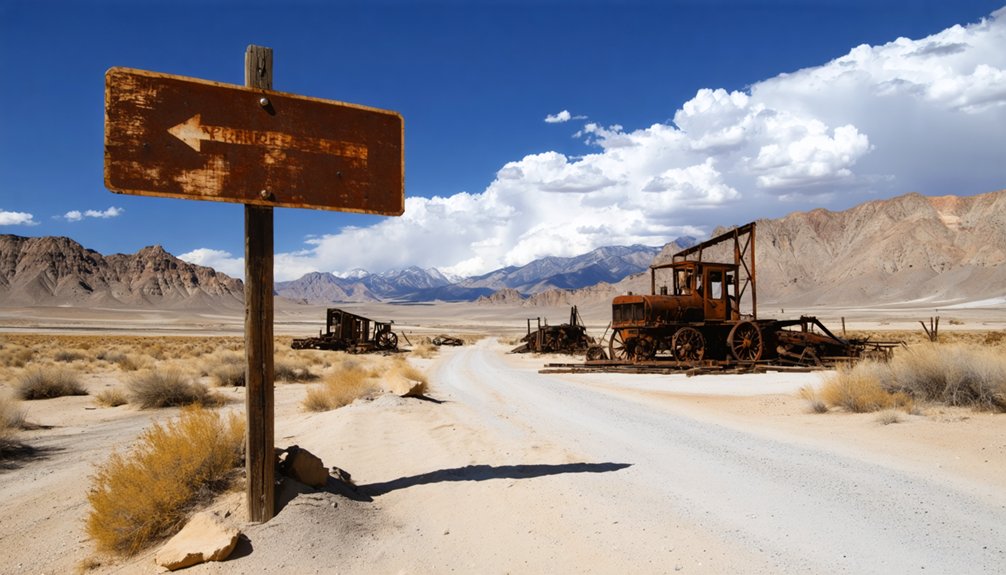
Before you point your truck toward Mountain City, know that Rio Tinto rewards the prepared visitor. This site carries deep historical significance — a WWII-era copper boomtown that kept Allied forces supplied — and it deserves your respect.
Follow these safety precautions before heading out:
- Stay out of the gated mine area — it’s private property and has been closed since at least 2009.
- Avoid disturbing soils — you’re walking a remediated Superfund site, so tread carefully and heed posted signs.
- Check road and access conditions — unpaved dirt roads turn treacherous after rain or snow.
Bring water, tell someone your plans, and verify current access rules with local land-management authorities. The school gymnasium alone makes the drive worth it.
Frequently Asked Questions
Who Originally Discovered Copper at the Rio Tinto, Nevada Site?
Samuel Franklyn Hunt discovered copper here in 1919, sparking your Copper Exploration adventure into Historic Significance. You’ll trace his bold footsteps through Nevada’s rugged wilderness, uncovering a legacy that forever shaped this remarkable, freedom-inspiring ghost town.
What Spanish Mining Region Inspired the Name Rio Tinto, Nevada?
You’ll find the name carries deep Spanish heritage — it’s drawn from Spain’s legendary Rio Tinto river, whose mining history stretches back an astonishing 3,000 years, connecting Nevada’s copper boom to one of history’s greatest mining regions.
When Did the Rio Tinto Superfund Remediation Project Officially Conclude?
You’ll find the remediation timeline concluded in 2016, closing a chapter of environmental impact that shadowed this rugged land. Now it’s in long-term monitoring, freeing you to explore Rio Tinto’s haunting, historically-grounded remnants with renewed adventure.
Did Rio Tinto Have a Theater During Its Peak Population Years?
Yes, you’d have found a theater there during Rio Tinto’s peak years — a testament to its theater history and cultural significance, proving this bold mining community didn’t just survive; it truly lived with adventurous, freedom-loving spirit.
Were There Attempts to Reprocess Rio Tinto Copper Tailings After Closure?
“History repeats itself” — you’ll see it firsthand here. In the 1970s, miners attempted tailings reprocessing at Rio Tinto, chasing renewed copper yields through emerging mining innovations. That adventurous second chapter left debris you can still discover today.
References
- https://www.nevadaappeal.com/news/2019/oct/09/the-wild-history-of-the-ghost-town-of-rio-tinto/
- https://en.wikipedia.org/wiki/Rio_Tinto
- https://www.youtube.com/watch?v=pu-1ljJP5oc
- https://forgottennevada.org/sites/riotinto.html
- https://www.youtube.com/watch?v=69ILNp6fHNo
- https://www.forgottennevada.org/sites/mountaincity.html
- https://www.youtube.com/watch?v=fRhhIPQpoUQ
- https://www.nvexpeditions.com/elko/riotinto.php
- https://www.ghosttowns.com/states/nv/riotinto.html
- https://www.nps.gov/deva/learn/historyculture/rhyolite-ghost-town.htm