Pinal City sits west of Superior off Route 60, about 60 miles east of Phoenix — a silver boomtown that hit 2,000 residents in the 1880s before collapsing almost overnight. You’ll find stone foundations, desert silence, and the ghost of Wyatt Earp’s common-law wife still haunting the landscape. Bring water, wear sturdy boots, and visit between October and April. Everything you need to plan your trip is waiting just ahead.
Key Takeaways
- Pinal City, founded in 1878, is located west of Superior and 60 miles east of Phoenix, accessible via Route 60.
- A high-clearance or 4WD vehicle is recommended, and visitors should bring water, sturdy boots, sun protection, and offline maps.
- Visit between October and April to avoid dangerous summer temperatures that regularly exceed 110°F.
- The site features scattered stone foundations with no visitor centers, offering a raw, untouched ghost town exploration experience.
- Nearby attractions include Historic Downtown Superior, Picket Post Mountain trails, and the Silver King Mine Site.
What Is Pinal City and Why Visit This Ghost Town?
Once a thriving silver mining camp of 2,000 souls, Pinal City now lies silent in the Arizona desert, just west of Superior and roughly 60 miles east of Phoenix — its stone foundations swallowed by volcanic dust and scrub. Founded in 1878 to mill ore from the Silver King Mine, the town burned bright and collapsed fast, its post office shuttering by 1891.
You’ll find no tourist traps here — just raw desert, fractured ruins, and Pinal City lore thick with Wild West history, including the tragic death of Wyatt Earp’s common-law wife, Mattie Blaylock.
If ghost town photography is your passion, these crumbling foundations against an Arizona sky deliver something genuinely haunting. This is freedom — open roads, forgotten history, and a landscape that doesn’t apologize for what time took.
How Pinal City’s Silver Rush Started: and Why It Collapsed
Behind Pinal City‘s haunting silence is a story that moved fast — the way boom towns always do. Silver mining ignited everything in 1878 when ore from the Silver King Mine drew thousands chasing fortune into Arizona’s brutal desert heat.
Pinal City rose quickly — mills humming, 2,000 residents strong, a post office, even a local newspaper called the *Pinal Drill*.
Then the silver ran out.
Economic decline hit hard after 1890. The mine played out, silver values dropped, and people scattered like dust in a desert wind.
By 1890, only ten souls remained. On November 28, 1891, the post office closed — the quiet, official signal that Pinal City was finished.
What took years to build collapsed within a single decade.
Who Lived in Pinal City, Including Wyatt Earp’s Common-Law Wife
Pinal City didn’t just attract miners — it pulled in the desperate, the drifting, and the quietly broken. Among its 2,000 residents stood Celia Blaylock, known as Mattie, the common-law wife Wyatt Earp left behind when he rode toward Tombstone and a new life.
She followed the only road she knew — and it led here.
Pinal City became her final chapter. On July 4, 1888, she died of an alcohol and laudanum overdose, buried in a town already beginning to hollow out.
She wasn’t famous. She wasn’t celebrated. But her story gives Pinal City a human weight that mining records never could.
When you walk these ruins, you’re not just tracing silver — you’re tracing lives that slipped through history’s fingers.
What’s Left to See at the Pinal City Ghost Town Site Today?
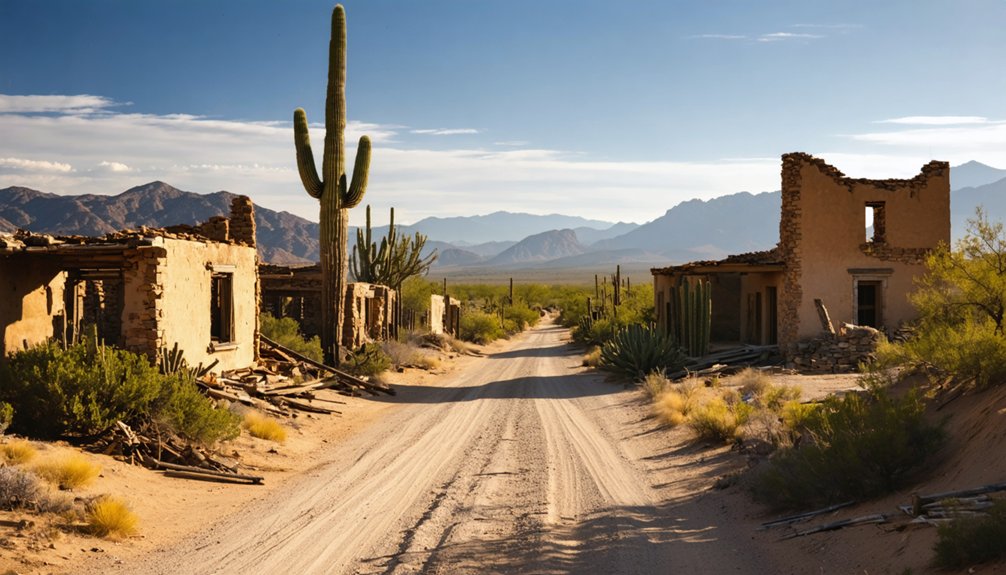
What remains of Pinal City won’t announce itself. You’ll find scattered stone foundations half-swallowed by desert vegetation and volcanic dust — quiet evidence of a town that once held 2,000 souls chasing silver.
There’s no monument, no visitor center, no dramatic skyline. Just remnants.
That restraint is part of the ghost town history here. You’re standing where miners, merchants, and even Wyatt Earp’s common-law wife once lived out their days.
The mining legacy beneath your boots fueled an entire economy, then collapsed just as fast.
Access the site via Route 60 near Superior. Some terrain may require 4WD.
Walk the ruins slowly. Let the foundations tell you what the desert hasn’t buried yet — because out here, the land keeps its own kind of record.
How to Get to Pinal City From Phoenix and Superior
About 60 miles east of Phoenix, Pinal City sits just west of Superior in the shadow of Picket Post Mountain — close enough to reach in under an hour, remote enough that it still feels forgotten.
Take US Route 60 east from Phoenix through Mesa and Gold Canyon, and you’ll roll into Superior before you know it. From there, head west along the canyon roads toward the old mill site.
Some stretches demand a high-clearance vehicle or 4WD, so don’t push your luck in a sedan. Ghost towns like Pinal City don’t advertise themselves — they reward the curious who show up prepared.
Pack water, wear sturdy shoes, and bring a sense of adventure. The desert doesn’t wait for the unprepared.
The Best Time of Year to Visit Pinal City, Arizona
Timing your visit to Pinal City can make the difference between a rewarding desert hike and a miserable slog through brutal heat. The best seasons are fall and spring, when temperatures stay manageable and the desert light casts long, dramatic shadows across crumbling foundations.
October through April offers the most comfortable weather considerations — cool mornings, clear skies, and enough silence to let the ghost town speak.
October through April: cool mornings, clear skies, and enough silence to finally hear what the desert is saying.
Summer visits are genuinely dangerous. Arizona desert heat regularly exceeds 110°F, and Pinal City offers zero shade or shelter. You’re walking exposed volcanic terrain with no services nearby.
Winter works well too, though occasional cold snaps require layering.
Whenever you go, bring your own water. This landscape swallowed a whole town — it won’t hesitate to humble an unprepared traveler.
What to Pack for a Safe Pinal City Desert Hike
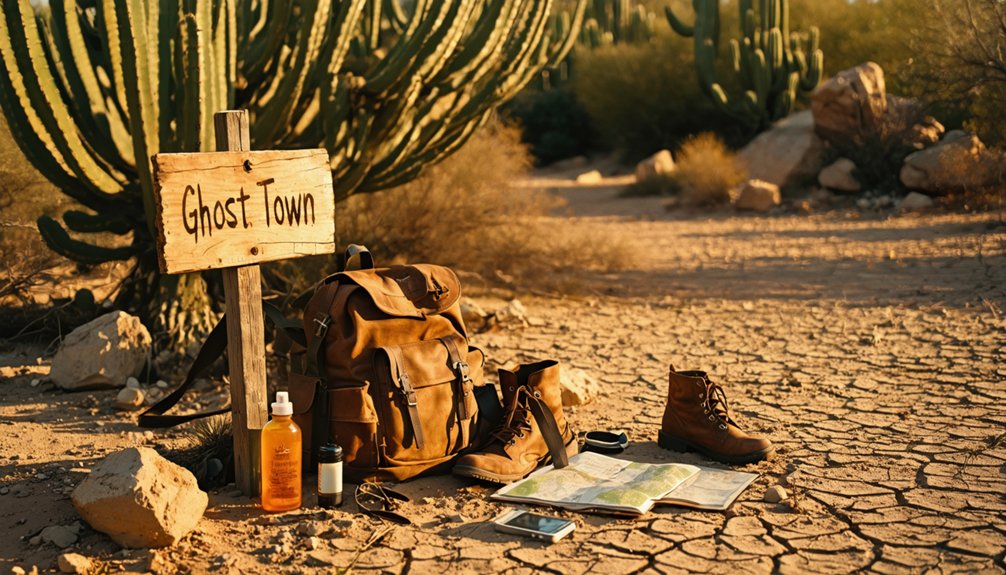
Once you’ve locked in the right season, packing smart is what keeps a ghost town visit from becoming a survival situation. Pinal City’s desert safety demands respect — this isn’t a manicured trail but fractured volcanic terrain where foundations hide under dust and brush.
Your hiking essentials start with water — carry more than you think you’ll need. Add sturdy boots for unstable rubble, sun protection, and a basic first aid kit.
Cell service is unreliable near Superior’s canyon roads, so bring a paper map or downloaded offline route.
You’re walking where 2,000 souls once hustled silver ore and where Mattie Blaylock spent her final days. Honor that ground by arriving prepared, self-sufficient, and ready to move through history without leaving a rescue story behind.
How to Photograph Pinal City’s Stone Foundations and Ruins
When you crouch low against Pinal City’s crumbling stone foundations, you’ll capture foreground texture that transforms scattered ruins into storytelling frames, evoking the 2,000 souls who once worked and lived here.
Shoot during golden hour, when Arizona’s desert light rakes across volcanic dust and rough-cut stone, pulling out shadow and depth that flat midday sun destroys.
Angle your lens toward Picket Post Mountain as a backdrop, and you’ll anchor these remnants of an 1878 silver-rush milling town within their true geographic and historical context.
Best Angles For Ruins
Crouching low and shooting upward from ground level transforms Pinal City’s scattered stone foundations into something far more commanding than they appear standing upright. That low angle forces weathered rock against open Arizona sky, giving ruins photography a dramatic tension that mirrors the town’s volatile boom-and-bust story.
Move around each foundation before committing to a shot. Side angles reveal texture and shadow that straight-on compositions flatten entirely. During golden hour, raking light carves depth into every crack and crevice, making the stones speak.
For ghost town exploration that yields honest, powerful images, incorporate desert vegetation growing through the ruins as a foreground element. That encroaching scrub isn’t clutter — it’s proof of time passing.
Let it remind your viewer that Pinal City surrendered to the desert on its own terms.
Lighting Tips For Foundations
Stone foundations photograph best in the hours just after sunrise or before sunset, when raking light drags long shadows across every crack and weathered edge.
These lighting techniques transform flat desert rubble into something that feels alive with forgotten stories. Midday sun bleaches the volcanic dust white and flattens texture — avoid it. Instead, position yourself low, shooting parallel to the foundation walls so shadows carve depth into the stone.
Overcast days create soft, even atmospheric effects that reveal subtle color variations in the weathered rock without harsh contrast. If morning mist rolls through the canyon, shoot immediately — it won’t last.
Pinal City’s ruins are sparse, so light does the heavy lifting here, turning a handful of crumbling stones into a vivid reflection of Arizona’s silver rush past.
Nearby Stops Worth Adding to Your Pinal City Road Trip
While you’re out near Superior, you’ve got no excuse to skip the town’s historic downtown district, where century-old buildings still carry the architectural memory of Arizona’s mining era.
From there, Picket Post Mountain‘s trails rise sharply above the desert floor, offering sweeping views of the same rugged terrain that once drew prospectors and settlers to this remote corner of Arizona Territory.
If silver’s the thread running through your trip, follow it to the Silver King Mine site, the very ore source that built Pinal City and ultimately sealed its fate.
Superior’s Historic Downtown District
Before you leave the ghost town behind, the short drive into Superior’s historic downtown district rewards you with one of Arizona’s best-preserved copper-era Main Streets, where early 20th-century brick storefronts still line the highway like a town that never quite gave up.
The historic architecture here tells a layered story — mining wealth, immigrant labor, and stubborn desert resilience etched into every faded façade.
Walk the main strip and you’ll catch echoes of local legends tied to Arizona’s boom years, some colorful enough to rival Pinal City’s own Wild West chapter.
Grab coffee, browse the quirky shops, and let the town breathe on you for an hour. Superior earns its stop — it’s living history you can actually walk through.
Picket Post Mountain Trails
Just a few miles from Pinal City’s scattered ruins, Picket Post Mountain rises sharply out of the Sonoran Desert like a volcanic sentinel. Hiking its trails puts you directly inside the same dramatic landscape that shaped the Silver King Mine era.
The scenic trails wind through rugged volcanic terrain, offering sweeping views of the canyon systems where silver ore once traveled toward Pinal City’s mills. You’ll feel the isolation that defined frontier life here—wide open skies, sparse desert vegetation, and silence broken only by wind.
Picket Post itself gave the town its original name before “Pinal City” stuck. Pack water, wear sturdy boots, and take your time. These trails don’t just exercise your legs—they connect you viscerally to Arizona’s raw, boom-and-bust past.
Silver King Mine Site
From Picket Post Mountain’s trails, the logical next stop pulls you deeper into the story—the Silver King Mine site, the economic heartbeat that called Pinal City into existence in the first place.
Silver mining here wasn’t just an industry; it was the singular force that conjured a town of 2,000 souls from raw desert.
The Silver King’s ore fed Pinal City’s mill operations through the 1880s, sustaining commerce, community, and ambition.
When the silver played out, everything collapsed with it—a pattern you’ll recognize across Arizona’s ghost towns.
Standing near the mine site today, you feel that brutal equation clearly. Fortunes rose on a mineral vein and vanished just as fast.
This stop doesn’t just complement Pinal City’s story—it explains it entirely.
How to Plan a Full Superior and Pinal City Day Trip
Planning a full day around Superior and Pinal City rewards you with layers of Arizona’s frontier history packed into a single stretch of Route 60. Start early in Superior, exploring its mining-era storefronts and the Boyce Thompson Arboretum.
By midmorning, push west toward Picket Post Mountain, where desert hiking trails open into raw, windswept terrain. From there, navigate toward the Pinal City site, where scattered stone foundations and volcanic dust mark one of Arizona’s most evocative ghost towns.
Bring plenty of water, sturdy boots, and a sense of curiosity. Some access points require a high-clearance vehicle.
End your afternoon tracing the canyon routes once traveled by Silver King Mine ore wagons. You’ll leave with dust on your boots and the frontier alive in your imagination.
Frequently Asked Questions
Is Pinal City Located on Private Land or Public Property?
The knowledge doesn’t confirm whether Pinal City’s land is private or public. You’ll want to verify ownership before exploring its Pinal City history. Research Pinal City accessibility details locally to guarantee you’re free to roam its haunting, silver-rush ruins legally.
Are There Any Guided Tours Specifically Focused on Pinal City?
No dedicated guided tours exist, but you’ll find ghost town explorations through regional Arizona tour operators who value historical significance. You can wander freely, discover crumbling foundations yourself, and uncover Pinal City’s dramatic boom-and-bust story on your own terms.
Was Pinal City Ever Considered for Historical Landmark Designation?
No clear records confirm landmark designation, but Pinal City’s historical significance demands your attention. You’ll find preservation efforts remain informal, yet its crumbling foundations and Wild West legacy boldly echo Arizona’s fierce, freedom-forged silver rush past.
Did Pinal City Have Any Documented Conflicts or Violent Incidents?
Pinal City’s conflict history reads like a viral headline—you’d find violent events tied to frontier lawlessness, mining disputes, and Mattie Blaylock’s tragic death echoing through its dusty ruins, reminding you that freedom always carried a dangerous price.
Are There Any Museums Nearby That Display Pinal City Artifacts?
You’ll find artifact preservation and local history alive at the Superior Historical Society and nearby Globe museums, where you can connect with Pinal City’s wild silver-rush legacy — tangible echoes of a free, untamed frontier waiting to inspire you.
References
- https://en.wikipedia.org/wiki/Pinal_City
- https://ca.wikipedia.org/wiki/Pinal_City
- https://www.youtube.com/watch?v=6xuMVEBIeIY
- https://www.youtube.com/watch?v=AD8krZuPI9g
- https://www.youtube.com/watch?v=EhU1K8FVJTM
- https://www.youtube.com/watch?v=WNHPUqTDBOs
- https://www.arizonan.com/ghost-towns/pinal-city/
- https://azmemory.azlibrary.gov/nodes/view/223018
- https://westernmininghistory.com/towns/arizona/pinal/
- https://azgw.org/pinal/ghosttowns.html