Planning a ghost town road trip to Rosewood, Florida means confronting one of America’s most painful erased histories. In January 1923, a white lynch mob destroyed this thriving Black community of roughly 355 residents, killing an unknown number of people — official records say six, but eyewitnesses estimate up to 150. Today, you’ll find only dense swampland, abandoned roads, and a single historical marker. Keep exploring to uncover the full, devastating story behind what happened here.
Key Takeaways
- Rosewood is located in Levy County, Florida, off State Road 24, approximately nine miles northeast of Cedar Key.
- Almost nothing remains of Rosewood today; dense swampland and a single historical marker indicate where the community once stood.
- Navigate carefully using the green highway sign near State Road 24, as the site requires attentive wayfinding to locate.
- Combine your visit with nearby Cedar Key, Chiefland, Gainesville, or Bronson for a fuller road trip experience.
- Prepare for your visit by reading “Like Judgment Day” by Michael D’Orso or watching John Singleton’s film “Rosewood.”
What Happened to Rosewood, Florida?
In the first week of January 1923, a white mob tore through Rosewood, Florida, burning an entire prosperous Black community to the ground in a matter of days. The violence ignited after Fannie Taylor, a white woman, falsely accused a Black man of assault.
Vigilantes from surrounding towns responded with unchecked brutality, torching homes and hunting residents through swamps. Official records confirm at least six Black residents died, though eyewitness accounts suggest the true toll reached 150. Florida’s government failed to investigate or protect displaced survivors.
Yet the Rosewood Legacy endures beyond the ashes. Community Resilience defined those who escaped, rebuilt their lives, and refused silence.
In 1994, Florida finally acknowledged its failures, awarding $2.1 million in reparations to descendants of those who lost everything.
Who Lived in Rosewood Before the Massacre?
Before the mob arrived, Rosewood wasn’t just a dot on a map — it was a living, breathing community of roughly 355 African American residents who’d carved a thriving life out of Florida’s swampy hammocks.
The Rosewood community wasn’t surviving — it was prospering. African American families worked the land, ran local trade businesses, and built something genuinely theirs in rural north Florida.
That kind of self-determined freedom made Rosewood remarkable for its era. These weren’t people waiting for permission to thrive — they’d claimed their independence through hard work and resilience.
When you visit the site today, let that reality sink in. What stood here wasn’t just a town — it was proof that Black autonomy could flourish, which, tragically, may have made it a target.
What Triggered the 1923 Attack?
As you piece together what happened in January 1923, you’ll find the spark that ignited the massacre was a single, unverified accusation.
Fannie Taylor, a married white woman, claimed a Black man had attacked her — a story many historians believe was fabricated.
That allegation was all it took for white vigilantes from surrounding towns to form a lynch mob, and within hours, the violence had spiraled into a full-scale assault on Rosewood’s residents.
Fannie Taylor’s False Claim
The spark that ignited the Rosewood massacre was a lie. Fannie Taylor, a married white woman, claimed a Black man had attacked her. But eyewitness accounts told a different story — one involving a white lover and a desperate cover-up. Fannie Taylor’s motives remain murky, yet her false accusation carried devastating consequences.
You have to understand the community impact of that single fabrication. Within hours, white vigilantes from surrounding towns formed a lynch mob, hungry for vengeance against people who’d built something remarkable from Florida’s swamps.
They weren’t seeking justice — they were seeking destruction. A thriving, self-sufficient Black community became the target of manufactured outrage. One woman’s lie erased an entire town, and the residents of Rosewood paid with their lives, homes, and freedom.
The Mob Forms
Within hours of Fannie Taylor’s accusation, word spread like wildfire through the surrounding white communities, and men grabbed their weapons. Mob mentality took over fast — no investigation, no evidence, no due process. Armed white men from Gainesville, Levy County, and beyond descended on Rosewood, driven by rage and racial hatred rather than justice.
You have to understand what you’re visiting when you drive to this ghost town. This wasn’t random chaos. This was organized destruction targeting a prosperous Black community that had built something real from swampland.
The mob’s first target was Aaron Carrier, a Black resident falsely suspected of involvement. Despite community resilience and attempts at self-defense, residents quickly realized they faced overwhelming, murderous force with zero institutional protection standing between them and annihilation.
Violence Erupts Quickly
On January 1, 1923, a single accusation shattered the fragile peace of Levy County — Fannie Taylor, a married white woman, claimed a Black man had attacked her in her home.
Within hours, white vigilantes from surrounding towns descended on Rosewood, transforming suspicion into slaughter.
You’d think law enforcement would’ve intervened, but officials largely stepped aside. The mob burned homes, hunted residents through swamps, and dismantled a thriving community built on decades of hard work and community resilience.
At least eight people died, though eyewitnesses suggest far more perished.
What makes this historical memory so critical is understanding how quickly unchecked hatred erases entire communities.
Rosewood’s destruction wasn’t spontaneous chaos — it was organized, deliberate racial violence that transformed a prosperous town into ash within days.
How Many People Died in the Rosewood Massacre?
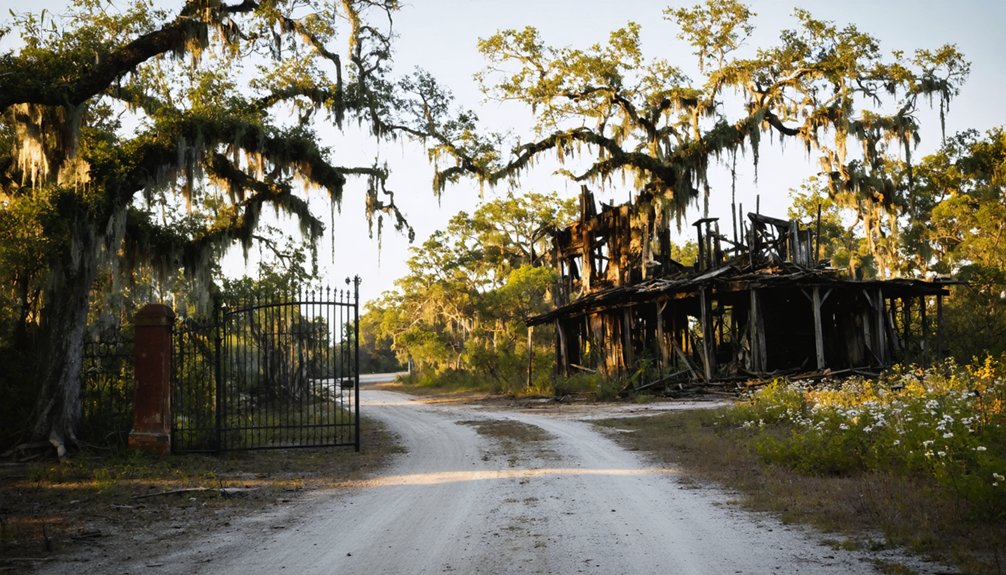
When you dig into the official death toll, you’ll find Florida’s records confirm at least six Black residents were killed, though some accounts place the confirmed casualties at eight.
What’s harder to reconcile are the eyewitness testimonies, which paint a far grimmer picture, with estimates ranging from 27 to as many as 150 dead.
The gap between official records and survivor accounts forces you to question just how much of Rosewood’s true tragedy was buried alongside its victims.
Official Death Toll Records
Although official records state at least six Black people died during the Rosewood massacre, eyewitness accounts tell a far darker story — with estimates ranging from 27 to 150 victims.
The gap between these numbers isn’t just a statistical discrepancy — it’s a deliberate silence.
Florida’s government failed to conduct a thorough investigation, leaving historical records incomplete and deeply unreliable.
When you dig into the official death toll, you’ll quickly realize the numbers reflect what authorities chose to document, not what actually happened.
Survivors who fled into the surrounding swamps carried the truth with them, and many took it to their graves.
As you stand at this ghost town site today, remember that the real count may never be known — and that erasure itself is part of the tragedy.
Eyewitness Account Discrepancies
Survivors who escaped into the Florida swamps carried stories that shatter the official death toll of six — their accounts place the number anywhere between 27 and 150 victims.
That’s a staggering discrepancy you can’t ignore when you’re standing where this community once thrived.
Eyewitness accounts from those who fled describe bodies hidden, evidence destroyed, and authorities unwilling to count Black lives lost.
The official record served power, not truth.
Memory preservation has become an act of resistance here — descendants and historians have spent decades piecing together testimonies that governments buried.
When you visit Rosewood, you’re confronting that gap between recorded history and lived experience.
The real death toll may never surface, but the survivors’ voices demand that you keep asking the question.
Confirmed Massacre Casualties
Eight people were confirmed killed in the Rosewood massacre — but that number tells you almost nothing about what actually happened. Casualty estimates from eyewitnesses paint a far darker picture of this racial violence.
Consider what the official record conveniently omits:
- Witnesses reported 27 deaths — more than triple the confirmed count
- Some accounts place casualties as high as 150 people
- Florida officials never conducted a thorough investigation
- Displaced survivors fled into swamps, their fates largely undocumented
When you stand at that historical marker on State Road 24, you’re confronting a government that chose silence over truth. The real death toll may never surface — and that deliberate erasure is part of Rosewood’s tragedy.
Did the Government Ever Acknowledge What Happened?
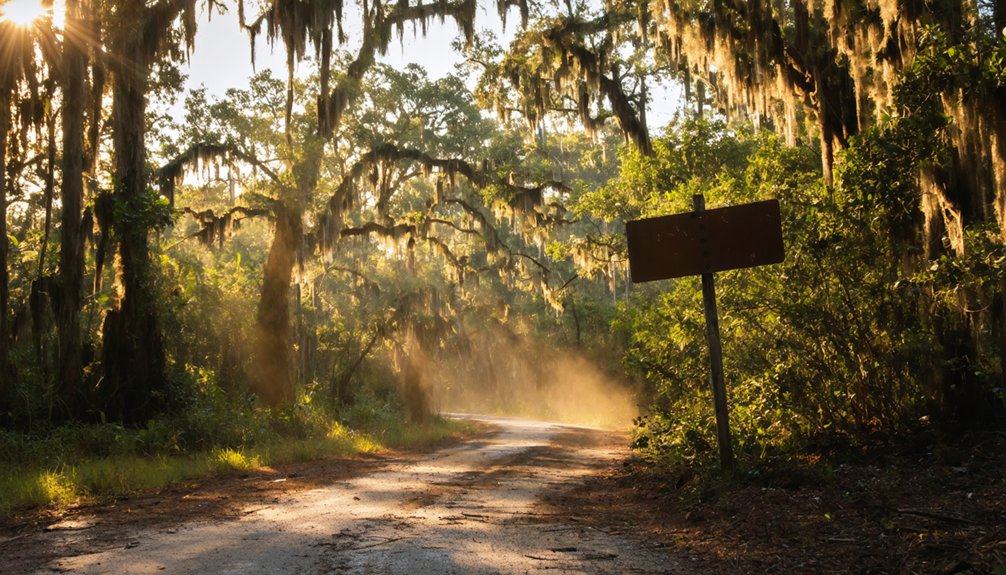
For decades, the government looked the other way. Florida officials refused to investigate the massacre thoroughly, leaving survivors displaced and silenced. No one faced justice. The state fundamentally buried the truth beneath bureaucratic indifference.
But the fight for government accountability never stopped. Survivors and descendants pushed relentlessly, demanding historical justice for what was stolen from them. Their persistence finally paid off in 1994, when the Florida Legislature passed House Bill 591, formally acknowledging both the destruction of Rosewood and the government’s failure to protect its residents.
The result? A $2.1 million reparations package distributed among survivors and descendants. It wasn’t enough to restore what was lost, but it confirmed something powerful — the truth, when pursued long enough, eventually forces even reluctant governments to answer for their silence.
What Does the Rosewood Site Look Like Today?
With reparations finally delivered, the question shifts from what the government owed to what physically remains of Rosewood itself — and the answer is both stark and haunting.
When you visit this ghost town today, you’ll find almost nothing left of what once thrived here.
Here’s what greets you at the site:
- Abandoned roads cutting through dense Florida swampland
- A solitary historical marker acknowledging the community’s violent erasure
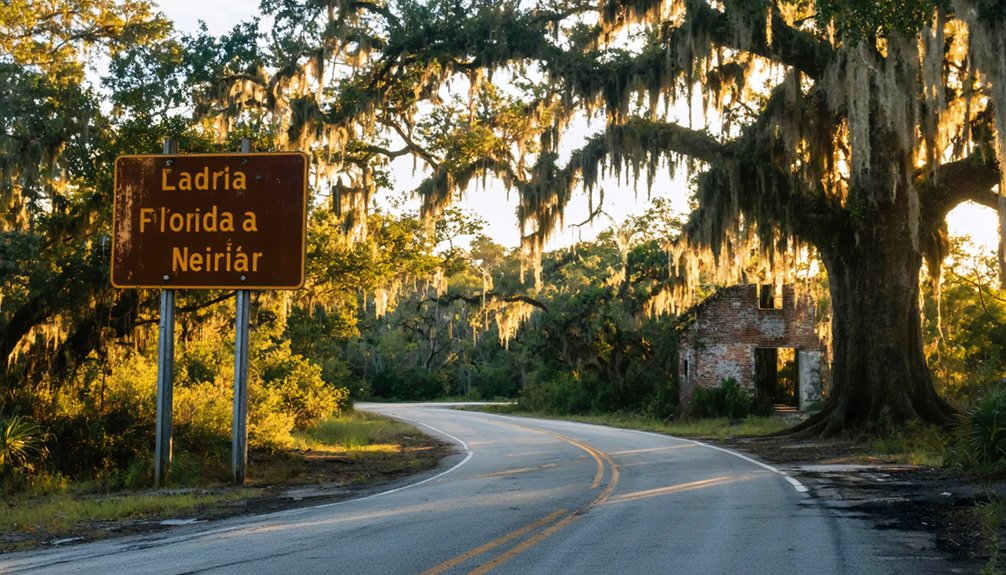
- A green highway sign near State Road 24 pointing toward silence
- No structures, no foundations — just reclaimed wilderness
The land doesn’t whisper; it screams absence.
You’re standing where 355 people built lives, raised families, and were driven out in a single week.
That historical marker carries an enormous weight for something so small.
Where Is Rosewood Located and How Do You Get There?
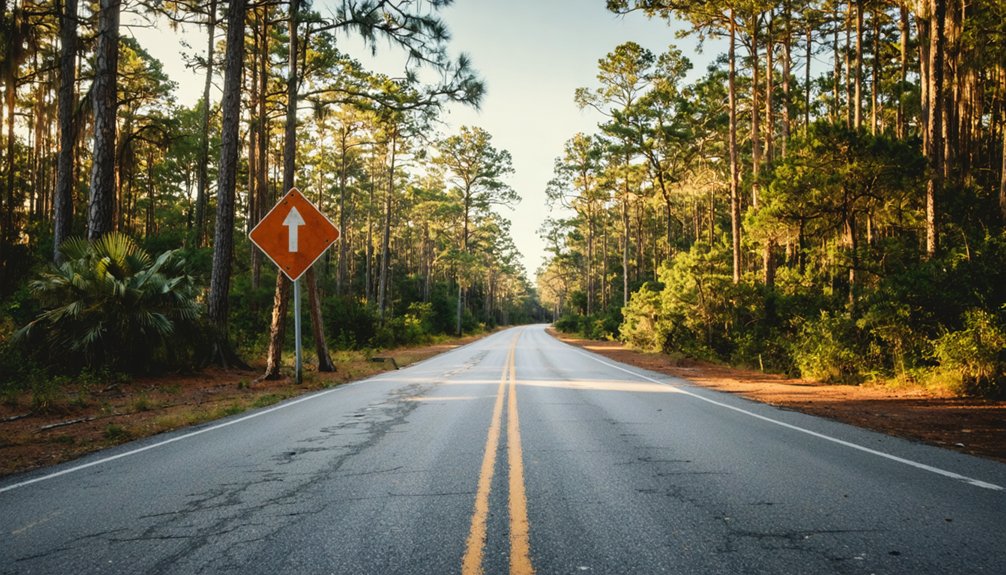
Tucked into the rural swamplands of Levy County, Florida, Rosewood sits just off State Road 24, roughly nine miles northeast of Cedar Key and one mile northeast of the small community of Sumner.
If you’re chasing Rosewood history, you won’t find a bustling destination — you’ll find silence, swamp, and a green highway sign marking what once stood here.
To reach this ghost town, head west from Gainesville on State Road 24 toward Cedar Key.
Watch carefully; Rosewood doesn’t announce itself boldly. A historical marker is fundamentally all that remains.
The surrounding hammocks and swamps feel eerily fitting — nature has quietly reclaimed what hatred destroyed.
Come prepared with a full tank, good directions, and an honest willingness to confront America’s darker chapters on an open road.
What Towns Near Rosewood Are Worth Visiting?
Once you’ve stood at Rosewood’s marker and absorbed the silence, the surrounding region offers towns worth folding into your trip.
These nearby towns carry their own stories, and the local attractions reward curious travelers willing to explore.
- Cedar Key — Nine miles southwest, this weathered fishing village sits at the edge of the Gulf, offering raw coastal beauty and fresh seafood.
- Chiefland — A practical stop for supplies with authentic small-town Florida character.
- Gainesville — Dig deeper into regional history at the Florida Museum of Natural History.
- Bronson — Levy County’s quiet seat, where old courthouse squares remind you who holds power in rural America.
Each stop adds context.
Together, they paint a fuller picture of the world that allowed Rosewood to burn.
Which Books and Documentaries Tell the Full Rosewood Story?
How do you piece together a history that nearly disappeared? Start with “The Rosewood Massacre” by Gary Moore, whose investigative journalism first cracked this story open.
Then read “Like Judgment Day” by Michael D’Orso, which reconstructs the community’s destruction through survivor testimonies and historical narratives that refuse to let racial violence stay buried.
For visual storytelling, watch John Singleton’s 1997 film “Rosewood”, which dramatizes the massacre with unflinching intensity.
The documentary “The Rosewood Massacre: An Investigation into Mass Murder” digs deeper, presenting firsthand accounts that challenge official records.
These works don’t just inform you — they demand accountability.
When you visit the ghost town site, you’ll walk those abandoned streets carrying knowledge that transforms a roadside marker into something profoundly meaningful.
Frequently Asked Questions
Is There an Entrance Fee to Visit the Rosewood Ghost Town Site?
You don’t need an entrance fee to explore Rosewood’s haunting grounds. Walk freely through Ghost town legends and uncover Rosewood history firsthand — only a historical marker and green highway sign greet your investigative spirit.
Are There Any Guided Tours Available at the Rosewood Memorial Site?
You won’t find formal guided tour options at Rosewood, but you can independently explore its historical significance through the haunting marker, green highway sign, and annual commemorative events that keep this story powerfully alive.
What Is the Best Time of Year to Visit Rosewood?
Spring or fall hits the sweet spot for visiting Rosewood. You’ll explore its historical significance comfortably, avoiding summer’s brutal heat. Cooler months let you investigate local legends and soak in this haunting site’s deeply moving, freedom-defining atmosphere.
Is the Rosewood Site Accessible for Visitors With Disabilities?
You’ll find limited accessible pathways and minimal visitor accommodations at Rosewood’s ghost town site. It’s a rural, undeveloped area, so you’d want to investigate local conditions before planning your freedom-seeking journey through this historically haunting landmark.
Are There Hotels or Campgrounds Near the Rosewood Historical Site?
Imagine rolling into Cedar Key, nine miles away — you’ll find accommodation options like cozy inns and campgrounds. Explore nearby attractions, then make your investigative day trip to Rosewood’s haunting historical marker on your own schedule.
References
- https://greatfloridaroadtrip.com/rosewood-history-buried-then-remembered/
- https://newsone.com/4511413/the-haunting-of-rosewood-florida/
- https://www.youtube.com/watch?v=LBTm3RTz3qQ
- https://www.rememberingrosewood.com/history
- https://www.latimes.com/archives/la-xpm-1996-05-23-ls-9923-story.html
- https://dos.fl.gov/library-archives/research/explore-our-resources/florida-history-culture-and-heritage/rosewood/
- https://www.smithsonianmag.com/history/how-history-forgot-rosewood-a-black-town-razed-by-a-white-mob-180981385/
- https://www.youtube.com/watch?v=CwkglF305DU
- https://en.wikipedia.org/wiki/Rosewood_massacre
- https://vocal.media/horror/the-bell-that-still-tolls-a-haunting-in-rosewood