Despite its name, you can’t road trip to Loring, Alaska—there’s no road in. You’ll reach this forgotten cannery ghost town by boat or floatplane from Ketchikan, traversing roughly 27 kilometers through Behm Canal. What awaits you are weathered ruins of a once-thriving salmon cannery that peaked near 200 residents before fading in the 1930s. Pack your rubber boots and curiosity, because everything you need to plan your journey is just ahead.
Key Takeaways
- Loring, Alaska, sits on Revillagigedo Island and is only accessible by boat through Behm Canal or floatplane, requiring advance travel planning.
- The ghost town features weathered cannery remnants and segregated housing zones from its peak population of nearly 200 diverse residents.
- Pack waterproof layers, rubber boots, a dry bag, water filter, and high-calorie snacks for this remote, uninhabited exploration site.
- No guided tours exist, making self-directed exploration essential; bring a printed history guide to better understand the crumbling structures.
- Summer, late spring, or early fall offer the best visiting conditions, though insect repellent is necessary during warmer months.
What Is Loring, Alaska’s Ghost Town?
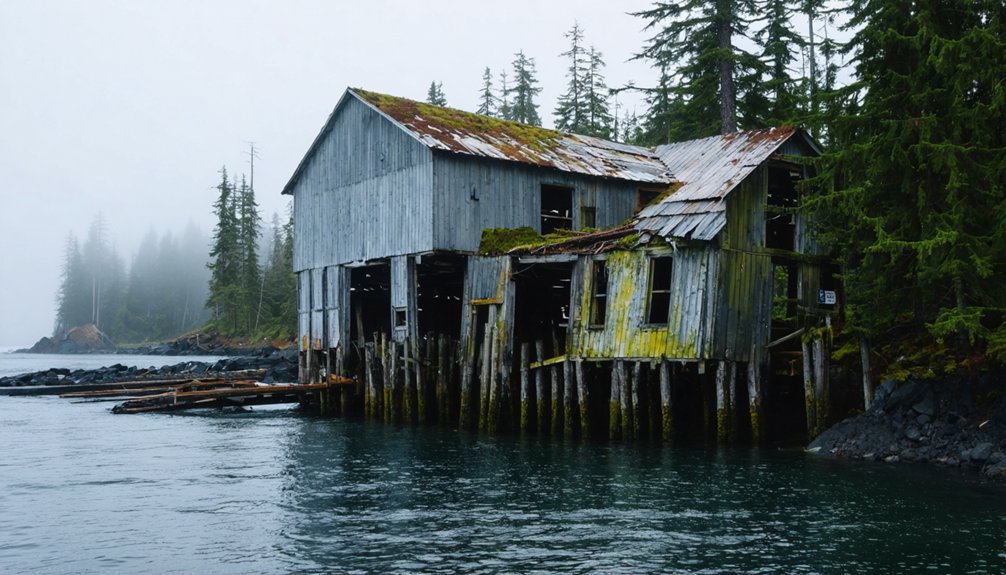
Tucked along Naha Bay on the rain-soaked western shore of Revillagigedo Island, Loring, Alaska, is a ghost town that once hummed with the labor of hundreds of cannery workers processing salmon for markets as far away as Seattle.
Its industrial legacy stretches back to 1875, when salmon processing operations first transformed this remote corner of Southeast Alaska into a thriving hub.
At its peak, Loring history counted nearly 200 residents — Native, Asian, and White workers — all living within a segregated but bustling community shaped entirely by the Alaska Packers Association cannery.
At its peak, nearly 200 residents — Native, Asian, and White — built their lives around a single cannery.
By the 1930s, competition from nearby Ketchikan had drained the life from it completely.
Today, with zero permanent residents, Loring stands as a striking monument to ambition, labor, and the unforgiving pace of economic change.
The Rise and Fall of Loring’s Salmon Cannery
When you trace Loring’s history, you’ll find the Alaska Packers Association cannery at its industrial heart, processing salmon for export markets as early as 1875.
At its peak, the town supported nearly 200 residents—a diverse workforce of Native, Asian, and White laborers living in segregated housing zones along the bay.
But by 1930, Ketchikan’s competing markets had quietly strangled operations, and Loring’s cannery days were finished.
Cannery’s Industrial Peak
At its peak, the Alaska Packers Association cannery transformed Loring into a thriving industrial hub, drawing a diverse workforce of Native, Asian, and White laborers who processed salmon bound for markets far beyond Alaska’s shores.
You can almost hear the machinery humming and smell the salt air as you imagine hundreds of workers moving through this once-bustling operation. The cannery’s industrial legacy shaped Southeast Alaska’s salmon heritage, proving that remote wilderness could sustain serious commercial ambition.
Segregated housing zones divided the workforce by ethnicity, reflecting the era’s harsh social realities. Population swelled to 200 residents before competition from nearby Ketchikan began eroding Loring’s economic foundation.
Ketchikan’s Competing Market
Ketchikan’s growth as a commercial powerhouse delivered the fatal blow to Loring’s ambitions, pulling workers, investment, and market share southward through Behm Canal’s cold waters.
The Ketchikan economy expanded rapidly, offering cannery operators better infrastructure, shorter supply lines, and stronger connections to Seattle’s cannery market.
Loring simply couldn’t compete.
Who Actually Lived and Worked in Loring?
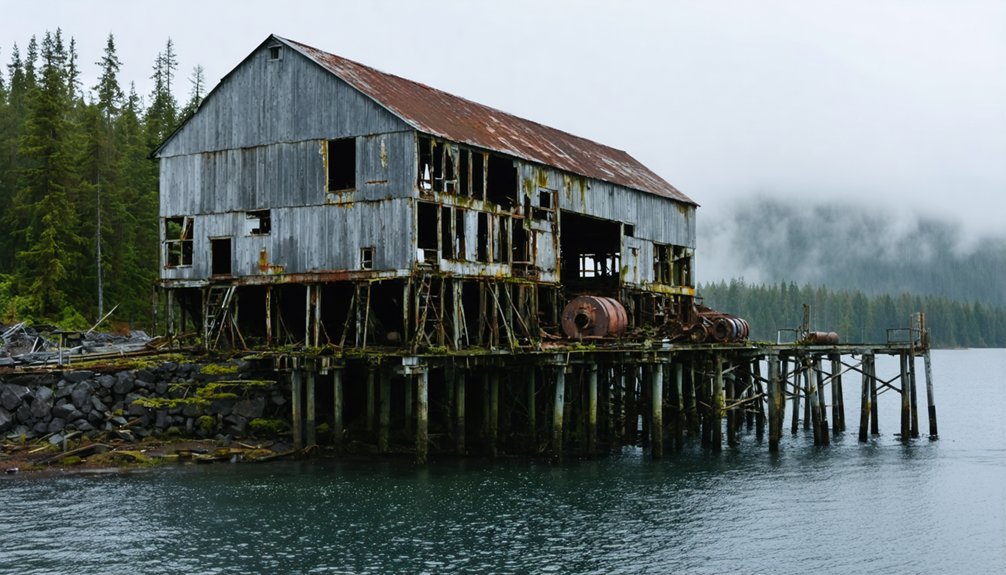
Loring’s workforce wasn’t the homogenous crowd you might picture in a remote Alaskan outpost — it was a mosaic of Native, Asian, and White laborers who kept the Alaska Packers Association cannery humming through its peak years.
These cannery workers lived in segregated housing zones, a stark social division carved into the landscape itself. Loring residents came from vastly different worlds yet shared the same brutal rhythms of salmon season.
Native workers brought generations of fishing knowledge, Asian laborers filled processing roles, and White workers occupied varying positions throughout the operation.
Before decline hit in the 1930s, this unlikely community swelled to nearly 200 people during peak summer months.
Today, only weathered remnants of those segregated quarters remain, silently testifying to who actually built Loring.
What’s Left to See at the Old Cannery Site?
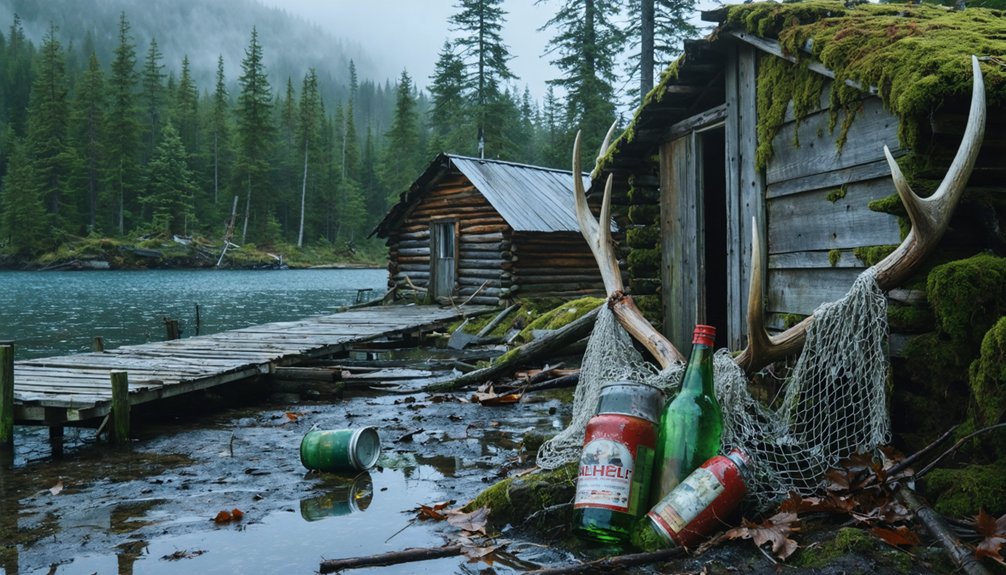
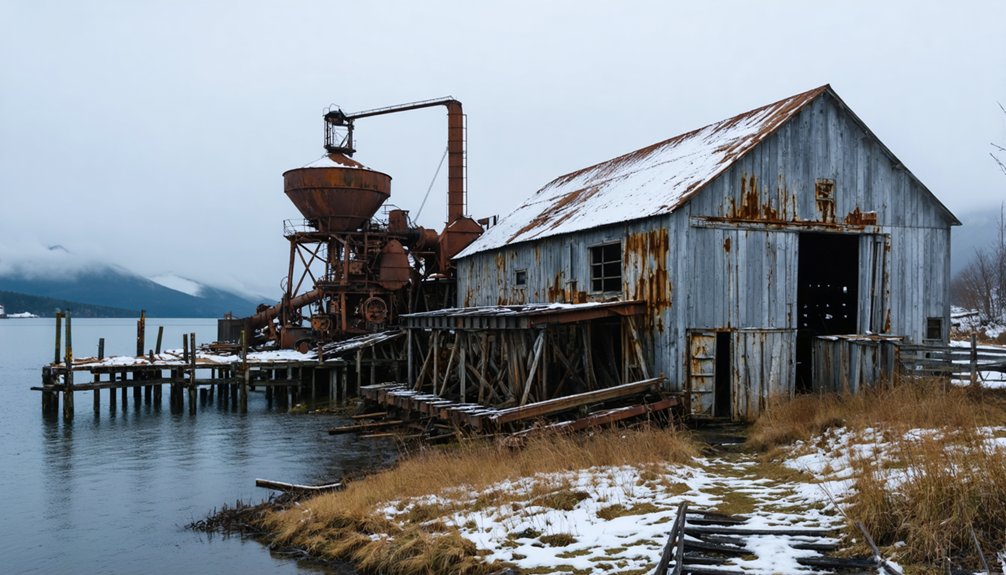
Scattered across the rain-soaked grounds of Naha Bay, the remnants of the Alaska Packers Association cannery still stand as weathered proof that Loring once roared with industrial life.
You’ll find cannery architecture slowly surrendering to Southeast Alaska’s relentless moisture, yet stubbornly refusing to disappear entirely. Deteriorating structures frame the site like open-air monuments to ghost town history, telling stories no museum could replicate.
The cannery refuses to vanish, its rotting bones outlasting every attempt by rain and time to reclaim them.
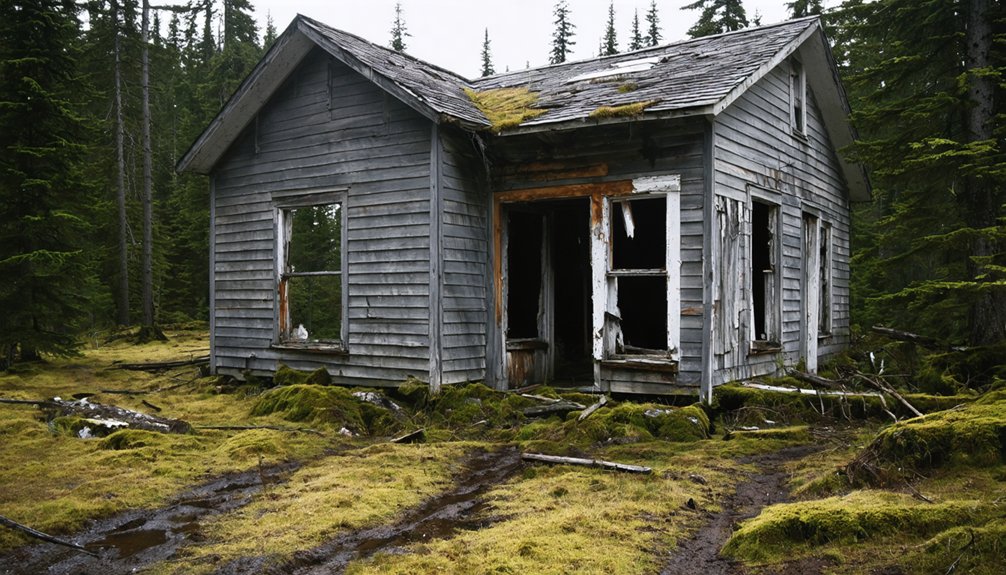
Walk the grounds and you’ll notice remnants of the segregated housing zones, silent evidence of the workforce’s complicated social divisions. Original industrial frameworks remain visible against the treeline, giving you a raw, unfiltered look at early Alaskan enterprise.
No tour guide narrates this experience. Just you, the rain, and the bones of a town that salmon built and time quietly dismantled.
How Do You Get to Loring From Ketchikan?
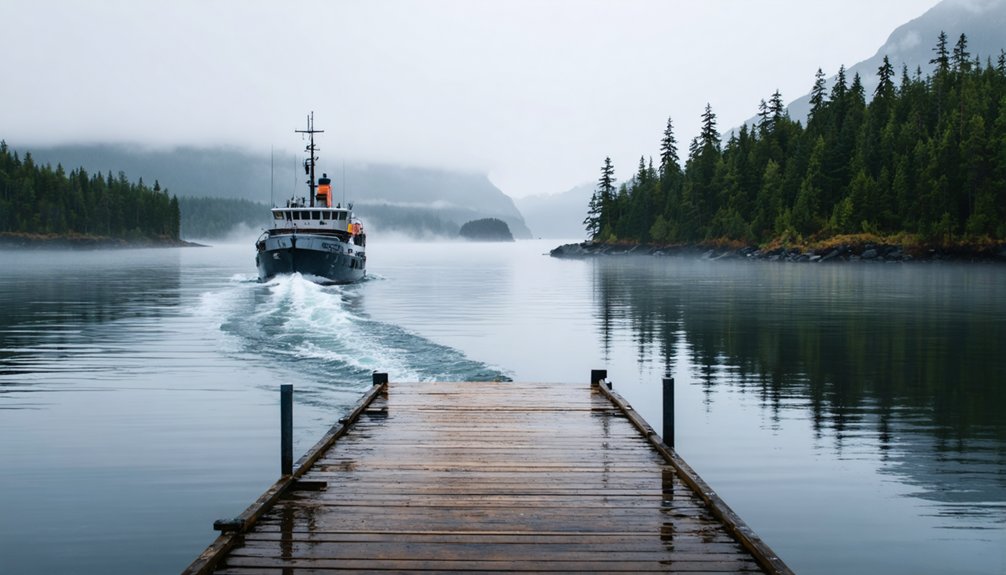
Since there’s no road connecting Loring to Ketchikan, you’ll need to travel either by water or air to reach this forgotten outpost.
You can charter a boat and navigate roughly 27 kilometers north through Behm Canal, tracing the same watery routes that once carried cannery workers and salmon shipments to and from the site.
If you’d rather fly, a floatplane covers the 15-mile air route in minutes, dropping you into a rain-soaked silence that feels worlds away from Ketchikan’s waterfront bustle.
Boat Access From Ketchikan
Reaching Loring means taking to the water, as there are no roads connecting this ghost town to the outside world. From Ketchikan, you’ll navigate roughly 27 kilometers north through Behm Canal, entering Naha Bay’s quiet, rain-soaked waters.
Consider these four ways to make the journey:
- Charter a private boat for complete freedom over your schedule.
- Join guided boat tours that combine history with stunning coastal scenery.
- Kayak the canal for an intimate, unhurried wilderness experience.
- Combine fishing opportunities with your visit, dropping lines along Behm Canal’s productive waters before arriving.
The approach by water mirrors how cannery workers and salmon packers once arrived, trading Seattle’s bustling ports for Southeast Alaska’s haunting, mist-draped shoreline.
That shared experience makes landing at Loring feel genuinely timeless.
Air Route Travel Options
For travelers short on time, floatplanes offer the fastest link between Ketchikan and Loring, covering roughly 15 miles by air route in minutes rather than the hours a boat journey demands.
Air travel drops you directly into a landscape that once buzzed with seasonal workers hauling salmon through the Alaska Packers Association cannery. Today, that same silence greets you on arrival.
Ketchikan’s floatplane operators service remote Southeast Alaska destinations regularly, making Loring accessible even without a private vessel.
You’ll want to confirm scheduling in advance, as flights depend heavily on weather conditions along Behm Canal.
The rain-soaked air and dramatic coastal terrain you’ll glimpse from above set the mood perfectly before your boots ever touch Loring’s ghost-town ground.
When Is the Best Time to Visit Loring?
When you visit Loring matters almost as much as why you visit. The best seasons reveal completely different sides of this forgotten place.
- Summer (June–August) – Seasonal workers arrive, local wildlife thrives, and longer daylight hours let you explore every weathered corner.
- Late Spring (May) – Wildflowers reclaim the cannery grounds before crowds appear, offering quiet and raw beauty.
- Early Fall (September) – Salmon runs echo the industrial past that once defined this shore, making history feel tangible.
- Winter – Avoid it unless you crave brutal isolation; access becomes genuinely dangerous.
Summer remains your strongest bet for experiencing Loring’s haunted atmosphere while staying safe. The rain never truly stops, but that’s part of the ghost town’s soul.
What Should You Pack for a Day Trip to Loring?
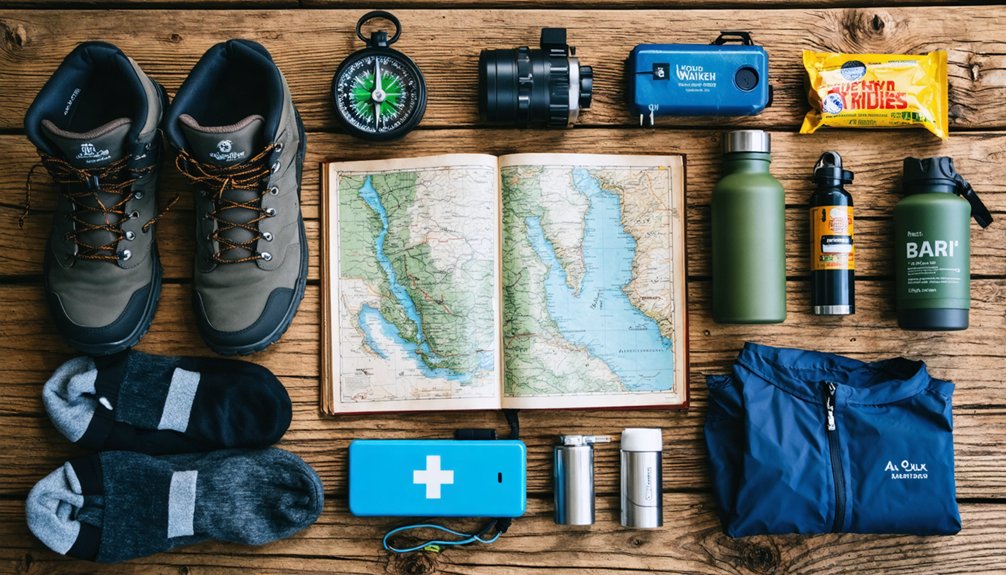
Once you’ve locked in your timing, what you carry to Loring can mean the difference between a memorable journey and a miserable one. Southeast Alaska’s rain-soaked air doesn’t negotiate, so pack waterproof layers, rubber boots, and a reliable dry bag for your gear.
For ghost town photography, bring extra memory cards and a wide-angle lens — the cannery ruins demand space to breathe. A printed guide to Loring history adds depth to what you’re seeing beyond crumbling timber.
Carry high-calorie snacks, a water filter, and a first-aid kit since you’re venturing somewhere with zero permanent residents. Insect repellent is non-negotiable during warmer months.
Most importantly, pack curiosity — Loring rewards those who look closely at what Southeast Alaska’s pioneering salmon industry left behind.
Which Other Southeast Alaska Ghost Towns Are Worth Visiting?
Loring isn’t Southeast Alaska’s only ghost town worth lacing your boots for. This rain-soaked coastline hides layers of forgotten history begging for ghost town exploration.
Pack your curiosity and consider these stops:
- Dolomi, Prince of Wales Island – A copper-mining remnant with rusting equipment and profound historical significance tied to early 1900s Alaskan industry.
- Helm Bay – A quiet, overgrown settlement where timber operations once thundered through old-growth forest.
- Meyers Chuck – Nearly abandoned, this fishing village whispers stories of Southeast Alaska’s maritime past.
- Kasaan – A Haida village site featuring a restored totem park amid collapsing structures, blending cultural heritage with haunting beauty.
Each destination rewards the freedom-seeking traveler willing to venture beyond the tourist trail.
Frequently Asked Questions
Is There Cell Phone Service Available at the Loring Ghost Town Site?
Don’t count on cell service at this ghost town — Loring’s remote Alaskan wilderness, tucked deep within Revillagigedo Island, leaves you gloriously disconnected, free to explore its hauntingly silent cannery ruins without modern distractions pulling you away.
Are There Any Guided Tours Specifically Focused on Loring’s History?
You won’t find formal guided exploration tours specifically focused on Loring history, but you’re free to independently wander its haunting remnants. Local Ketchikan outfitters occasionally offer customized boat excursions that’ll bring this forgotten cannery ghost town beautifully alive.
Can Visitors Legally Take Artifacts or Souvenirs From the Cannery Ruins?
You can’t legally take artifacts from Loring’s cannery ruins. Respect the site’s historical significance by leaving everything untouched — artifact preservation guarantees future explorers experience the same haunting, nostalgic connection to Southeast Alaska’s pioneering industrial past that you’re feeling right now.
Is Overnight Camping Permitted Anywhere Near the Loring Ghost Town?
You’ll want to research camping regulations carefully before visiting. Nearby attractions like Naha Bay’s wilderness invite your free spirit, but always verify current land-use permissions with local authorities to guarantee your overnight adventure stays legal.
Are There Any Local Regulations Protecting the Loring Cannery Heritage Structures?
You’ll want to research current heritage preservation rules before exploring Loring’s crumbling cannery bones. Alaska state and borough codes may protect these local history relics, so check with Ketchikan Gateway Borough authorities before touching anything.
References
- http://www.sitnews.org/JuneAllen/Loring/091402_loring.html
- https://en.wikipedia.org/wiki/Loring
- https://www.slideshare.net/slideshow/history-of-loring-alaska/84194339?nway-content_model=D
- https://www.bbc.com/travel/article/20210520-the-ghost-town-that-electrified-the-us
- https://www.slideshare.net/slideshow/history-of-loring-alaska/84194339
- https://coastview.org/2024/12/27/loring-naha-bay/
- https://www.youtube.com/watch?v=TC_KPrhDByY
- https://www.adn.com/arts/article/places-no-longer-exist/2015/03/20/
- https://www.youtube.com/watch?v=GNjMpM6b58o
- https://en.wikipedia.org/wiki/List_of_ghost_towns_in_Alaska