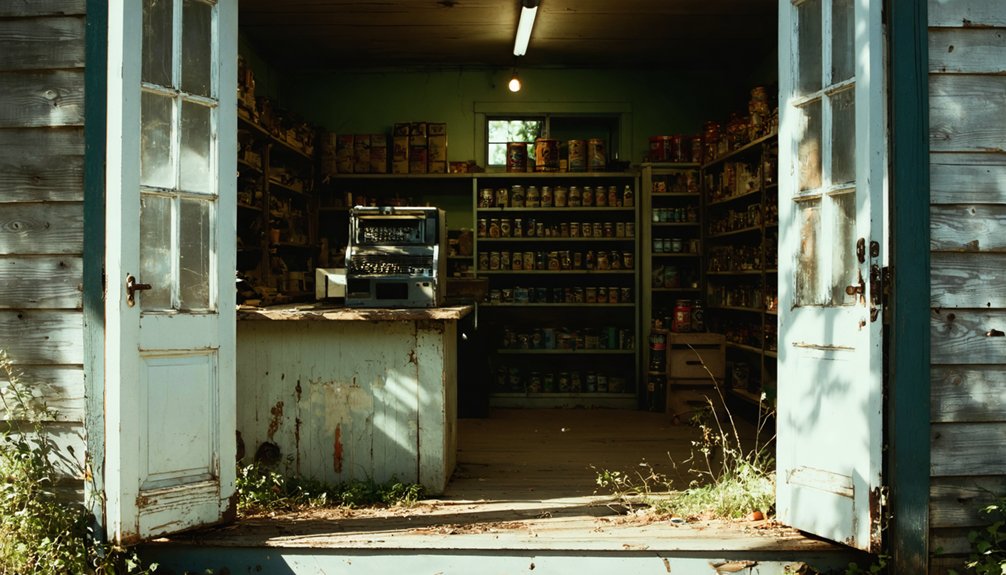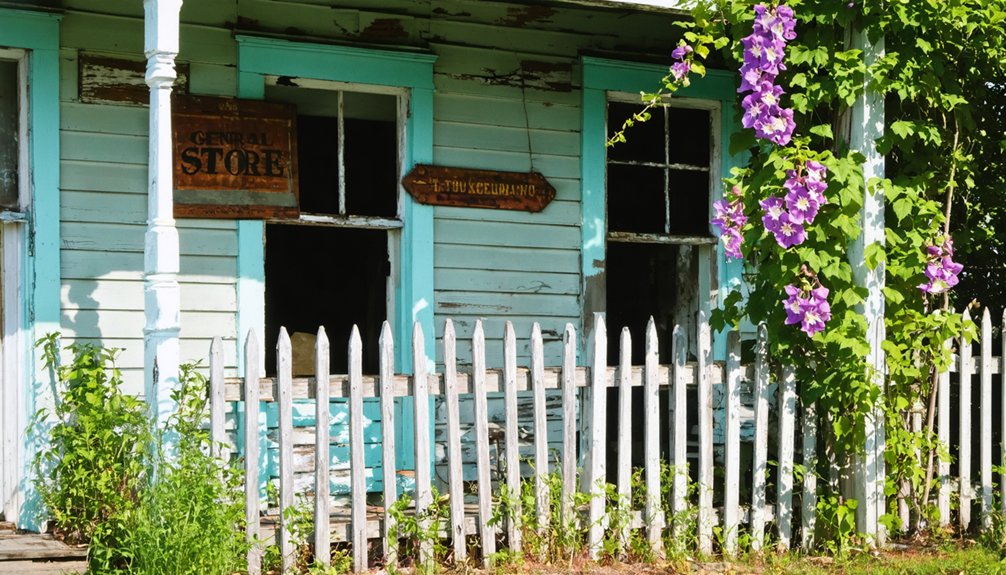
Planning a ghost town road trip to Saint Johnstown, Delaware means venturing into Sussex County’s forgotten past, where a once-thriving railroad stop now sits silent between Ellendale and Greenwood. You’ll need offline maps, sturdy hiking shoes, and a reliable flashlight since there’s no cell service or official signage. The Queen Anne’s Railroad made this town, and its closure erased it. Stick around to uncover everything you need to explore Saint Johnstown safely and legally.
Key Takeaways
- Saint Johnstown is a ghost town in Sussex County, Delaware, abandoned after the Queen Anne’s Railroad closed, leaving only a church and railroad stop.
- Download offline maps before visiting, as there is no cell service, formal signage, or paved paths leading to the site.
- Use King’s Highway as a navigation reference, park near the old trail, and look for the Methodist church as a landmark.
- Wear sturdy hiking boots, pack a first aid kit, and inform someone of your itinerary before exploring this remote location.
- Visit nearby ghost towns like Woodland, Owens Station, and Glenville to create a fuller Delaware ghost town road trip experience.
What Is Saint Johnstown and Why Did It Vanish?
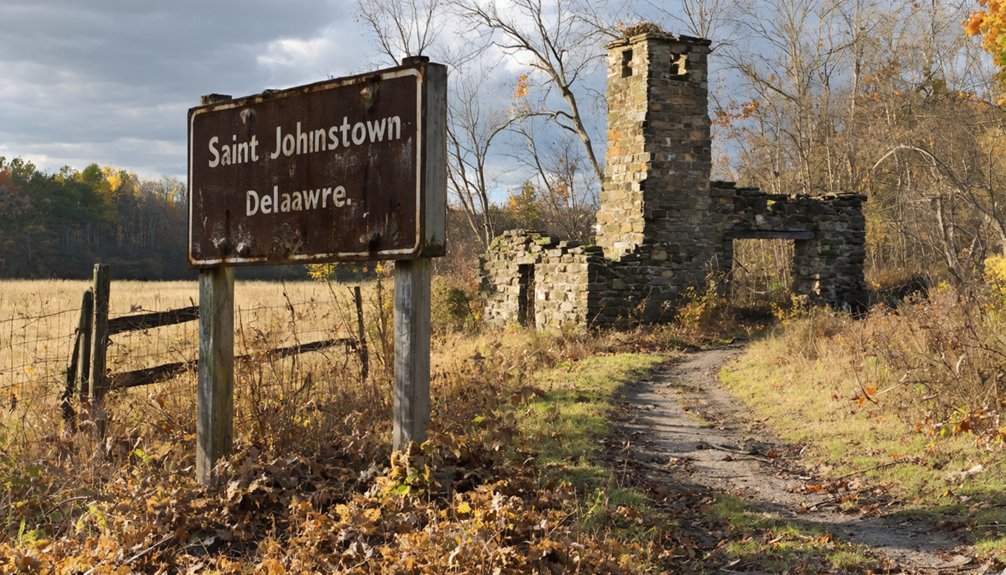
Tucked between Ellendale and Greenwood in Sussex County, Delaware, Saint Johnstown was once a modest but functioning settlement that owed its entire existence to the Queen Anne’s Railroad.
Its historical significance lies in how completely one industry could build and erase a community. When the railroad operated, the town thrived as a stop along the line, drawing residents, commerce, and connection.
Then the line shut down.
Once the Queen Anne’s Railroad closed after roughly 30 years of operation, Saint Johnstown’s population dropped to zero. No railroad meant no reason to stay. The railroad impact was total and irreversible.
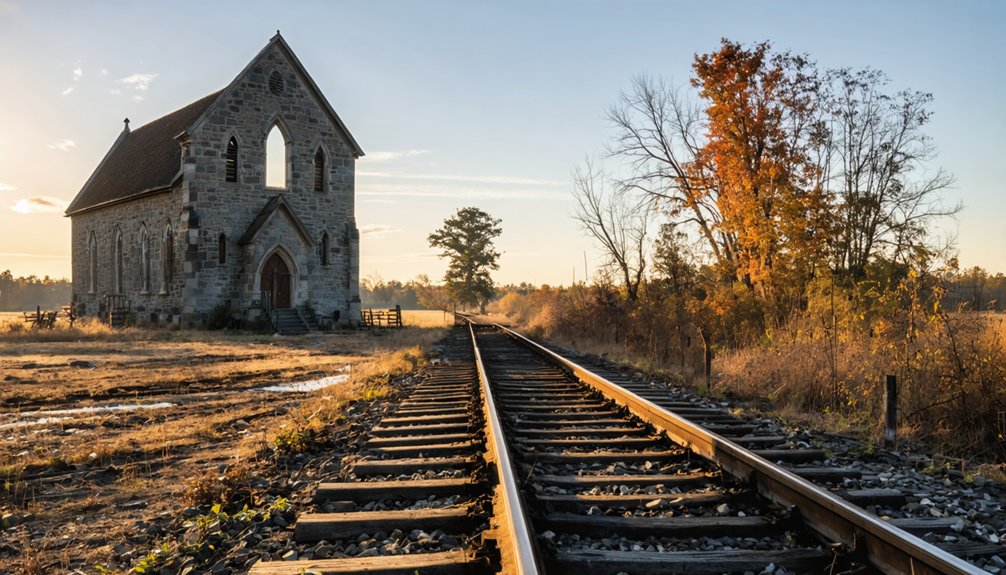
Today, only an abandoned railroad stop and a historic Methodist church survive along King’s Highway. You won’t find residents, signs, or services — just silence and the bones of a forgotten place.
What to Pack Before You Visit Saint Johnstown?
Before you head out to Saint Johnstown, download offline maps since the remote Sussex County site has no cell service, and you won’t find any official signage guiding your way.
Pack a first aid kit because the nearest medical facility is far from this isolated stretch of King’s Highway, leaving you on your own if something goes wrong.
You’ll also want sturdy hiking shoes to navigate the uneven terrain around the old railroad stop and church, along with a reliable flashlight for exploring the darker corners of the ruins.
Navigation Tools And Maps
How do you navigate a ghost town that doesn’t appear on modern GPS maps? Saint Johnstown sits in a remote Sussex County pocket with zero cell service, so your smartphone’s navigation apps become useless the moment you leave the main road.
Download offline maps before you leave home. Apps like Maps.me or Gaia GPS let you store detailed terrain data locally, keeping you oriented without a signal.
Cross-reference those digital resources with a printed Delaware county road map, marking King’s Highway and its position one mile east of Greenwood as your landmark anchor.
You’re not following a trail someone built for you — you’re piecing together a route independently. That freedom demands preparation.
Carry both your phone and paper backup, because redundancy out here isn’t paranoia; it’s smart travel.
Safety And First Aid
Maps get you there, but a well-stocked first aid kit keeps you safe once you arrive. Saint Johnstown sits in a remote Sussex County pocket with no cell service and no nearby medical facilities, so you’re fully responsible for your own well-being out there.
Pack standard first aid essentials: bandages, antiseptic wipes, pain relievers, and blister treatment for those uneven trail surfaces.
Safety precautions also mean dressing appropriately — long pants guard against brambles, and sturdy hiking shoes handle unstable ground near the old railroad stop and church ruins.
Tell someone your itinerary before you leave. Since emergency services can’t reach you quickly, your preparation is your protection.
A lightweight first aid kit adds minimal weight but delivers maximum peace of mind when you’re exploring freely and far from help.
Footwear And Lighting Gear
Two pieces of gear make or break your Saint Johnstown visit: footwear and lighting. The remote Sussex County terrain demands smart preparation before you step onto that overgrown King’s Highway trail.
Choose your footwear types and lighting options carefully:
- Ankle-support hiking boots — uneven ground and debris near the railroad stop will punish flat-soled shoes fast.
- Waterproof soles — Red Clay Creek moisture seeps into low-lying areas, making wet terrain unavoidable.
- Handheld flashlight — powerful beams cut through darkness inside the abandoned church’s shadowed corners.
- Headlamp — keeps both hands free while you photograph ruins or consult your offline map.
You’re exploring a site with zero nearby help, so your gear isn’t optional — it’s your safety net.
How to Find Saint Johnstown Without Getting Lost?
Finding Saint Johnstown isn’t as straightforward as punching an address into Google Maps — there’s no official signage, no cell service, and no paved path leading you to its remnants.
You’ll need GPS alternatives like downloaded offline maps or a printed topographic guide before you leave home.
Use King’s Highway as your anchor point — the site sits roughly one mile east of Greenwood along this historic corridor.
Park informally near the old trail and navigate on foot from there.
Once you arrive, the historical significance becomes immediately clear: a standing Methodist church and abandoned railroad stop are your landmarks, both surviving from the Queen Anne’s Railroad era.
Trust your preparation over your phone signal, and you’ll find exactly what you came for.
What Survives at Saint Johnstown: The Church, Railroad Stop, and Nothing Else
When you step into Saint Johnstown, the silence tells the story before the ruins do.
Two structures survived the town’s collapse after Queen Anne’s Railroad shut down, and that’s it.
Here’s what you’ll actually find standing:
- The Methodist Episcopal Church – the sole intact building, carrying deep church history from the railroad era.
- The abandoned railroad stop – a quiet marker of railroad significance, where passengers once boarded a line that defined the town.
- King’s Highway traces – the old road corridor still threading nearby.
- Open land – no homes, no businesses, nothing else remains.
You won’t find a neighborhood here.
You’ll find two relics holding a ghost town’s entire identity. That rawness is exactly what makes Saint Johnstown worth the drive.
Don’t Touch the Ruins: What’s Illegal at Saint Johnstown
Before you touch anything at Saint Johnstown, know this: removing artifacts, bottles, or debris from the site is illegal under Delaware state law.
These artifact preservation rules exist to protect what little remains of this vanished community.
Illegal activities here include disturbing the church’s masonry, tampering with the railroad stop ruins, or pocketing anything you find on the ground.
Delaware’s historical site protections carry real legal consequences, so don’t test them.
Your freedom to explore this ghost town depends on respecting its boundaries.
You can photograph everything, wander the grounds, and absorb the atmosphere of a place time forgot.
Just remember the golden rule: take only photos, leave only footprints.
The ruins survived this long because others followed that rule before you.
When Is the Best Time to Visit Saint Johnstown?
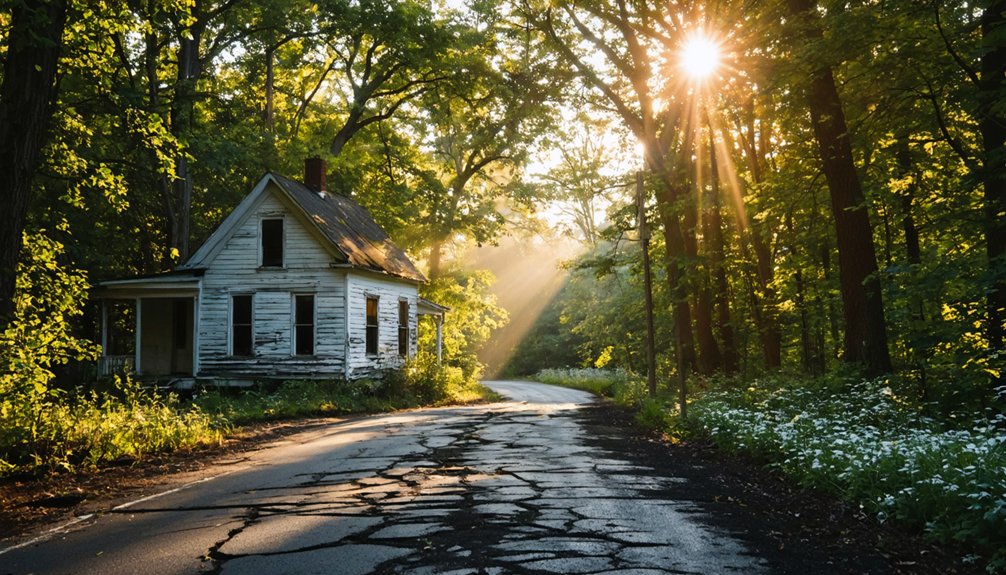
You’ll get the most out of Saint Johnstown by visiting in late spring or early fall, when mild temperatures make the remote trek comfortable and overgrown vegetation hasn’t swallowed the site’s remaining structures.
Summer heat and thick foliage can obscure the church and railroad stop ruins, while winter visits risk muddy, impassable trails near King’s Highway.
Since the area has no cell service, check weather forecasts before you leave and download offline maps to avoid getting stranded in Sussex County’s rural backcountry.
Ideal Visiting Seasons
Though Saint Johnstown sits quietly in Sussex County year-round, late spring and early fall offer the most rewarding visits. Mild temperatures make exploring the abandoned railroad stop and historic Methodist church far more comfortable, and you’ll move freely without summer‘s oppressive humidity slowing you down.
Consider these four seasonal advantages:
- Late Spring (April–May): Wildflowers frame the old King’s Highway trail, enhancing the historical significance of every photograph you capture.
- Early Fall (September–October): Cooler air and golden light reveal local legends etched into the landscape.
- Summer: Longer daylight extends exploration time, though heat and insects intensify.
- Winter: Bare trees expose structural details of ruins, though muddy trails demand extra caution.
Plan around weekdays to enjoy uninterrupted solitude at this forgotten Delaware settlement.
Weather And Accessibility Tips
Knowing when to visit Saint Johnstown goes beyond picking a comfortable season—weather directly shapes how accessible this remote Sussex County site actually is.
Spring brings unpredictable rainfall that turns informal trail paths into muddy obstacles, making sturdy hiking shoes essential.
Summer heat feels intense without shade cover near the old railroad stop, so bring extra water.
Fall offers the clearest weather patterns and firm ground, giving you the best combination of comfort and mobility.
Winter cold can harden terrain but also brings fog that limits visibility along King’s Highway.
Year-round accessibility challenges stem from the site’s lack of cell service and formal infrastructure, so always download offline maps before you leave home.
Plan smart, and Saint Johnstown rewards every visit.
Ghost Towns Near Saint Johnstown Worth Adding to Your Route
While Saint Johnstown deserves its own dedicated visit, Sussex County’s surrounding landscape holds several ghost towns worth weaving into your route. Each stop adds a distinct layer of Delaware’s forgotten past.
- Woodland – Woodland history reveals a storm-ravaged resort town with a scenic fishing pier still standing against time.
- New Market – This Sussex County ghost town has nearly vanished entirely, leaving only traces for the sharpest-eyed explorers.
- Owens Station – Another former railroad stop echoing Queen Anne’s Railroad’s broader regional collapse across Sussex County.
- Glenville – The Glenville floods from Red Clay Creek drove residents out in the 1900s, abandoning everything behind.
String these locations together, and you’ll experience Delaware’s hidden history across one unforgettable open-road journey.
Frequently Asked Questions
Are There Guided Tours Available at Saint Johnstown Ghost Town?
No official guided tour options exist at Saint Johnstown, so you’ll explore its ghost town history independently. Bring offline maps, sturdy shoes, and a flashlight, as there’s no signage or cell service to assist you.
Can Visitors Camp Overnight Near the Saint Johnstown Site Legally?
Like a wanderer without a map, you’ll find no legal campground here. Current camping regulations don’t permit overnight permits at Saint Johnstown’s protected historical site, so you’ll need to seek nearby approved campgrounds instead.
Is Saint Johnstown Accessible to Visitors With Mobility Limitations?
Saint Johnstown’s remote terrain isn’t ideal for wheelchair accessibility or mobility aids. You’ll navigate uneven trails, informal parking, and no paved paths. It’s a rugged adventure best suited for those who can handle challenging, unpredictable ground conditions independently.
Does the Methodist Church at Saint Johnstown Hold Any Active Services?
Like a frozen clock, the Methodist church holds no active services—it’s a silent relic of Methodist history. You won’t find community events here, only echoing walls and the freedom of stepping through forgotten time.
Are Pets Allowed When Visiting the Saint Johnstown Ghost Town Site?
No official pet policies exist for Saint Johnstown, but you’re free to bring leashed pets. Practice ghost town etiquette by keeping them from disturbing the historic church ruins and fragile railroad stop remnants you’ll encounter.
References
- https://en.wikipedia.org/wiki/List_of_ghost_towns_in_Delaware
- https://usabynumbers.com/ghost-towns-in-delaware/
- https://archives.delaware.gov/historic-houses-of-worship/st-johnstown-methodist-church-me/
- https://en.wikipedia.org/wiki/Saint_Johnstown
- https://kids.kiddle.co/List_of_ghost_towns_in_Delaware
- https://www.youtube.com/watch?v=ex8Hld_imPU
- https://en.wikipedia.org/wiki/Category:Former_populated_places_in_Delaware
- https://www.youtube.com/watch?v=bjAlTv64sTg
- https://anabasis.fandom.com/wiki/Saint_Johnstown_(Delaware)
- https://broadkillblogger.org/2018/05/new-market-all-but-vanished/