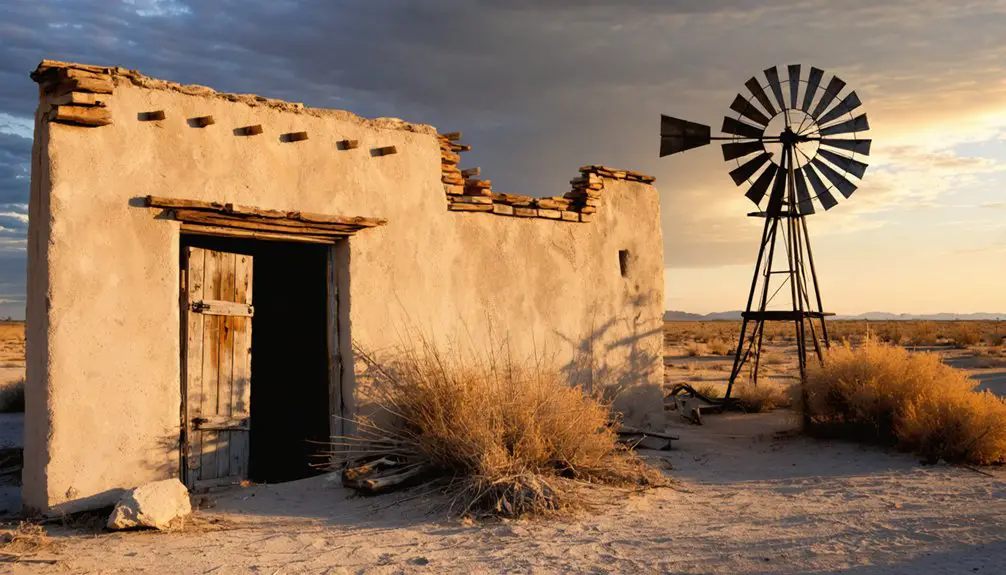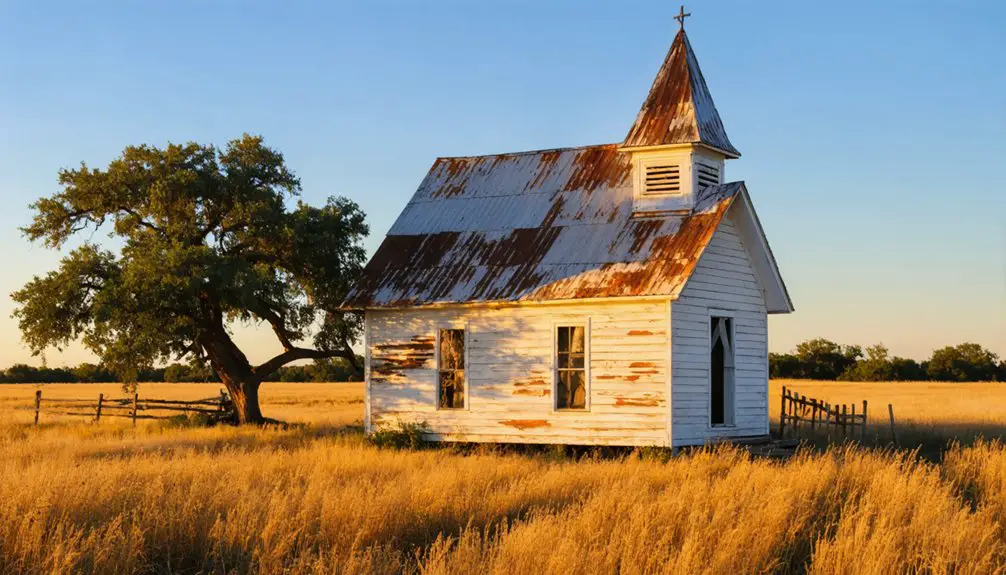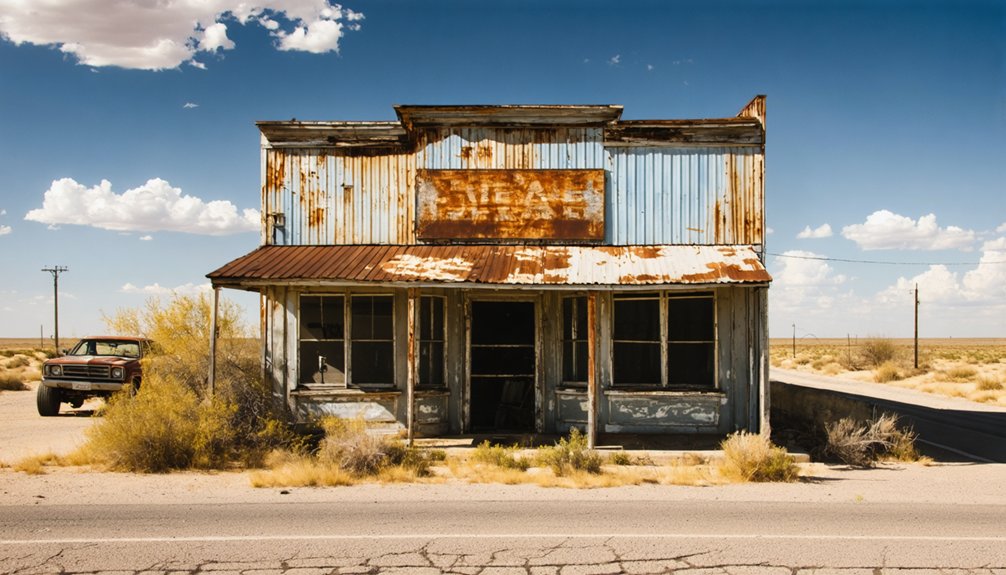
Sandy Hills, Texas sits five miles west of La Vernia at the quiet crossing of County Road 321 and County Road 361 in Wilson County. You won’t find tourist infrastructure here — just an old brick schoolhouse, open sky, and roads slowly being reclaimed by nature. Plan your visit as a day trip from San Antonio, pair it with nearby ghost towns like Saspamco and Sutherland Springs, and bring your camera. There’s more history waiting around every forgotten bend.
Key Takeaways
- Sandy Hills is located five miles west of La Vernia in Wilson County, Texas, making it an easy day trip from San Antonio.
- The only remaining structure is a historic brick schoolhouse, offering an authentic glimpse into the town’s educational and community heritage.
- Nearby ghost towns Saspamco and Sutherland Springs can be combined into one road trip for a fuller regional historical experience.
- No tourist infrastructure exists, so visitors should plan accordingly by bringing a camera and researching each location beforehand.
- Visit during daylight hours for optimal exploration of abandoned structures and the surrounding rural Texas landscape.
Where Is Sandy Hills, Texas?
Sandy Hills sits quietly in the western reaches of Wilson County, Texas, roughly five miles west of La Vernia at the intersection of County Road 321 and County Road 361.
Its geography places it southeast of San Antonio, making it surprisingly accessible for those craving an off-the-beaten-path escape.
Sandy Hills’ geography shaped its historical significance as a modest yet purposeful settlement. Residents once built homes here, gathered as a community, and sent their children to a small brick schoolhouse that still stands today.
Over time, the pull of larger cities drained the population, leaving Sandy Hills among Wilson County’s 31 ghost towns.
You’re not just visiting an empty crossroads — you’re stepping into a quiet chapter of Texas history that most travelers completely overlook.
Why Sandy Hills Became a Ghost Town
Like so many small Texas communities, Sandy Hills didn’t disappear overnight — it faded gradually as residents packed up and chased better wages and broader opportunities in nearby cities.
Economic shifts pulled families away from rural Wilson County, triggering a community migration that slowly drained the settlement of its liveliness. San Antonio’s growing economy beckoned, offering steady employment that small, agricultural communities simply couldn’t match.
One by one, households emptied, leaving buildings standing silent against the Texas sky. You can still feel that quiet absence when you visit today.
The houses stand empty now, their silence heavier than anything left behind.
The brick schoolhouse — the last structure remaining — tells the whole story without a single word. It once anchored neighborhood life; now it stands alone, a monument to how quickly economic forces can reshape the landscape you call home.
The Brick Schoolhouse Sandy Hills Left Behind
Standing alone amid the quiet of Wilson County, the small brick schoolhouse is the only structure Sandy Hills left behind. It once anchored the community’s daily life, serving children and gathering neighbors together.
Today, it stands as a quiet symbol of schoolhouse history and community legacy.
Visit and you’ll find:
- A sturdy brick exterior that outlasted every surrounding structure
- Walls that once held the voices of local children learning
- A gathering space where residents built shared community identity
- Tangible proof that small settlements invested deeply in education
- A landmark connecting present-day explorers to vanished daily life
You don’t need much time to take it in, but the schoolhouse rewards those who pause.
It’s history you can stand beside, not just read about.
What It Looks Like to Visit Sandy Hills Today
Once you’ve taken in the schoolhouse, you’re left standing in the larger silence that defines Sandy Hills itself. Abandoned structures dot the landscape, remnants of a community that once had rhythm and purpose.
There’s no tourist infrastructure here — no signs, no parking lots, no guided tours. Just open Texas sky, County Roads 321 and 361 stretching toward the horizon, and the weight of community memories pressing quietly against the present.
You’ll notice how quickly nature reclaims what people leave behind. Grass pushes through old foundations. Wind moves through empty spaces where families once gathered.
Sandy Hills doesn’t perform its history — it simply holds it. For travelers who value unfiltered discovery over curated experience, that raw authenticity makes this five-mile detour from La Vernia completely worth taking.
How to Drive to Sandy Hills From La Vernia
The drive itself takes only five minutes, but it carries the quiet weight of rural Texas in every mile. From La Vernia, head west along these driving routes toward one of Wilson County’s forgotten corners:
Five minutes west of La Vernia, rural Texas swallows you whole — quietly, completely, without apology.
- Start at La Vernia’s main intersection heading west
- Follow County Road 321 through open farmland
- Watch for County Road 361’s intersection as your landmark
- Sandy Hills sits exactly at that crossroads
- Use scenic stops along the way to absorb the landscape
You won’t pass strip malls or traffic lights. Instead, you’ll navigate low fences, grazing cattle, and sky that stretches endlessly.
The intersection of County Roads 321 and 361 marks the ghost town’s heart. Five miles disappear fast, but arriving here feels like stepping outside ordinary time entirely.
Other Wilson County Ghost Towns Near Sandy Hills
Wilson County’s ghost town trail doesn’t end at Sandy Hills — you can extend your road trip to Saspamco and Sutherland Springs, two other once-thriving communities that share the same quiet fate.
Sutherland Springs carries a particularly deep historical footprint, having flourished as a health resort town before emptying out over generations.
Together, these abandoned communities paint a vivid picture of Wilson County’s vanished past, reminding you that Sandy Hills is just one thread in a broader tapestry of Texas towns time left behind.
Saspamco Ghost Town Exploration
While Sandy Hills stands as one of Wilson County’s forgotten places, nearby Saspamco offers another compelling ghost town worth exploring on your road trip.
Saspamco history reveals another community that once thrived before depopulation claimed it. You’ll find Saspamco landmarks scattered across the landscape, whispering stories of lives once lived freely here.
Add Saspamco to your Wilson County itinerary for these reasons:
- It’s part of Wilson County’s 31 documented ghost towns
- You can experience raw, unfiltered Texas history firsthand
- Remnant structures evoke the community’s former liveliness
- The rural roads connecting these towns reward curious explorers
- Pairing Saspamco with Sandy Hills creates a full ghost town day trip
Both towns paint a vivid portrait of Texas communities reclaimed by time.
Sutherland Springs Historical Visit
Sutherland Springs rounds out your Wilson County ghost town circuit with a historical depth that Sandy Hills and Saspamco can’t quite match.
Sutherland Springs carries a weight of historical significance tied to early Texas settlement, mineral springs that once drew health-seekers, and the kind of local legends that stick to a place long after its population thins.
You’ll find echoes of its cultural heritage in weathered structures and roadside markers that refuse to let the past dissolve quietly.
Sutherland Springs still hosts occasional community events that connect modern visitors to that layered history, giving you more than just ruins to photograph.
It’s a stop that demands reflection, not just a glance through the windshield.
Wilson County’s Abandoned Communities
Beyond Sutherland Springs, Wilson County holds 31 ghost towns scattered across its rural landscape, each one a quiet reminder of communities that once thrived and then emptied out as residents chased work and opportunity in larger cities.
These abandoned buildings carry deep historical significance, marking where settlers built lives before economics shifted everything.
Explore these nearby forgotten communities:
- Saspamco – once a bustling industrial settlement, now silent
- Sandy Hills – anchored by its enduring brick schoolhouse
- Pawelekville – rural farmland swallowed a once-active community
- Coy City – empty roads trace former neighborhood boundaries
- Lodi – scattered remnants mark where families once gathered
Each stop deepens your understanding of Texas’s rural past, offering unfiltered glimpses into lives lived far outside city limits.
Day Trips From San Antonio Through Wilson County’s Ghost Towns
San Antonio sits just a short drive from Wilson County’s ghost town circuit, making it an ideal base for history-minded day-trippers.
Head southeast along County Roads 321 and 361, and you’ll discover ghost town attractions scattered across open ranchland, each one carrying remnants of communities that once thrived.
Sandy Hills sits five miles west of La Vernia, where a solitary brick schoolhouse still stands against the Texas sky.
Rural road trips through Wilson County reward curious travelers with quiet landscapes, forgotten crossroads, and 31 documented ghost towns, including Saspamco and Sutherland Springs.
You won’t need much time, but you’ll leave with a sharper sense of how settlement patterns shaped this region and why so many Texans eventually traded small communities for city life.
Frequently Asked Questions
How Many Ghost Towns Does Texas Have Compared to Other States?
Texas leads the nation with 511 ghost towns, far surpassing other states. You’ll find their historical significance reflects economic decline, yet their tourism impact lets you reclaim freedom exploring these evocative, forgotten landscapes of American history.
Can Visitors Rent Sand Sleds at Monahans Sandhills State Park?
Yes, you can rent sand sleds at Monahans Sandhills State Park! Embrace your freedom by exploring rental options for thrilling sand sledding adventures across the park’s stunning, ever-shifting 3,840-acre dunes that transform overnight.
What Unique Forest Can Be Found Near Monahans, Texas?
You’ll discover a unique Harvard Oak forest near Monahans, Texas — a remarkable blend of unique ecosystems and desert vegetation that’s historically significant, offering you an unexpected, awe-inspiring glimpse into nature’s untamed, free-spirited wilderness.
How Large Is Monahans Sandhills State Park in Total Acres?
Like an ocean frozen in time, Monahans Sandhills State Park’s sandy terrain stretches across 3,840 acres of shifting dunes. You’ll discover park features like primitive camping and rentable sand sleds awaiting your adventurous spirit.
Does Monahans Sandhills State Park Offer Primitive Camping for Visitors?
Yes, Monahans Sandhills State Park offers primitive camping, letting you sleep beneath vast Texas skies. Its visitor amenities embrace your spirit of freedom, where shifting sand dunes and untamed landscapes awaken your sense of boundless, rugged adventure.
References
- https://kids.kiddle.co/Sandy_Hills
- https://www.hipcamp.com/journal/camping/texas-ghost-towns/
- https://www.ksat.com/holidays/2018/10/30/texas-has-more-ghost-towns-than-any-other-state/
- https://txmn.org/lostpines/2018/04/15/the-ghosts-of-monahans/
- https://www.youtube.com/watch?v=TAzYYizf1O0
- https://texashillcountry.com/hill-country-ghost-town-road-trip/
- https://www.youtube.com/watch?v=fPOrKK3rr0Q
- https://tpwd.texas.gov/state-parks/monahans-sandhills
- https://www.texasescapes.com/TOWNS/Monahans/Monahans_Sandhills_State_Park.htm