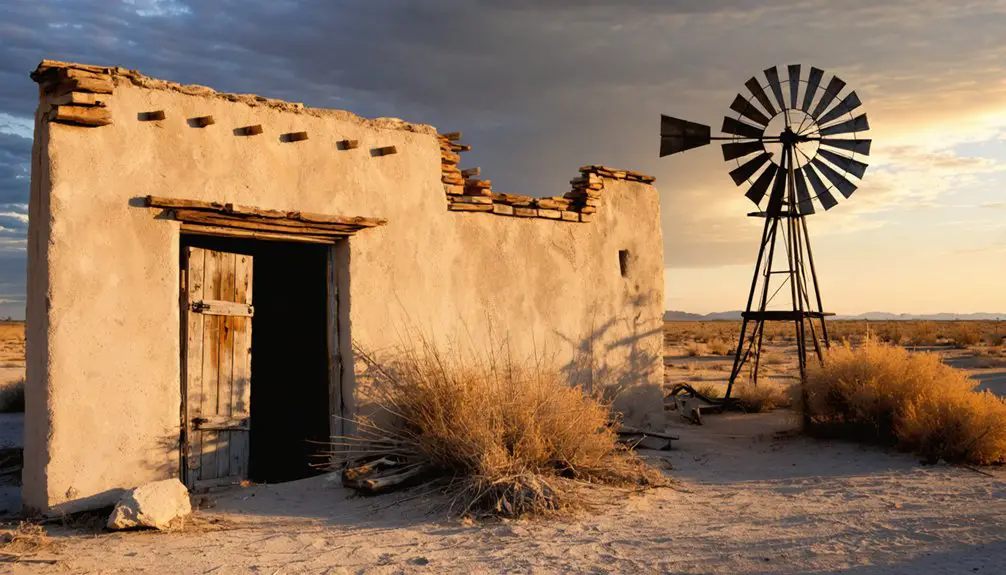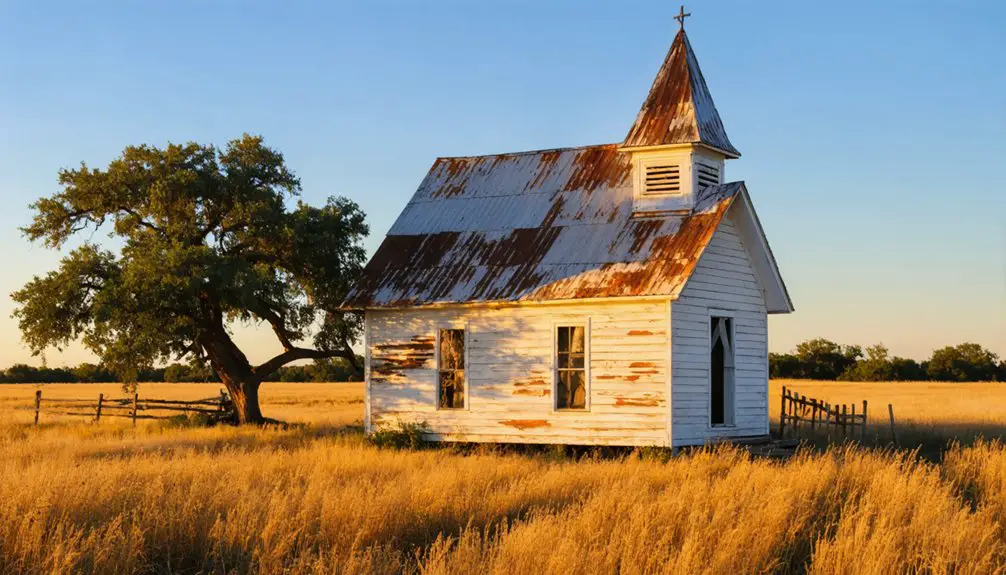
Saspamco, Texas, is a ghost town with a story you won’t want to miss. Named after the San Antonio Sewer Pipe Manufacturing Company, this once-thriving community peaked in the 1930s with 200 residents producing 120 tons of pipe daily. Today, you’ll find crumbling factory ruins and a stunning 1923 immigrant-built church still standing strong. Stock up on supplies before you go — there’s nothing out there. Keep scrolling to uncover everything you need for an unforgettable road trip.
Key Takeaways
- Saspamco is located 11 miles northeast of Floresville on U.S. Highway 181, making it an accessible ghost town destination from San Antonio.
- Stock up on fuel, food, and water before arriving, as Saspamco has no gas stations, restaurants, or lodging available.
- Visit Our Lady of Perpetual Help Catholic Church, built in 1923, which stands as Saspamco’s most enduring cultural landmark.
- Explore remnants of the sewer pipe factory, which once produced 120 tons of pipe daily before its industrial decline.
- Extend your trip by visiting nearby Wilson County ghost towns, including Kicaster, Kosciusko, Sunnyside, and Sutherland Springs.
Why Saspamco Stands Out Among Texas Ghost Towns
What sets Saspamco apart from Texas’s countless forgotten towns is its name—an acronym born from the San Antonio Sewer Pipe Manufacturing Company, the industrial heartbeat that built this community from the ground up in 1901.
That factory-driven origin gives Saspamco heritage a rare authenticity you won’t find in most rural relics.
At its peak in the 1930s, the plant churned out 120 tons of sewer pipe daily, supporting 200 residents and a surprisingly full community life.
Today, the ghost town allure draws curious travelers who appreciate a place shaped by immigrant labor, red clay, and raw ambition.
Wilson County alone claims 31 ghost towns, yet Saspamco’s industrial roots and cultural depth make it the most compelling stop on your Texas road trip itinerary.
The Rise and Fall of Saspamco’s Sewer Pipe Factory
When the San Antonio Sewer Pipe Manufacturing Company fired up its kilns in 1901, it didn’t just launch a factory—it built an entire town from the ground up. Local red clay fueled sewer pipe production, and by the 1930s, the plant cranked out 120 tons daily while employing 150 workers.
That prosperity couldn’t last forever. Steel and PVC alternatives triggered a brutal economic shift, making heavy clay pipes obsolete and unprofitable.
Businesses shuttered through the 1960s, and the old quarry briefly became a private landfill before regulators shut it down in the 1980s.
What remains are factory ruins and a quiet rural community that refused to disappear completely.
You’re visiting a place that survived industrial collapse on its own stubborn terms.
Our Lady of Perpetual Help: Saspamco’s Church That Survived
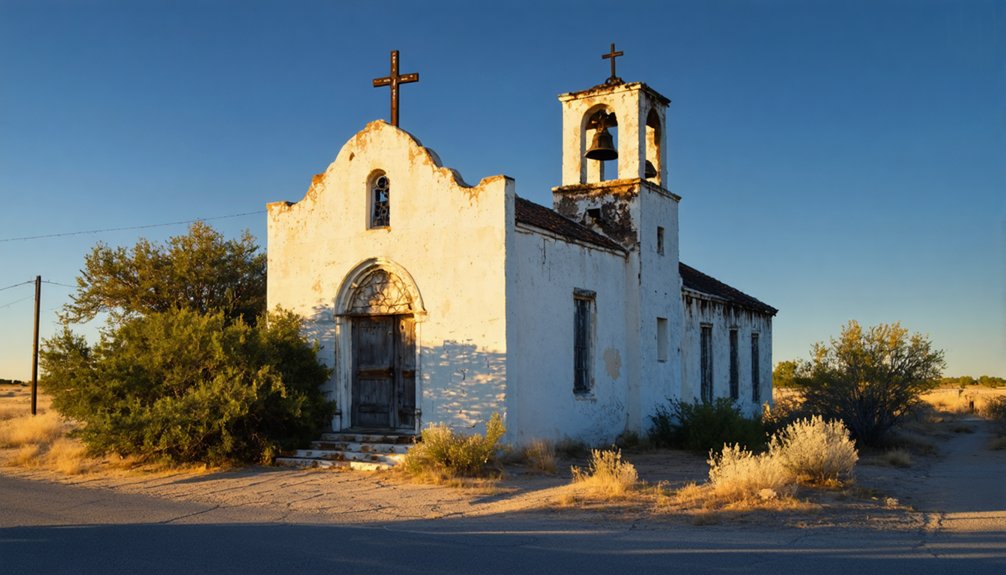
While the pipe factory crumbled and businesses packed up, one structure held its ground: Our Lady of Perpetual Help Catholic Church. Built in 1923, this remarkable example of Church Architecture stands as Saspamco’s most enduring Community Legacy.
Mexican immigrant laborers constructed it using materials they sourced themselves:
- Local sand harvested from the surrounding landscape
- Gravel pulled directly from nearby deposits
- Water drawn from the San Antonio River area
- Land donated by Lorenzo and Victoria Gonzales from their personal sand pit
You’ll find this church humbling when you visit. These workers built something permanent with their own hands, on donated ground, for their own community.
No corporation funded it. No outside authority commissioned it. They simply built it themselves, and it still stands today.
The Pipe Factory Ruins and Remnants Still Standing at Saspamco
Though the pipe factory that gave Saspamco its identity has long since ceased operations, its physical remnants haven’t fully disappeared. You can still explore ruins and quarry remnants dating back to the 1914-1915 era, offering tangible connections to the town’s industrial past.
The pipe factory’s historical significance becomes clear when you consider it once produced 120 tons of sewer pipe daily, employing 150 workers at its peak.
A 1910 real photo postcard even captured oil well drilling rock cones on the site, hinting at the area’s layered industrial history. Walking these grounds, you’ll sense the ambition that once drove this small Texas community.
The crumbling infrastructure stands as a quiet reflection of an era when Saspamco thrived as a genuine manufacturing hub.
How to Get to Saspamco, Texas
Exploring those factory ruins is even more rewarding once you know exactly how to reach this quiet corner of Wilson County.
Saspamco sits on the northern bank of the San Antonio River, 11 miles northeast of Floresville via U.S. Highway 181.
Follow these steps for a smooth journey:
- Start in San Antonio — your nearest metropolitan base for accommodations.
- Head south on U.S. Highway 181 toward Floresville, soaking in the open Texas landscape.
- Drive 11 miles northeast from Floresville — watch for the San Antonio River crossing.
- Stop in Floresville first — the Wilson County Historical Society offers historical significance context and local legends worth knowing before you arrive.
You’re now positioned to explore one of Texas’s 31 Wilson County ghost towns freely.
More Wilson County Ghost Towns Worth Adding to Your Drive
While you’re in the area, you’ll find that Wilson County holds the Texas record for ghost towns, with 31 in total, making Saspamco a perfect anchor for a broader loop.
Add Kicaster and Sutherland Springs to your route for a deeper look at the county’s layered past, each town carrying its own distinct story of rise and abandonment.
A little advance planning with the Wilson County Historical Society in Floresville can help you map an efficient drive that connects these scattered remnants without backtracking.
Nearby Ghost Towns Cluster
Wilson County holds a remarkable distinction as Texas’s ghost town capital, boasting 31 abandoned settlements within its borders—and Saspamco sits at the heart of several worth visiting.
Expand your ghost town exploration by adding these nearby communities, each carrying its own historic significance:
- Kicaster – A quietly faded settlement offering raw, unfiltered rural Texas character.
- Kosciusko – Named by Polish settlers, reflecting the county’s diverse immigrant heritage.
- Sunnyside – Once promising, now peacefully reclaimed by the South Texas landscape.
- Sutherland Springs – Carries deep historical layers predating the Civil War era.
You’re already driving U.S. Highway 181 through Wilson County—why stop at one ghost town?
Cluster these stops together and you’ll experience Texas history few travelers ever discover.
Kicaster And Sutherland Springs
Two of Wilson County’s ghost towns deserve a closer look before you move on—Kicaster and Sutherland Springs each bring something distinct to your drive.
Kicaster history is minimal by design—it’s a quiet reminder of how quickly small settlements vanish when industry or agriculture shifts.
You’ll find little fanfare, just raw Texas landscape telling its own story.
Sutherland Springs heritage runs deeper. This community gained national attention in recent years, but its roots stretch back through generations of Wilson County settlers who built lives along Cibolo Creek.
The old townsite carries weight you’ll feel standing there.
Together, these stops round out your ghost town circuit, giving you a fuller picture of how Wilson County’s rural communities rose, struggled, and ultimately faded into the surrounding South Texas plains.
Planning Your County Loop
With 31 ghost towns scattered across Wilson County, you’ve got more than enough material to build a full-day loop around Saspamco.
Stack your itinerary with stops that reward curiosity and respect for ghost town preservation.
- Kicaster – A quiet remnant worth photographing for local history enthusiasts.
- Kosciusko – Explore its rural character and faded community roots.
- Sunnyside – A brief stop revealing how farming shaped this region.
- Sutherland Springs – Rich local history tied to tragedy and resilience.
Use U.S. Highway 181 as your backbone, swinging between sites efficiently.
Cap your loop at the Wilson County Historical Society in Floresville, where detailed records deepen everything you’ve witnessed.
Freedom means choosing your own pace—so build this loop your way.
Closest Places to Stay and Eat Near Floresville
Since Saspamco sits just 11 miles northeast of Floresville, you’ll find your best options for food and lodging right there in Wilson County’s seat.
Floresville keeps things simple but satisfying, offering local dining at family-run Tex-Mex spots and classic American diners along its main corridor. You won’t find big chain hotels here, but the lodging options available give you a clean, comfortable base without unnecessary cost.
Several budget-friendly motels operate near U.S. Highway 181, keeping your return trip to Saspamco quick and easy. If you prefer more variety, San Antonio sits roughly 30 miles northwest and delivers every accommodation level imaginable.
Either way, you’re staying close to Wilson County’s rich ghost town cluster, so you can maximize your time exploring rather than driving.
What to Know Before You Drive Out to Saspamco
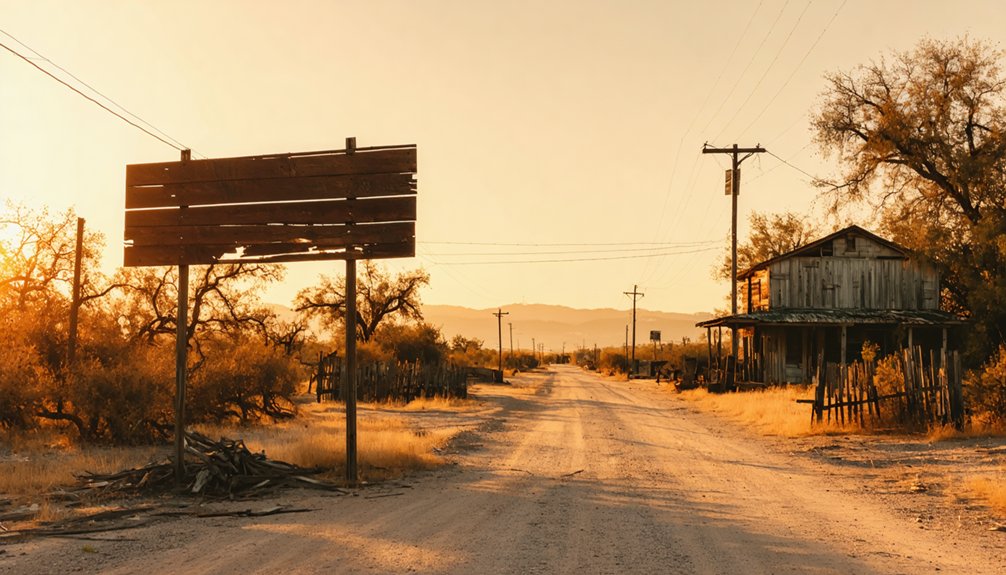
Before you head out to Saspamco, know that you’re driving to a true ghost town with few modern conveniences waiting for you on arrival.
You’ll reach the site by taking U.S. Highway 181 northeast from Floresville for about 11 miles, where the community sits quietly off the northern bank of the San Antonio River.
Stock up on fuel, food, and water before you leave, because you won’t find much out there beyond scattered rural remnants of a once-thriving manufacturing hub.
Remote Location Access
Reaching Saspamco requires a straightforward drive, but knowing what to expect will save you time and frustration. The remote scenery along U.S. Highway 181 northeast of Floresville rewards explorers who appreciate historical significance off the beaten path.
- Drive U.S. Highway 181 northeast from Floresville approximately 11 miles until you reach the northern bank of the San Antonio River.
- Use San Antonio as your base — it’s the nearest major city and offers full accommodations within the metro area.
- Fuel up beforehand — rural Wilson County has limited services between stops.
- Combine your visit with nearby ghost towns like Sutherland Springs or the Rancho de las Cabras historic site for a fuller experience.
Limited Amenities Available
Saspamco doesn’t offer much in the way of modern conveniences, so you’ll want to prepare before you leave home. As a ghost town with limited facilities, it won’t greet you with gas stations, restaurants, or lodging.
By 1990, only one business remained, and that number hasn’t grown considerably since. Basic services simply don’t exist here anymore — this is a community that manufacturing built and time quietly emptied.
Pack water, snacks, and a full tank of gas before heading northeast on U.S. Highway 181. San Antonio covers your accommodation needs as the nearest major city, roughly within the metro area.
Floresville, just 11 miles southwest, offers additional supplies and houses the Wilson County Historical Society if you’re craving deeper context for your exploration.
Frequently Asked Questions
Was Saspamco Ever Considered for Official Texas Historical Landmark Designation?
The records don’t confirm Saspamco’s official Texas Historical Landmark designation, but you’ll find its historical significance undeniable. Explore its rich heritage and champion preservation efforts to protect this fascinating ghost town’s remarkable story.
Are There Any Annual Events or Gatherings Still Held in Saspamco?
Like a fading ember, Saspamco’s ghost town history doesn’t spotlight annual events or gatherings. You won’t find official festivals, but locals still carry its local folklore, keeping quiet traditions alive in this small rural outpost.
Did the San Antonio and Aransas Pass Railway Tracks Through Saspamco Survive?
The railway history doesn’t show surviving tracks, but you’ll find local legends whispering of their ghostly paths. Explore Saspamco’s landscape, and you’ll sense the San Antonio and Aransas Pass Railway’s vanished spirit still haunting the terrain.
Were Any Other Clay Products Besides Sewer Pipe Manufactured at the Factory?
The records don’t confirm other clay pottery products beyond sewer pipe. You’ll find Saspamco’s industrial history centered on tile goods from local red clay, making that pipe production the factory’s defining — and fascinating — manufacturing legacy.
Is the Saspamco Post Office Still Operational or Permanently Closed Today?
Like a faded stamp on an old envelope, Saspamco’s post office status mirrors its local history — it’s closed. You’ll find this ghost town’s once-bustling mail hub silent, leaving only memories of its vibrant 1901 origins behind.
References
- https://www.wilsoncountyhistory.org/talk-saspamco
- https://en.wikipedia.org/wiki/Saspamco
- https://www.tshaonline.org/handbook/entries/saspamco-tx
- https://en.wikipedia.org/wiki/List_of_ghost_towns_in_Texas
- https://www.ksat.com/holidays/2018/10/30/texas-has-more-ghost-towns-than-any-other-state/
- https://kids.kiddle.co/Saspamco
- https://texashighways.com/travel/the-quest-to-resurrect-a-ghost-town/
- https://www.wilsoncountyhistory.org/talk-wilson-county?page=2
- https://www.texasescapes.com/SouthTexasTowns/Saspamco-Texas.htm