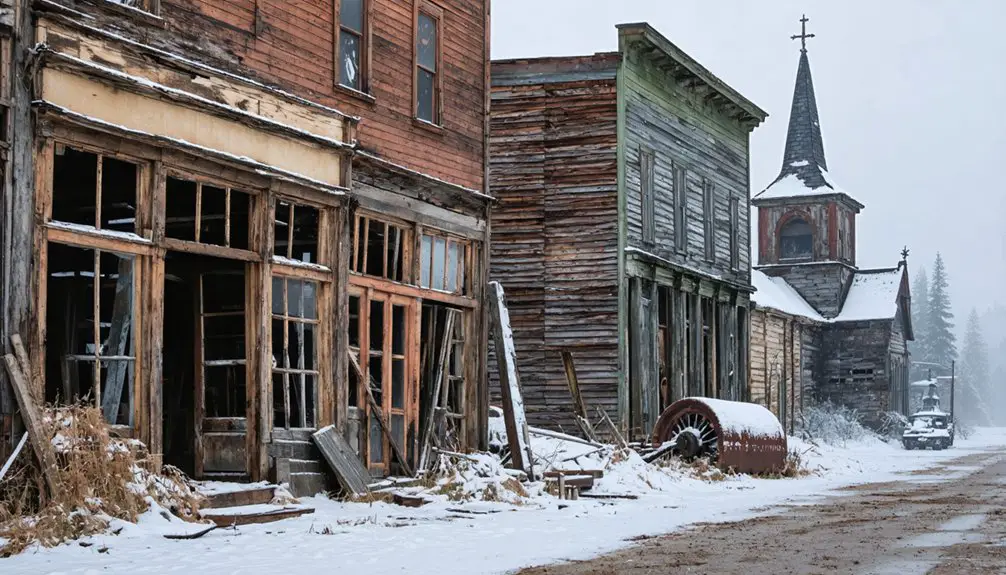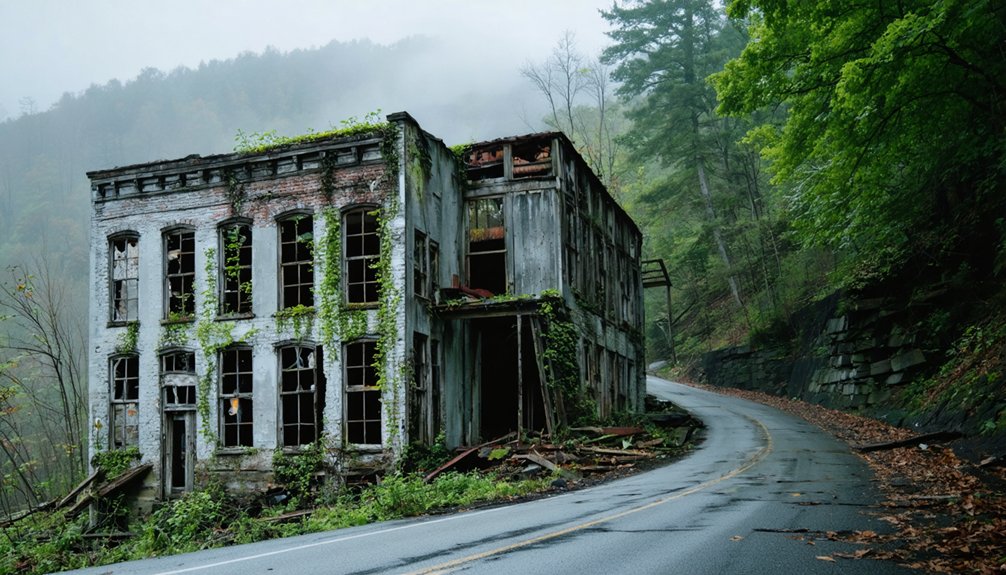
Planning a ghost town road trip to Sewell, West Virginia means committing to a journey as rugged as its history. You’ll start at Babcock State Park, the only legal land access point, then hike through a reclaimed forest to reach crumbling coke ovens, lost foundations, and railroad ruins slowly disappearing into the wilderness. Sewell once housed over 300 residents and nearly 200 beehive ovens before coal’s decline silenced it forever. Everything you need to find it — and understand it — is just ahead.
Key Takeaways
- Sewell is only legally accessible from Babcock State Park, requiring at least a 6-mile round trip combining biking and hiking through rugged terrain.
- Plan to stay at Babcock State Park, which offers campgrounds, cabins, and picnic areas as a staging base before exploring Sewell.
- The site features a third of a mile of preserved beehive coke ovens, engine house ruins, a bank vault, and collapsed coal conveyor remnants.
- Pack all essentials, respect site boundaries, and follow Leave No Trace principles, as Sewell is remote with no visitor amenities or services.
- Water access via raft or boat along the New River provides an alternative scenic route to reach the ghost town site.
What Is Sewell, West Virginia?
Once a thriving industrial hub deep in the New River Gorge, Sewell, West Virginia, is now a ghost town that’s been slowly swallowed by the forest. What was once home to over 300 residents, bustling coke ovens, and a working railroad has faded into ruins, reclaimed by nature since its last resident left in 1973.
Situated in Fayette County along the New River, Sewell sits within boundaries shared by New River Gorge National Park and Preserve and Babcock State Park. Preservation efforts have kept the site largely intact, protecting its industrial archaeology from further deterioration.
Local legends tied to early settlers like Peter Bowyer and Stephen Sewell add layers of human history to the crumbling foundations and overgrown coke ovens you’ll encounter when you venture in.
How to Actually Get to Sewell
Getting to Sewell isn’t like pulling up to a roadside historical marker — you’ll earn this one. The only legal land access drops down from Babcock State Park, covering at least 6 miles total, with the first 1.5 miles currently bikeable. After that, you’re on foot through reclaimed forest that’s slowly swallowing a century of industrial memory.
If you’re coming by water, rafts and boats can reach the site along the New River. Either way, the restricted access isn’t an obstacle — it’s intentional. That remoteness supports both cultural preservation and environmental impact management, keeping the ruins intact rather than trampled.
Pack what you need, leave nothing behind, and respect the boundaries. Sewell survived a long time. Your visit should help it survive a little longer.
Why Sewell Boomed: and Why It Died
Sewell’s rise came down to geology and timing. The hills surrounding the New River held some of the region’s richest coking coal, and by 1874, the first beehive coke ovens were already firing. That coal fed iron and steel production across the country, turning a quiet ferry crossing into a thriving industrial center with over 300 residents and nearly 200 ovens at peak output.
Then the seams thinned. Through the 1930s and 1940s, coal quality dropped, and the economics shifted. The ovens went cold in 1956. The Mann’s Creek Railroad stopped running in 1955. By 1973, the last resident was gone.
Today, urban decay has swallowed most of what stood. But the industrial relics — ovens, foundations, tipple ruins — still tell the story if you’re willing to hike in and listen.
What You’ll See at the Sewell Ghost Town Site
When you make the trek down to Sewell, you’ll find roughly a third of a mile of old beehive coke ovens still standing, their curved stone mouths quietly testifying to nearly a century of industrial fire.
You can also pick out surviving building foundations scattered across the overgrown site, including an office and store foundation that still holds its old bank vault.
Railroad-era remnants round out the scene, with the Mann’s Creek Railway engine house ruins and the collapsed coal conveyor tipple anchoring what’s left of a town that once hummed with production.
Coke Ovens Still Standing
Though the forest has reclaimed much of Sewell, roughly a third of a mile of beehive coke ovens still stands as the site’s most striking feature. These industrial relics fired continuously from 1874 to 1956, making them among southern West Virginia’s longest-running operations. Walking past them, you’ll feel the weight of that industrial era.
Look for these highlights as you explore:
- The arched coke oven openings, still intact despite decades of abandonment
- Railway remnants of the Mann’s Creek engine house, quietly rusting nearby
- A stone office foundation complete with a surviving bank vault
Each structure tells a piece of Sewell’s story. You’re not just seeing ruins — you’re reading the bones of a town that once fueled America’s steel industry.
Surviving Building Foundations
Beyond the coke ovens, you’ll find scattered building foundations that hint at the commercial life Sewell once supported. These stone outlines mark where workers once conducted business, bought supplies, and kept the town running through decades of industrial activity.
One of the most striking industrial relics you’ll encounter is the office and store foundation, where a bank vault still stands amid the rubble. It’s a haunting reminder that real money and real commerce once moved through this now-silent hollow.
Forest reclamation has done its patient work here, with roots cracking mortar and vines softening every hard edge. Yet the foundations endure, readable enough to help you map the town’s former layout.
Walking among them connects you directly to Sewell’s forgotten daily life.
Railroad Era Remnants
The Mann’s Creek Railroad once threaded through this hollow from 1886 to 1955, and you can still find its ghost at Sewell. This railroad was the town’s economic lifeline, hauling coal and coke out of the gorge for nearly seven decades.
Today, its industrial relics anchor the ghost town’s story.
Look for these surviving railroad-era remnants:
- Engine house ruins – The Mann’s Creek Railway engine house walls still stand, hinting at the mechanical heartbeat of a once-thriving operation.
- Coal conveyor tipple – The decaying tipple structure remains visible, marking where raw coal moved from mine to rail car.
- Rail corridor traces – The old rail path cuts through reclaimed forest, readable if you know what you’re looking for.
Planning Your Sewell Visit From Babcock State Park
Babcock State Park serves as your gateway to Sewell, offering the only legal land access to the ghost town via a route stretching at least 6 miles into the gorge.
You can bike the first 1.5 miles before shifting to a hike, so bringing a mountain bike lets you cover more ground before the trail demands foot travel.
The park’s campgrounds, picnic areas, and visitor facilities make it a practical base for your trip, letting you rest up before and after the long push down to the ruins.
Trailhead Access Points
Reaching Sewell means starting your journey at Babcock State Park, where the only legal land access to this forgotten industrial relic begins. The trail carries real cultural significance, threading through landscapes layered with local legends of coal miners and coke-oven workers who once shaped this valley.
Before you head out, know your three key access realities:
- The total route runs at least 6 miles one way into the gorge.
- Only the first 1.5 miles are currently bikeable; the rest demands hiking.
- River access via raft or boat offers an alternate approach along the New River.
This isn’t a drive-up destination. It rewards those willing to earn the experience on foot, moving freely through a wilderness that’s slowly reclaiming its industrial past.
Hiking And Biking Routes
Once you’ve sorted out your entry point at Babcock State Park, planning the actual route into Sewell calls for some honest prep work.
The total journey runs at least 6 miles, but you’ll enjoy a gentler start — the first 1.5 miles are currently bikeable, letting you cover ground quickly before the trail demands foot travel.
After that, you’re hiking through reclaimed forest where local legends of miners and coke workers seem to echo through the trees.
Pack light, wear sturdy footwear, and carry enough water for the full distance.
Preservation efforts have kept the site intentionally remote, so there’s no infrastructure waiting at the bottom.
That rawness is exactly the point — Sewell rewards travelers willing to earn the experience on its own terms.
Babcock Park Amenities
Tucked just above the gorge where Sewell’s ruins wait, Babcock State Park serves as your natural staging ground before you make the descent. Its visitor facilities give you everything you need to prepare for a backcountry day.
- Camping and cabins – Rest up the night before so you’re fresh for the trail.
- Grist Mill and picnic areas – Recharge after your hike with scenery that echoes another era.
- Wildlife watching – Local wildlife, from white-tailed deer to wild turkey, roams freely throughout the park’s forested ridges.
You’re not just passing through Babcock — you’re stepping into the same landscape that once fed Sewell’s coal operations. Let the park ground you before the ghost town pulls you in.
Nearby History Worth Adding to Your Sewell Trip
Sewell doesn’t exist in a vacuum, and the surrounding region gives you plenty of historical depth to round out your trip. Fayetteville anchors the area with historic landmarks that trace the region’s Civil War past, and local legends of river traders and frontier settlers echo through the New River Gorge.
The gorge itself carries centuries of layered history, from early ferry crossings like Bowyer’s Ferry in the 1790s to the railroad corridors that shaped Appalachian industry. Babcock State Park adds its own story, preserving working grist mills and woodland heritage.
Together, these sites transform your Sewell visit from a single ghost-town stop into a fuller journey through West Virginia’s industrial and pioneer past, rewarding every traveler who values wandering on their own terms.
Frequently Asked Questions
Is Camping Allowed Overnight at the Sewell Ghost Town Site?
The knowledge doesn’t confirm camping’s allowed at Sewell. You’ll want to check overnight restrictions and camping regulations with Babcock State Park and New River Gorge National Park before you chase this hauntingly beautiful, freedom-calling ghost town adventure.
Are Guided Tours of Sewell Available Through Either Park?
Neither park currently promotes planned, published guided tours of Sewell. You’ll freely forge your own path through this forgotten frontier, honoring its historical significance and preservation efforts as nature quietly reclaims its hauntingly beautiful, coal-dusted past.
What Wildlife Might Visitors Encounter Along the Trail to Sewell?
You’ll find wildlife sightings that’ll stir your soul on this trail. Trail animal encounters may include white-tailed deer, wild turkey, black bears, and soaring hawks — nature’s timeless companions guiding you toward Sewell’s forgotten past.
Is the Sewell Site Accessible During All Four Seasons?
You can technically visit Sewell year-round, but winter’s harsh conditions make the rugged 6-mile trek challenging. There aren’t visitor amenities, so you’ll appreciate how historical preservation keeps this nostalgic, free-spirited ghost town beautifully untamed across every season.
Are Drones Permitted for Photography Over the Sewell Ruins?
You’ll need to check drone regulations and photography permits before flying over Sewell’s haunting ruins. Both New River Gorge National Park and Babcock State Park enforce their own rules, so don’t assume the skies are freely yours.
References
- https://www.youtube.com/watch?v=_RczGBKsQPA
- https://www.onlyinyourstate.com/experiences/west-virginia/sewell-in-wv
- http://freepages.rootsweb.com/~gtusa/history/usa/wv/sewell.htm
- https://officialbridgeday.com/bridge-blog/history-of-sewell-coal-mine-community
- https://www.youtube.com/watch?v=h61GMMiCxzA
- https://en.wikipedia.org/wiki/Sewell
- https://wvexplorer.com/ghost-town-hidden-west-virginia-soon-accessible-to-hikers/
- https://wvexplorer.com/2025/10/19/ghost-towns-in-southern-west-virginia/