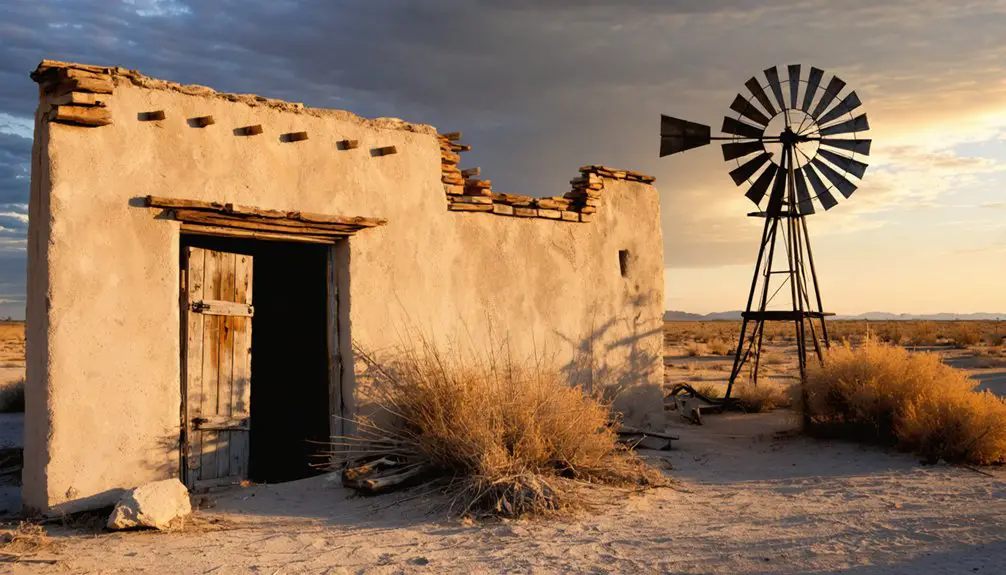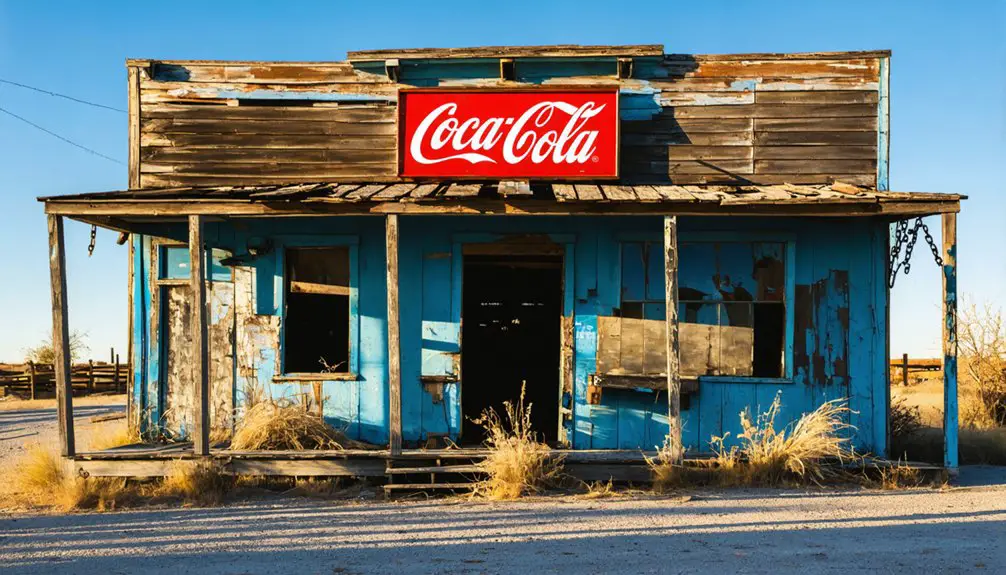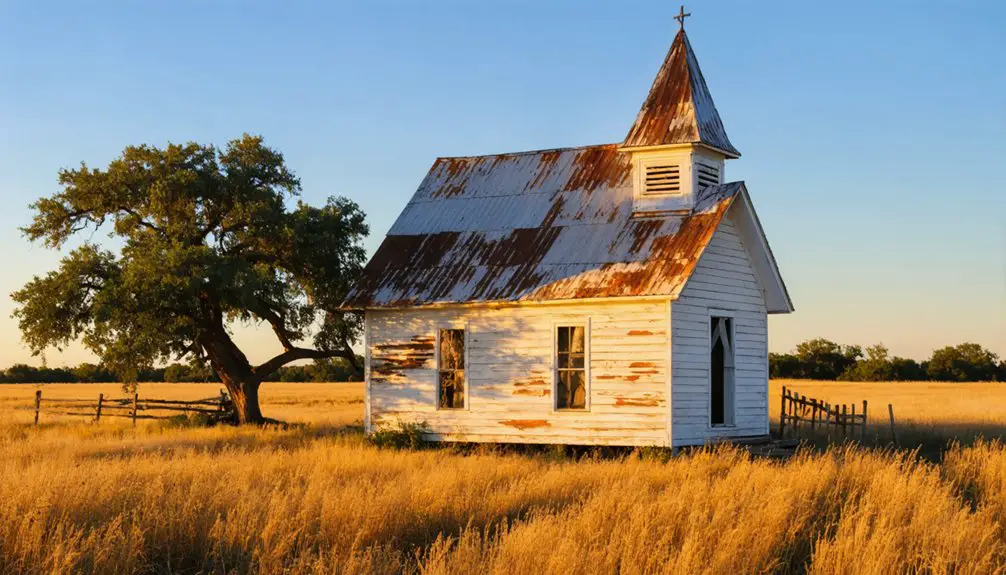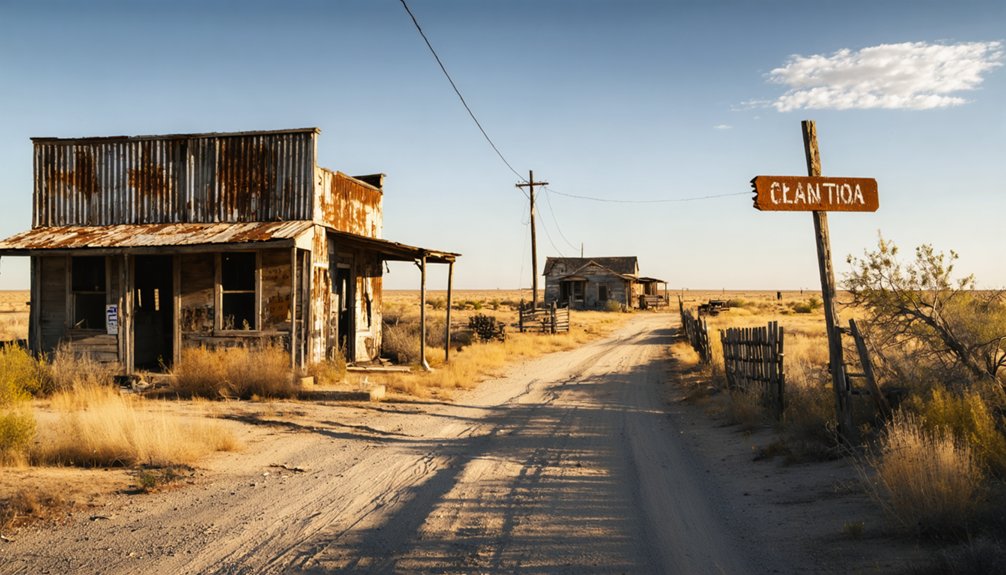
Planning a ghost town road trip to Dixie, Texas starts with heading northwest out of Sherman on U.S. Highway 377, about 16 miles into Grayson County’s quiet rural landscape. You’ll find a town that Confederate veterans built from scratch after the Civil War, complete with churches, schools, and a gin, now faded into ruins and forgotten cemeteries. Spring and fall offer the best conditions for exploring. There’s far more history here than the highway suggests.
Key Takeaways
- Dixie, Texas, lies 16 miles northwest of Sherman along U.S. Highway 377, accessible by standard 2WD vehicles.
- Founded by Confederate veterans post-Civil War, Dixie declined after its post office closed in 1902 and school consolidated in the 1940s.
- Remaining landmarks include old ruins, active churches, and cemeteries accessible from the highway, though private land requires permission.
- Visit during spring or fall for comfortable temperatures, wildflower blooms, and ideal photography lighting.
- Extend your trip by stopping at Dexter’s old hotel and Delaware Bend’s submerged settlements along U.S. 377.
Where Is Dixie, Texas and How Do You Get There?
Tucked along U.S. Highway 377, Dixie sits about 16 miles northwest of Sherman in Grayson County’s west central corridor. You’ll find it in north-central Texas, with Whitesboro to the south and Lake Texoma anchoring the landscape to the north.
Getting there’s straightforward. The road is 2WD-friendly, so you don’t need a truck or SUV to make the drive. Simply head northwest out of Sherman on U.S. 377 and watch for the community emerging quietly alongside the highway.
Dixie never succumbed to urban development pressures that swallowed other small towns, yet commercial decline stripped away most of its original businesses long ago. What remains is a roadside remnant worth the short detour — understated, historically loaded, and easy to reach on your own terms.
Why Dixie Qualifies as a Texas Ghost Town
Dixie won’t hit you as a Hollywood-style ghost town with tumbleweeds rolling past empty storefronts, but it earns the label through steady, documented decline.
The post office closed in 1902, the school consolidated into Whitesboro’s district by the 1940s, and the community services that once anchored daily life here simply disappeared over time.
What you’ll find today are old ruins and a slave cemetery tucked on private property, quiet proof that a once-functioning settlement slowly lost its people and its purpose.
Population Decline Over Time
Although it never fully emptied out, Dixie has followed the same slow fade that claimed hundreds of small Texas communities after the Civil War era boom settled into quiet decline. You can trace the pattern clearly: a post office that opened in 1886 and closed by 1902, a school that consolidated into Whitesboro’s district during the 1940s, and businesses that quietly disappeared when better roads pulled residents toward larger towns.
What’s left reflects both urban decay and stubborn historical preservation — crumbling ruins on private land sitting alongside active churches and a still-used cemetery. The population never vanished overnight; it just thinned steadily across generations. That gradual erosion is exactly what gives Dixie its ghost town character and makes your visit feel like stepping into something real rather than staged.
Abandoned Structures Still Standing
What you’ll find when you pull off U.S. Highway 377 tells the real story of Dixie’s slow fade. Urban decay has claimed much of what once made this community hum — the gin, the store, and the school are gone, replaced by overgrown lots and forgotten foundations.
Old ruins survive on private property, silent reminders of post-Civil War settler ambition. Yet Dixie isn’t completely hollow. Active churches still stand, and a roadside cemetery remains in use, suggesting quiet preservation efforts have kept at least part of the community’s identity intact.
Occupied residences dot the area too. It’s this mix — crumbling remnants alongside living landmarks — that earns Dixie its ghost town label. You’re not visiting rubble; you’re visiting a place caught between memory and disappearance.
Lost Community Services
How does a community earn the ghost town label? Dixie qualifies because it lost the services that once kept daily life running. Historic preservation efforts capture what disappeared:
- Post office — operated from 1886 to 1902, then closed permanently
- Cotton gin — processed harvests for surrounding farms before shutting down
- General store — supplied residents who no longer needed to travel to Sherman
- School — consolidated into the Whitesboro district during the 1940s
Each closure stripped away a reason for people to stay. Community resilience kept the churches and cemetery alive, but without commerce, mail service, or local education, Dixie’s population drifted elsewhere.
You’re fundamentally walking through the outline of a functioning town, seeing only what survival and memory managed to hold together.
The Confederate Veterans Who Founded Dixie, Texas
After the Civil War ended, Confederate veterans pushed westward into north Texas and staked their claim on what would become Dixie. These settlers first called their community Theodore, a name that quietly disappeared by 1886 when residents renamed it Dixie — a nod to the Southern identity these founders carried with them.
You can almost feel that history when you walk the ground here. Local legends tie the community’s roots directly to postwar resilience, with families building churches, schools, and a gin from scratch.
These historic landmarks tell a story of people who refused to let defeat define them.
What You Can Still See in Dixie, Texas Today
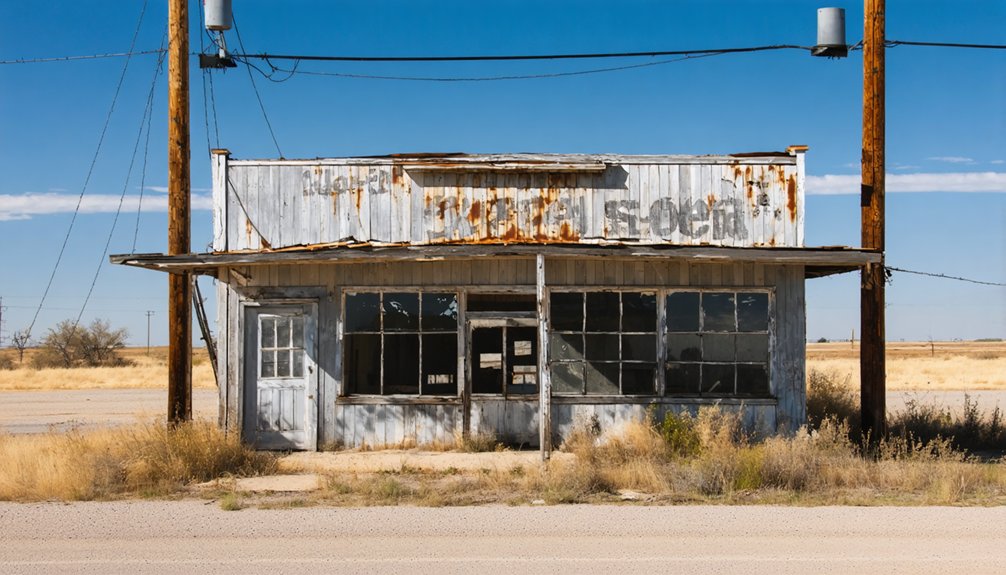
Though Dixie never vanished completely, what you’ll find today reflects a community frozen somewhere between past and present. Community preservation efforts have kept certain landmarks standing, giving you tangible connections to its post-Civil War roots. The restoration potential here is real — enough survives to imagine what once thrived along Highway 377.
Dixie never fully disappeared — it simply endured, suspended between memory and the present along Highway 377.
Look for these key stops:
- Active churches — still serving the area, offering living proof of Dixie’s enduring faith community
- Roadside cemetery — accessible near the highway and still in use
- Old ruins — visible on private property, so respect boundaries
- Slave cemetery — historically significant, also privately held
Keep your visit respectful and curious. Dixie rewards those who look closely at what quiet survival actually looks like.
Whose Land Is It? Respecting Boundaries at Dixie’s Cemeteries
Spotting those landmarks from the road is one thing — walking up to them is another matter entirely. Dixie holds two cemeteries, and at least one sits on private property. That boundary matters.
You’re free to pay your respects at the cemetery near the highway, which remains active and carries real historical significance for the families connected to this community.
The slave cemetery, however, sits on private land. Crossing onto that property without permission isn’t exploration — it’s trespassing.
Community preservation depends on visitors treating these sites with honest respect. Before you venture off the roadside, do your homework.
Contact local landowners if you want closer access. The people tied to Dixie’s past deserve that courtesy, and so does the land that still holds their history.
The Best Time To Visit Dixie, Texas
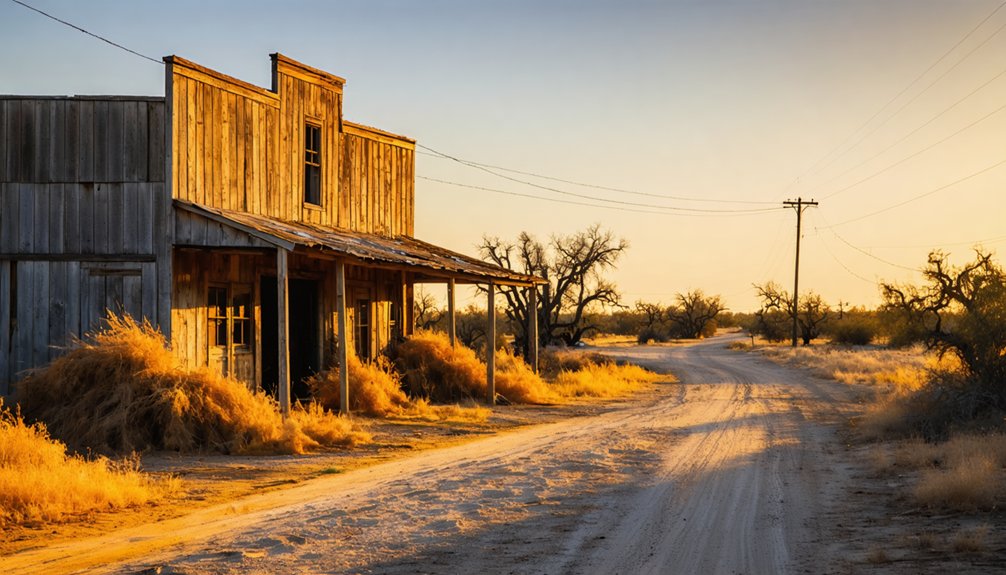
You can visit Dixie anytime since the site stays accessible year-round, but Texas summers turn brutally hot, making long outdoor stops uncomfortable.
Spring and fall offer the most pleasant temperatures for walking the cemetery grounds and taking in the roadside scenery.
If you’re planning to linger and explore, aim for March through May or September through November.
Anytime Works For Visitors
Since Dixie sits in north-central Texas rather than deep in the Hill Country or the desert southwest, the weather stays manageable for most of the year. Ghosttowns.com confirms you can visit anytime, so plan around your own schedule rather than a narrow season.
Keep these practical notes in mind:
- Spring and fall offer the most comfortable temperatures for roadside exploration.
- Summer heat runs hot, so arrive early and carry water.
- Mild winters remain passable for 2WD vehicles along U.S. Highway 377.
- Weekday visits give you quieter access near the cemetery and churches, where preservation efforts remain active and local legends still shape community identity.
Flexibility is the real advantage here — Dixie rewards curiosity on your timeline.
Avoid Peak Summer Heat
While Dixie welcomes visitors year-round, peak summer heat along the U.S. 377 corridor can turn a leisurely roadside stop into an uncomfortable sprint back to your air-conditioned car. North-central Texas summers hit hard, so plan your visit for spring or fall when cooler temperatures let you linger at the cemetery, read the headstones, and absorb the local legends tied to Confederate veterans who built this community from scratch.
You’ll also move freely around the active churches and surviving structures without wilting. Preservation efforts at sites like the slave cemetery deserve unhurried attention, and brutal July heat discourages that.
Pack water regardless of season, respect private property boundaries, and give yourself enough time to genuinely connect with what remains of Dixie’s layered, complicated past.
Spring And Fall Ideal
Spring and fall transform the U.S. 377 corridor into exactly the kind of road trip backdrop that makes ghost town hunting worthwhile. Mild temperatures let you move freely between outdoor stops without the July heat pressing down on you.
These seasons also sharpen your appreciation for historical preservation and community resilience when you’re standing beside an active cemetery or aging church wall:
- March–May brings cooler mornings ideal for cemetery walks.
- September–November offers clearer skies for roadside photography.
- Wildflower blooms in spring frame the surviving structures beautifully.
- Harvest-season light in fall adds depth to ruin photography.
You’ll read the landscape better when you’re comfortable, and Dixie’s quiet, partial remnants reward the traveler who arrives unhurried and ready to look closely.
What To Pack for a Dixie, Texas Road Trip
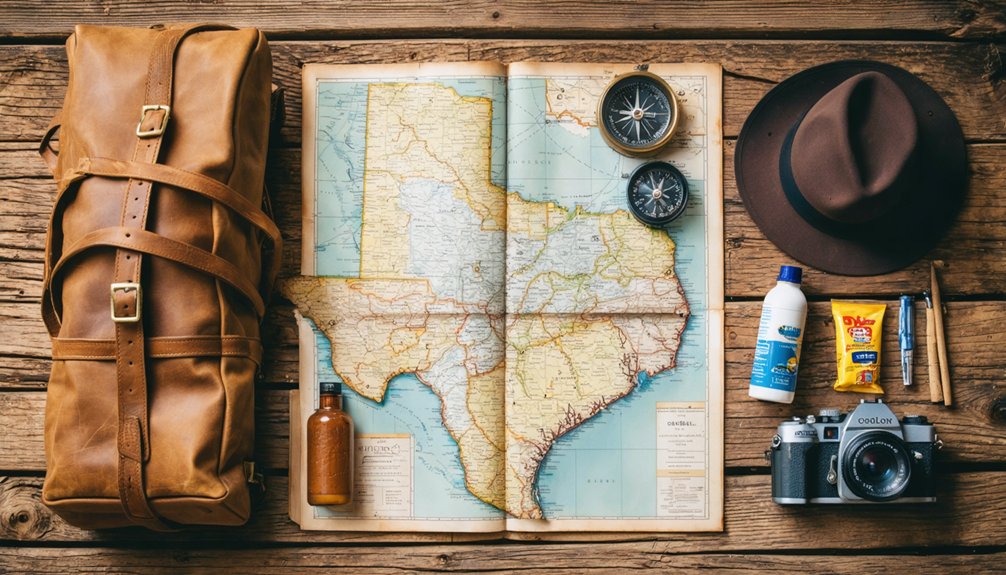
Because Dixie sits along U.S. 377 as a quick roadside stop rather than a remote wilderness destination, you won’t need heavy gear—but a few smart choices will make the visit more comfortable. Weather preparedness matters here since north Texas swings between cold winters and brutally hot summers, so layer accordingly and always carry water.
Comfortable walking shoes handle the 2WD-accessible terrain without trouble. Bring a camera for the cemetery, surviving church structures, and any visible ruins along the roadside.
Since Dixie itself offers no local cuisine stops, pack snacks or plan a meal in nearby Whitesboro before heading out. A printed or downloaded map helps since rural cell service can be unreliable. Keep cash handy for any small-town stops you add along Highway 377.
Dexter and Lake Texoma: Ghost Town Stops Near Dixie
If you’re already cruising U.S. 377 through Dixie, Dexter sits just a short drive north and rewards the detour with one surviving landmark: an old hotel standing as the last visible trace of what was once an active community.
Nearby, Delaware Bend tells a harder story — entire settlements swallowed by Lake Texoma‘s creation. These stops together reveal how community resilience and historical preservation shape what survives and what disappears.
Plan your extended route around these four points:
- Dexter’s old hotel — photograph the sole surviving structure
- Delaware Bend — reflect on communities deliberately flooded for the reservoir
- Lake Texoma shoreline — visualize displaced settlement patterns
- U.S. 377 corridor — connect the region’s postwar rural history northward
Each stop adds depth without demanding extra hours.
More Ghost Towns Along the Highway 377 Corridor
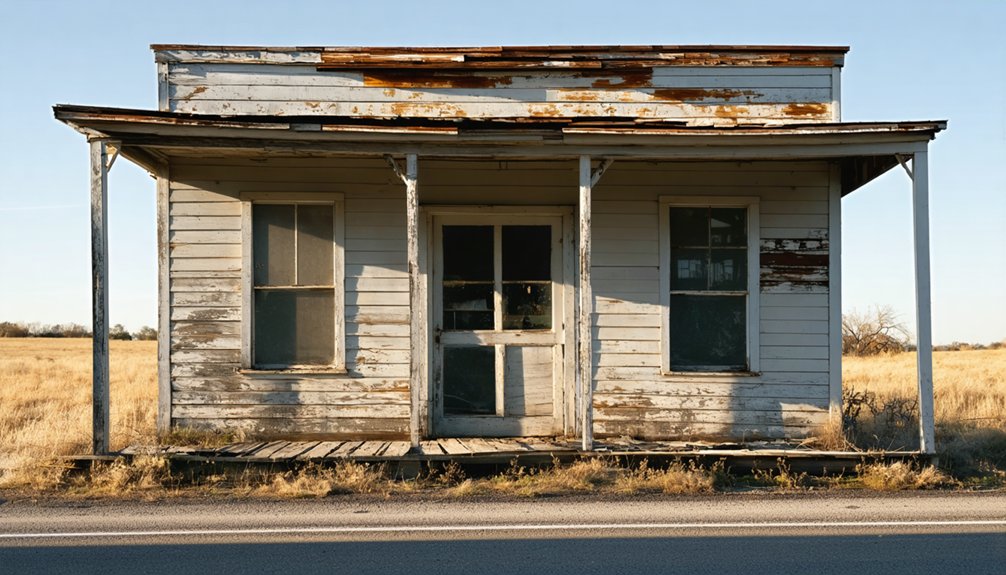
North-central Texas doesn’t hide its ghost town history — it scatters it across the landscape in fragments, waiting for drivers who know where to look. Highway 377 gives you a natural thread to follow beyond Dixie.
Small communities once tied to farming, railroads, and postwar settlement still leave traces along this corridor. Local folklore fills the gaps where official records go quiet, pointing you toward forgotten crossroads and faded storefronts.
Some sites benefit from quiet preservation efforts by local families and historical societies keeping memories from disappearing entirely. You won’t always find dramatic ruins, but you’ll find context — a cemetery here, a church foundation there, an old structure barely standing.
That accumulation of fragments is exactly what makes a road trip like this worth taking.
Frequently Asked Questions
Was Dixie, Texas Ever Called by a Different Name?
Dixie’s got a history that’ll blow your mind — it was originally called Theodore after the Civil War. Confederate veterans founded it, shaping its historical landmarks and sparking local legends before the name changed to Dixie by 1886.
How Many Ghost Towns Exist Across the State of Texas?
You’ll find more than 500 ghost towns scattered across Texas, offering incredible historical preservation and unique tourist attractions. These forgotten communities invite you to explore untamed landscapes and uncover the freedom of Texas’ rich, enthralling past.
When Did Dixie’s Post Office Permanently Close Its Doors?
While it may seem like a minor detail, it’s actually a key historical landmark: Dixie’s post office permanently closed its doors in 1902, ending 16 years of service and fueling local legends about the community’s quiet fade into history.
Did Dixie’s School Close or Merge With Another District?
You’ll find that Dixie’s school didn’t simply close — it merged with the Whitesboro district in the 1940s. This historical school closure left a lasting community impact, reshaping the town’s identity and accelerating its quiet fade into ghost town history.
Is There a Second Community Named Dixie Elsewhere in Texas?
Like a hidden gem waiting to be discovered, yes, you’ll find a second Dixie in Smith County, just west of Tyler off State Highway 64, boasting its own historic landmarks and local legends worth exploring!
References
- https://authentictexas.com/texas-ghost-towns/
- https://en.wikipedia.org/wiki/List_of_ghost_towns_in_Texas
- https://www.youtube.com/watch?v=Ux4FjzHs5DE
- https://www.instagram.com/p/DQWxfJEDehe/
- https://www.ghosttowns.com/states/tx/dixie.html
- https://www.tshaonline.org/handbook/entries/dixie-tx-smith-county
- https://www.facebook.com/groups/1784294158550093/posts/4222744401371711/
- https://www.tshaonline.org/handbook/entries/dixie-tx-grayson-county
- https://www.mineralrightsforum.com/t/dixieland-texas-in-reeves-county/44768