You’re heading to one of Minnesota’s most intriguing ghost towns when you visit Shell City. Founded in 1879 along the Shell River, this once-thriving prairie settlement supported a button factory, hotel, blacksmith shops, and massive wheat caravans before a railroad bypass sealed its fate by 1901. Today, you’ll explore a 60-acre historic site with foundation depressions, wagon tracks, and a frontier cemetery. Everything you need to plan your perfect road trip is just ahead.
Key Takeaways
- Shell City, founded in 1879, sits along the Shell River in Minnesota and once supported 75 residents before being abandoned by 1901.
- Reach Shell City from Menahga via Highway 71, County Road 23, 380th Street, and 199th Avenue to the Shell City Campground.
- Bring printed maps, a compass, sturdy footwear, water, and a first-aid kit, as cell service is unreliable on-site.
- The 60-acre site features foundation depressions, faint wagon tracks, interpretive signs, a historic cemetery, and overnight camping facilities.
- Nearby ghost towns Aldrich, Verndale, and Nimrod offer additional historical context for a fuller regional road trip experience.
What Was Shell City: Minnesota’s Forgotten Prairie Ghost Town?
Where the Shell River once bustled with clam harvesters and wheat caravans, a forgotten village now sleeps beneath the Minnesota woods. Shell City, Minnesota, sits in Wadena County’s Shell River Township, born in 1879 when William E. Kindred established its first post office.
You’re stepping into a place that thrived briefly on the edge of fertile Shell Prairies, supporting a button factory, hotel, blacksmith shops, and a stagecoach line hauling wheat 40 miles south to Verndale.
Around 75 residents once called this riverbank home.
How Shell City Grew Up on the Shell River Prairie
Francis M. Yoder and Sewall Chandler purchased the townsite in 1881, transforming a simple post office into a thriving prairie settlement. By 1882, Shell City officially had its name and a growing reputation along the fertile Shell River shore.
Local legends tell of a bustling community built on ambition and hard work, featuring:
- A button factory crafting products from river clams
- A stagecoach line connecting Shell City to Verndale, 40 miles south
- Essential businesses including blacksmith shops, mercantile stores, and a hotel
You can almost picture 75 residents building their lives among these abandoned structures, hauling caravans of 100 wheat wagons across open prairies.
Shell City wasn’t just surviving — it was genuinely thriving, until circumstances beyond its control changed everything.
The Button Factory and Every Business That Built the Town
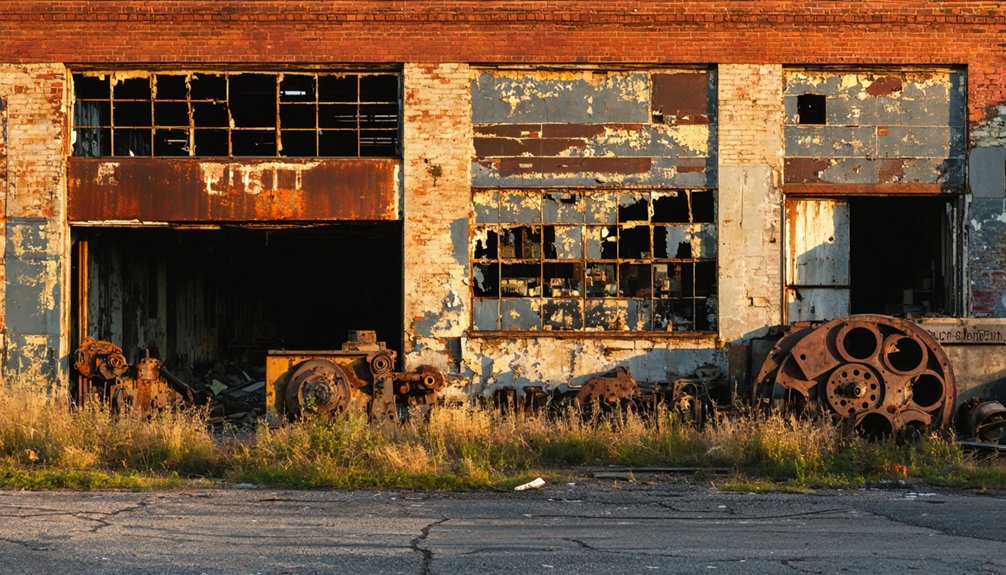
When you picture a remote prairie town in 1880, a button factory probably isn’t the first business that comes to mind. Shell City’s entrepreneurs harvested river clams straight from the Shell River and manufactured buttons from their shells, turning a local resource into a commercial product.
Supporting that factory, you’d have found a hotel, post office, school, stagecoach barn, multiple blacksmith shops, and mercantile stores all working together to keep the town alive.
Button Factory Origins
Shell City’s most unusual enterprise was its button factory, which turned river clams harvested from the Shell River into finished buttons. Local folklore suggests this factory gave the town its distinct identity among frontier settlements.
You’ll appreciate knowing the process wasn’t simple — workers cut, shaped, and polished raw clamshells into usable buttons sold across the region.
Preservation efforts have kept this story alive despite no physical factory remaining today. Here’s what made this operation remarkable:
- Raw material came directly from the Shell River’s abundant clam beds
- Finished buttons supplied markets far beyond Wadena County’s borders
- Local labor transformed a natural resource into a genuine manufacturing enterprise
This factory proved frontier communities could build creative economies from whatever nature provided nearby.
Supporting Local Businesses
How did a remote frontier settlement along the Shell River sustain itself before modern infrastructure existed? Shell City’s economy ran on diversity and determination. You’d have found blacksmith shops hammering out essential repairs, mercantile stores stocking frontier necessities, a hotel welcoming weary travelers, and a stagecoach barn coordinating the 40-mile wheat runs to Verndale’s Northern Pacific railhead.
Local legends describe caravans hauling up to 100 wagons of wheat through untamed terrain, keeping commerce alive season after season. A school educated children while the post office connected isolated families to the outside world.
Today, preservation efforts at the 60-acre historic site honor every business that once defined Shell City. Signs mark original building locations, letting you trace exactly where this self-sufficient community carved its brief but remarkable existence into Minnesota’s frontier landscape.
When Shell City Peaked: Population, Wheat Caravans, and Community Life
At its peak, Shell City buzzed with roughly 75 residents living along the Shell River shore, and the town’s heartbeat was wheat. Local legends and pioneer stories paint a vivid picture of caravans rolling across open prairie, sometimes reaching 100 wagons strong, hauling grain 40 miles south to Verndale’s Northern Pacific railhead.
Imagine the freedom of that frontier rhythm.
Here’s what defined Shell City’s peak years:
- Massive wheat caravans connected isolated settlers to distant markets
- A tight-knit community supported hotels, blacksmith shops, and mercantile stores
- A button factory turned river clams into commerce
You can almost feel the dust and determination when you walk the site today, tracing those faint wagon tracks yourself.
Why the Railroad Killed Shell City
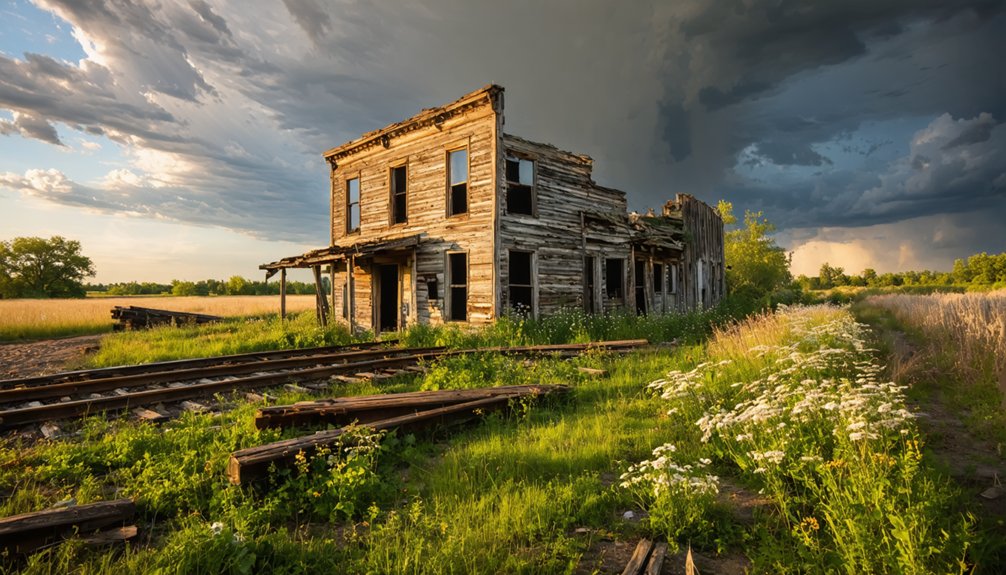
When the Great Northern Railroad chose a route seven miles west of Shell City, it quietly signed the town’s death warrant. Businesses that once thrived on wheat caravans and stagecoach traffic suddenly had no reason to stay. Residents dismantled their own buildings, hauling lumber elsewhere to start fresh near the railroad’s economic pull.
By 1901, the post office closed, officially marking Shell City’s end. Isolation swallowed what remained, and the woods slowly reclaimed every structure.
Today, local legends whisper about the community that railroad executives erased with a simple surveying decision. Urban legends aside, the real story needs no embellishment — ambition, geography, and corporate routing combined to erase an entire town.
You’ll feel that absence the moment you walk the silent, tree-lined grounds.
What’s Left to See at Shell City Ghost Town Today
When you arrive at Shell City’s 60-acre historic site, you won’t find standing buildings, but you’ll discover foundation depressions and faint wagon tracks that echo the town’s bustling past.
Signs throughout the site mark every original building location, letting you mentally reconstruct the village as you walk the grounds.
You’ll also find the historic cemetery, where graves of early settlers serve as quiet reminders that real lives once shaped this forgotten community.
Foundation Depressions And Tracks
Though Shell City’s buildings are long gone, you’ll still find fascinating remnants of the original village scattered across the 60-acre historic site.
Historical artifacts and preservation efforts have made these traces accessible and meaningful for modern explorers.
Look for these three compelling features:
- Foundation depressions – Subtle ground impressions mark where the hotel, blacksmith shops, and mercantile stores once stood.
- Wagon tracks – Faint trails carved by caravans hauling up to 100 wagons of wheat remain visible across the landscape.
- Informational signs – Markers identify every original building site, connecting you directly to Shell City’s 1880s story.
You’re fundamentally reading the land itself. Each depression and track tells you exactly where life once thrived before the Great Northern Railroad sealed this town’s fate.
Historic Cemetery And Graves
Beyond the foundation depressions and wagon tracks, Shell City’s historic cemetery stands as the most sobering reminder that real people built their lives here. You’ll find graves belonging to the settlers who carved this community from Minnesota wilderness. Their stories are now woven into local legends passed down through generations.
Unlike the abandoned structures that neighbors dismantled and hauled away for lumber, the cemetery endures untouched by time’s practical demands. Walking among the headstones, you’re connecting directly with those 75 original residents who once hauled wheat caravans and ran mercantile stores along the Shell River shore.
Signs throughout the 60-acre historic site help you locate and understand each burial area. The cemetery doesn’t just mark death — it marks the courage of people who dared to build something free and lasting.
Original Building Site Signs
How do you find a town that no longer exists? At Shell City, signs solve that mystery, marking every spot where abandoned structures once stood across this 60-acre historic site.
Local legends come alive as you walk lot to lot, piecing together a vanished community.
The signs reveal three remarkable discovery points:
- Mercantile and blacksmith locations – where commerce once drove frontier survival
- Hotel and stagecoach barn sites – ghost footprints of a bustling travel hub
- Button factory foundation depressions – remnants of Shell City’s most unique industry
You won’t need imagination alone here. The signage does the storytelling, transforming faint depressions and overgrown clearings into a readable map of 1880s life.
Shell City’s layout becomes surprisingly clear once you let the markers guide you.
How to Get to Shell City From Menahga, MN
Getting to Shell City from Menahga, MN is a straightforward drive through Minnesota’s scenic countryside. Head out on US Highway 71 toward Stocking Lake Road, then drive east for 4 miles until you reach County Road 23. Turn left heading north for 1 mile to 380th Street, then turn right heading east.
Continue east for 3 miles to 199th Avenue, then turn left heading north. Drive 1 more mile, and you’ll arrive at the Shell City Campground site.
The journey winds through open landscapes steeped in historical preservation and local legends that shaped this forgotten community. Signs throughout the 60-acre historic site mark original building locations, connecting you directly to the town’s past. Pack your curiosity and explore freely on your own terms.
What to Pack for a Shell City Ghost Town Visit

Preparing for a Shell City visit means packing smart for a remote, unmarked outdoor site with no modern amenities. You’ll navigate dense woods, uneven terrain, and Minnesota’s unpredictable weather, so come ready.
Historical preservation depends on respectful visitors who leave the site undisturbed, and visitor safety starts before you leave your driveway.
- Navigation tools – Bring a printed map and compass since cell service is unreliable this deep into Wadena County.
- Sturdy footwear and layered clothing – Uneven ground, roots, and seasonal mud make ankle support essential.
- Water, snacks, and a first-aid kit – The nearest services are miles away, so self-sufficiency isn’t optional.
Pack light, stay aware, and you’ll explore Shell City’s 60-acre historic site safely and confidently.
Where to Camp at Shell City: Campground and Horse Camp Options
Once you arrive at Shell City, you’ll find a campground and horse camp waiting to make your stay comfortable amid the ghost town’s wooded surroundings.
The campground offers basic amenities that let you settle in and explore the 60-acre historic site at your own pace, with signs marking every original building location.
If you’re riding in on horseback, the nearby horse camp gives you a dedicated facility so you can tie up your mount and hit the wagon trails without missing a beat.
Campground Amenities and Features
Whether you’re exploring the historic site on foot or arriving with horses in tow, Shell City offers camping options that make it easy to turn your ghost town visit into an overnight adventure. Supporting local legends and ongoing preservation efforts, the campground keeps you connected to this fascinating slice of Minnesota history.
The 60-acre site provides:
- Designated campsites with enough space to set up comfortably near the Shell River shoreline
- A dedicated horse camp with facilities designed specifically for equestrian travelers and their animals
- Interpretive signage marking original building foundations, letting you explore at your own pace
You’ll wake up surrounded by the same woods that slowly reclaimed this forgotten village, making every morning feel like stepping back into another era.
Horse Camp Facilities Nearby
For equestrian travelers, Shell City goes beyond a standard campground experience. The horse camp facilities sit near the historic 60-acre site, giving you and your horse direct access to trails once traveled by wheat caravans hauling 100 wagons at a time.
You’ll ride through the same wooded terrain where local legends say entire families quietly dismantled their homes and carried the lumber away piece by piece. Dedicated tie-ups, open space, and trail access make this a practical overnight stop for riders exploring the region.
Preservation efforts have kept the surrounding land accessible and clearly marked, so you won’t lose your way among the foundation depressions and faint wagon tracks. It’s a rare chance to experience Minnesota frontier history from the saddle.
Ghost Towns Near Shell City Worth Adding to Your Route
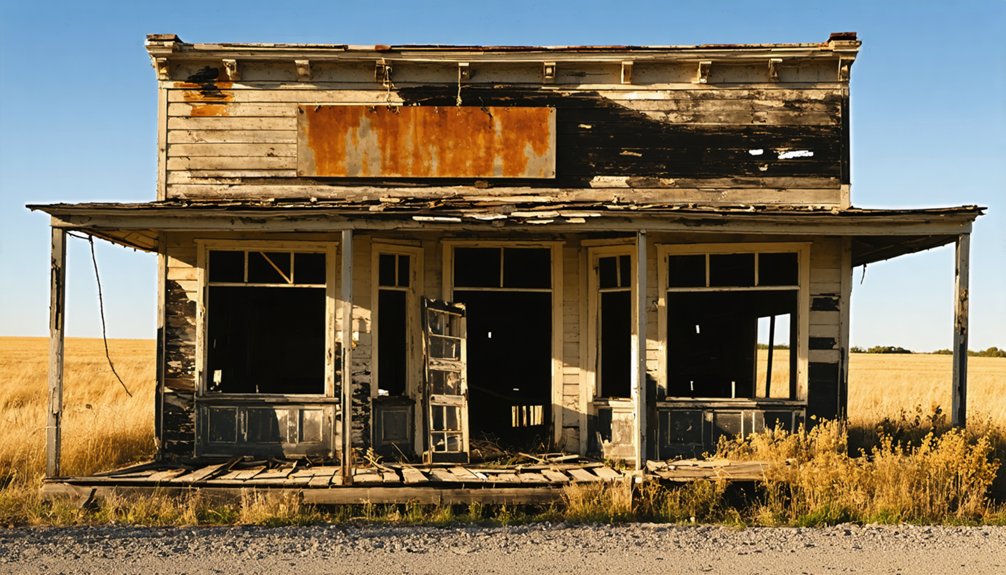
Why stop at Shell City when Minnesota’s backroads hold a string of forgotten settlements waiting to be explored? Pair your visit with nearby ghost towns to build a fuller picture of historical preservation across Wadena County‘s vanished frontier.
- Aldrich, MN – A nearly forgotten mill town with scattered remnants worth photographing.
- Verndale, MN – Once the Northern Pacific railhead where Shell City’s wheat caravans terminated, now a quiet town carrying real historical weight.
- Nimrod, MN – A small settlement that barely survived, offering honest rural atmosphere without tourism development crowds.
Each stop adds context to Shell City’s story. You’re not just visiting ruins — you’re tracing an entire region’s rise and quiet disappearance, mile by dusty mile.
Frequently Asked Questions
Is There an Entrance Fee to Visit the Shell City Historic Site?
The provided knowledge doesn’t mention an entrance fee, so you’re likely free to explore Shell City’s historical significance firsthand! Support preservation efforts by respecting the 60-acre site’s graves, foundations, and wagon trails you’ll discover there.
Are Pets Allowed at the Shell City Campground and Horse Camp?
Don’t let uncertainty stop your adventure! The provided information doesn’t specify pet policies or camping regulations for Shell City. You’ll want to contact Wadena County directly to confirm whether you can bring your furry companions along.
What Is the Best Time of Year to Visit Shell City?
You’ll find Shell City’s historical significance shines brightest in summer’s warm seasonal weather, when you can freely explore foundation depressions and wagon trails without battling Minnesota’s harsh winters or muddy spring thaws.
Is the Shell City Site Accessible for Visitors With Mobility Limitations?
Imagine rolling along firm wagon tracks in your wheelchair — Shell City’s flat, open terrain offers some natural accessibility options. However, mobility accommodations are limited, so you’ll want to plan carefully before visiting this rustic, freedom-filled historic site.
Can Visitors Legally Collect Artifacts or Souvenirs From Shell City?
You shouldn’t remove anything from Shell City’s 60-acre historic site. Artifact collection is prohibited, and souvenir regulations protect remaining foundations and wagon tracks. Respect these rules so you’ll preserve this remarkable ghost town’s history for future explorers.
References
- https://en.wikipedia.org/wiki/Shell_City
- https://kids.kiddle.co/Shell_City
- https://www.ghosttowns.com/states/mn/shellcity.html
- https://www.facebook.com/groups/125978938019838/posts/753047008646358/
- https://www.youtube.com/watch?v=q-4pccQVbns