Planning a ghost town road trip to Sitka, Kansas means trading tourist crowds for raw, honest history along U.S. 183. You’ll find abandoned storefronts, a standing church, crumbling homes, and a grain elevator that still dominates the skyline. Spring and fall offer the best travel conditions, and pairing Sitka with nearby Clark County ghost towns like Englewood and Lexington maximizes your day. Stick around — there’s plenty more to uncover about making this trip unforgettable.
Key Takeaways
- Access Sitka via U.S. 183 from Dodge City or Liberal, visiting during spring or fall for the best weather conditions.
- Explore abandoned structures, a standing church, grain elevator, and concrete foundations marking Sitka’s former bustling main street.
- Combine Sitka with nearby Clark County ghost towns like Englewood, Lexington, and Clark City for a comprehensive road trip.
- Respect Kansas trespassing laws, stick to roadsides, wear sturdy footwear, and carry a first aid kit for safety.
- Visit Clark State Fishing Lake near Ashland for a natural contrast and reflection between ghost town stops.
What Makes Sitka, Kansas Worth the Drive?
Why drive out to a Kansas ghost town with barely a handful of residents left? Because Sitka delivers something rare — ghost town allure without the tourist crowds.
You’re not walking through a reconstructed exhibit. You’re standing where real people built a thriving community that once peaked near 300 residents in the 1920s.
Sitka’s historical significance runs deeper than crumbling walls. A railroad once made it a regional hub for livestock and commerce.
Stockyards, hotels, and a busy Main Street defined its prime. Today, sidewalks, foundations, and scattered ruins tell that story without a single tour guide.
If you crave open roads, honest history, and the freedom to explore on your own terms, Sitka gives you exactly that — raw, unfiltered, and waiting along U.S. 183.
How Sitka Went From Railroad Boomtown to Ghost Town
Sitka didn’t collapse overnight — it unraveled slowly, pulled apart by the same forces that hollowed out dozens of Kansas farm towns throughout the 20th century.
Railroad impact hit first. Once the trains stopped mattering, Sitka lost its edge over surrounding settlements, and the commerce that depended on that access dried up fast.
Then came agricultural changes — mechanization meant fewer hands needed on the land, fewer families planting roots in small towns, and fewer reasons to keep local businesses running.
Larger nearby towns absorbed the trade that once flowed through Sitka’s main street. Storefronts emptied, residents left, and the post office finally closed in 1964.
What had once peaked at around 300 people quietly faded into the Clark County landscape.
What You Can Still See in Sitka Today
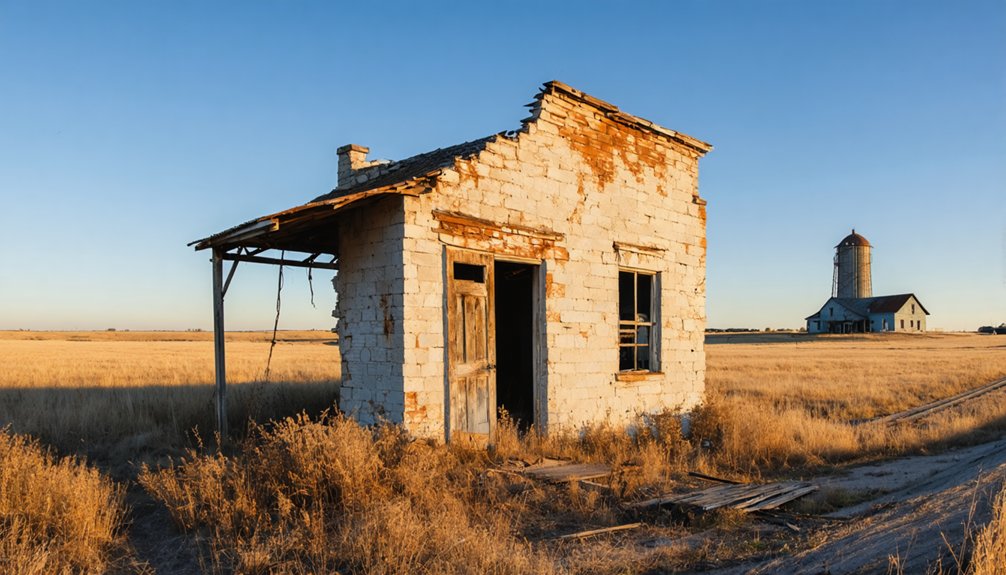
When you pull into Sitka today, you won’t find a bustling town, but you’ll find enough remnants to piece together what once stood here.
A few structures still break the skyline, while foundations, old sidewalks, and water pumps quietly mark the footprints of businesses and homes long abandoned.
Train your eye on the landscape and you’ll start reading the town’s former layout in the ruins scattered across the site.
Standing Structures Still Visible
Few ghost towns offer as much to see as Sitka does for a place with so few residents left.
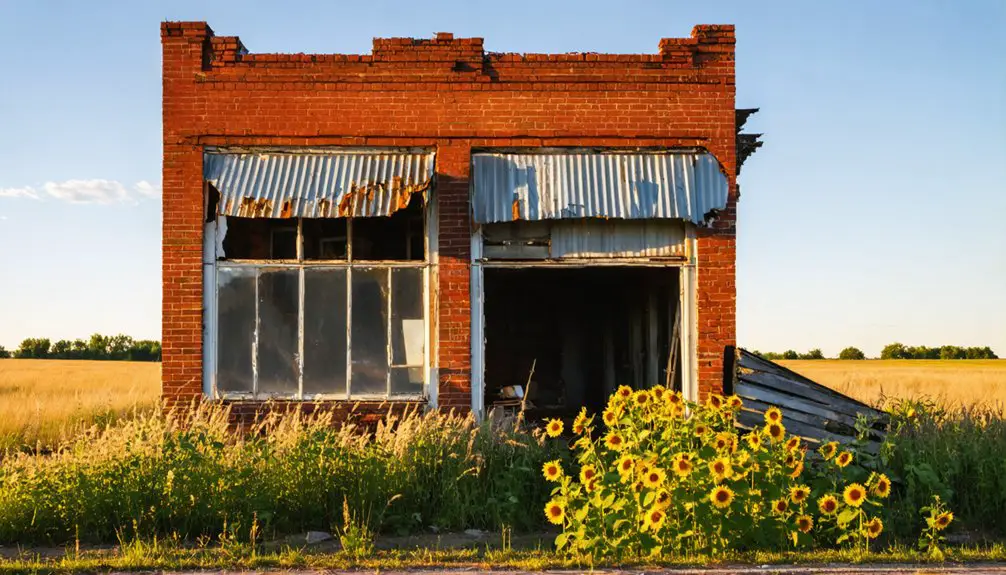
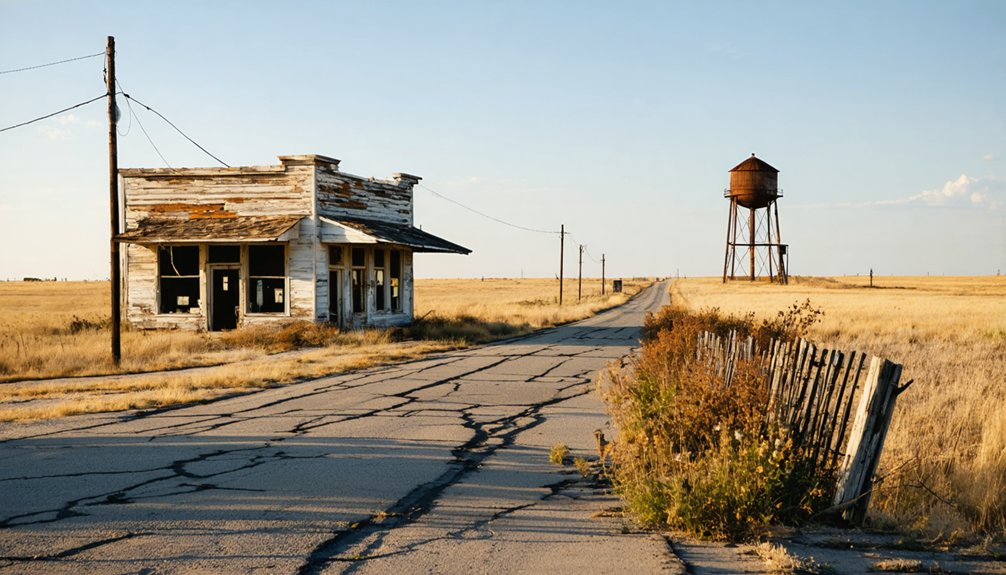
As you drive through, you’ll spot abandoned structures scattered along what was once a busy main street. A church still stands, along with old homes in varying states of decay.
Look down and you’ll notice concrete sidewalks, foundations, and old hand pumps marking where businesses once operated. These historical remnants give you a tangible sense of the town’s former layout.
The grain elevator, reportedly the last active business, remains a dominant landmark on the horizon.
An old school building, later converted into a restaurant before closing in 1999, also survives. Each structure tells a piece of Sitka’s story without a single word.
Foundations And Former Sites
Scattered across the townsite, foundations and remnants of former buildings give Sitka a quiet, open-air museum quality that rewards those who look closely.
You’ll find old sidewalks still cutting through overgrown lots, hand pumps marking where homes once stood, and concrete pads outlining businesses that served a thriving community a century ago.
This foundations exploration connects you directly to Sitka’s peak years, when Main Street hummed with commerce and railroad activity kept the town alive.
The historical remnants aren’t dramatic, but they’re honest — telling a story of slow departure rather than sudden collapse.
Walk the grid, study the depressions and stone outlines, and you’ll start reading the town like a map.
Every cracked slab represents a life, a livelihood, and a place that genuinely mattered.
Trespassing Laws and Safety Rules for Exploring Sitka
Exploring a ghost town like Sitka feels thrilling, but you’ll need to respect both the law and your own safety before you start poking around abandoned structures.
Kansas trespassing laws apply even when a property looks completely abandoned, so always assume someone owns what you’re looking at. Post yourself on public areas like roadsides unless you’ve confirmed access.
Follow basic safety guidelines when near old buildings: watch for unstable floors, collapsed roofing, and rusted metal edges. Don’t enter structures that look ready to fall.
Bring sturdy footwear, a first aid kit, and let someone know your plans. Cell service can be spotty in Clark County, so prepare accordingly.
Respecting boundaries keeps you free to enjoy the experience without legal or physical consequences.
When to Visit Sitka and How to Get There
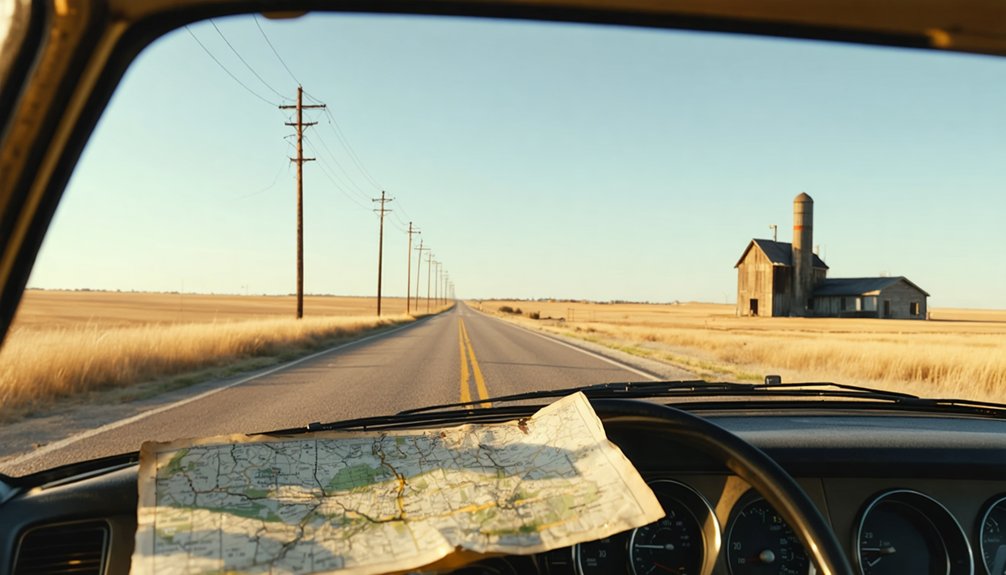
Timing your visit to Sitka well can make the difference between a rewarding stop and a frustrating one.
Spring and fall offer the best travel times, giving you mild temperatures and clear skies without summer’s brutal heat or winter’s unpredictable road conditions. Avoid visiting after heavy rain, since rural Clark County roads can turn muddy and impassable quickly.
Getting there’s straightforward. You’ll follow U.S. 183 through south-central Kansas, with Sitka sitting right along the route.
From Dodge City, head south; from Liberal, head north. Both route options drop you onto the highway without complicated detours.
Sitka works best as a rolling stop rather than a standalone destination, so pair it with nearby ghost towns like Englewood or a swing past Clark State Fishing Lake.
Other Clark County Ghost Towns Worth Visiting
Clark County holds more ghost towns than most travelers realize, and if you’ve already made the drive to Sitka, you’re well-positioned to explore several others without backtracking far.
Englewood, Acres, Lexington, Clark City, and Mount Casino all carry their own ghost town history, each shaped by the same rural depopulation that hollowed out Sitka. Some offer crumbling foundations, others standing structures, and a few sit quietly beside roads that once connected thriving communities.
Clark State Fishing Lake also sits nearby, giving you a natural break between stops. Treat this stretch of Clark County as a self-guided circuit rather than a single destination, and you’ll leave with a fuller picture of how an entire region transformed over the course of a century.
Plan a Full Day Around Sitka With These Nearby Stops
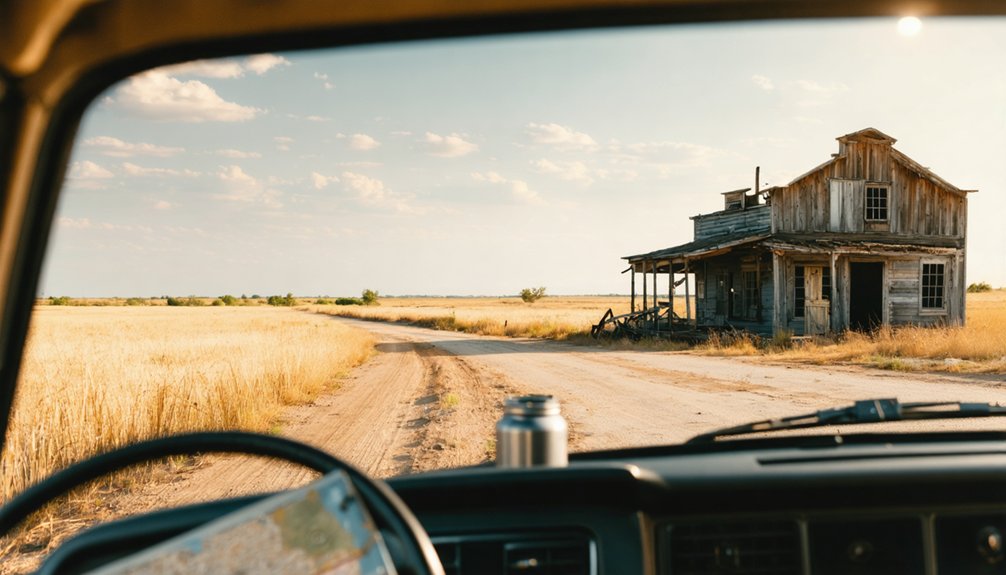
If you’re making the drive to Sitka, you can easily turn the trip into a full day by hitting several other Clark County ghost towns along the way, including Englewood, Acres, Lexington, Clark City, and Mount Casino.
You’ll find that pairing those abandoned sites with a stop at Clark State Fishing Lake breaks up the route with some natural scenery and a change of pace.
Planning your stops in advance keeps the day moving efficiently and guarantees you don’t miss anything worth seeing in this ghost-town-rich corner of Kansas.
Explore Nearby Ghost Towns
Since Sitka works best as a quick stop rather than an all-day destination, you’ll get far more out of your trip by pairing it with the other ghost towns scattered across Clark County. Englewood, Acres, Lexington, Clark City, and Mount Casino all sit within reasonable driving distance, each carrying its own quiet history and abandoned character.
One of the best travel tips for this kind of route is to map your stops in advance so you’re not doubling back on rural roads. These ghost towns share similar stories of railroad decline, rural depopulation, and fading commerce, but each one feels distinct on the ground.
Together, they turn a single afternoon into a genuinely rewarding exploration of what the southern Kansas plains once built and eventually left behind.
Visit Clark State Lake
Tucked just outside of Ashland, Clark State Fishing Lake offers a natural counterpoint to the crumbling storefronts and abandoned lots you’ll encounter throughout the day.
After immersing yourself in historic preservation and local legends, the lake gives you room to breathe and reset before your next stop.
Consider making the most of your time here:
- Fish or hike along the lake’s quiet trails and shoreline
- Picnic surrounded by open Kansas landscape after a morning of ghost town exploring
- Photograph the contrast between rugged natural scenery and the day’s urban ruins
- Reflect on the region’s layered history, from agricultural roots to abandoned communities
It’s a simple, rewarding stop that balances the heavier atmosphere of Sitka and its surrounding ghost towns.
Combine Multiple County Sites
While Sitka makes for a compelling centerpiece, Clark County holds enough ghost town history to fill an entire day if you plan your route well.
Add Englewood, Acres, Lexington, Clark City, and Mount Casino to your itinerary for a loop that rewards curious travelers with layered stories of settlement and abandonment.
These road trip tips will help you move efficiently between sites without backtracking unnecessarily along rural highways.
Keep ghost town etiquette in mind throughout your journey — respect private property, don’t remove artifacts, and leave structures exactly as you find them.
Each stop contributes something distinct to the region’s larger narrative, and combining them transforms a single roadside curiosity into a meaningful exploration of how Kansas communities rose, thrived, and quietly disappeared.
Where to Research Sitka’s History Before You Go
Before heading out, a few solid resources can help you get a feel for Sitka’s story. Eldora McMinimy’s book on Sitka’s history is a great starting point, and local libraries in Clark County may carry copies alongside historical archives worth browsing.
- Local libraries in Ashland often hold Clark County records, photographs, and maps.
- Historical archives through the Kansas Historical Society offer digitized documents and old newspapers.
- Online resources like ghost town databases and travel blogs feature photos and firsthand accounts.
- Oral histories from longtime residents occasionally surface in county historical society collections.
Spending an hour with these sources before you leave gives your trip real context.
You’ll recognize foundations, ruins, and landmarks with fresh eyes once you actually roll into town.
Frequently Asked Questions
Did Sitka, Kansas Ever Have Its Own School Building?
Want to explore ghost town schools? Yes, Sitka history confirms it had its own school building! You’ll find it fascinating that locals later converted it into a restaurant, which operated until finally closing in 1999.
Who Wrote a Historical Book Specifically About Sitka, Kansas?
You’ll love discovering that Eldora McMinimy wrote a book packed with Local Legends and Historical Anecdotes about Sitka, Kansas, giving you an intimate, freedom-fueling glimpse into the town’s rich, enchanting past.
When Did the Sitka, Kansas Post Office Permanently Close?
You’ll find that Sitka’s postal services permanently closed in 1964, marking a defining moment in its ghost town history. That closure signaled the town’s final fade, leaving behind only echoes of a once-thriving community along U.S. 183.
What Was the Peak Population Sitka Reached During Its History?
Ironically, Sitka’s ghost town demographics once boasted a bustling peak population of around 300 in the 1920s — a historical significance you’d never guess exploring its quiet, nearly abandoned streets today!
What Was the Last Remaining Active Business in Sitka?
You’ll find the elevator stands as Sitka’s last active business, a proud landmark in this ghost town history. It’s a piece of local legends that reminds you of the freedom found in exploring forgotten American heartland communities.
References
- http://kansasghosttowns.blogspot.com/2010/10/sitka-kansas.html
- https://www.youtube.com/watch?v=gkfXLg-ftys
- https://www.youtube.com/watch?v=zgp0w9WWGcg
- https://www.travelks.com/kansas-magazine/articles/post/exploring-kansas-forgotten-roads/
- https://www.youtube.com/watch?v=KBXINX0xqnU
- https://www.facebook.com/TravelwithaWiseguy/posts/todays-video-was-of-me-driving-around-central-kansas-finding-random-ghost-towns-/879468841534477/
- https://www.onlyinyourstate.com/trip-ideas/kansas/kansas-ghost-town-road-trip
- https://www.youtube.com/watch?v=HpolfSLrhsE
- https://legendsofkansas.com/kansas-ghost-town-list/
- https://www.youtube.com/watch?v=Aa-_f4ThouQ