You’ll find Slatersville Station along Rhode Island’s historic Providence Pike, where weathered granite mill walls and the 1856 stone arch bridge tell stories of America’s industrial awakening. Plan your October visit to capture autumn light on the 1850 brick store blocks and converted mill apartments that line the village green. The Blackstone River Valley National Historical Park protects this atmospheric landscape where worker housing rows still stand beside the Branch River, and the architectural remains reveal both industrial triumph and the stark realities of 19th-century mill life that await your exploration.
Key Takeaways
- Visit Slatersville Mill, birthplace of America’s industrial revolution, featuring weathered granite walls and distinctive belltower architecture from 1805.
- Explore the historic 1856 stone arch bridge and former Providence-Woonsocket Railroad corridors that connected the isolated mill village.
- Walk the village green to see the 1850 brick store block, Congregational Church, and converted worker housing apartments.
- Photograph between September and November for optimal autumn light on the architectural landmarks and waterside locations.
- Combine your visit with nearby Blackstone River Valley National Historical Park and Slater Mill National Historic Landmark tours.
The Rise and Fall of America’s First Mill Village
When you stand before the weathered granite walls of Slatersville Mill today, you’re witnessing the birthplace of a revolution that transformed America from an agricultural nation into an industrial powerhouse.
Samuel and John Slater established this village in 1803, opening their mill on July 4, 1807—a deliberate declaration of economic independence. The architectural innovations were unprecedented: a massive stone structure powered by a 170-acre reservoir, featuring a belltower that commanded workers’ daily rhythms.
Getting to Slatersville: Routes Through History
You’ll find yourself tracing the same paths the Slater brothers traveled in 1805, winding through northwestern Rhode Island’s rolling hills where gambling dens once dotted the landscape. The historic Providence Pike carried merchants and mill workers into this valley, while the Woonsocket and Pascoag Railroad later carved iron rails alongside the Branch River, delivering coal and cotton to the humming mills.
Today, these routes converge at Slatersville Station, where Main Street meets the old rail corridor—a crossroads frozen between the horse-drawn past and the freight train era.
Historic Providence Pike Access
As you trace the path of Providence Pike toward Slatersville, you’re following the same crucial artery that Samuel Slater’s brother John traveled in 1803 during his search for the perfect mill site. This route still connects rural Branch River valley to Providence’s urban core, threading through landscapes where commerce once flourished at crossroads stores.
The 1856 stone arch bridge—a marvel of engineering that spans the river—anchors your journey, its preservation standing proof of stakeholder collaborations that rejected soulless widening proposals. Modern pike preservation efforts maintain the road’s historic character while handling increased traffic from the Blackstone River Valley National Historical Park.
You’re not just driving; you’re experiencing the freedom of open roads that built America’s industrial backbone.
Railroad Heritage Routes
The whistle of steam locomotives once echoed through these valleys, announcing arrivals that synchronized with the rhythmic clatter of mill machinery. You’ll trace routes where the Providence-Woonsocket Railroad’s “Lonsdale” hauled freight starting in 1847, connecting textile empires to distant markets. The industrial architecture aesthetics still reveal themselves at former junction points—stone abutments and rail bed cuts marking where commerce flowed freely.
Transportation infrastructure impacts transformed isolated mill villages into economic powerhouses. From Slatersville, you’d have caught the New York, New Haven and Hartford line via Woonsocket or Millville, then taken a stage coach onward. These weren’t just passenger routes—they were freedom corridors carrying raw cotton inbound and finished goods to waiting ships at Narragansett Pier, where textile fortunes rode the rails toward prosperity.
What Remains: Exploring the Historic District Today
The 1850 brick store block still anchors the village crossroads, while the Congregational Church watches over the green—a rare New England gem established in 1838.
Most striking? The rehabilitated Stone Arch Bridge and converted mill apartments from 2007, where you can witness adaptive reuse done right.
The Blackstone River Valley National Historical Park now protects this entire industrial landscape, ensuring future wanderers discover what you’re experiencing.
The Original Mill Complex and Stone Buildings
Standing before the massive stone walls of the Center Mill, you’ll immediately grasp why this structure survived nearly two centuries of New England winters, floods, and economic upherfal. The architectural design elements tell stories of 1807 craftsmanship—that original four-story building topped with its distinctive five-story stair belltower. When fire consumed the first structure in 1826, builders doubled down with even more formidable stonework preservation techniques.
The complex’s evolution can be traced: the 1843 Granite Mill standing sentinel behind its predecessor, the brick weave shed snaking along the power trench from 1894. That wooden office building? It’s the sole survivor from the original settlement. These aren’t museum pieces—they’re 2007-converted apartments where residents now inhabit manufacturing history, living within walls that once thundered with cotton looms.
Walking Tour of Workers’ Housing and Company Structures
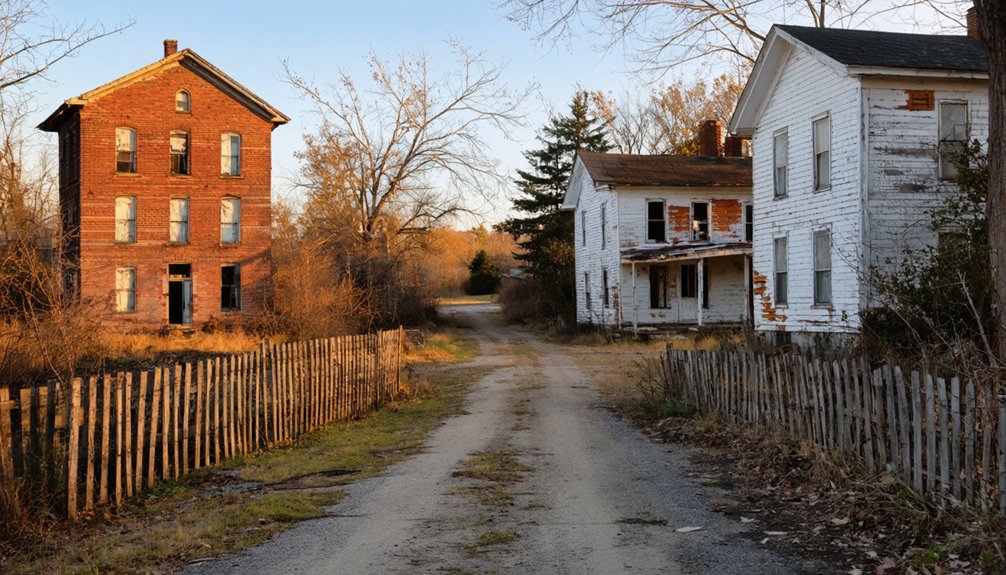
Walking past rows of plain clapboard workers’ houses, you’ll notice how deliberately John Slater designed this settlement—America’s first successful planned mill village engineered everything around control and efficiency. Four families crammed into each multi-family structure, their wages paid in company tender that kept them shackled to village stores. Worker living standards were deliberately kept low—these homes resembled Slater’s own residence but stripped to bare essentials.
The 1½-story office building from 1806 still stands, now a leasing clubhouse after Newport Collaborative Architects renovated these structures into luxury apartments. It’s ironic: what began as debt traps now commands premium rent. Owner worker relationships seemed friendly when John Slater lived among his laborers until 1843, but that proximity was surveillance disguised as community.
Best Times to Visit and Photography Tips
After exploring the stark realities of mill worker life, you’ll want to capture Slatersville’s preserved architecture in the best possible light—literally. Plan your visit between September and November when changing light transforms colonial-era structures into photographer’s gold.
Fall’s golden light transforms Slatersville’s historic architecture into a photographer’s paradise between September and November.
October delivers peak conditions—burgundy and orange foliage frames the village church and restored mill homes, while crisp air sharpens every architectural detail.
Post-Labor Day crowds vanish, giving you unobstructed shots of the historic village green and waterside locations at Upper Slatersville Reservoir. The photography conditions improve as autumn progresses, with shifting angles creating dramatic shadows across centuries-old facades.
Combine your architectural exploration with seasonal activities like brewery tours at Sons of Liberty or oyster farm visits through October’s end, maximizing both your creative opportunities and authentic Rhode Island experiences.
Nearby Blackstone Valley Attractions Worth Exploring
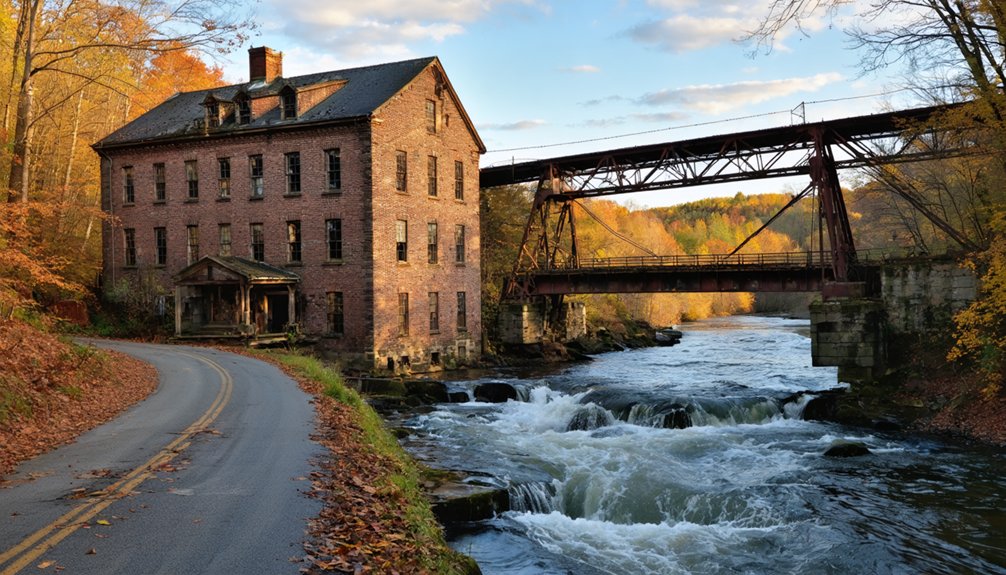
The weathered brick facades of Slatersville Station mark just the beginning of Blackstone Valley’s industrial archaeology. You’ll discover America’s manufacturing origins scattered along the Blackstone River, where mill towns still whisper their revolutionary past.
Essential Stops Within 15 Miles:
- Slater Mill National Historic Landmark – Walk through the 1793 cotton-spinning factory that sparked America’s Industrial Revolution, complete with waterfall viewing opportunities along the Blackstone River.
- Museum of Work and Culture – Experience French-Canadian immigrant stories and culinary heritage sites in Woonsocket’s restored textile district.
- Blackstone River Bikeway – Pedal 11 miles of former towpaths where mules once hauled barges.
- Captain Wilbur Kelly House – Navigate canal operations at this transportation museum (April-October).
Each location reveals how independence-minded entrepreneurs transformed wilderness into industrial might.
Frequently Asked Questions
Is Slatersville Actually a Ghost Town or Still Inhabited Today?
Slatersville’s still inhabited, not a ghost town. You’ll find a residential population status of 753 residents living actively here, with current economic activity including 32 operating businesses employing 398 people. It’s a living, breathing community you can explore freely.
Are There Any Ghost Stories or Paranormal Reports From the Mill Buildings?
You’ll find paranormal occurrences documented throughout Slatersville’s mill buildings, where footsteps echo through abandoned floors. Haunting presences linger from the industrial era, though solid ghost stories remain frustratingly sparse compared to nearby Slater Mill’s flying objects and shadow figures.
As you delve deeper into exploring abandoned sites in Massachusetts, you may come across similar tales of the past that intermingle with the present. Each step through these forgotten places reveals remnants of history, often accompanied by strange phenomena that pique the curiosity of adventurers. Ultimately, the allure of these eerie locations lies in the stories waiting to be uncovered, shrouded in mystery.
Can Visitors Enter the Original Stone Mill Buildings From 1826?
You can’t freely explore inside—the original 1826 stone mill buildings now house private apartments with limited public access. Entry through original mill buildings is restricted, though you’ll find their magnificent granite exteriors still commanding attention from outside.
Are There Guided Tours Available or Is It Self-Guided Exploration Only?
You won’t find any Yelp reviews for guided tours here—Slatersville Station offers pure self-guided exploration options. You’re free to wander the haunting ruins independently, discovering crumbling stone walls and forgotten pathways at your own adventurous pace.
Where Can Visitors Park When Exploring the Slatersville Historic District?
You’ll find designated parking areas along the village streets near the historic mill buildings. On-site parking availability varies, so arrive early to secure your spot and freely wander through this atmospheric ghost town’s forgotten corridors.