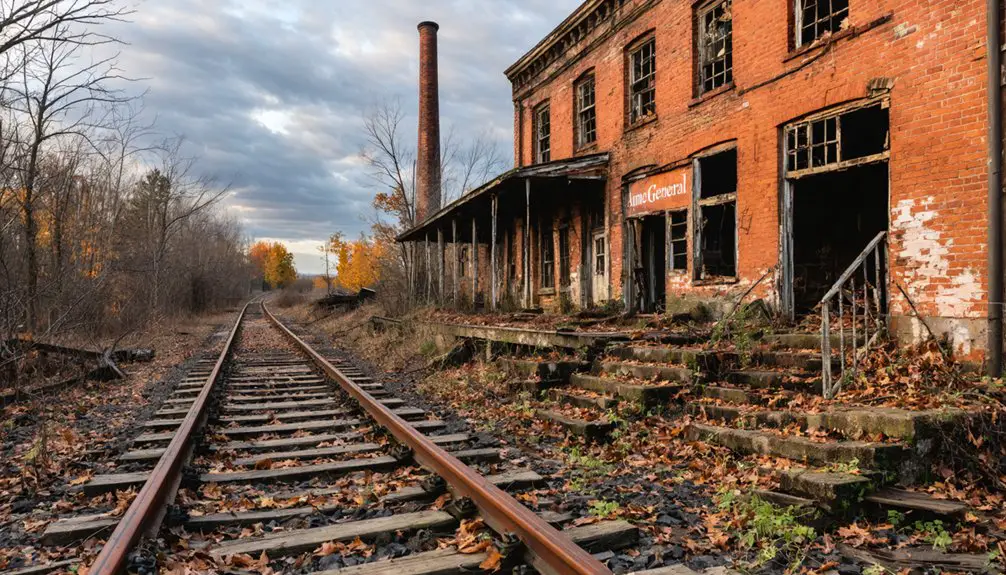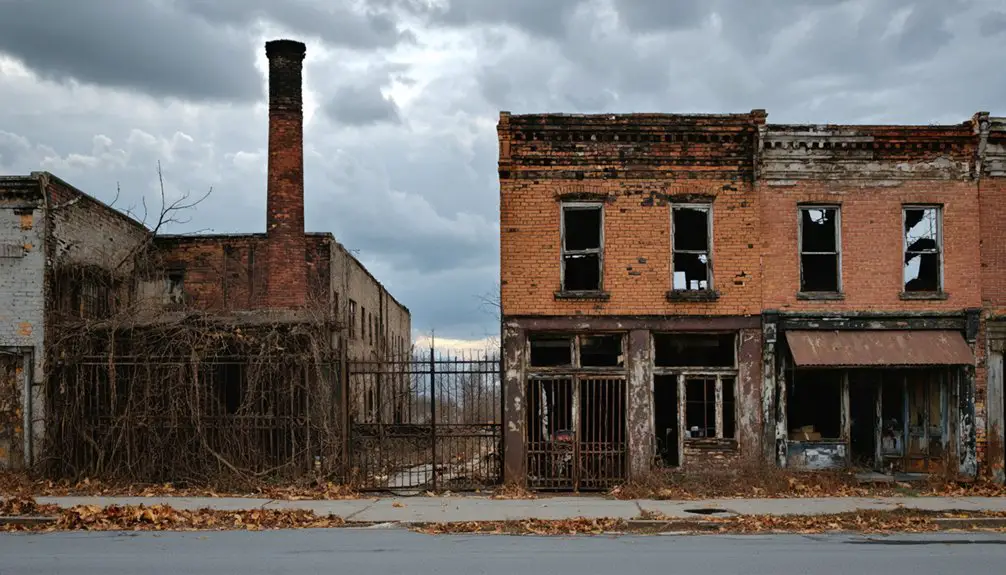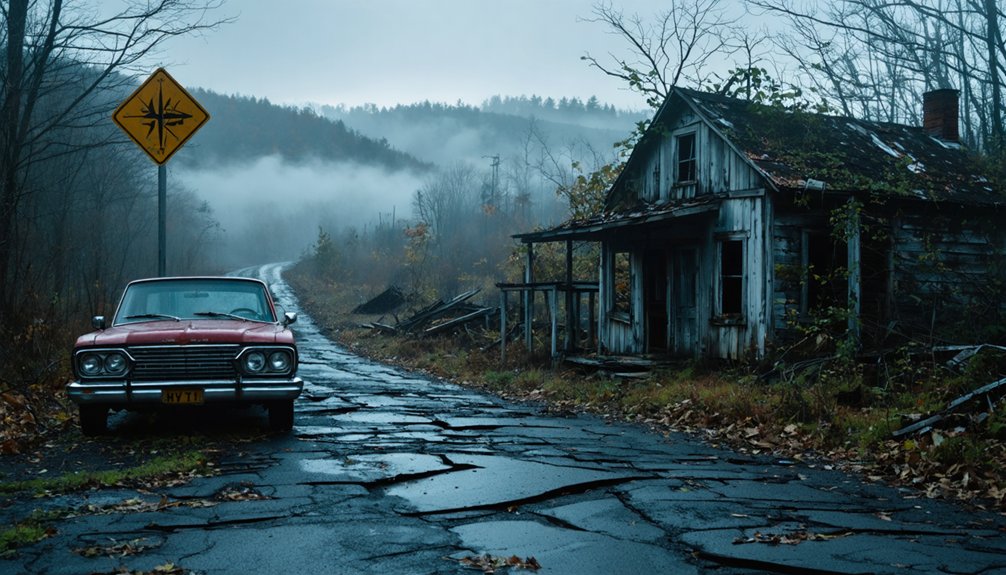
You’ll find Centralia—not Smokeless—rising from Pennsylvania’s coal country as America’s most haunting ghost town, where underground fires have burned since 1962. Navigate cracked Route 61 as 122°F steam erupts through fractured asphalt, explore Odd Fellows Cemetery where smoke curls between tilted tombstones, and photograph the solitary Assumption of the Blessed Virgin Mary Church standing defiant above the smoldering ruins. This journey through abandoned streets and hazardous venting fields reveals the full story of how 3,000 residents fled an underground inferno that still rages beneath your feet.
Key Takeaways
- Visit Odd Fellows Cemetery where smoke rises between tilted gravestones, offering haunting evidence of the underground coal fire.
- Explore abandoned Route 61’s fractured asphalt, featuring a large smoking crack and 122°F steam erupting through pavement.
- Tour Assumption of the Blessed Virgin Mary Church, the sole surviving house of worship from the original five.
- Exercise caution near active vent fields releasing carbon monoxide plumes across 140 hazardous acres of unstable terrain.
- Witness numerous sinkholes and cracked streets where nearly 3,000 residents once lived before evacuating.
The Fire That Never Dies: Understanding the 1962 Mine Disaster
On May 27, 1962, borough workers set fire to trash at Centralia’s landfill—a routine burn that should’ve been contained by clay barriers between the waste layers. Those barriers were never completed. Hot coals found an unsealed opening and ignited the coal seam below, spreading through pillars directly beneath town.
By August, state inspectors detected lethal carbon monoxide levels, forcing all local mines to close and idling 203 miners. The catastrophic underground impact became undeniable as the blaze consumed 3,700 acres across an 8-mile stretch, burning 300 feet deep. 27 small mines were forced to curtail operations as smoke, fumes, and heat filled the miners’ workings.
Early containment attempts failed spectacularly—excavation crews accidentally flooded mine chambers with oxygen, intensifying the inferno. Despite continuous long term monitoring and $43,000 spent, the fire continued its relentless march through Pennsylvania’s coalfields. Just months later in December, the Robena No. 3 mine near Carmichaels experienced two devastating explosions that killed 37 miners when methane gas ignited in an unventilated area.
What to Expect When You Arrive at the Ghost Town
When you roll into Centralia today, the landscape confronts you with an unsettling emptiness—streets stretch silent and cracked where nearly 3,000 residents once lived, worked, and raised families. This post evacuation landscape reveals the town’s former identity through scattered remnants: the Assumption of the Blessed Virgin Mary Church stands defiant, Odd Fellows Cemetery remains accessible, and a handful of government-owned homes shelter the few holdouts who won their legal right to stay in 2013.
A ghost town suspended in time—Centralia’s empty streets and stubborn church tell the story of a community that refused to completely disappear.
You’ll encounter three defining features:
- Ground smoke seeping through cracks, carrying the persistent smell of burning coal
- Sinkholes dotting the terrain, reminding you of the 150-foot-deep crater that opened in 1981
- Broken rocks and debris blanketing hillsides around this toxic wasteland
The underground fire still burns beneath your feet. The smoke from burning coal deposits has died down over the years, with only a few places showing smoke rising from the ground. The abandoned highway section, covered in colorful graffiti, features a large smoking crack where the fire has torn through the asphalt.
Must-See Landmarks and Eerie Attractions
You’ll find the most haunting evidence of Centralia’s underground inferno at the Odd Fellows Cemetery, where smoke sometimes rises between gravestones scorched by temperatures exceeding 900 degrees Fahrenheit below.
The cracked, buckled pavement of abandoned Route 61 stretches before you like a shattered spine, its surface upturned by six decades of relentless subterranean burning. Metal venting tubes dot the landscape where the fire is thought to have started, marking ground zero of the 1962 blaze that consumed a town. Numerous sinkholes scar the terrain, silent reminders of the ground instability that forced thousands from their homes.
Above the skeletal remains of town, the Assumption of the Blessed Virgin Mary Ukrainian Greek-Catholic Church still holds weekly services on its hillside perch—the sole survivor of five original houses of worship.
Active Mine Fire Sites
The most visceral evidence of Centralia’s underground inferno lies scattered across a hellish landscape where steam vents pierce cracked pavement and sinkholes yawn without warning. You’ll witness an 8-mile stretch where 300-foot-deep flames have transformed ordinary ground into something otherworldly. Despite hazardous emissions monitoring and failed mitigation strategies, these sites remain accessible:
- Route 61’s abandoned section where 122°F steam erupts through fractured asphalt
- Former gas station locations with basement temperatures reaching 136°F
- Active vent fields releasing carbon monoxide plumes across 140 hazardous acres
The Buck Mountain Coalbed continues burning through interconnected mine shafts, creating new collapses that could swallow you whole—like the 1981 sinkhole that nearly claimed young Todd Domboski. The fire’s relentless advance has already consumed neighboring Byrnesville, forcing complete abandonment of that settlement. Tread carefully where smoke seeps through earth. The conflagration may burn another 250 years, transforming this landscape into a perpetual monument to Pennsylvania’s coal mining legacy.
Abandoned Cemetery and Structures
Beyond the burning earth and toxic vents, Centralia’s departed rest in monuments to abandonment that rival the mine fire’s devastation. You’ll find tombstones tilting through cracked ground, their inscriptions fading into Pennsylvania’s forgotten histories.
Nearby cemeteries mirror this decay—Fall Brook’s woods reclaim graves from the 1840s coal boom, while Mount Moriah’s 300,000 souls sleep beneath years of overgrowth. These preserved ruins tell stories authorities won’t: Good Shepherd’s exposed caskets and condemned mausoleums, McIntyre’s tombstones scattered among ghost town foundations, Catawissa’s caged graves standing as America’s only hooded burials. Dedicated volunteers are working to return the cemetery to its former glory. Pennsylvania’s largest cemetery, Mount Moriah holds the remains of thousands of U.S. veterans and notable figures beneath its deteriorating Romanesque entrance.
Trek forest trails to these sites where nature devours human legacy. You’re witnessing what remains when communities vanish—markers of lives that burned bright, then disappeared into Pennsylvania’s unforgiving landscape.
Safety Precautions for Visiting an Active Mine Fire Zone
When approaching an active mine fire zone like Centralia’s smoldering underground inferno, your survival depends on proper protective equipment and constant vigilance. Safety protocols for exploration demand you maintain serious distance from visible smoke vents and subsidence trenches where toxic gases escape.
Protective gear requirements include:
- Self-contained self-rescuers (SCSRs) that’ll deliver breathable air when carbon monoxide and methane concentrations spike
- Gas detectors measuring oxygen, CO, and methane levels before you venture closer
- High-visibility markers and lifelines if you’re traversing areas with dense smoke
You’ll encounter superheated ground that can collapse without warning. Never enter when explosion risks escalate or humidity combines with extreme temperatures. Keep fire extinguishers accessible, establish clear escape routes, and remember—this isn’t a playground for thrill-seekers lacking proper preparation.
Best Times to Visit and Photography Tips
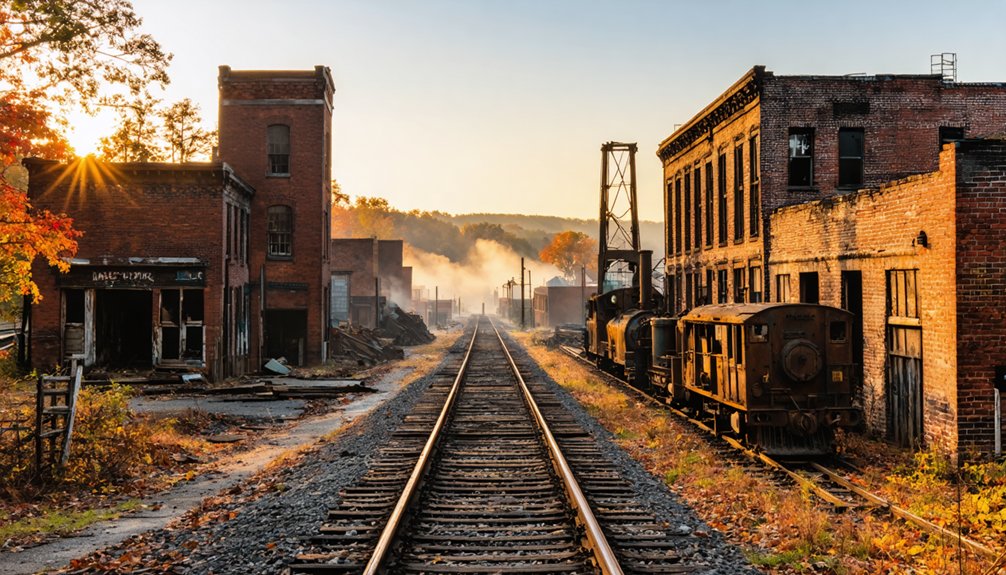
You’ll find Centralia’s ghostly landscape transforms dramatically with the seasons, making your timing pivotal for both safety and stunning photographs. Late spring through fall offers the sweet spot—milder weather lets you explore comfortably while avoiding treacherous winter ice over hidden vents, and autumn’s foliage creates an eerie contrast against rising steam pockets.
Plan your shots during golden hour when low-angled light illuminates the cracked Graffiti Highway and casts long shadows across abandoned church ruins, turning this fire-scarred town into a photographer’s haunting playground.
Optimal Seasonal Visiting Conditions
For those planning a journey to Centralia, timing your visit between May and October offers the most favorable conditions, when mild temperatures and clear pathways allow you to explore the ghost town’s eerie landscape without battling Pennsylvania’s harsh winter elements.
As you explore ghost towns near Bear Run, be sure to immerse yourself in their rich histories and unique stories. Many of these abandoned places provide great opportunities for photography and reflection on the passage of time. Each ghost town has its own charm and mystery, inviting you to discover what lies beyond the remnants of the past.
Fall delivers the perfect trifecta: fewer crowds, cheaper lodging, and Pennsylvania’s legendary foliage creating natural backdrops for documentation.
However, winter photography enthusiasts shouldn’t dismiss colder months entirely. When relative humidity impacts become visible around 3°F, you’ll capture:
- Dramatic steam plumes rising from cracked pavement against snow-white terrain
- Geothermal hotspots creating otherworldly contrast with frozen surroundings
- Moisture condensation patterns revealing the underground inferno’s exact location
Summer brings ideal lighting conditions but crowds diminish the solitary, post-apocalyptic atmosphere that makes Centralia legendary.
Capturing Smoke and Vents
Capturing Centralia’s elusive smoke plumes requires equal parts patience, luck, and strategic timing—these ghostly vapors don’t perform on command. Despite decreasing visibility over time as the underground fire weakens, you’ll spot the best plumes during frigid winter mornings when 3-degree temperatures create dramatic contrast. Look for snow-free patches indicating warm ground vents, particularly around Odd Fellows Cemetery’s gravestones and the cracked expanse of abandoned Route 61.
Overcoming photography challenges demands adaptability—the smoke that’s visible to your eye often proves too faint for cameras. Position yourself near widening fissures at safe distances, watching for steam billowing from ground cracks. Cold weather sharpens these ethereal displays, though questionable air quality and unstable terrain require quick, cautious shooting from elevated positions like the church overlook.
Golden Hour Lighting Tips
Centralia’s desolate landscape transforms into something otherworldly when bathed in golden hour’s amber glow—crumbling asphalt and weathered graffiti suddenly pulse with cinematic warmth. You’ll want to arrive 60-90 minutes before sunset, when soft light smooths the harsh industrial decay into something hauntingly beautiful.
Master these golden hour composition techniques for dramatic shots:
- Position subjects against backlit smoke vents for ethereal rim lighting effects
- Frame broken pavement cracks with warm highlights dancing across fractured surfaces
- Capture steam wisps glowing amber against darkening skies
Switch to manual mode for ideal golden hour exposure settings—RAW format gives you post-processing flexibility as light shifts rapidly. The reduced contrast lets you nail both shadow detail in burnt structures and highlight information in billowing steam simultaneously, creating images that capture Centralia’s apocalyptic essence.
Nearby Accommodations and Dining Options
Whether you’re seeking budget-friendly motels or secluded forest cabins, the region surrounding Pennsylvania’s ghost towns offers accommodations to match every traveler’s style. Smoketown Inn tops local rankings with two-room units sleeping five from $119, while Quality Inn delivers comfort from just $61 nightly. Discover charming bed & breakfasts like Cherry Blossom, serving delicious morning spreads in tastefully decorated period rooms.
For wilderness immersion, quaint lodges and cabins await your arrival. Heritage Cabins at Cook Forest feature wood-burning fireplaces and full kitchens, perfect for off-grid evenings. Cross Fork’s Bear’s Den sleeps seven with modern amenities including AC and Wi-Fi.
The Lodge at Chalk Hill combines rustic atmosphere with lakeside access across sixty rooms overlooking seven-acre Lake Lenore. Spruce Lane offers private cottages near attractions, balancing seclusion with convenience for your ghost town explorations.
Respecting the Remaining Residents and Their History
Beneath the cracked asphalt and sulfurous plumes of Centralia lies a story that demands your reverence—not just for the coal miners who carved prosperity from Pennsylvania’s anthracite veins, but for the fewer than ten souls who’ve refused to abandon their hometown. These holdouts won legal challenges in 2013, securing their right to remain despite eminent domain pressures.
When you visit, honor their choice by:
- Staying clear of occupied properties where residents navigate daily life amid 900-degree ground temperatures
- Skipping unauthorized resident interviews that treat survivors like tourist attractions
- Respecting the Assumption Church and Odd Fellows Cemetery as sacred memorials to 2,700 former lives
Their persistence isn’t rebellion—it’s defending home against a century-long fire that won’t dictate their surrender.
Frequently Asked Questions
Is It Legal to Visit Centralia Today?
Like Pompeii’s smoldering warning, you’ll find visiting Centralia’s abandoned mining operations remains technically legal on public roads. However, you’re risking encounters with dangerous underground fire hazards, toxic fumes, sudden sinkholes, and potential trespassing charges in restricted zones.
How Much Does It Cost to Visit the Ghost Town?
Visiting Centralia won’t drain your wallet—there aren’t any entry fees to explore the abandoned streets. You’ll only spend on gas and lodging expenses in nearby towns, since this eerie ghost town remains hauntingly free to wander.
Can You Still See the Graffiti Highway?
No, you can’t see the Graffiti Highway anymore—it’s been paved over by private owners who strictly enforce no trespassing. This shift reflects changing urban exploration trends and ongoing debates about abandoned infrastructure preservation versus property rights.
Are There Guided Tours Available for Visitors?
No guided walking tours or private vehicle tours operate at Smokeless. You’ll explore this abandoned coal town independently, wandering crumbling foundations and overgrown streets at your own pace, discovering hidden remnants of Pennsylvania’s mining past through self-guided adventure.
What Inspired the Silent Hill Movie Connection?
Centralia’s haunting historical context—streets buckling over eternal flames, steam rising through cracks—captured screenwriter Roger Avary’s imagination. The town’s architectural significance as America’s ghost town perfectly embodied Silent Hill’s apocalyptic atmosphere, transforming Pennsylvania’s tragedy into cinematic horror.
References
- https://www.ndtv.com/feature/this-abandoned-ghost-town-in-us-has-been-burning-for-62-years-6342786
- https://www.jeffreydonenfeld.com/blog/2009/12/exploring-the-ghost-town-of-centralia-pennslvania/
- https://www.businessinsider.com/centralia-pennsylvania-underground-fire-town-photos
- https://www.youtube.com/watch?v=Qj5LjacccJ0
- https://en.wikipedia.org/wiki/Centralia
- https://www.atlasobscura.com/articles/centralia-pennsylvania-rebirth
- https://gettysburgghosts.com/centralia-pennsylvania-the-town-that-inspired-silent-hill/
- https://www.usdeadlyevents.com/1962-dec-6-coal-mine-dust-and-gas-explosions-robena-no-3-carmichaels-pa-37/
- https://wynninghistory.com/2020/08/08/centralia-august-1962/
- https://archive.triblive.com/news/pennsylvania/greene-county-mine-tragedy-recalled-50-years-later/