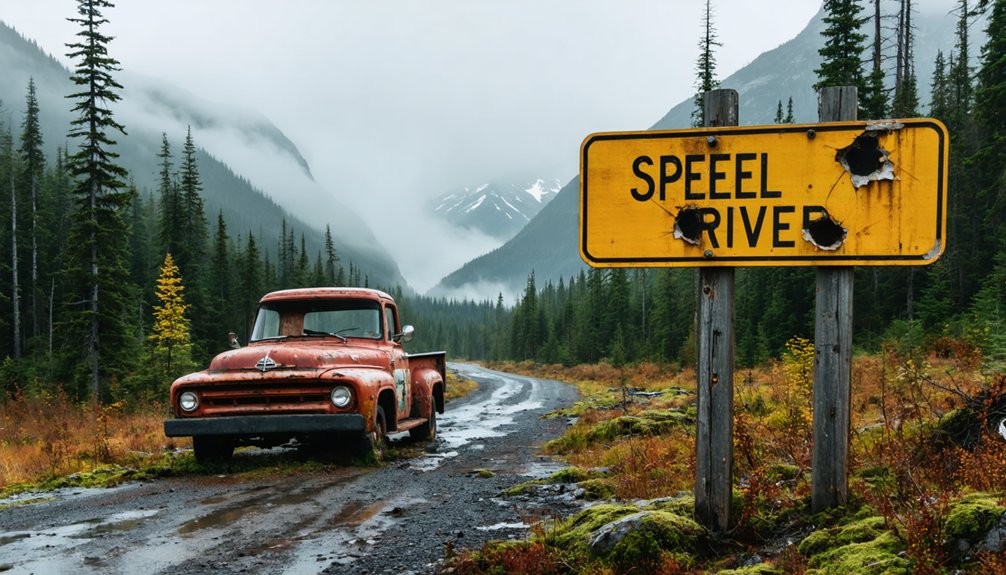
You can’t actually drive to Speel River—there’s no road leading to this authentic Alaskan ghost town south of Juneau. Instead, you’ll charter a floatplane or arrange boat transport through fjord-carved wilderness where grizzlies outnumber road signs. Once there, you’ll find skeletal frameworks of the old Friday and Crystal mines, rusted ore carts frozen on disintegrating tracks, and collapsed bunkhouses slowly returning to the rainforest. Pack bear spray, waterproof layers, and a satellite communicator, because cell service disappeared here decades before the miners did—and the adventure ahead demands serious preparation.
Key Takeaways
- No road access exists to Speel River; reach the ghost town via floatplane charter or ferry from Juneau instead of driving.
- Pack thermal layers, waterproof gear, bear spray, satellite communicator, and first aid kit for this remote wilderness location without cell service.
- Explore abandoned mining structures including the Friday mine tunnel, Crystal mine passages, stamp mill ruins, and scattered historical artifacts.
- Exercise extreme caution around unstable buildings, collapsed bunkhouses, rusted machinery, and corroded ore carts on disintegrating tracks.
- Expect wildlife encounters including brown bears fishing for salmon, bald eagles, harbor seals, and sea otters in this glacial ecosystem.
Understanding Speel River’s Mining History and Heritage
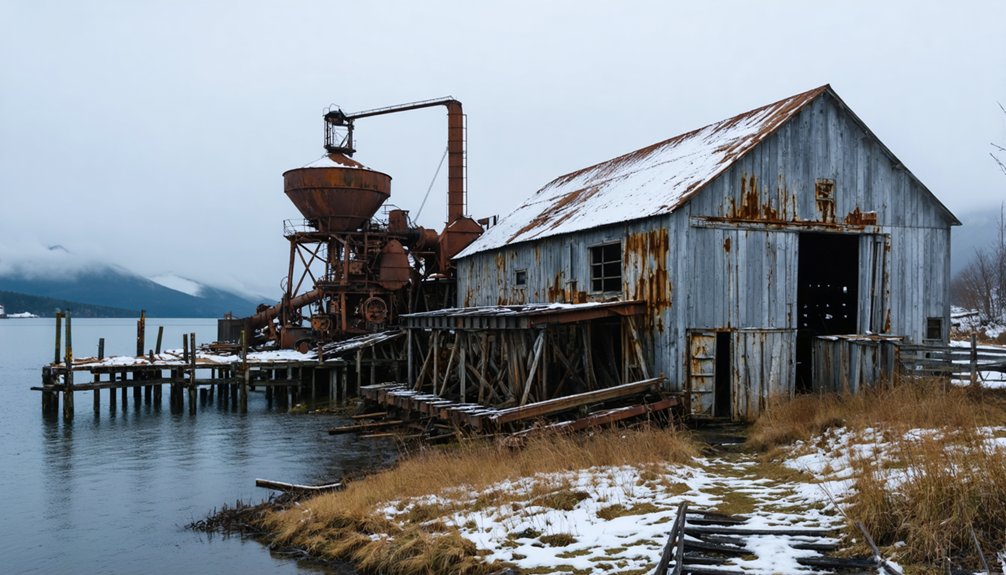
The rusted remnants of the Friday mine’s 750-foot tunnel still pierce the mountainside at Speel River, evidence of the desperate optimism that gripped prospectors in 1899. You’ll find yourself standing where miners battled ore processing challenges—their 5-stamp mill couldn’t efficiently separate gold from stubborn pyrite and magnetite.
Local mining lore tells of the Crystal mine’s $25,000 haul between 1901-1903, its 2,300 feet of underground passages carved by lantern light. These operations rode the coattails of Southeast Alaska’s gold fever, sparked by Sumdum Bay’s 1870 discovery.
Getting There: Access Routes and Transportation Options
Reaching Speel River requires a fundamental shift in your road trip expectations—there’s no highway exit or scenic pulloff waiting for you. Alaska’s Southeast Panhandle lacks direct highway connections, leaving this ghost town accessible only through ferry transportation options or air charter considerations.
You’ll depart from Juneau, maneuvering fjords where grizzlies outnumber road signs. The Alaska Marine Highway offers the most budget-friendly approach, though schedules dictate your timeline. Charter floatplanes provide flexibility—you’ll trade dollars for freedom, landing directly on remote waterways.
Unlike the Alaska Highway’s 1,400-mile ribbon of pavement or Stewart-Cassiar’s glacier-carved route, Speel River demands unconventional traversal. Pack your sense of adventure; standard rental vehicle restrictions don’t apply when water and wings replace wheels.
Essential Gear and Supplies for Remote Alaska Travel
Before you board that floatplane to Speel River, your packing list determines whether you’ll thrive or merely survive in Alaska’s unforgiving backcountry. Master layering techniques with thermal base layers, mid-weight fleeces, and waterproof shells—conditions shift from morning frost to afternoon sun in hours.
Alaska’s backcountry demands proper layering—thermal bases, fleeces, and waterproof shells protect you when temperatures swing dramatically within hours.
Specialized fabrics that wick moisture become critical when you’re paddling through drizzle or hiking soggy trails.
Pack waterproof gloves, wool socks, and hiking boots with aggressive tread for traversing muddy approaches. Don’t skip bear spray and a satellite communicator—cell service is nonexistent. Microspikes handle lingering snowfields, while a well-stocked first aid kit addresses injuries miles from help.
Your bug net might seem excessive until mosquitoes swarm at dusk. This gear isn’t optional; it’s your lifeline to exploring this ghost town freely.
What Remains: Exploring the Abandoned Mining Camp
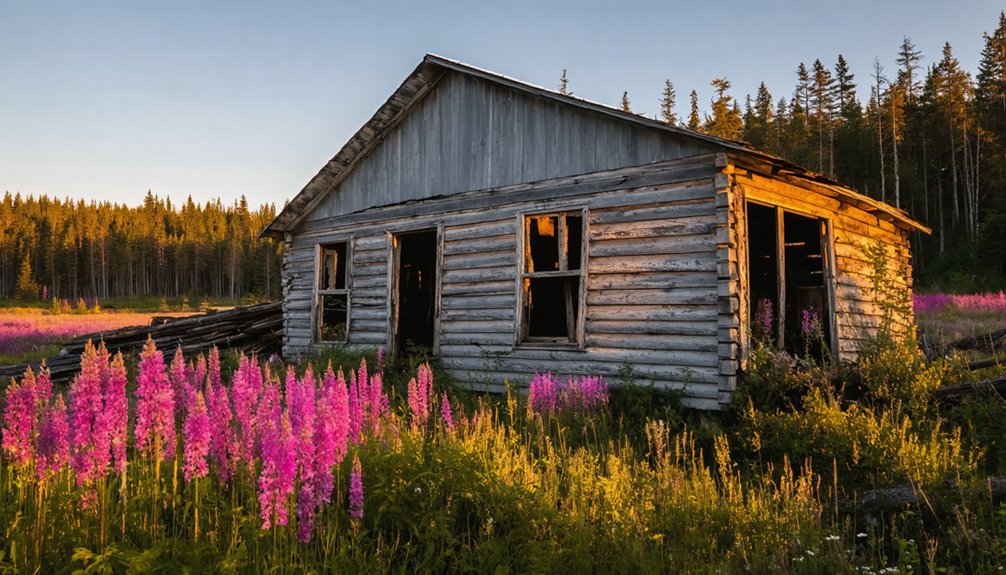
Emerging from the forest trail, you’ll find Speel River’s mining camp reduced to skeletal frameworks and rusted machinery half-swallowed by devil’s club and salmonberry thickets. Collapsed bunkhouses reveal rotting timber bunks where miners once slept after twelve-hour shifts.
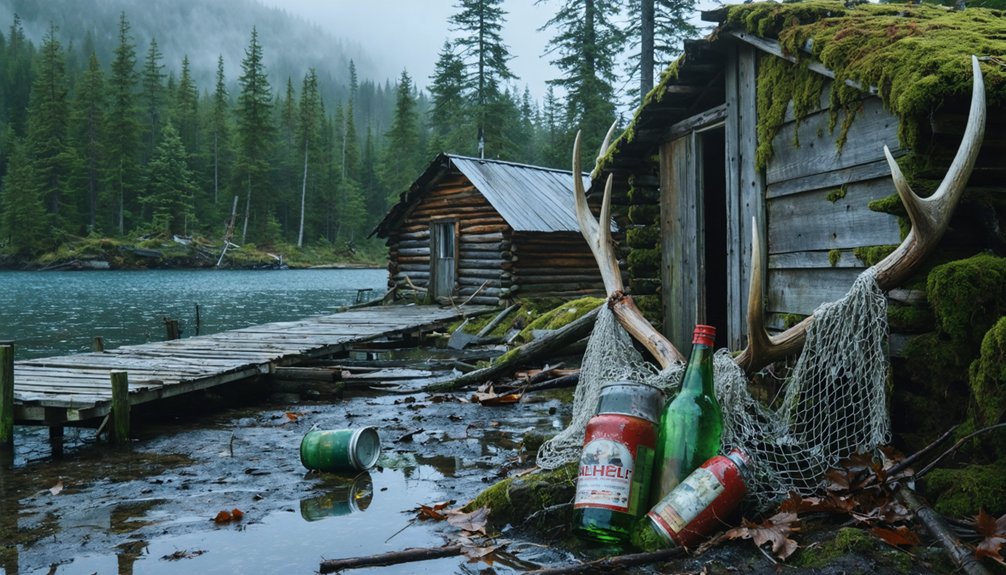
You’ll spot corroded ore carts tilted on disintegrating tracks, their iron wheels frozen by decades of rust. Historical artifacts scatter the site—bent shovels, tin cups, and glass bottles etched with miners’ names. Tread carefully around unstable structures; preservation efforts remain minimal this far from established parks.
The stamp mill’s foundation still stands, though its crushing mechanisms have surrendered to wilderness reclamation. Document what you discover through photographs rather than removal—these remnants belong to Alaska’s untamed narrative, not your mantle.
Wildlife and Natural Landscape of the Speel River Area
As you navigate the cold waters where Speel River meets the sea, you’ll spot harbor seals bobbing near the mouth while northern sea otters weave between the scattered islands.
The glacial-fed river itself thunders down from alpine lakes, carving through boreal forests so thick with devil’s club and ferns that brown bears emerge like shadows along the banks during salmon runs.
I’ve watched these coastal browns—sometimes dozens at a time—position themselves at natural falls where chum salmon leap, their massive paws snatching fish mid-air while bald eagles circle overhead, waiting for scraps.
Glacial River Ecosystem
The Speel River carves its path through southeastern Alaska with a force shaped entirely by glacial melt, creating a dynamic ecosystem unlike anything you’ll encounter in typical freshwater systems. During spring and autumn, you’ll witness nature’s brief rebellion against the glacier’s dominance—when meltwater subsides, algae finally captures sunlight through clearer waters, fueling aquatic invertebrate diversity that sustains the entire food web.
The river’s chemistry shifts constantly as retreating ice releases ancient nutrients and minerals, driving carbon cycling dynamics that ripple through downstream estuaries. Summer transforms the waterway into a sediment-laden torrent, while October reveals clean, exposed streambeds. This glacial pulse dictates everything—from microscopic organisms colonizing rocks to salmon traversing turbulent channels, reminding you that wilderness operates on its own uncompromising schedule.
Bear and Marine Life
Glacial currents that sustain salmon runs also draw southeastern Alaska’s most formidable predators to the Speel River corridor. You’ll encounter brown bears congregating along riverbanks from July through September, following ancient bear population patterns that mirror salmon migrations. Females weighing 200-800 pounds patrol territories with their cubs, while massive males reach 1,500 pounds during peak feeding season.
Watch for harbor seals traversing the estuary alongside bald eagles circling overhead. The surrounding waters occasionally yield whale carcasses that become unexpected feasts, drawing bears from miles around. While polar bear adaptation strategies focus on Arctic survival, Speel River’s coastal browns demonstrate their own resourcefulness—scavenging, fishing, and maintaining their wilderness kingdom with zero recorded human injuries at properly managed viewing sites throughout Alaska’s bear country.
Best Seasons and Weather Considerations for Your Visit
You’ll find Speel River’s remote location dramatically shifts between seasons—summer grants you 19+ hours of daylight for exploring the abandoned structures and traversing the challenging terrain, while winter plunges the ghost town into extended darkness with treacherous ice and snow blocking most access routes.
I learned this the hard way during a September visit when early snowfall cut my trip short, forcing a hasty retreat from the deteriorating buildings I’d traveled so far to photograph.
Plan for June through August if you’re attempting this journey, as the midnight sun becomes your greatest ally for safely navigating unmarked paths and documenting what remains of this forgotten settlement.
Summer’s Midnight Sun Advantage
When planning your ghost town adventure to Speel River, Alaska’s famous midnight sun transforms from astronomical curiosity into genuine tactical advantage. You’ll discover June delivers up to 19 hours of daylight along the coast, letting you push deeper into backcountry without racing sunset. That abandoned mining equipment photograph you’ve imagined? Capture it at 10 PM under golden light most photographers never experience.
July maintains 17-18 hours of visibility, with civil twilight extending your outdoor adventures even further. You’re free to explore decaying structures, hike surrounding trails, and document ghostly remnants without headlamp fumbling. Evening explorations become viable strategies rather than risky gambles.
Pack layers—temperatures drop to the 40s after midnight—but embrace this liberation from darkness. The midnight sun doesn’t just illuminate ruins; it eliminates arbitrary schedules.
Winter Access Challenges
Between October and May, Alaska’s remote highways transform into frozen gauntlets that’ll test even experienced winter drivers—and accessing Speel River becomes nearly impossible without specialized equipment. Road maintenance policies cease on critical routes like the Copper River Highway (MP 18-49) and McCarthy Road during this period, leaving you stranded if conditions deteriorate.
I’ve witnessed severe weather impacts firsthand: whiteouts materializing within minutes, ice-slicked bridges becoming skating rinks, and temperatures plummeting to life-threatening levels. Emergency services simply don’t operate on these unmaintained stretches, meaning you’re genuinely on your own.
The state discourages winter travel for good reason—maintenance vehicles disappear, communication drops, and rescue becomes problematic at best. Plan your ghost town adventure between June and September when freedom means manageable risk, not recklessness.
Exploring ghost towns in Wapello County offers a unique glimpse into forgotten histories and landscapes shaped by time. Each site holds stories waiting to be uncovered, providing a rich backdrop for photography and reflection. Make sure to bring plenty of water and a camera to capture the eerie beauty of these abandoned places.
Safety Precautions for Visiting Remote Ghost Towns
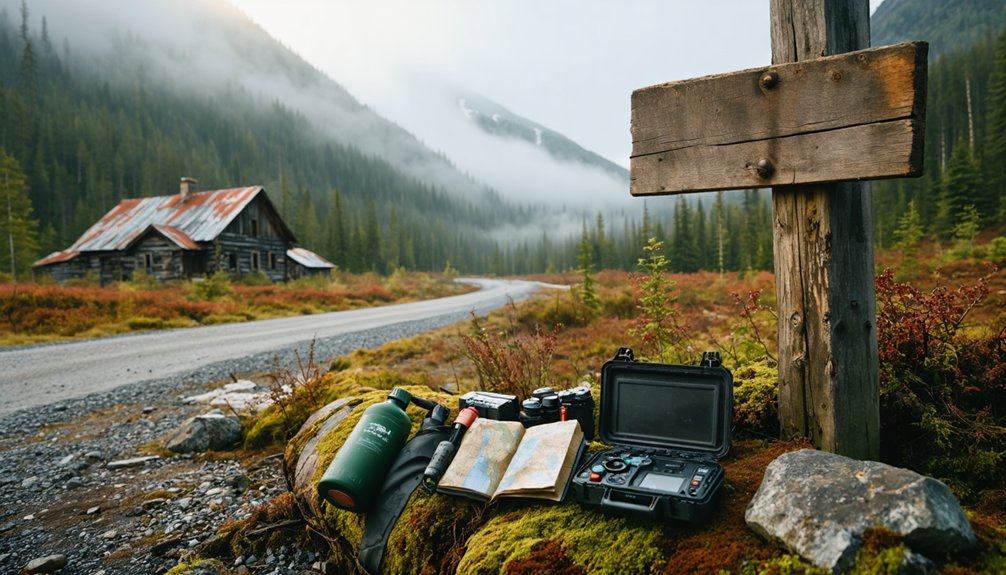
Exploring abandoned settlements like Speel River demands preparation that goes far beyond typical road trip planning. You’ll need survival gear that stays with you whenever you leave your vehicle—shelter, food, and signaling devices become lifelines in Alaska’s wilderness. Cold weather safety requires understanding hypothermia treatment: chest-to-chest warming and heated rocks work; alcohol doesn’t.
Pack bear spray and keep it accessible, particularly when camping near water sources where wildlife congregates. Never travel solo through these ghost towns. At minimum, bring one companion who can assist during emergencies or vehicle recoveries. Leave detailed trip plans on your dashboard, noting your physical capabilities for potential rescuers.
While avoiding confrontations with both wildlife and isolated humans requires vigilance, respecting your limits and heeding local warnings keeps your freedom-seeking adventure from becoming a rescue operation.
Nearby Attractions and Points of Interest
Since Speel River sits in one of Alaska’s most isolated pockets, you’ll find the journey itself reveals a constellation of haunting landmarks that reward the determined traveler. The Kennicott Mine complex towers fourteen stories above glacial features that’ve carved this wilderness for millennia, its red mill building standing defiant against time since 1903.
McCarthy’s abandoned streets and trestle bridges offer mining relics you can explore freely with a Park Service map in hand. I’ve watched rafters navigate iceberg-studded currents beneath the footbridge while imagining the 196-mile railroad that once conquered these mountains.
Chitina serves as your launching point, while Portage Ghost Town—earthquake-shattered in 1964—adds another layer to your Alaska exploration. Each stop writes its own chapter of human ambition against impossible odds.
Accommodations and Base Camp Options in the Region
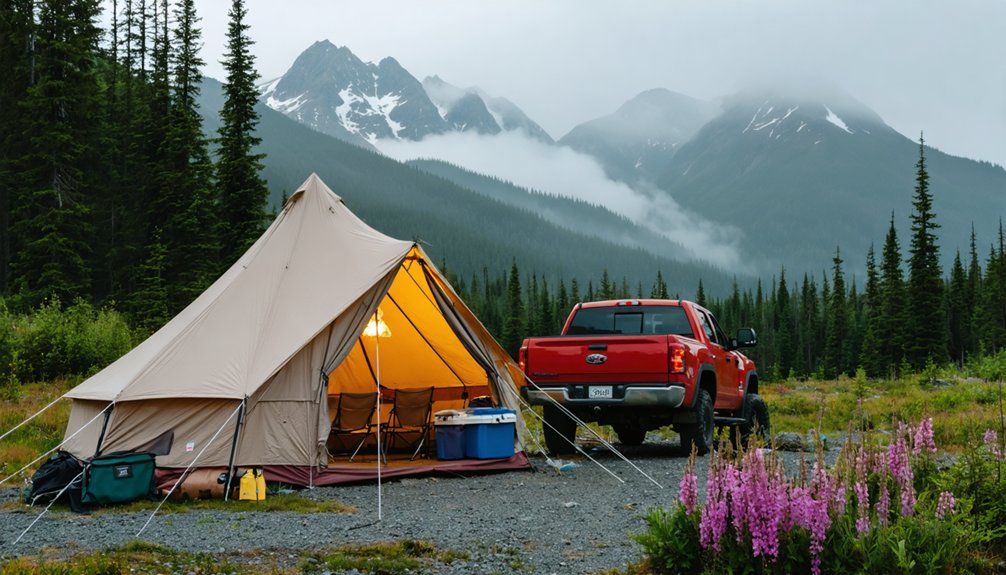
While Speel River itself offers no accommodations—the ghost town dissolved into wilderness decades ago—you’ll need strategic base camps within striking distance of Alaska’s remote corners. The Matanuska-Susitna Valley serves as your launching pad, where Pioneer Ridge B&B offers Chugach Mountain views and Rose Ridge provides suites at Hatcher Pass’s base. Both list local activity options on their websites, helping you plot glacier expeditions and abandoned settlement hunts.
Expect seasonal rate variations: Kenai River cabins run $200-$400 nightly May through October, then drop considerably. EagleQuest Cabins near Deshka Landing start at $70 year-round—perfect for budget-conscious explorers. For ultimate solitude, NorthernSpell’s island guest cabins deliver beachfront privacy with full kitchens. Alaska SeaScape Lodge accommodates twenty maximum, blending comfort with Cook Inlet wilderness access.
Frequently Asked Questions
Do I Need Special Permits to Visit the Speel River Ghost Town?
You’ll need to research private property rights before exploring, as trespassing concerns can turn your adventure sour. Check with local authorities and landowners first—safeguarding boundaries guarantees you’re free to roam without legal troubles shadowing your ghost town experience.
Are Guided Tours Available for the Abandoned Mining Camp Area?
No guided tours are offered for Speel River’s abandoned mining camp—ironically, while nearby sites like Kennecott provide structured access, you’ll navigate this remote territory independently. Private property concerns and Alaska’s rugged wilderness mean you’re truly on your own adventure here.
Can I Legally Take Artifacts or Souvenirs From the Site?
No, you can’t legally take artifacts. Historic preservation guidelines and cultural preservation concerns protect these sites. Leave everything untouched—taking souvenirs violates federal law and erases history for future explorers who’ll follow your footsteps.
Is Cell Phone Service Available Anywhere Near Speel River?
Cell coverage is unreliable near Speel River’s remote wilderness. You’ll find seasonal service changes affect signal strength, and most carriers don’t reach this isolated area. Bring a satellite phone—it’s your lifeline when cellular networks vanish into Alaska’s vast backcountry.
What Emergency Evacuation Options Exist if Something Goes Wrong?
You’re truly on your own here—no emergency medical services availability exists nearby. Your lifeline depends on satellite phones for emergency communication plans, Coast Guard helicopter rescue, or boat pickup. Self-reliance isn’t optional; it’s survival.