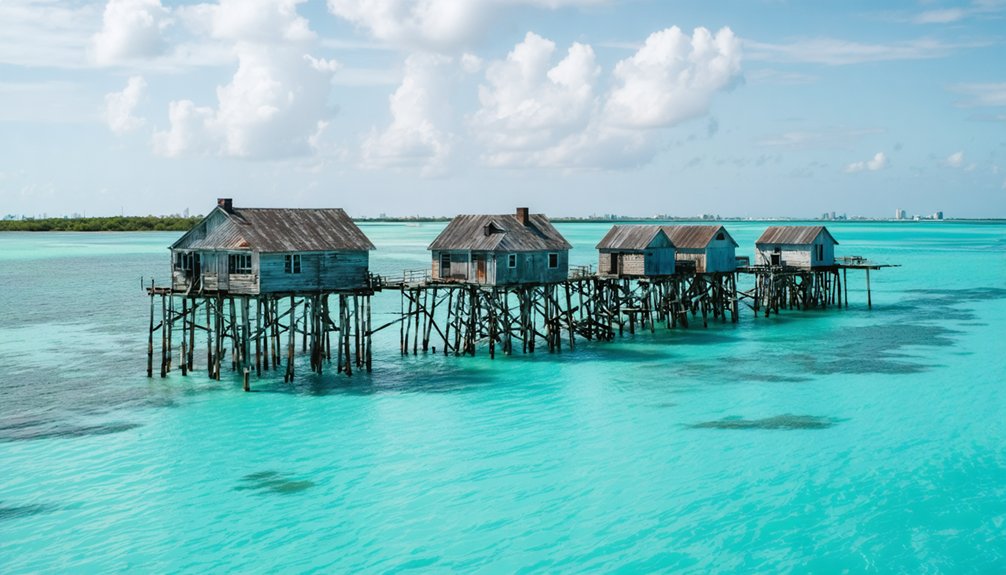
You can’t drive to Stiltsville — you’ll need a boat or kayak to reach this eerie collection of six weathered houses floating a mile off Miami’s shore in Biscayne Bay. Born in the 1930s as an offshore gambling haven, this ghost town survived hurricanes, fires, and legal battles to become one of Florida’s most unusual landmarks. Grab the proper permits, plan your trip between November and April, and there’s so much more waiting for you just beneath the surface.
Key Takeaways
- Stiltsville is accessible only by boat or kayak from nearby marinas or Crandon Park, making traditional road trips impossible without water transport.
- Obtain a Stiltsville Trust permit and an NPS special use permit before visiting to avoid fines up to $5,000.
- Guided tours depart from Dinner Key Marina through the Biscayne National Park Institute, offering a structured and legal visiting option.
- Visit between November and April for calmer seas, clearer skies, and ideal photography conditions; avoid summer thunderstorms.
- Only six structures remain after Hurricane Andrew and fires, including Baldwin House, Jimmy Ellenburg House, and Bay Chateau.
What Is Stiltsville and Why Does It Exist?
Perched on wooden and concrete pilings ten feet above the shallow waters of Biscayne Bay, Stiltsville is a collection of houses sitting one mile south of Cape Florida in Key Biscayne, Miami-Dade County. You’ll find no roads or bridges connecting you to this place — only open water. Accessible exclusively by boat or kayak, these six surviving structures blend local legends with intriguing architectural styles born from necessity and rebellion.
Stiltsville originated in the early 1930s, when gambling laws permitted offshore activity beyond one mile from land. Entrepreneurs built bars, gambling dens, and social clubs above the shallow bay, creating a thriving waterborne community.
Hurricane Andrew in 1992 and subsequent fires reduced over twenty original structures to just six, transforming this once-vibrant settlement into a mesmerizing ghost town.
How Did Stiltsville Rise, Fall, and Survive?
What started as a workaround to gambling laws quickly became one of Florida’s most colorful communities. In the early 1930s, entrepreneurs discovered that building a mile offshore placed them beyond local jurisdiction, so they constructed bars, gambling dens, and eventually over twenty stilt houses above Biscayne Bay’s shallow waters.
A mile offshore, beyond the reach of the law, Florida’s most defiant community rose from the water.
The historical significance of this floating neighborhood peaked mid-century, drawing boaters, thrill-seekers, and sun worshippers to spots like the notorious Bikini Club. Then Hurricane Andrew hit in 1992, followed by devastating fires, stripping the community down to just six structures.
Architectural preservation efforts saved what remained. The Stiltsville Trust stepped in, protecting the Baldwin House, Bay Chateau, and four other survivors from demolition.
What you see today is a resilient ghost town that refused to fully disappear.
How Many Stilt Houses Actually Remain Today?
When you arrive at Stiltsville today, you’ll find only six structures still standing where more than twenty once crowded the sandbanks.
Hurricane Andrew hit in 1992 and delivered a near-fatal blow to the community, wiping out the majority of homes and stripping the settlement down to a ghostly remnant of its former self.
You can still spot the Baldwin House, the Jimmy Ellenburg House, Bay Chateau, the Hicks House, the A-Frame House, and the Powerboat Club as the six survivors that define what remains.
Six Structures Standing Today
Though Stiltsville once boasted over twenty houses buzzing with gamblers, sunbathers, and fishing clubs, only six structures remain standing today. Hurricane Andrew and devastating fires stripped the settlement down to its bare bones, turning it into a remarkable ghost town frozen in time.
Historical preservation efforts now protect what’s left, while ongoing environmental impact from storms and saltwater continues challenging their survival.
The six surviving structures each carry their own identity:
- Baldwin House – a weathered reminder of mid-century bay life
- Jimmy Ellenburg House – one of the finest preserved examples of original stilt architecture
- Bay Chateau, Hicks House, A-Frame House, and Powerboat Club – completing the cluster
You’re fundamentally visiting living history every time you glide across that shallow bay water.
Hurricane Andrew’s Devastating Impact
Hurricane Andrew slammed into South Florida in 1992, and Stiltsville never fully recovered. The storm shredded most of the original twenty-plus structures, leaving behind splintered wood, twisted metal, and silence.
Subsequent fires finished off what the hurricane started, gutting several surviving buildings and accelerating the settlement’s transformation into a ghost town.
What remains today tells a sobering story. Only six structures still stand above Biscayne Bay’s shallow waters, each one a fragile relic of a wilder era.
Preservation efforts through the Stiltsville Trust have kept these buildings from vanishing entirely, while marine ecology concerns shape how visitors and boaters interact with the surrounding environment.
You’re fundamentally witnessing history on borrowed time — a community that nature reclaimed, piece by piece.
Do You Need a Permit To Visit Stiltsville?
Visiting Stiltsville isn’t as simple as hopping in a boat and paddling over — you’ll need proper permits before you can legally approach the houses. Given the site’s cultural significance and ongoing architectural preservation efforts, authorities take unauthorized access seriously.
Visiting Stiltsville requires more than a boat — permits are essential before you can legally approach these historic structures.
Here’s what you need to know:
- Stiltsville Trust permit: Request yours through their official website before planning your visit.
- NPS special use permit: Required if you want to tie up or step inside any structure.
- Trespassing fines: Unauthorized visitors face a steep $5,000 penalty, and “no trespassing” signs are posted on all six houses.
Even captains steering nearby need National Park Service authorization. Acquiring your permits in advance ensures you experience this remarkable ghost town legally and responsibly.
How To Get to Stiltsville by Boat or Kayak
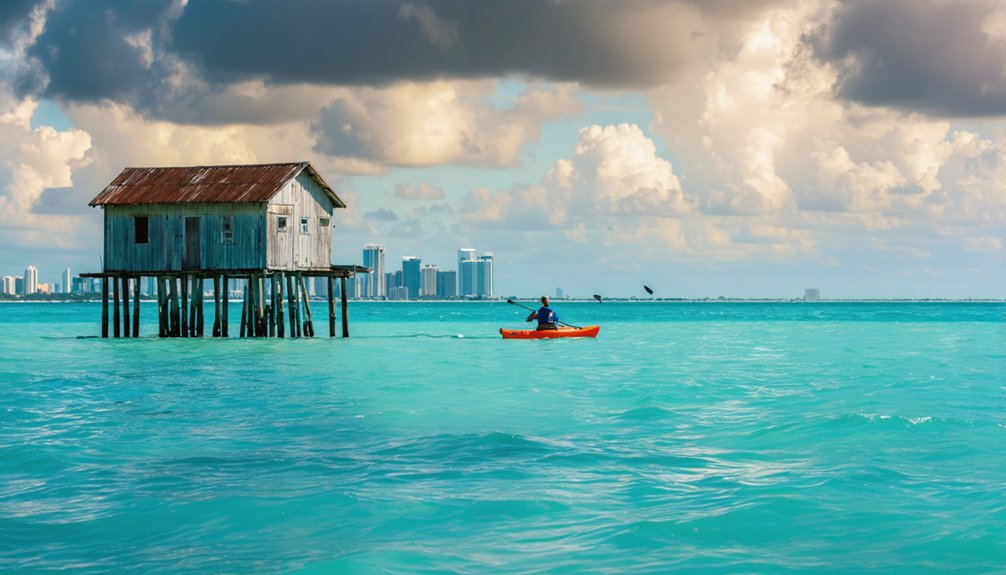
Since there’s no bridge or road leading to Stiltsville, your only options for reaching the seven remaining structures are by boat or kayak. Launching from nearby marinas or Crandon Park, you’ll navigate Biscayne Bay’s shallow waters, which drop to just one to three feet at low tide.
Kayaking offers a quieter, more intimate experience, letting you observe local wildlife like herons, manatees, and bottlenose dolphins without disturbing their habitat. Keep your ecological impact minimal by staying on marked routes and avoiding seagrass beds, which are critical to the bay’s ecosystem.
If you’re bringing a powerboat, watch your speed and draft carefully. The sandbars surrounding the Safety Valve can strand careless captains fast, turning a smooth adventure into a costly headache.
How Do You Book a Guided Stiltsville Tour?
Exploring Biscayne Bay on your own is rewarding, but if you’d rather leave the planning to someone else, a guided tour is your best bet. The Biscayne National Park Institute runs narrated cruises Thursday through Monday at 10 a.m. and 1 p.m., departing from Dinner Key Marina in Coconut Grove.
Rather leave the planning to someone else? The Biscayne National Park Institute runs narrated cruises Thursday through Monday.
Here’s what you need to know before booking:
- Cost: $70 per person for a two-hour cruise focused on historical artifacts and marine preservation
- Departure point: 3500 Pan American Drive, Miami, FL 33133
- Best timing: Winter and spring offer calmer seas and better photography conditions
HistoryMiami Museum also hosts occasional cruises led by historian Dr. Paul George, covering celebrity stories and fishing club history. Book early, as spots fill quickly.
Best Time of Year To Visit Stiltsville
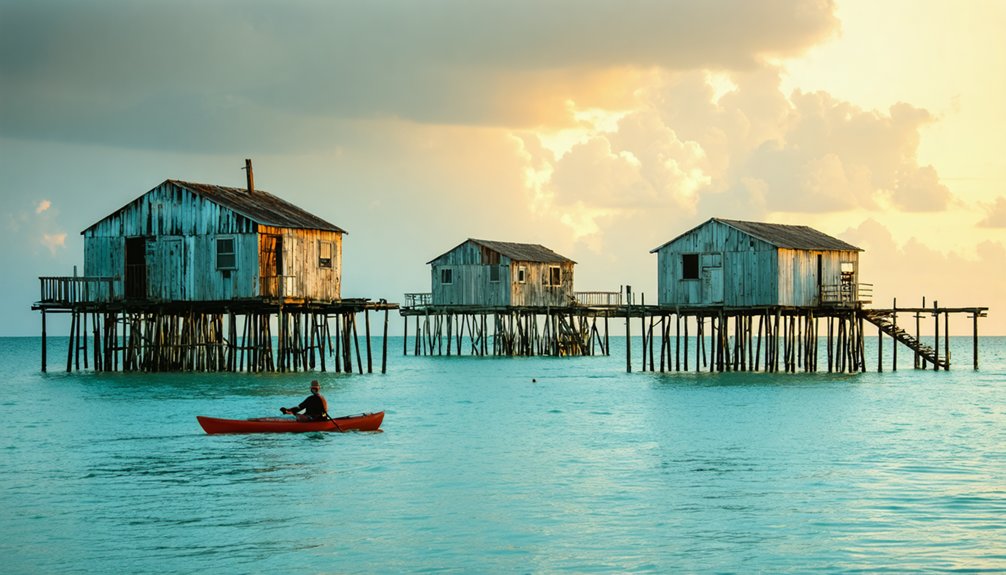
Timing your trip to Stiltsville can make the difference between a smooth, sun-soaked adventure and a choppy, frustrating ride. Winter and spring offer the calmest seas, clearest skies, and the best conditions for photography and boat navigation through Biscayne Bay’s shallow waters.
Visiting during these quieter months also lets you absorb Stiltsville’s cultural significance without battling summer storms or Atlantic hurricane season risks. You’ll move through the six remaining structures at your own pace, fully appreciating the preservation efforts that keep this mid-century ghost town standing above the water.
Avoid summer if possible — afternoon thunderstorms develop quickly and can cut your trip short. Plan your visit between November and April, and you’ll experience Stiltsville exactly as it deserves to be seen.
What Do the Six Remaining Houses Actually Look Like?
Each of the six remaining houses at Stiltsville carries its own personality, shaped by decades of salt air, storm damage, and the hands of the families who once called them home. You’ll notice that historical preservation and architectural details vary dramatically between structures.
- Baldwin House and Bay Chateau feature reinforced concrete pilings and weathered wood exteriors that reflect classic mid-century Florida coastal design.
- The Jimmy Ellenburg House stands as the clearest example of original stilt architecture, elevated roughly ten feet above shallow bay waters.
- The A-Frame House, Hicks House, and Powerboat Club each display distinct rooflines and structural quirks earned through years of hurricane exposure.
You’re fundamentally viewing six open-air time capsules, each frozen at different moments in Stiltsville’s remarkable, turbulent history.
What Are the Rules Before You Step Inside?
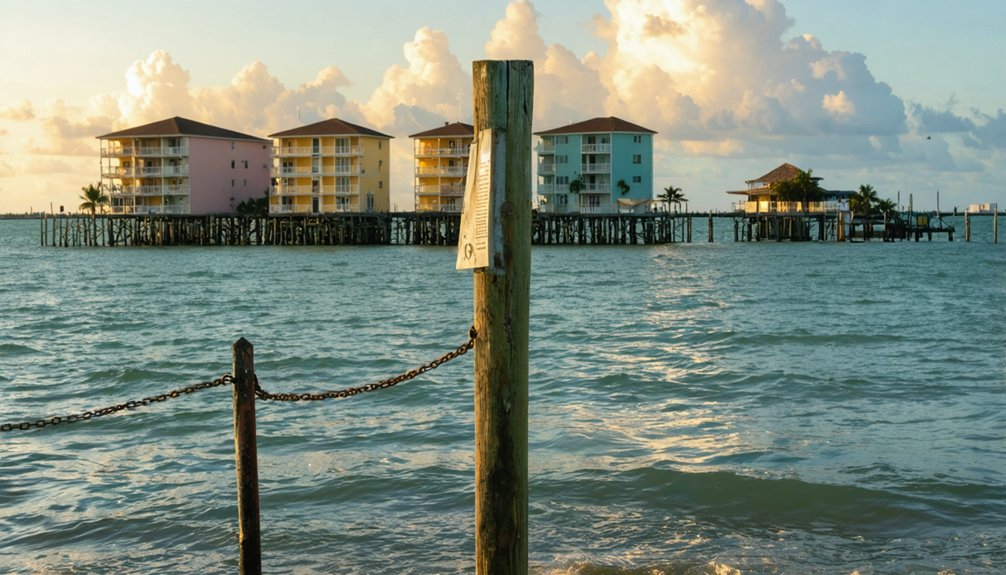
Before you even think about pulling up to one of the six remaining houses, you’ll need two permits: one from the Stiltsville Trust and a separate special use permit from the National Park Service.
These aren’t suggestions — every structure posts “no trespassing” signs, and ignoring them will cost you a $5,000 fine.
Visit the Stiltsville Trust website to start the permitting process before you book your boat.
Permits You Need First
Getting into Stiltsville isn’t as simple as pulling up a boat and hopping out—you’ll need two separate permits before you can legally tie up or step inside any of the six remaining structures. Skip this step, and you’re looking at a $5,000 fine.
- Stiltsville Trust permit: Request access through their official website before your trip.
- NPS special use permit: Required alongside the Trust permit to tie up or enter any structure.
- Captain authorization: Your boat captain needs National Park Service approval to legally navigate close to the houses.
Beyond the urban legends surrounding these weathered homes and the local cuisine you’ll grab before departing Coconut Grove, respecting this permitting process keeps Stiltsville protected and your wallet intact.
Consequences Of Trespassing
Stiltsville doesn’t take kindly to rule-breakers, and the consequences are steep enough to ruin any road trip budget. Every one of the six remaining houses displays “no trespassing” signs, and ignoring them costs you $5,000 in fines. That’s not negotiable.
Beyond your wallet, unauthorized entry threatens both wildlife conservation and cultural preservation efforts that keep this fragile ghost town standing. The Stiltsville Trust and National Park Service actively protect these structures, and they enforce the rules seriously.
Even captains steering too close without proper NPS authorization face consequences. You need a Stiltsville Trust permit plus an NPS special use permit before you tie up or step inside anything.
Respect the boundaries, follow the permitting process, and you’ll experience Stiltsville the right way — without a costly fine haunting your trip.
Frequently Asked Questions
Can You Swim or Snorkel Around the Stiltsville Structures Safely?
You can swim and snorkel around Stiltsville’s structures, but you’ll want to take safety precautions seriously. Bring proper snorkeling gear, watch for shallow one-to-three-foot depths, and navigate boat traffic carefully to enjoy your freedom safely.
Are Pets Allowed When Visiting Stiltsville on a Guided Tour?
With only 6 structures remaining, space is tight! Tour guidelines don’t officially confirm pet allowances, so you’ll want to contact Biscayne National Park Institute directly to guarantee pet safety before bringing your furry companion aboard.
What Happened to the Original Stiltsville Residents After Hurricane Andrew?
After Hurricane Andrew devastated Stiltsville, you’d find that resident relocation became inevitable—the storm’s fury transformed a vibrant community into a ghost town. Today, historical preservation efforts protect what’s left of those six remaining structures for your exploration.
Is Stiltsville Visible From the Shore or Key Biscayne Beaches?
You can spot Stiltsville’s historically significant silhouettes from Key Biscayne’s shores! The architectural design of those stilted structures rises boldly above Biscayne Bay’s shallow waters, calling you toward adventure, freedom, and discovery just one mile offshore.
Can Private Events or Weddings Be Hosted at Stiltsville Today?
Who needs a ballroom? You can host private events at Stiltsville! Wedding venue policies and private event regulations require NPS permits, but two well-conditioned houses welcome your celebration above Biscayne Bay’s shimmering waters.
References
- https://www.oneworld365.org/blog/florida-ghost-towns
- https://www.clickorlando.com/features/2025/01/06/this-crazy-florida-ghost-town-was-built-on-the-water-heres-where-to-find-it/
- https://www.youtube.com/watch?v=FS0v3OQMNgw
- https://www.youtube.com/watch?v=-vPPooDMJ5U
- https://nextbreakout.com/blog/stiltsville-floating-houses
- https://en.wikipedia.org/wiki/Stiltsville
- https://secretmiami.com/spooky-ghost-towns-florida/
- https://www.onlyinyourstate.com/experiences/florida/stiltsville-fl
- https://www.floridarambler.com/southeast-florida-getaways/stiltsville-miami/