To plan your ghost town road trip to Grisdale, Washington, drive north from Montesano along Wynoochee Valley Road for 32–37 miles into Olympic National Forest. You’ll find the site marked by rusted mailboxes near the forest boundary. Pack rain gear, sturdy boots, and emergency supplies since it’s extremely remote. Today, only concrete foundations and scattered debris remain where 52 family homes once stood. Keep exploring to uncover everything this hauntingly beautiful, forgotten logging camp has to offer.
Key Takeaways
- Grisdale, Washington, once America’s last permanent logging camp, was demolished in 1988, leaving only concrete foundations and rusted mailboxes to explore.
- Drive north from Montesano along Wynoochee Valley Road for 32–37 miles, crossing into Olympic National Forest to reach the site.
- Pack rain gear, layered clothing, sturdy boots, food, water, and a first-aid kit due to the remote location.
- Follow the right fork for former family homes and the left fork toward the bunkhouse area upon arrival.
- Nearby activities include elk and deer hunting, stream fishing, hiking old logging roads, and wildlife watching for bears and elk.
What Is Grisdale, Washington’s Ghost Town?
Once a thriving company town deep in Washington’s Grays Harbor County, Grisdale holds the remarkable distinction of being America’s last permanent logging camp, operating under Simpson Timber Co. from 1946 until its closure in 1986. When it shut down, national media took notice — this was the final traditional logging camp in the contiguous United States.
At its peak, Grisdale offered 52 family homes, modern bunkhouses, a recreation hall, a company store, a small movie theater, and a two-room schoolhouse. Workers rented homes for just $20-$30 monthly.
Today, historical preservation efforts reveal only foundations and scattered remnants after the town’s 1988 demolition. The surrounding wilderness, now reclaimed through wildlife conservation, shelters deer, elk, and black bears — giving you a glimpse into its rugged, untamed past.
How to Get to Grisdale From Montesano
Reaching Grisdale means heading north from Montesano along Wynoochee Valley Road, a scenic drive that carries you roughly 32–37 miles into the southern reaches of the Olympic Mountains. You’ll cross into Olympic National Forest, where a cluster of old, rusted mailboxes marks your destination about half a mile past the boundary. Park there and follow the old road on foot or by vehicle to explore the site.
This corridor doubles as a wildlife conservation zone, where deer, elk, and black bears roam freely through recovering forests. As you navigate the fork in the road—right toward former family home sites, left toward the bunkhouse area—you’re walking ground dedicated to historical preservation. The foundations and scattered remnants tell a powerful story about America’s last traditional logging camp.
What to Bring on Your Grisdale Road Trip?
Preparing for a Grisdale road trip means packing smart for a remote Pacific Northwest environment with no amenities, no residents, and unpredictable weather. You’ll want camping essentials like rain gear, layered clothing, sturdy boots, and plenty of food and water since nothing’s available along Wynoochee Valley Road. A first-aid kit and emergency supplies are non-negotiable this deep into Grays Harbor County.
For photography tips, bring a wide-angle lens to capture the forest’s dramatic scale alongside crumbling foundations. A macro lens helps document scattered remnants and rusted mailboxes up close. Pack extra batteries since cold, damp conditions drain power quickly.
Shoot during overcast hours — Pacific Northwest cloud cover actually creates ideal, soft lighting for moody ghost town imagery. A waterproof camera bag protects your gear from the region’s notorious rainfall.
What’s Left of Camp Grisdale Today
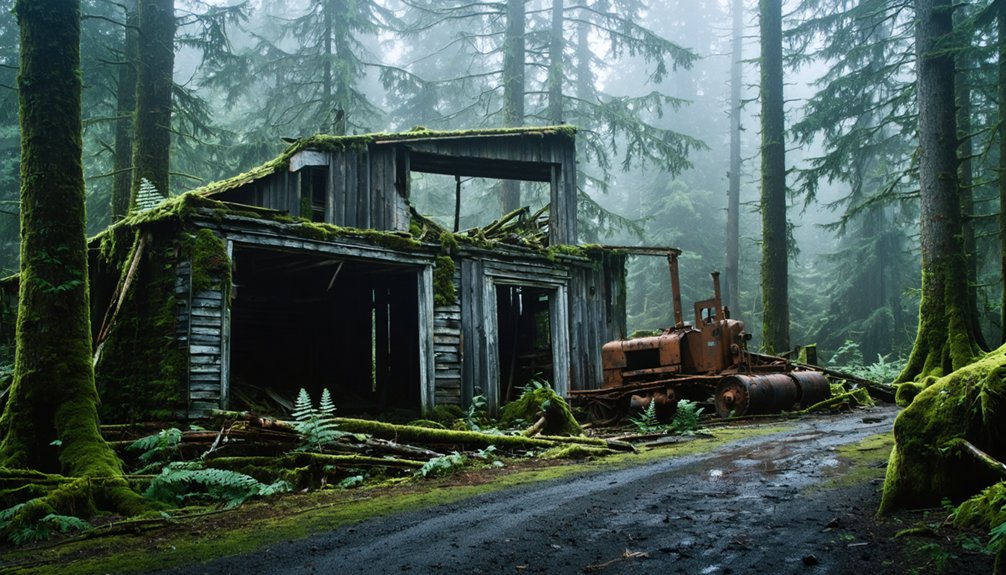
When you arrive at Camp Grisdale today, the forest has largely reclaimed what was once America’s last permanent logging camp. Forest regrowth has swallowed most of the 52 family home sites, leaving only concrete foundations poking through the underbrush. You’ll spot rusted mailboxes near the Olympic National Forest boundary — one of the few authentic markers still standing and worth noting for historical preservation purposes.
Follow the old road’s right fork to explore former family home sites, or take the left toward the bunkhouse area. Either path reveals the same sobering reality: the town was razed in 1988, and bulldozers finished what time started. Rubble and scattered remnants are your primary companions here, but the surrounding wilderness makes every step feel genuinely worth taking.
Why Camp Grisdale Was America’s Last Logging Camp
Camp Grisdale earned its distinction as America’s last permanent logging camp largely because of how Simpson Timber Co. structured life there — workers rented homes for as little as $20 a month, lived alongside their families, and built a genuine community complete with a store, movie theater, and two-room schoolhouse.
When it closed in 1986, national media took notice because nothing like it existed anywhere else in the contiguous United States. Simpson ran 52 family homes, modern bunkhouses, and a recreation hall — all company-owned, none privately held.
That unusual arrangement kept the camp intact decades longer than its predecessors. Today, historical preservation efforts remain minimal, leaving the site largely to nature and those drawn to recreational exploration.
You’re fundamentally walking through a vanished way of life that America won’t see again.
Hunting, Fishing, and Hiking Around Grisdale
Grisdale’s surroundings deliver serious recreational appeal — deer, elk, and black bears roam the forests here, and they’ve done so long enough that the animals practically expect to share the land with visitors. Forest regeneration has quietly restored thriving wildlife habitats across the old camp’s footprint, making outdoor pursuits genuinely rewarding.
Here’s what you can expect:
- Hunting – Elk and deer season brings serious hunters deep into these Olympic Mountain foothills.
- Fishing – Cold, clean streams run nearby, offering solid freshwater fishing within minutes.
- Hiking – Old logging roads double as trails cutting through dense Pacific Northwest forest.
- Wildlife Watching – Bears and elk move through regenerated timber stands regularly, rewarding patient observers.
You’re not just visiting a ghost town — you’re accessing real wilderness.
Nearest Towns, Lodging, and Services Outside Grisdale
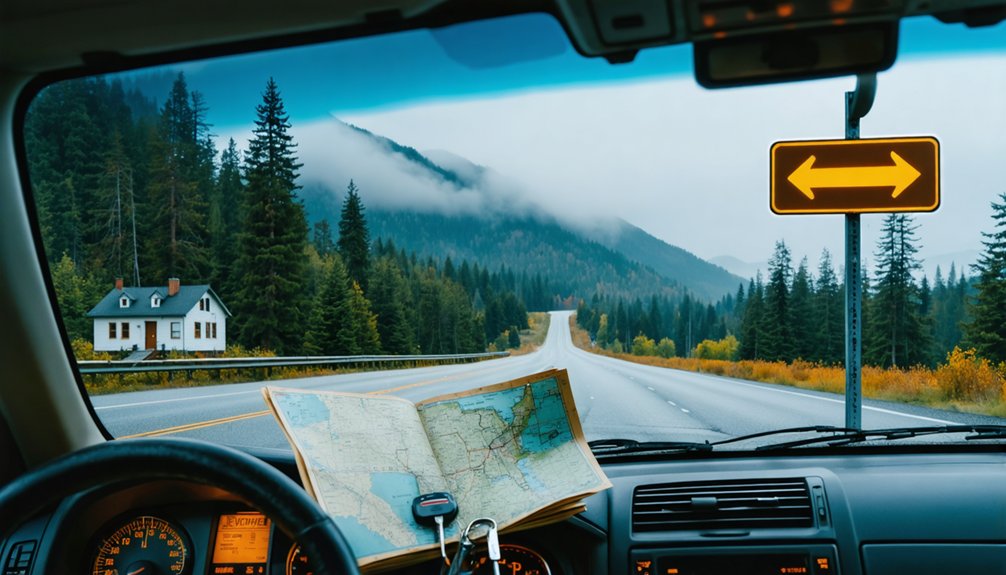
Since Grisdale offers zero services, you’ll need to plan your supply stops before heading up Wynoochee Valley Road. Montesano serves as your primary base, sitting roughly 32–37 miles south and offering grocery stores, fuel, and lodging options that keep you comfortable between explorations.
Grays Harbor College sits about 33 miles away, anchoring a broader community infrastructure throughout Grays Harbor County. The surrounding area supports forest conservation efforts that protect local wildlife corridors, meaning the roads you travel pass through actively managed natural lands worth respecting.
Stock your cooler, fill your tank, and book accommodations in Montesano or nearby Aberdeen before you commit to the drive. Cell service grows unreliable deep in the valley, so arriving prepared isn’t optional — it’s essential for a smooth ghost town adventure.
Frequently Asked Questions
What Were Monthly Rent Costs for Camp Grisdale Family Homes?
Like renting a piece of history for pocket change, you’d have paid just $20–$30 monthly to experience Camp Grisdale’s historic architecture and living conditions — a remarkably affordable glimpse into America’s last traditional logging camp life.
How Many Family Homes Existed in Camp Grisdale at Its Peak?
You’d have found 52 family homes shaping Camp Grisdale’s historical architecture at its peak. These closely resembled structures defined vibrant community life, giving you a glimpse into America’s last permanent logging camp’s tight-knit, self-sufficient spirit.
Did Camp Grisdale Workers Own the Homes They Lived In?
No, you didn’t own your home in this fascinating ghost town architecture. Simpson Timber Co. rented all houses for just $20-$30 monthly, mirroring mining history’s company-town model, where workers lived affordably but never held true ownership freedom.
Which Direction Leads to Bunkhouse Areas on the Old Roads?
When you’re exploring Grisdale’s abandoned roads and historical routes, take the left fork to reach the bunkhouse area. You’ll discover fascinating remnants where single workers once lived, tucked deep within the now-reclaimed Pacific Northwest forest.
What Year Was Camp Grisdale Completely Razed and Demolished?
You’ll find that Camp Grisdale’s haunted legends began when its abandoned structures were completely razed in 1988, leaving only eerie foundations behind — fueling theories that the forest itself reclaimed this ghost town almost overnight.
References
- https://www.facebook.com/groups/ForgottenWashington/posts/2030504960556952/
- https://www.ghosttowns.com/states/wa/grisdale.html
- https://www.movers.com/moving-to-grisdale-wa/
- https://en.wikipedia.org/wiki/List_of_ghost_towns_in_Washington