Sunnyside isn’t a ghost town—it’s a living community of 23,000 residents with deep roots stretching back to 1912. You’ll find historic landmarks like the Cullen Clinic Building and Mt. Vernon Baptist Church standing alongside signs of both struggle and redevelopment. While some streets show visible blight with overgrown lots and deteriorating infrastructure, this remains an active neighborhood where families live, work, and maintain their cultural heritage. Approach your visit with respect: slow down, ask permission before photographing property, and remember you’re exploring someone’s home, not an abandoned relic.
Key Takeaways
- Sunnyside is not a ghost town—23,000 residents live in this active Houston neighborhood with rich African-American heritage.
- Visit historic landmarks like Cullen Clinic Building, Mt. Vernon Baptist Church, and former “Black Wall Street” business district sites.
- Expect mixed conditions: some areas show visible blight while others demonstrate active community pride and ongoing redevelopment efforts.
- Practice respectful tourism by obtaining permission before entering private property and keeping speeds under 5 MPH.
- Honor the living community’s privacy through Neighborhood Watch programs and avoid treating residents’ homes as tourist attractions.
Why Sunnyside Is Not Actually a Ghost Town
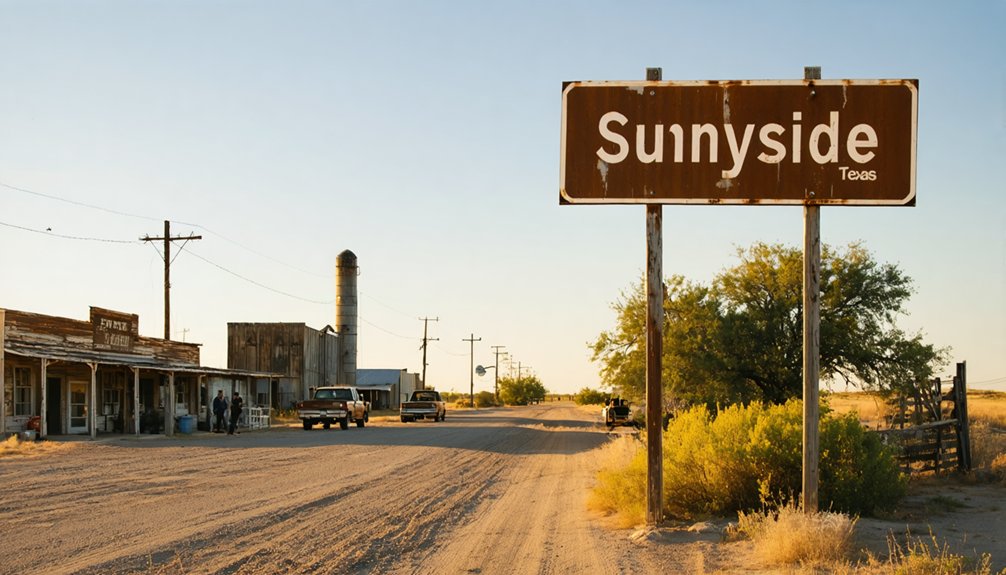
Why would anyone call Sunnyside, Texas a ghost town when over 23,000 people call it home? You’ll find more than 8,000 households here, with 67% of residents reporting a genuine sense of community. That’s not abandonment—that’s connection.
Walk through Sunnyside and you’ll discover thriving small businesses serving a population that’s primarily/chiefly/predominantly/mainly young, with a median age around 37. The streets pulse with active community initiatives supporting families—30% of residents are under 18.
Sunnyside’s median age of 37 and 30% youth population prove this community is building futures, not fading away.
While the 12.5% vacancy rate might catch your eye, it’s balanced by an energetic housing market with 140 homes actively for sale.
This isn’t a place people left behind. It’s a neighborhood where people choose to stay, build, and create their own version of community outside mainstream expectations.
Historical Landmarks and Architecture Worth Visiting
Standing at 7703 Cullen Boulevard, you’ll find the Cullen Clinic Building—a structure that tells two pioneering stories in one. Built in 1960 by Dr. Zeb Poindexter Jr., Texas’s first African-American dentist, and designed by John S. Chase, the state’s first licensed African-American architect, this designated landmark earned historic protection in 2015. It’s living proof that community preservation matters.
Down the road, Mt. Vernon Baptist Church has anchored Sunnyside since 1922, built by residents’ own hands during Jim Crow’s grip. The Sunnyside Civic Club Building from 1936 stands as evidence of self-determination—locals paved their own roads and created gathering spaces when others wouldn’t.
These aren’t museums frozen in time. They’re working buildings where architectural restoration meets daily life, reminding you why Sunnyside earned its “Black Wall Street” nickname.
Understanding the Community’s Rich Cultural Heritage
The story of Sunnyside begins in 1912 with a bitter truth: H. H. Holmes created this segregated neighborhood when racist policies trapped African Americans outside city limits. Yet you’ll discover how residents transformed exclusion into extraordinary community pride.
They built their own volunteer fire department in the 1940s and established water districts when the city wouldn’t serve them. During the 1970s-80s, Sunnyside earned the name “Black Wall Street,” its businesses thriving despite barriers. You’ll find African American traditions woven through every corner—from the rurban landscape mixing shotgun houses with small churches to Dr. Zeb Poindexter‘s historic dental clinic designed by Texas’s first licensed Black architect. This community didn’t just survive segregation; they created something powerful from nothing.
What to Expect When You Visit Today
Driving into Sunnyside today, you’ll notice a landscape caught between survival and surrender. The social implications of rural decline hit hard here—nearly one in five structures sits empty, creating ghost town scenes along residential streets.
You’ll encounter:
- Overgrown lots littered with trash, old concrete piles, and waist-high weeds
- Boarded windows and sagging roofs marking houses surrendering to the elements
- Unpaved or deteriorating roads that complicate navigation
- Active redevelopment efforts like the TCEQ-approved solar farm alongside visible blight
Despite municipal funding challenges limiting cleanup crews to grass-cutting while leaving major debris behind, you’ll find community members pushing forward. Town halls discuss park amenities and future development. It’s a stark contrast—neighborhood pride persisting against a backdrop of vacancy and neglect.
Respectful Tourism in an Active Neighborhood
When you explore Sunnyside, you’re not wandering through frozen history—you’re walking through someone’s neighborhood. This active community demands respect for its resident perspectives and evolving community demographics.
You’ll notice well-maintained homes alongside historic structures, with private property clearly marked. Before you step onto any land, secure explicit permission—Texas trespassing laws aren’t suggestions. The guest book welcomes curious travelers, but management reserves the right to refuse access if you can’t follow basic courtesy.
Keep your speed under five MPH, honor quiet hours from 10 pm to 8 am, and leave everything exactly as you found it. No littering, no trespassing, no disruption. Neighborhood Watch programs stay active here, protecting both heritage and privacy. Your freedom to explore exists because residents allow it—don’t abuse that privilege.
Frequently Asked Questions
What Are the Best Months to Visit Sunnyside, Texas?
You’ll find ideal weather conditions from October through April, when cooler temperatures make exploring this abandoned ghost town comfortable. Spring brings wildflowers and seasonal events nearby, while autumn offers perfect conditions for photography and unhurried wandering through history.
Are There Guided Tours Available in the Sunnyside Neighborhood?
No guided tours operate in Sunnyside, but you’ll find freedom exploring independently. Self-guided walking tours let you discover the neighborhood’s character at your own pace, with opportunities for abandoned building photography throughout this quiet residential area.
Where Can I Find Authentic Local Restaurants in Sunnyside?
You’ll discover authentic local food specialties at Cassy’s Soul Food Kitchen on Martin Luther King Blvd, where perfectly crispy fried chicken wings and tangy collard greens create unique dining experiences that capture Sunnyside’s true Southern comfort soul.
Is Public Transportation Available to Reach Sunnyside From Downtown Houston?
Yes, you’ll find public transportation via METRO Route 87 running hourly from downtown. The 37-minute journey costs just $1-2. Alternatively, you’ve got taxi services and rideshare options for more flexible, independent travel to Sunnyside.
What Safety Precautions Should Visitors Take When Exploring Sunnyside?
You’ll want to visit during daylight hours and stay alert to your surroundings. Bring necessary supplies like water and a phone charger. Wear appropriate footwear for uneven terrain, and don’t explore alone for added security.