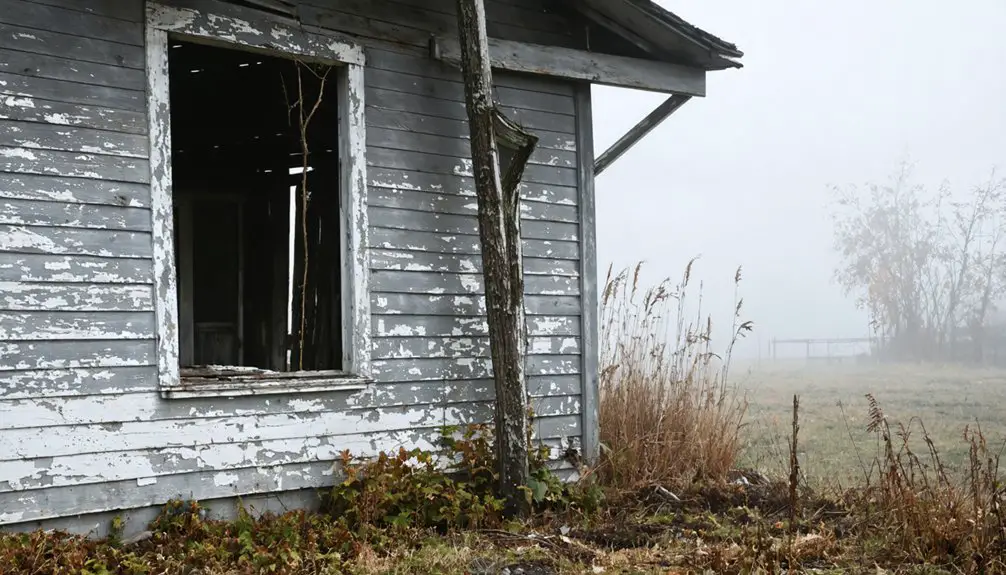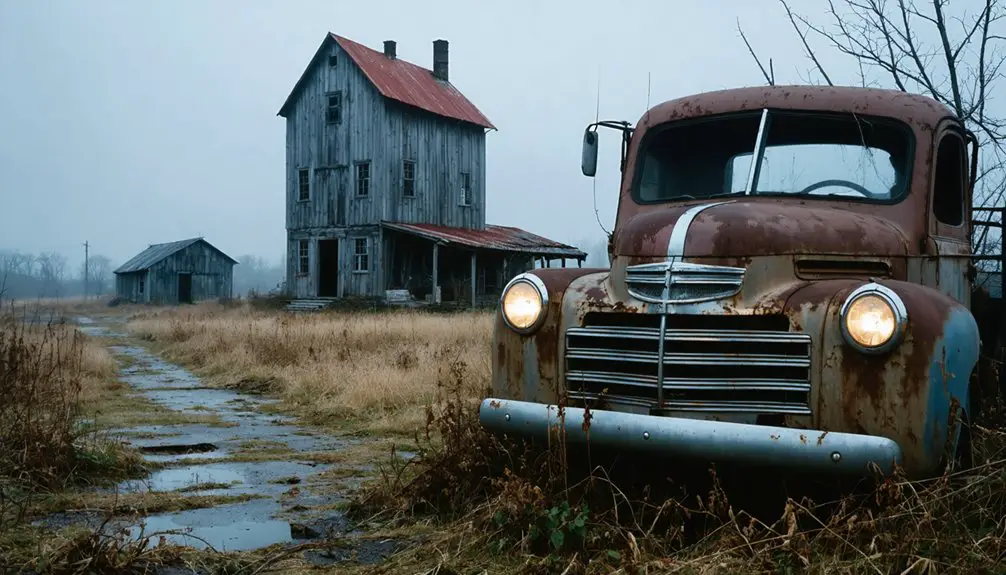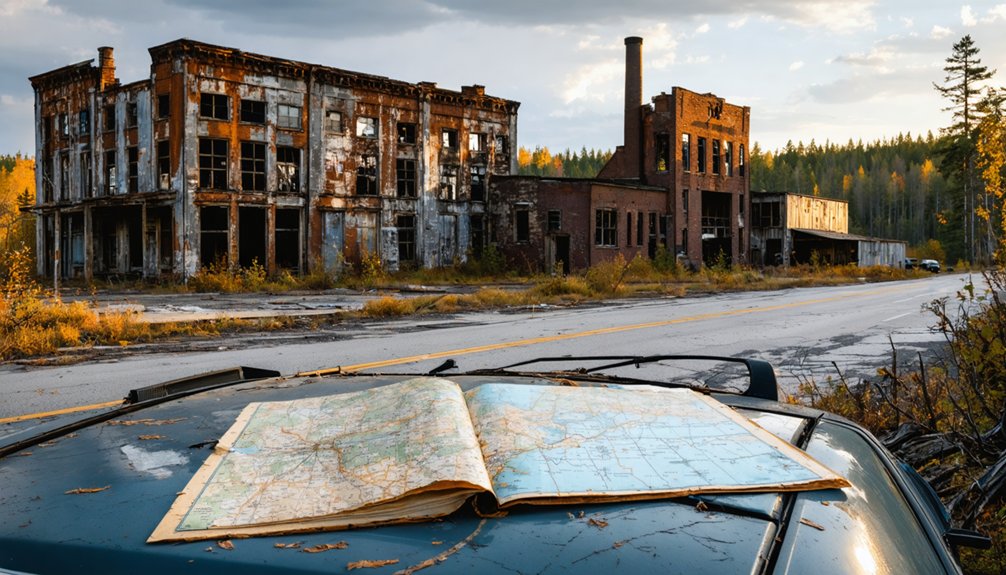
Start your ghost town road trip at Whitefish Point, then head west along M-28, where Walsh, Pines, Star, and Creighton wait within a haunting 25-mile stretch between Seney and Shingleton. You’ll find collapsed cabins, a standing 1920s saloon, and schoolhouses frozen since 1884. Pack sturdy boots, a flashlight, and paper maps — cell service is scarce out here. September’s cooler air and golden foliage make it unforgettable, and there’s far more to uncover ahead.
Key Takeaways
- Start your road trip at Whitefish Point, exploring Deer Park Road before heading west on M-28 through historic ghost towns.
- Visit Walsh, Pines, Star, and Creighton along a 25-mile stretch between Seney and Shingleton without backtracking.
- Travel in late spring to early fall, with September offering cooler temperatures, fewer crowds, and vibrant foliage.
- Bring sturdy boots, a charged flashlight, insect repellent, paper maps, and layers for unpredictable Lake Superior winds.
- Stay safe by avoiding open mineshafts, respecting “Keep Out” signs, and contacting Michigan DNR for unclear site access.
The Best Ghost Towns Along M-28: Walsh, Pines, Star, and More
If you’re chasing the quiet thrill of forgotten places, the 25-mile stretch of M-28 between Seney and Shingleton delivers four ghost towns in a single drive: Walsh, Pines, Star, and Creighton.
Walsh history traces back to 1884, when J.B. Walsh managed logging operations for Delta Lumber Company, leaving behind a schoolhouse and general store now swallowed by time.
Pines attractions include a 1920s bar, grill, and gas station that survived until the 1970s, with the original building still standing.
Star cabins, once welcoming road-weary travelers, now collapse slowly into the tree line.
Ghost town photography thrives here — each site offers raw, unfiltered decay against dense Michigan forest.
Drive this corridor once, and you’ll understand why some roads reveal more in their silence than their destinations.
Best Time to Visit UP Ghost Towns and What to Pack
Most ghost town explorers time their Upper Peninsula visits between late spring and early fall, when snowmelt clears the back roads and daylight stretches long enough to cover multiple sites.
September delivers the strongest seasonal highlights — cooler air, thinning crowds, and fiery foliage framing Fayette’s iron furnaces like a painting you’ll never forget.
Pack your essential gear thoughtfully: sturdy boots with ankle support for uneven terrain, a charged flashlight for shadowed interiors, and insect repellent for overgrown lots where the past hides thick.
Bring a paper map — cell service disappears fast along M-28. Layers matter too, since Lake Superior’s wind rewrites afternoon temperatures without warning.
Come prepared, and these forgotten towns will give you something modern places rarely can — genuine stillness.
How to Road-Trip the Upper Peninsula’s Ghost Towns Without Backtracking
Planning the route right means you’ll never double back on yourself — just a clean westward sweep through the Upper Peninsula’s forgotten corners.
Start at Whitefish Point, absorbing ghost town history along Deer Park Road before joining M-28 heading west. You’ll roll through Walsh, Star, Pines, and Creighton in natural sequence — no retracing, no wasted miles.
From Shingleton, push northwest toward Houghton, where red-soil scenic routes reveal 150-year-old structures still standing against the skyline.
Continue up US-41 through the Keweenaw Peninsula, hitting Central and Laurium before circling south toward the Garden Peninsula.
Fayette waits last, its iron furnaces preserved along Snail Shell Harbor. Every stop flows logically into the next, letting the landscape — not logistics — hold your full attention.
Mining Ruins and Shipwreck Sites That Complement the Ghost Town Route
Beyond the ghost towns themselves, the Upper Peninsula rewards curious travelers with mining ruins and shipwreck sites that deepen every mile you’ve already driven.
Stop at Prospector’s Paradise on US-41 to walk through ancient copper artifacts and absorb the region’s mining history firsthand.
Central’s 1854 townsite, now a national historic district, lets you stand where 1,200 people once lived and worked.
Then push toward Whitefish Point, where the Great Lakes Shipwreck Museum holds Edmund Fitzgerald relics and shipwreck legends that’ll haunt you long after you’ve left.
Admission runs $15, but the weight of those stories is priceless.
You’re not just sightseeing here—you’re tracing the boom-and-bust pulse that shaped an entire peninsula and left its bones beautifully exposed.
Hidden Mineshafts and Collapsing Structures: What to Watch For
The same ruins that pull you in with their haunting beauty carry real danger underneath. Overgrowth hides open mineshafts dropping 25 feet or more, and the structural integrity of century-old buildings can fail without warning.
You’ll want to take serious safety precautions before stepping past any threshold.
Watch for soft ground near old mining sites throughout Keweenaw—it often conceals collapsed tunnels beneath a deceptive surface. Respect every “Keep Out” sign you encounter; those boundaries exist because someone already learned the hard way.
Star’s crumbling tourist cabins and Walsh’s weathered remnants look romantic from a distance, but rotted floorboards don’t announce themselves.
Contact Michigan DNR when access seems unclear. Your freedom to explore these forgotten places depends entirely on returning home to tell the story.
Frequently Asked Questions
Are There Guided Ghost Town Tours Available in the Upper Peninsula?
The knowledge doesn’t confirm guided tours, but you can explore ghost town history yourself! Wander forgotten streets, uncover local legends, and let Michigan’s haunted past speak directly to your free, adventurous spirit.
Can You Camp Overnight Near the M-28 Ghost Town Sites?
You can camp near M-28’s ghost towns, but don’t expect ghost town amenities — there are virtually none! Check camping regulations with Michigan DNR first, then pitch your tent and breathe in that glorious, untamed Upper Peninsula freedom.
Is Photography Permitted at Privately Owned Ghost Town Properties?
You’ll want to respect property rights before snapping shots at privately owned sites. Photography ethics demand you seek permission first — those weathered walls and forgotten stories deserve your reverence, not trespassing.
What Permits Are Needed to Explore Abandoned Mining Sites Legally?
Like a key opening the past, contact Michigan DNR before you immerse yourself in exploration safety at abandoned sites. You’ll need proper authorization to honor mining history while roaming these hauntingly free, forgotten landscapes legally.
Are Any Ghost Town Sites Wheelchair Accessible for Mobility-Impaired Visitors?
Fayette’s preserved village offers you the best accessible routes, with paved paths through ghost town amenities like intact iron furnaces. You’ll find history’s echoes underfoot, though most sites lack formal accessibility, so call Michigan DNR ahead.
References
- https://99wfmk.com/michigan-roadtrip-four-michigan-ghost-towns-along-m28/
- https://www.onlyinyourstate.com/trip-ideas/michigan/ghost-town-road-trip-mi
- https://wdet.org/2019/06/07/take-a-road-trip-to-the-ghost-towns-of-michigans-upper-peninsula/
- https://www.visitkeweenaw.com/things-to-do/museums-history/ghost-towns/
- https://www.youtube.com/watch?v=7-vjuqiGWJU
- https://www.theinnatstonecliffe.com/blog/fayette-historic-townsite-a-ghost-town-frozen-in-1891
- https://madelinemarquardt.com/ultimate-7-day-upper-peninsula-road-trip-budget-guide/