Planning a ghost town road trip to Tasmania, Florida means heading deep into Glades County’s remote flatlands, where a once-thriving pioneer settlement now sits in quiet ruins. You’ll travel Highlands County Road 731 west of Palmdale, traversing unpaved terrain to find scattered foundations and the historic Lucky Island Schoolhouse. Pack water, sturdy boots, and offline maps — cell service is unreliable out here. There’s far more to this forgotten frontier town than meets the eye.
Key Takeaways
- Tasmania, Florida, a ghost town in Glades County, is accessible via Highlands County Road 731, approximately 10 miles west of Palmdale.
- Visit in spring for cooler temperatures, better road conditions, and optimal wildlife viewing while avoiding Florida’s intense summer heat.
- The Lucky Island Schoolhouse, now a barn, and scattered overgrown foundations are the primary remaining structures to explore on-site.
- Bring at least one gallon of water per person, snacks, insect repellent, sun protection, and emergency vehicle supplies for safety.
- Cell service drops near Fisheating Creek, so download offline maps or bring printed directions before departing for this remote site.
What Is Tasmania, Florida’s Ghost Town Story?
Tucked into the remote flatlands of Glades County, Florida, Tasmania is a ghost town that’s as mysterious as its name — a former pioneer settlement that once thrived on turpentine, cattle, and trade before the Great Depression and a railroad bypass quietly erased it from the map.
Dr. J.B. Ingraham homesteaded the area in 1888, and by 1916, the community had officially renamed itself from Fisheating Creek to Tasmania — though nobody’s quite sure why. You won’t find historical markers pointing you toward answers, and local legends surrounding the name remain unconfirmed.
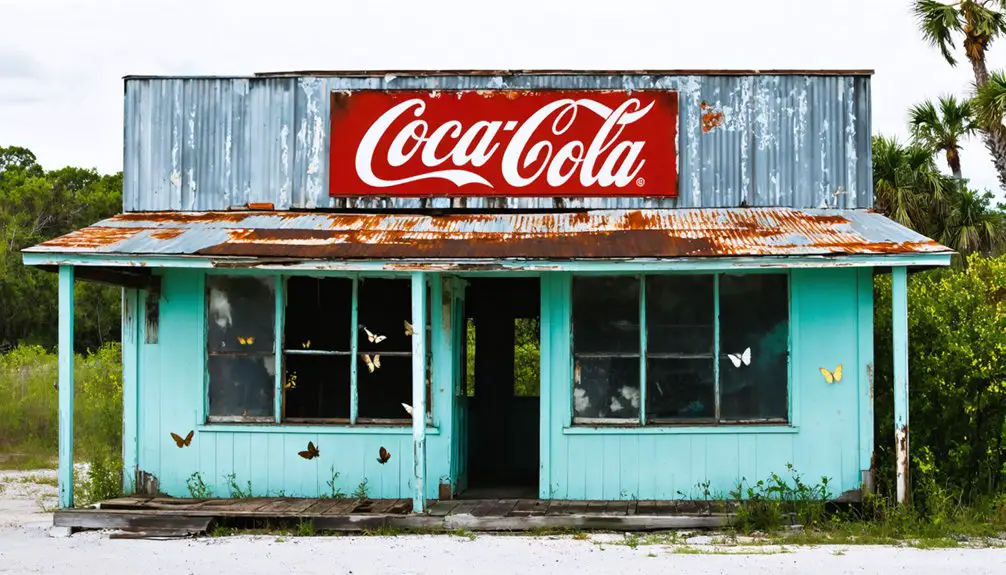
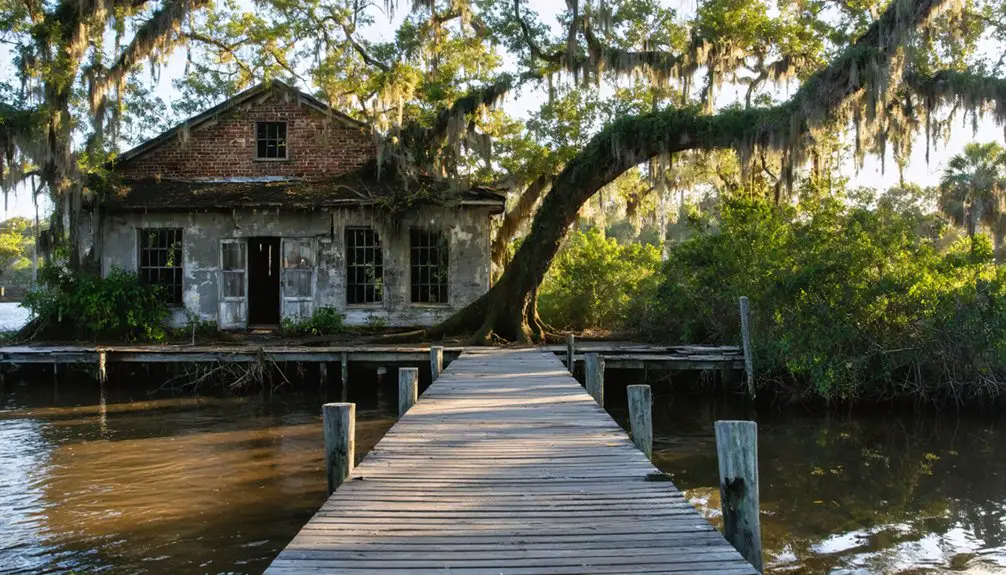
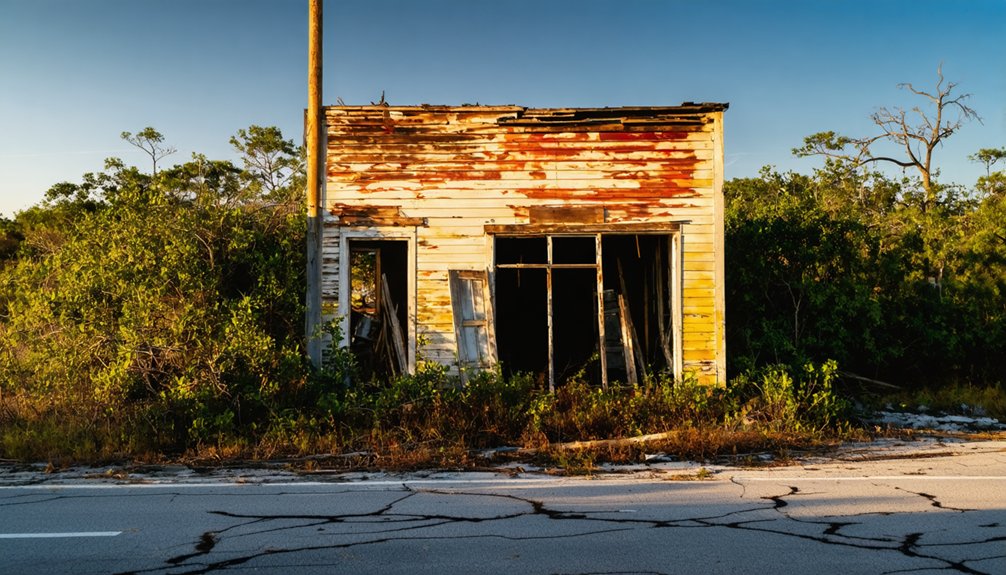
What you’ll find are scattered foundations, a surviving schoolhouse converted into a barn, and an eerie silence that speaks louder than any signpost. It’s raw, forgotten history sitting completely in the open.
How Did Tasmania, Florida Rise and Then Collapse?
What started as a single homestead in 1888 grew into a small but self-sustaining pioneer community built on turpentine production, cattle farming, and a local trading post that kept families connected and supplied.
Dr. J.B. Ingraham’s vision attracted pioneer families who built schools, established a post office, and created local legends around moonshine trade and frontier resilience.
But the Great Depression hit hard, and when the railroad bypassed Tasmania entirely, the community lost its economic lifeline.
By the 1930s, the schools and post office had closed.
By the 1950s, families had scattered completely, leaving only foundations behind.
Historical preservation efforts remain minimal, but that raw abandonment is exactly what makes Tasmania worth visiting.
You’re stepping into an unfiltered chapter of Florida’s forgotten frontier history.
How to Get to Tasmania, Florida by Road
Getting to Tasmania, Florida requires a bit of old-fashioned road navigation, but that’s half the adventure. Head toward Palmdale, then drive roughly 10 miles west, following Highlands County Road 731 — which actually carries “Tasmania” as its alternate name.
You’ll cross into northwestern Glades County near Fisheating Creek, where local legends and historical landmarks quietly await discovery.
Here’s what to keep in mind before you go:
- Road 731 is your primary route, accessible via standard 2WD vehicles
- Venus, Florida serves as the closest nearby community landmark
- Spring visits beat the brutal Florida summer heat
- No major paved highways lead directly to the site, so download offline maps
Trust your instincts, follow the road, and let Tasmania reveal itself on its own terms.
What’s Left to See at the Tasmania Ghost Town Site
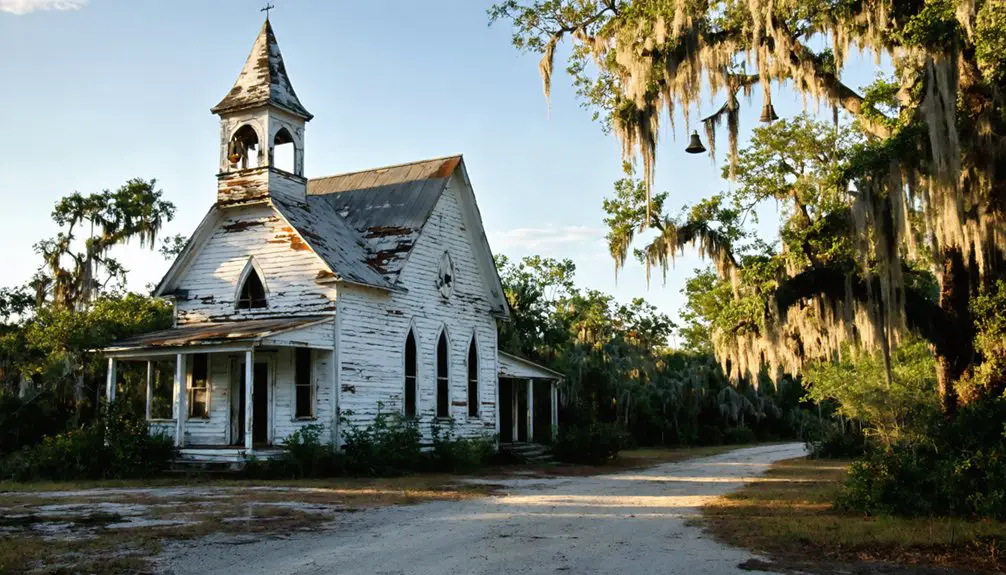
When you arrive at the Tasmania ghost town site, the Lucky Island Schoolhouse stands as the most notable surviving structure. Though it now serves as a barn rather than a place of learning.
You’ll also spot scattered foundations poking through the overgrowth, offering quiet proof that a real community once thrived here.
The site is accessible via Highlands County Road 731, so you can reach it without a 4WD vehicle, making it a straightforward stop on your ghost town road trip.
Lucky Island Schoolhouse Remains
Although little remains of Tasmania’s once-thriving settlement, the Lucky Island Schoolhouse stands as the site’s most significant surviving structure — and it’s still standing today, though it’s now used as a barn.
Historical anecdotes tie this building to pioneer families who built a community from scratch in Florida’s wilderness. Local legends suggest the schoolhouse witnessed the town’s final days before abandonment in the 1940s–1950s.
When you visit, here’s what you’ll find:
- A converted schoolhouse now functioning as a working barn
- Scattered foundations marking where homes and businesses once stood
- A quiet, open landscape carrying the weight of forgotten stories
- Accessible terrain via 2WD roads, making exploration straightforward
Walk the grounds and let the silence tell Tasmania’s story for itself.
Scattered Foundations Still Visible
Beyond the Lucky Island Schoolhouse, scattered foundations are all that’s left to hint at Tasmania’s former life as a working settlement. Walk the grounds and you’ll spot concrete and stone remnants poking through the brush, silent markers of homes, trading post operations, and turpentine industry buildings long since swallowed by Florida’s relentless vegetation.
Bring historical maps if you can track them down — they’ll help you piece together where structures once stood and imagine the layout of this vanished community.
Local legends suggest certain foundation clusters belonged to the trading post where cattle ranchers and moonshiners once conducted business.
There’s no guided tour here, no roped-off exhibits. You explore freely, read the land on your own terms, and let what remains tell Tasmania’s quiet, fading story.
Accessing The Site Today
Getting to Tasmania, Florida takes a little planning, but the route is straightforward once you know it. Head west from Palmdale about 10 miles, or approach from Venus via Highlands County Road 731, which actually carries Tasmania as an alternate name. Your standard 2WD vehicle handles the roads fine.
While you’re out here, embrace the full experience:
- Navigate via Road 731 connecting Venus and the Tasmania site directly
- Spot local wildlife along Fisheating Creek and Rainey Slough during spring visits
- Sample local cuisine in Palmdale or Venus before venturing out — services are nonexistent at the site
- Arrive prepared with water, maps, and cameras; no infrastructure exists on-site
Spring remains your best window, offering cooler temps and active wildlife spotting opportunities throughout the surrounding wetlands.
Best Time to Visit Tasmania, Florida
Spring is the best time to visit Tasmania, Florida, since the region’s summers can get brutally hot and humid, making outdoor exploration uncomfortable. Cooler temperatures between March and May let you roam freely across the scattered foundations and ruins without battling oppressive heat.
You’ll appreciate the comfortable conditions when examining what remains of this forgotten settlement, where historical preservation efforts have kept the Lucky Island Schoolhouse standing as a weathered barn.
Dry weather also keeps the 2WD roads along Highlands County Road 731 manageable and accessible.
Visiting during spring gives you space to absorb the local legends surrounding Tasmania’s mysterious name and dramatic decline. Fewer crowds and pleasant skies make documenting the site’s remnants far more rewarding, giving your ghost town road trip the authentic, unhurried experience it deserves.
What to Pack for Rough Roads and Remote Florida Terrain
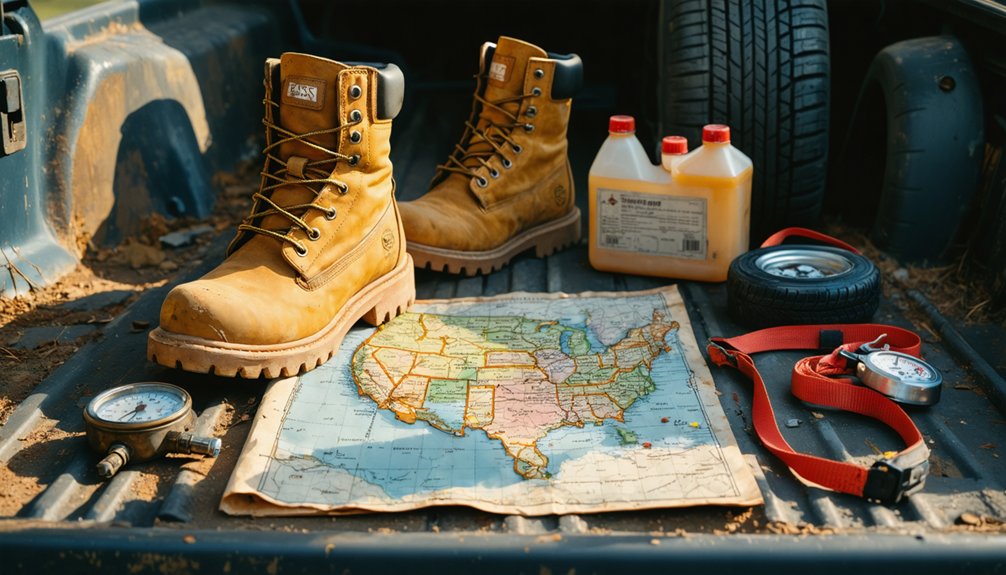
Before you hit Highlands County Road 731, you’ll want to stock your vehicle with a solid emergency kit that includes water, insect repellent, sunscreen, a first-aid kit, a paper map, and a fully charged phone with offline GPS downloaded.
Since the site sits roughly 10 miles west of Palmdale on unpaved terrain, pack a spare tire, jumper cables, a tow strap, and a basic tool kit to handle anything the road throws at you.
Florida’s remote interior won’t forgive unpreparedness, so treat this trip like the off-grid adventure it truly is.
Essential Gear Packing List
Packing smart makes all the difference when you’re heading into remote Florida terrain like Tasmania’s back roads off Highlands County Road 731. You’ll encounter rough 2WD roads, Florida heat, and a site rich with historical artifacts and local legends worth exploring thoroughly.
Bring these essentials:
- Water and snacks — Remote terrain offers zero services; carry at least one gallon per person
- Navigation tools — GPS or printed maps, since cell service drops markedly near Fisheating Creek
- Sun and bug protection — Wide-brim hats, sunscreen, and strong insect repellent handle Florida’s brutal conditions
- Sturdy footwear — Closed-toe boots protect your feet while walking scattered foundations and overgrown terrain
Spring visits keep the brutal summer heat manageable, so time your trip wisely and travel light but prepared.
Road-Ready Vehicle Supplies
Rough 2WD roads like Highlands County Road 731 can punish an unprepared vehicle fast, so you’ll want your rig stocked before you leave pavement behind. Toss in a full-size spare tire, a quality jack, and a plug kit — flat tires happen on remote Florida terrain without warning.
Pack extra coolant, oil, and a tow strap, because the nearest help sits miles away near Venus. Keep a printed set of historical maps in your cab; cell service drops out here, and digital navigation fails you at the worst moment.
A recovery board and jumper cables give you real independence when things go sideways. Local legends say this land swallows the unprepared whole — don’t test that theory with an underprepared truck.
Frequently Asked Questions
Why Was the Town Renamed Tasmania Instead of Keeping Fisheating Creek?
Nobody’s confirmed why they renamed it Tasmania in 1916—the historical preservation records don’t reveal clear town renaming reasons. You’ll find speculation about Australian-tied settlers, but the true mystery adds to its wild, untamed ghost town allure.
Are There Any Guided Tours Available at the Tasmania Ghost Town Site?
You won’t find formal guided tours or structured tour scheduling at Tasmania’s ghost town, but you’re free to explore independently. Historical preservation efforts remain minimal, so you’ll discover scattered foundations and the old schoolhouse barn entirely on your own terms.
Is the Tasmania Ghost Town Site on Public or Private Property?
You might think it’s public land, but Tasmania’s ghost town sits on private property, so you’ll face access restrictions. Always verify permission before exploring — historical preservation depends on respectful visitors like you honoring those boundaries.
What Wildlife Might Visitors Encounter Near Fisheating Creek and Rainey Slough?
You’ll encounter incredible wildlife sightings near Fisheating Creek and Rainey Slough, where ecosystem diversity thrives. Spot alligators, white-tailed deer, wild turkeys, wading birds, and otters roaming freely through Florida’s untamed wetlands and hammocks.
Are Campgrounds or Overnight Accommodations Available Near Tasmania, Florida?
Like pioneers who once homesteaded this wild frontier, you’ll find Fisheating Creek Wildlife Management Area offers camping amenities nearby. It’s your base for historical preservation exploration — rough, free, and perfectly suited for the adventure-seeking spirit you’re carrying.
References
- https://en.wikipedia.org/wiki/List_of_ghost_towns_in_Florida
- https://www.youtube.com/watch?v=XJ0Gvol5Enc
- https://www.youtube.com/watch?v=2ohMxvqew6A
- https://www.australiantraveller.com/tas/ghost-towns-tasmania/
- https://www.ghosttowns.com/states/fl/tasmania.html
- https://enjoytasmania.com.au/articles/ghost-towns/
- https://floridastateonline.com/ghost-towns-in-florida/
- http://wikimapia.org/11624432/Tasmania