You’ll find Terlingua 84 miles south of Alpine on US 118, where crumbling mercury mine ruins and a windswept cemetery tell stories of a once-thriving community that extracted 40% of America’s quicksilver during WWI. Plan your visit around November’s legendary chili cookoffs, fuel up before leaving Alpine, and pack offline maps since cell service vanishes along this isolated Chihuahuan Desert route. The ghost town’s atmospheric church ruins, quirky cemetery art, and authentic mining remnants await your exploration with preparation tips that’ll transform this off-grid adventure into an unforgettable West Texas experience.
Key Takeaways
- Drive 84 miles from Alpine on US 118 after fueling up; bring extra water and download offline maps before cell service disappears.
- Book lodging months ahead for peak seasons; only 2-3 non-camping spots exist for solo travelers during festival weekends.
- Explore church ruins, historic cemetery with 530 graves, and abandoned mercury mine sites using $1 walking-tour maps from Trading Company.
- Visit during November’s legendary chili cookoffs or Viva Terlingua Fest to experience authentic West Texas culture and vibrant celebrations.
- Pack layered clothing for temperature swings, ensure high-clearance 4×4 for remote roads, and stock supplies before arriving in town.
Journey Through History: From Mining Boom to Desert Revival
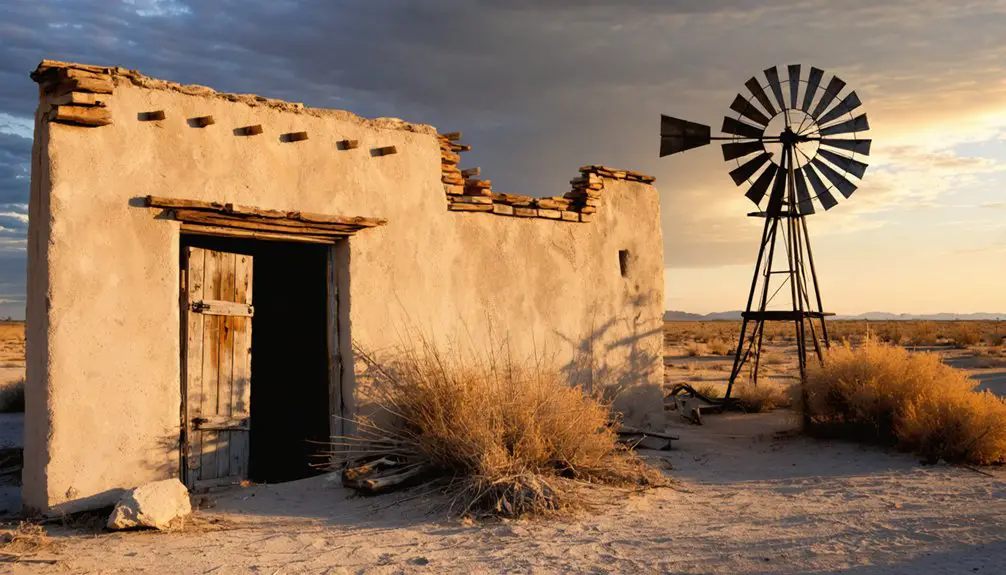
The windswept landscape of Terlingua holds secrets in its crumbling adobe walls and rusted mining equipment, each relic whispering tales of fortunes won and lost beneath the Chihuahuan Desert sun.
You’ll trace the town’s arc from Howard Perry’s 1903 establishment of the Chisos Mining Company through its explosive WWI-era peak, when 2,000 souls extracted 40% of America’s quicksilver. The mining decline hit hard after 1942’s bankruptcy, yet Mexican workers’ limestone-adobe homes still stand—testaments to their escape from revolution.
Today’s ghost town occupies that original skeleton, where cultural preservation meets desert freedom. Before white settlers arrived, indigenous groups had long known these lands, grinding cinnabar ore into vivid pigments for war paint and rock art. The region’s chili cookoffs have become legendary celebrations, drawing visitors who appreciate Terlingua’s independent spirit. You’re eight miles from Big Bend’s border, standing where boom-bust cycles carved human stories into unforgiving terrain, inviting you to wander without constraint.
Your journey to Terlingua begins with a critical decision: which route you’ll take through the vast Chihuahuan Desert. Most travelers approach from Alpine via Highway 118 or from Study Butte along Highway 170, but understanding road conditions before you set out can mean the difference between adventure and disaster.
Remote desert highways transform into treacherous mud traps after storms, cell service vanishes for miles, and the nearest tow truck might be hours away—so you’ll need to plan every fuel stop, water supply, and weather window with precision. Adventure motorcycle riders exploring the Big Bend Texas BDR-X should download updated GPX tracks before their trip, as certain segments have been rerouted due to access changes. While some routes through the Terlingua Ranch Subdivision like North County Road are publicly accessible, many roads in the area have become closed to through traffic with locked gates marking private property boundaries.
Main Routes From Alpine
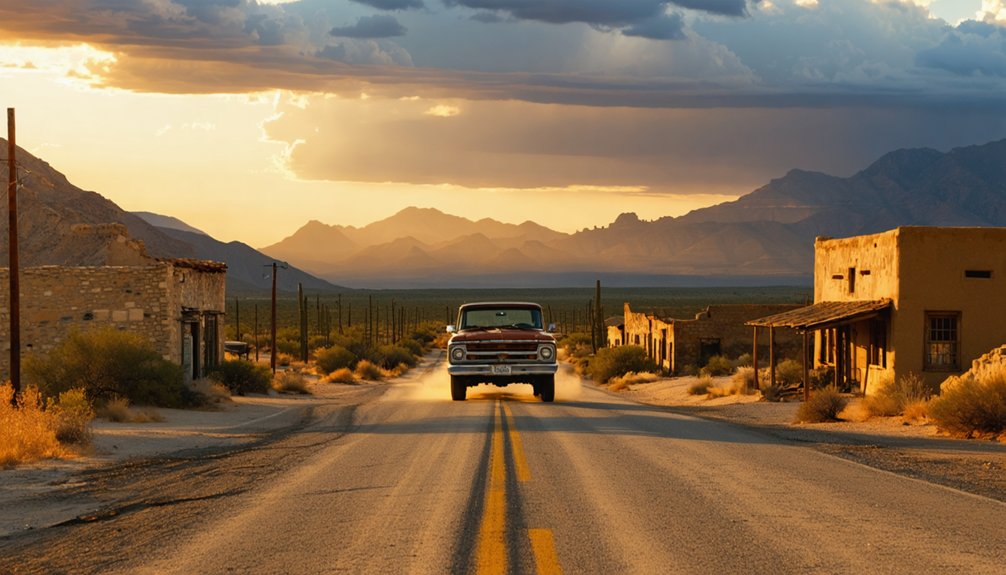
From Alpine’s main thoroughfare, Cockrell Street transforms into US 118 and carries you south across 84 miles of remote Chihuahuan Desert terrain toward Terlingua. This two-hour journey showcases spectacular mountain vistas rising from the desert floor, with the Chisos Mountains beckoning from Big Bend National Park beyond your destination.
Essential desert driving tips include fueling up in Alpine—you’ll spend $15–22 on gas—and bringing extra water for both yourself and your vehicle. Services disappear quickly once you leave town, so check your tire pressure and coolant levels before departing. Alpine sits at an elevation of around 4,485 feet, providing a comfortable starting point for your desert journey. Upon arrival, 22+ hotels await to accommodate road-weary travelers seeking rest after their desert crossing.
The scenic highway demands attention as it winds through isolated backcountry where cell service becomes unreliable.
While a bus-drive combination exists via Presidio, your direct route on US 118 offers unmatched freedom and flexibility.
Study Butte Access Points
Just two miles before reaching Big Bend National Park‘s western entrance, Study Butte emerges as your last reliable outpost of civilization along Highway 118. You’ll find everything you need here—fuel, food, mechanics, and ATMs—before venturing into the wilderness.
The junction where TX 118 meets FM 170 serves as your primary navigation point.
Essential stops include:
- Cottonwood General Store across the street for supplies
- Study Butte trailhead access points leading into surrounding terrain
- Scenic overlook viewpoints revealing desert expanses
- Big Bend Stables for horseback adventures
Use Google Maps instead of Apple for reliable navigation through these remote desert roads. With over 300 residents, this former mercury mining town balances frontier independence with modern convenience, making it your ideal basecamp. The area’s transition from quicksilver mining operations to tourism has transformed it into a welcoming gateway for park visitors and retirees seeking desert solitude. The nearby Terlingua Ranch development and increasing visitation to Big Bend National Park have contributed to the region’s steady population growth since the 1970s.
Road Conditions and Hazards
Traversing Terlingua’s remote desert roads requires constant vigilance and real-time awareness of changing conditions. You’ll encounter minor washes that transform into raging torrents during flash floods, while unpredictable weather patterns shift trail surfaces from passable to treacherous within hours. Hot Springs Road remains closed following July’s flooding damage, and Black Gap Road blocks access to backcourses completely.
Your high-clearance 4×4 faces off-camber sections, switchbacks, and rocky terrain that demand respect. Inclement weather could drastically alter road conditions, making previously navigable routes impassable. Seasonal accessibility concerns intensify during winter storms when ice coats bridges before appearing on main roads. Fuel and supplies are available at Study Butte and Terlingua, ensuring you can stock up before venturing deeper into the backcountry. Monitor DriveTexas and call (800) 452-9292 for real-time updates—these resources prove essential for maneuvering closures. Construction at Chisos Basin compounds access challenges, making advance planning non-negotiable for your desert adventure.
Must-See Ruins and Historic Landmarks
You’ll find Terlingua’s greatest treasures scattered across the desert landscape, where crumbling stone walls and weathered structures tell stories of boom-and-bust prosperity.
The ghost town’s ruins stand as tangible monuments to the thousands of miners who once extracted mercury from the earth beneath your feet. From the haunting Perry Mansion to the windswept cemetery and abandoned mine shafts, each landmark offers a raw, unvarnished glimpse into West Texas frontier life.
Perry Mansion and Church Ruins
Perched high on a steep hill overlooking Terlingua Ghost Town, the Perry Mansion commands attention like a dilapidated castle surveying its abandoned kingdom. Built in 1906 by mining magnate Howard Perry, this rock-and-adobe structure has been transformed from crumbling ruins into unique lodgings while maintaining its “living ruin” character. You’ll experience architectural preservation that honors the past without sanitizing it.
Essential experiences at these historic sites:
- Watch sunrise from the Green Room’s expansive veranda overlooking the ghost town
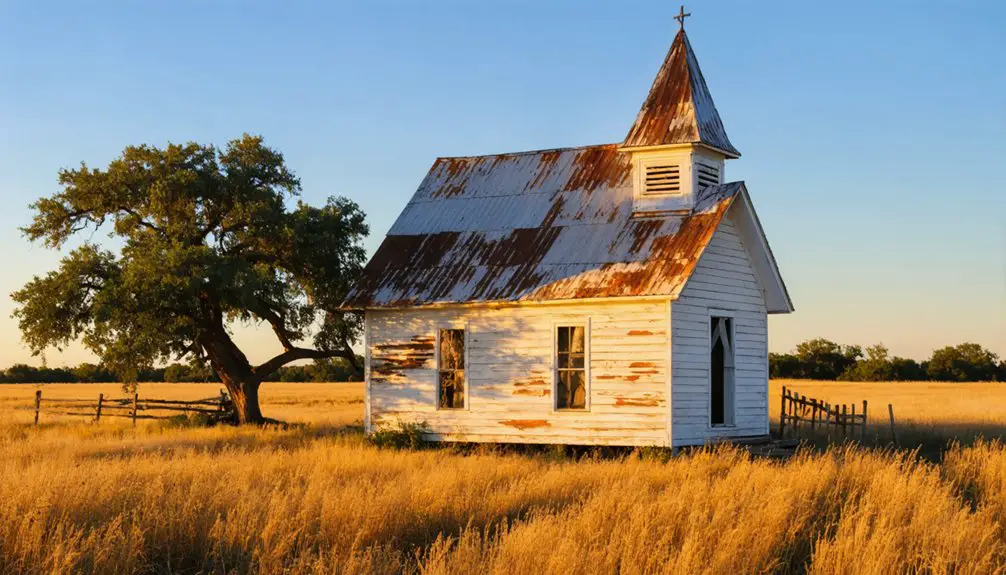
- Explore the atmospheric church ruins that anchored this once-thriving mercury-mining community
- Wander among remnants of stores, schools, and miners’ homes from the early 1900s
- Feel the spiritual atmosphere of a town that housed thousands before post-WWII abandonment
Winter offers ideal conditions for exploring these haunting landmarks.
Historic Terlingua Cemetery Exploration
The Historic Terlingua Cemetery spreads across a windswept hillside below the ghost town, where 530 graves tell stories of hardship, hope, and the brutal realities of early 1900s mercury mining. You’ll discover folk art memorials that defy convention—a three-foot T-Rex statue, hobbit-themed markers with Tolkien quotes, and a massive chicken honoring “Boss Bird.” Weathered gravestone symbolism ranges from simple filigree crosses to hand-crafted grottoes adorned with beer bottles, Grateful Dead CDs, and rosaries left by visitors.
Mercury miners who died from poisoning and accidents rest alongside 1918 influenza victims and pioneer Federico Villalba. Visit during Day of the Dead celebrations when paper streamers and candles transform the hillside into vibrant color against the Chisos Mountains. It’s Texas’ most photographed cemetery—raw, authentic, unforgettable.
Abandoned Mercury Mine Sites
Crumbling sandstone walls rise from the desert floor like sentinels of Terlingua’s industrial past, where Howard E. Perry’s Chisos Mining Company once dominated mercury production. You’ll discover authentic remnants untouched by salvage operations—two to three dozen structures scattered across stark terrain where 2,000 souls once labored.
Essential Sites to Explore:
- Abandoned mineshafts marking industrial zones where 7,200 flasks flowed during peak production
- Company store (now Trading Company) selling walking-tour maps for $1
- Ghost town buildings with intact roofs standing against harsh elements
- Labor union strikes memorial sites documenting workers’ struggles in brutal conditions
Navigate freely through these ruins without restrictions. The furnaces and head frames disappeared post-WWII, but you’ll walk where miners endured extreme heat and poor ventilation, transforming cinnabar into America’s mercury backbone before 1942’s bankruptcy ended Perry’s empire.
Annual Events That Bring the Ghost Town to Life
Several times each year, Terlingua shakes off its dusty slumber as thousands of visitors flood into this remote ghost town for festivals that transform the desert landscape into a vibrant celebration.
November brings the legendary Frank Tolbert-Wick Fowler Cook-Off and Terlingua International Chili Championship—renowned chili competitions that draw over 10,000 fans the first weekend of the month. You’ll find three days of fierce culinary battles, cold drinks, and plenty of desert camaraderie.
Throughout the year, lively music festivals pulse through the ghost town. Viva Terlingua Fest showcases regional musicians alongside film screenings and photography contests, while October’s Ride 4 Trails brings motorcyclists together for barbecue and games. Each event offers you a chance to experience authentic West Texas culture without the constraints of ordinary tourism.
What to Expect in This Off-the-Grid Desert Community
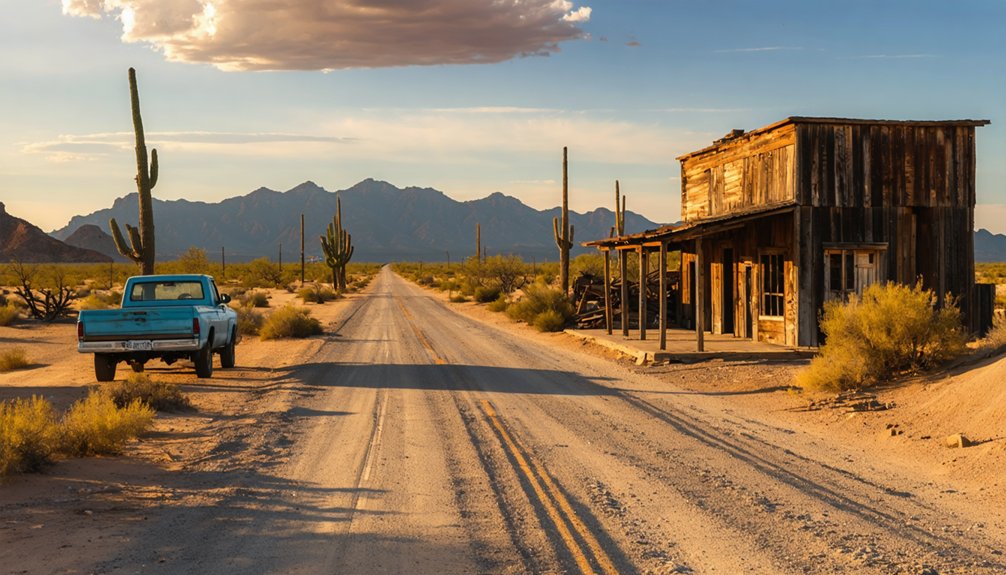
Dust-covered ruins rise from the Chihuahuan Desert like monuments to another era, their flat sandstone walls standing without mortar against the relentless West Texas wind. You’ll find sustainable desert living here isn’t just philosophy—it’s necessity.
In this unforgiving landscape, self-sufficiency isn’t a lifestyle choice—it’s the price of survival in West Texas isolation.
The fragile off-grid setup blends seamlessly into the landscape, where 78 residents embrace rustic community charm alongside abandoned 1930s vehicles and weathered mining structures.
What defines this remote outpost:
- No traditional utilities – Residents generate their own power and haul water
- Active cemetery overlooking the living town, where miners rest beside modern graves
- Vibrant art scene integrated directly into historic ruins
- Capped mine shafts dotting nearby hills, including California Hill where Terlinguaite mineral was discovered
This isn’t suburban comfort transplanted—it’s authentic frontier independence.
Essential Tips for Your Terlingua Adventure
Your sense of adventure brought you here—now practical planning will keep you comfortable in one of Texas’s most unforgiving landscapes. Book lodging options for solo travelers months ahead, as only 2-3 non-camping spots exist for peak weekends. Pack an SUV with offline maps, extra fuel, and layered clothing for temperature swings between scorching days and cold nights. Stock up on supplies before arriving—dining options are scarce.
Activities suitable for families include Lost Mine Trail’s moderate 5-mile hike and Santa Elena Canyon‘s dramatic walls. For solitude seekers, explore hidden Cattail Falls or Dagger Flat. Download navigation tools before cell service disappears. Start hikes at dawn to maximize exploration time and avoid afternoon heat. Big Bend Ranch State Park offers crowd-free alternatives when the national park gets busy.
Frequently Asked Questions
Are There Any Lodging Options or Hotels Available in Terlingua?
You’ll find boutique lodging rentals like luxury cave suites and desert yurts, plus affordable camping options at Terlingua Ghost Town RV Park. Choose from historic casitas, themed rooms, or stargazing domes—your desert escape awaits on your terms.
What Restaurants or Places to Eat Exist in the Ghost Town?
You’ll discover authentic flavors at Taqueria El Milagro and DB’s Rustic Iron BBQ in the Ghost Town itself. Both serve local cuisine specialties—traditional Mexican dishes like street tacos and slow-smoked Texas barbecue that’ll satisfy your adventurous appetite.
Is Cell Phone Service Available in Terlingua and Surrounding Areas?
You’ll find limited cell service in Terlingua—T-Mobile offers the best coverage, though internet connectivity quality’s unpredictable. AT&T and Verizon have spotty reception. Emergency services availability exists, but don’t rely solely on your phone in remote areas.
How Far Is Terlingua From the Nearest Gas Station?
You’re practically standing at it—like finding an oasis in the desert, Terlingua’s only gas station sits right in town. It doubles as your nearest grocery store location with potable water availability for your off-grid adventures.
Are Guided Tours of the Abandoned Mines Available to Visitors?
Yes, you’ll find guided tours of abandoned buildings through horseback excursions and backcountry adventures. However, Terlingua Ghost Town offers self-guided exploration of ruins, letting you freely wander among decaying structures and mining remnants at your own pace.
References
- https://www.legendsofamerica.com/tx-terlingua/
- https://www.dallasites101.com/blog/post/terlingua-texas-ghost-town-guide/
- https://www.youtube.com/watch?v=fnk7SotJgq4
- https://ghosttowntexas.com/ghosttown.html
- https://texashighways.com/culture/history/a-new-texan-finds-beauty-and-solitude-amongst-the-living-and-the-dead-in-terlingua/
- https://www.tshaonline.org/handbook/entries/terlingua-tx
- https://en.wikipedia.org/wiki/Terlingua
- https://gov.texas.gov/film/trail/terlingua-ghost-town
- https://texashighways.com/culture/history/chasing-quicksilver-mercury-mining-history-in-beautiful-big-bend/
- https://www.tshaonline.org/handbook/entries/mercury-mining