Planning a ghost town road trip to Thurmond, West Virginia means stepping into a place that once outshipped Cincinnati in freight and buzzed with 15 daily passenger trains. Today, only five residents remain. You’ll walk free through preserved storefronts, the historic C&O Depot, and silent streets that echo a coal-boom past. Located inside New River Gorge National Park, it’s easy to reach by car or even Amtrak. Keep going to uncover everything you need for the perfect visit.
Key Takeaways
- Thurmond is located in New River Gorge National Park, Fayette County, accessible via US-19 South, Thurmond Road, and a single-lane bridge.
- Admission is free, with self-guided walking tours available year-round and a visitor center open June through August plus September weekends.
- Amtrak’s Cardinal line offers a unique request-a-stop service three times weekly, providing an alternative arrival experience.
- No lodging exists in Thurmond; stay in nearby Fayetteville, Oak Hill, or campgrounds at Grandview and Babcock State Park.
- Combine your visit with New River Gorge hiking, white water rafting, the gorge bridge walk, and Fayetteville’s craft breweries.
What Makes Thurmond the Most Extreme Ghost Town in West Virginia?
Once a booming railroad and coal hub that handled more freight than Cincinnati at its peak, Thurmond, West Virginia has since dwindled to a staggering population of just five residents. That dramatic contrast is exactly what makes it one of America’s most extreme ghost towns.
At its peak, Thurmond outshipped Cincinnati. Today, five people call it home.
When you walk through Thurmond, you’re stepping past historical landmarks frozen in time — an old depot, vacant storefronts, and bank buildings that once held more capital than most institutions across the state.
Local legends tell of streets packed with saloons, hotels, and 15 daily passenger trains rattling through town.
Today, trains still pass through, but almost nobody’s watching. If you crave raw, unfiltered history without the crowds, Thurmond delivers a kind of freedom you simply won’t find anywhere else.
How Thurmond Went From More Freight Than Cincinnati to Five Residents
At its peak, Thurmond handled more freight than Cincinnati, supported 15 daily passenger trains, and packed its streets with banks, saloons, hotels, and thriving businesses fueled by the region’s coal boom.
The town’s collapse came hard and fast—the Great Depression crushed demand, mines closed, and the railroad’s switch from steam to diesel engines eliminated the very reason Thurmond existed as a junction stop.
Today, you’ll find a near-silent ghost town of just five residents, where preserved storefronts and an old depot stand as the only witnesses to what was once West Virginia’s most powerful commercial hub.
Thurmond’s Coal Boom Era
During the early 1900s, Thurmond punched well above its weight — this small West Virginia town moved more freight than Cincinnati at its peak, fueled almost entirely by coal. You’d have found a thriving hub unlike anything nearby:
- Banks holding more capital than most West Virginia institutions
- Up to 15 passenger trains stopping daily
- Streets packed with saloons, hotels, and active storefronts
- Coal-rich mines driving constant commercial momentum
Then industrial decline hit hard. Diesel engines replaced steam, reducing the need for Thurmond’s locomotive shops. Coal demand collapsed, triggering population decline as residents left chasing work elsewhere.
The same freedom that drew ambitious settlers here — opportunity, movement, commerce — eventually pulled them away. What remains today tells that story honestly, preserved inside New River Gorge National Park.
Forces Behind The Decline
Thurmond didn’t collapse overnight — it unraveled through a chain of industrial shifts that stripped away every reason people had to stay. The Great Depression hit hard, cooling coal demand and shuttering mines that once fueled the entire economy.
But the deeper wound came from transportation shifts nobody could reverse. When railroads abandoned steam engines for diesel locomotives, Thurmond’s engine shops and coaling towers became obsolete overnight. Fewer stops meant fewer workers, fewer customers, and fewer reasons to open a storefront.
Industrial decline fed on itself — businesses closed, families packed up, and the population quietly evaporated. That thriving commercial hub handling more freight than Cincinnati slowly emptied out, leaving behind preserved buildings and an eerie, walkable silence you can still explore today.
Ghost Town Today
What was once a roaring commercial hub handling more freight than Cincinnati now stands as one of West Virginia’s most fascinating ghost towns, with just five residents calling it home. Urban decay and historic preservation collide here in ways you won’t find anywhere else.
When you visit, you’ll encounter:
- Empty storefronts frozen in time along abandoned streets
- A restored depot preserved by the National Park Service
- Active rail lines where trains still rumble through daily
- Bank buildings standing as silent monuments to vanished wealth
You’re walking through living history here. The 2020 census confirmed only five residents remain in a place that once held thousands. It’s raw, it’s real, and it’s completely free to explore.
When Thurmond Is Actually Open and Worth the Drive
If you’re planning a visit to Thurmond, timing matters. The visitor center operates from June through August, plus September weekends, between 10 am and 5 pm. Outside those hours, you’re on your own — but that’s honestly part of the appeal.
You can explore the historical architecture and railroad history year-round through self-guided walking tours available online before your trip. The old depot, bank buildings, and empty storefronts stand quietly preserved inside New River Gorge National Park, and admission to the Historic District is completely free.
If you’re riding Amtrak, the train makes three weekly request-a-stop visits near town. Active trains still roll right through, connecting you directly to the living railroad history beneath your feet.
Plan ahead, and Thurmond absolutely rewards the drive.
How to Get to Thurmond, West Virginia
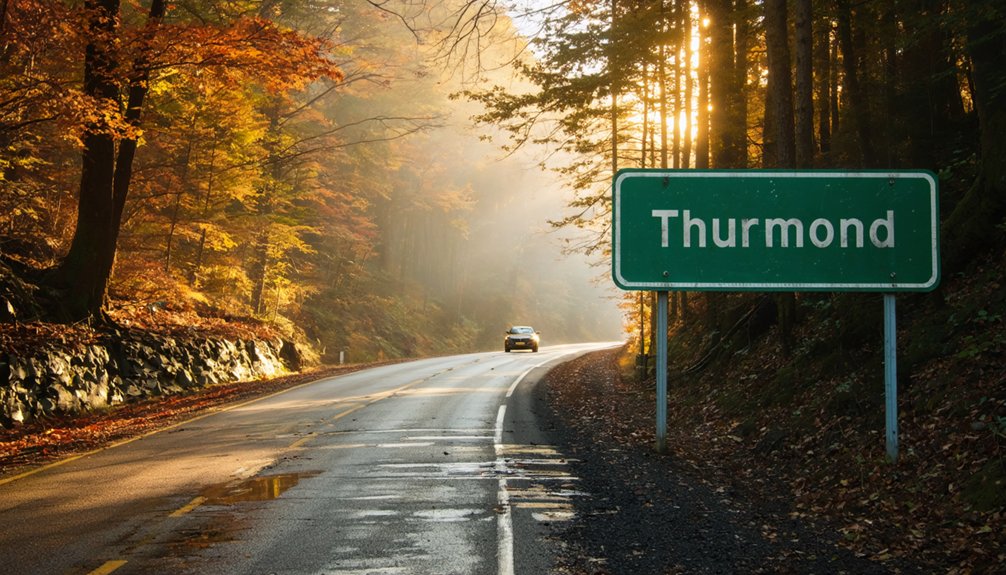
Thurmond sits in Fayette County, West Virginia, tucked deep inside New River Gorge National Park, so you’ll want to plan your route carefully before heading out.
Most visitors drive in via local park roads, where the journey itself rewards you with stunning gorge views.
If you’d rather skip the wheel, Amtrak stops near town three times a week on a request-a-stop basis, making it one of the more unique train arrivals you’ll ever experience.
Driving Directions and Routes
Getting to Thurmond, West Virginia requires traveling through some of the most scenic back roads in the Appalachian region, so planning your route ahead of time is well worth the effort. Located in Fayette County, this destination rewards adventurous travelers with stunning gorge views and historical architecture around every bend.
Follow these directions for the smoothest approach:
- Take US-19 South toward Fayette County from the north.
- Turn onto Thurmond Road, which winds dramatically into the gorge.
- Cross the single-lane bridge over the New River to enter town.
- Park near the old depot to begin exploring on foot.
Local legends surrounding this once-thriving coal town make the winding drive feel like traveling back through time itself.
Amtrak Stop Access
Beyond the winding road through the gorge, there’s another way to reach Thurmond that feels perfectly fitting for a town built around railroads—Amtrak. The Cardinal line makes three weekly stops here on a request-a-stop basis, meaning you’ll need to flag your intention when booking your ticket.
Stepping off the train puts you directly inside living railroad history, surrounded by historical architecture that once supported one of West Virginia’s most powerful economic engines. The old depot, bank facades, and empty storefronts stand exactly where thousands once hustled through daily life.
Unlike driving, arriving by rail lets you experience Thurmond the way its original residents did—through the gorge, on steel tracks, with the river rushing beside you. It’s an entrance that no road can quite replicate.
What You’ll Actually See Walking Through Thurmond?
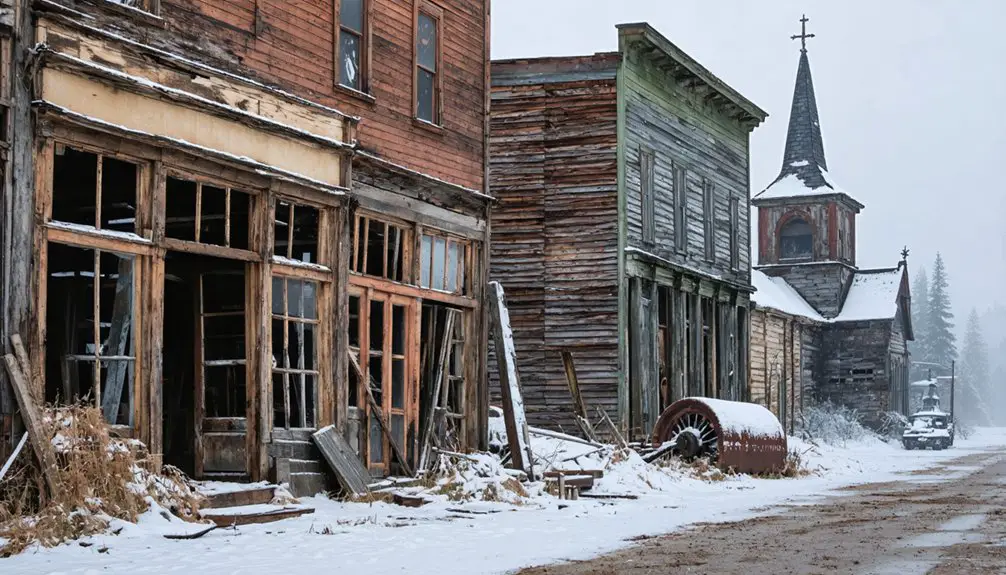
Walking through Thurmond feels like stepping into a moment frozen in time, where the old C&O depot, crumbling bank buildings, and hollow storefronts tell the story of a town that once outpaced Cincinnati in freight traffic.
The historical architecture speaks volumes about a booming past built on coal and rail. Local legends echo through every weathered wall.
Here’s what you’ll encounter on your self-guided walk:
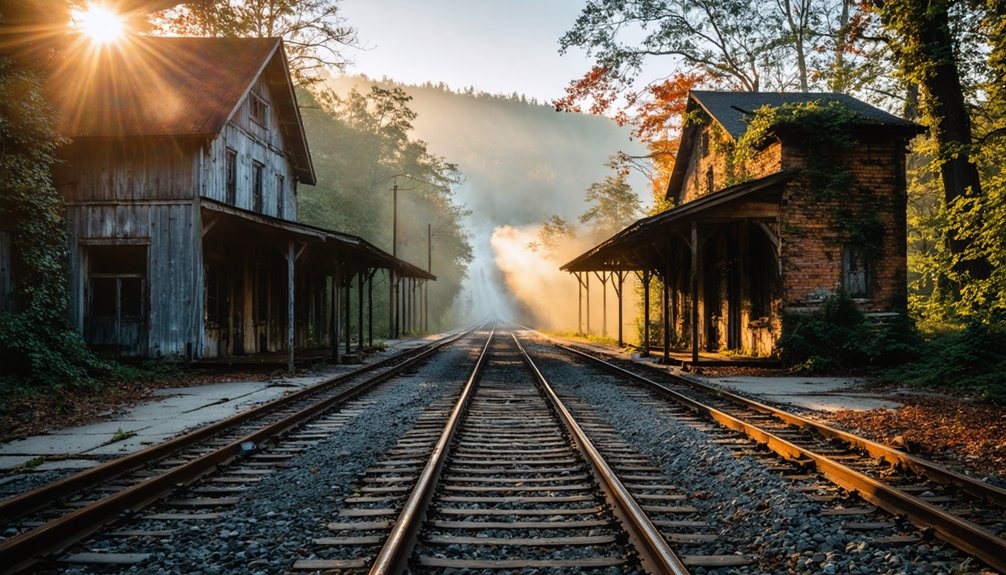
- The C&O Depot – A beautifully preserved centerpiece of the Historic District
- Former Bank Buildings – Once holding more capital than most West Virginia institutions
- Empty Storefronts – Remnants of saloons, hotels, and bustling commerce
- Active Rail Line – Real trains still roll directly through town
Best part? Admission is completely free.
Where to Stay When Visiting Thurmond and New River Gorge
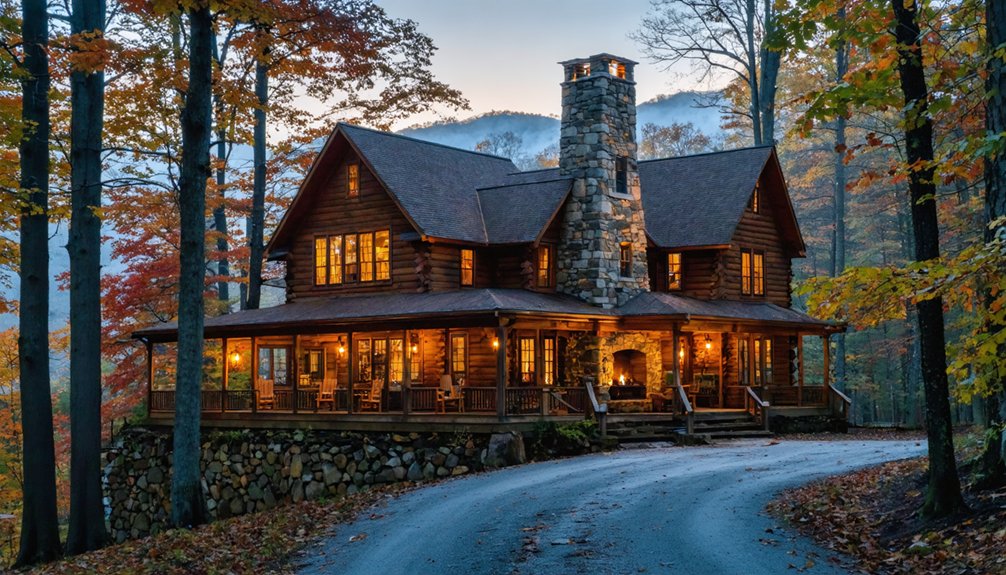
Since Thurmond itself has no lodging options, you’ll need to base yourself in the surrounding New River Gorge region, which actually works in your favor — the area offers everything from rustic campgrounds inside the national park to cozy cabins and hotels in nearby towns like Fayetteville and Oak Hill.
Fayetteville sits about 20 minutes away and gives you easy access to local dining, outdoor outfitters, and a lively small-town atmosphere.
Oak Hill offers budget-friendly hotel chains for travelers who prefer straightforward convenience.
If you’re camping, Grandview and Babcock State Park put you close to historic landmarks and trailheads.
Booking a cabin through local rental services lets you stay immersed in the gorge’s rugged landscape while keeping Thurmond within a short, scenic drive each day.
What Else Is Worth Stopping For Near Thurmond?
Thurmond sits inside New River Gorge National Park, which means you’re already surrounded by some of the best outdoor and historical attractions in West Virginia the moment you arrive. Don’t leave without exploring everything nearby:
Thurmond puts you at the heart of New River Gorge National Park—history and adventure are already at your doorstep.
- White Water Rafting – The New River offers world-class rapids perfect for outdoor adventures at any skill level.
- Long Point Trail – Hike to a stunning gorge overlook just a short drive from Thurmond.
- Fayetteville – A charming nearby town where you’ll find local cuisine, craft breweries, and independent shops.
- New River Gorge Bridge – Walk the catwalk beneath America’s longest steel arch bridge for breathtaking views.
You’ve got real freedom here—combine history, nature, and good food into one unforgettable trip.
Frequently Asked Questions
Is There Cell Phone Service Available When Visiting Thurmond, West Virginia?
Ready to disconnect from the world? Cell service in Thurmond is virtually nonexistent, so expect connectivity issues throughout your visit. You’ll want to download maps and self-guided tour information before you arrive!
Are Pets Allowed Inside the Thurmond Historic District Visitor Center?
The provided knowledge doesn’t confirm pet policies for visitor facilities at Thurmond’s Historic District. You’ll want to contact the National Park Service directly before your visit to guarantee you’ve got accurate, current information for your furry travel companions.
Can Visitors Legally Enter the Abandoned Buildings Throughout Thurmond Today?
You don’t have legal access to Thurmond’s abandoned buildings, as the National Park Service protects these preserved structures. You can explore the Historic District freely outside, soaking in the eerie atmosphere of this fascinating ghost town.
Is the Road Into Thurmond Accessible During Winter Weather Conditions?
Winter driving to Thurmond can be challenging, as road accessibility isn’t guaranteed during heavy snowfall or ice. You’ll want to check West Virginia DOT conditions before heading out, ensuring your adventure remains safe and unrestricted.
Are There Any Guided Ranger Tours Specifically Offered for Thurmond Visitors?
Like whispers from the past echoing through empty streets, the knowledge base doesn’t confirm ranger-led programs specifically for Thurmond’s historic preservation. You’ll want to contact the New River Gorge National Park directly for current guided tour availability.
References
- https://www.youtube.com/watch?v=6boE3Gl1RLM&vl=en-US
- https://www.abandonedspaces.com/towns/thurmond-west-virginia.html
- https://www.youtube.com/watch?v=2x_SbnBKfq4
- https://www.youtube.com/watch?v=4enovL8svZA
- https://www.youtube.com/watch?v=CabIWliN4t4
- https://www.facebook.com/61573972532206/posts/the-most-famous-ghost-town-in-west-virginia-is-the-thurmond-ghost-town-which-is-/122185296506799084/
- https://www.caseybarber.com/thurmond-wv/
- https://wwmt.com/amazing-america/thurmond-west-virginia-ghost-town-appalachian-america-coal-railroad-alise-valdes
- https://wvexplorer.com/filmmaker-says-heres-why-everyone-should-visit-this-west-virginia-ghost-town/
- https://www.youtube.com/watch?v=xIBTz8Vl-OQ