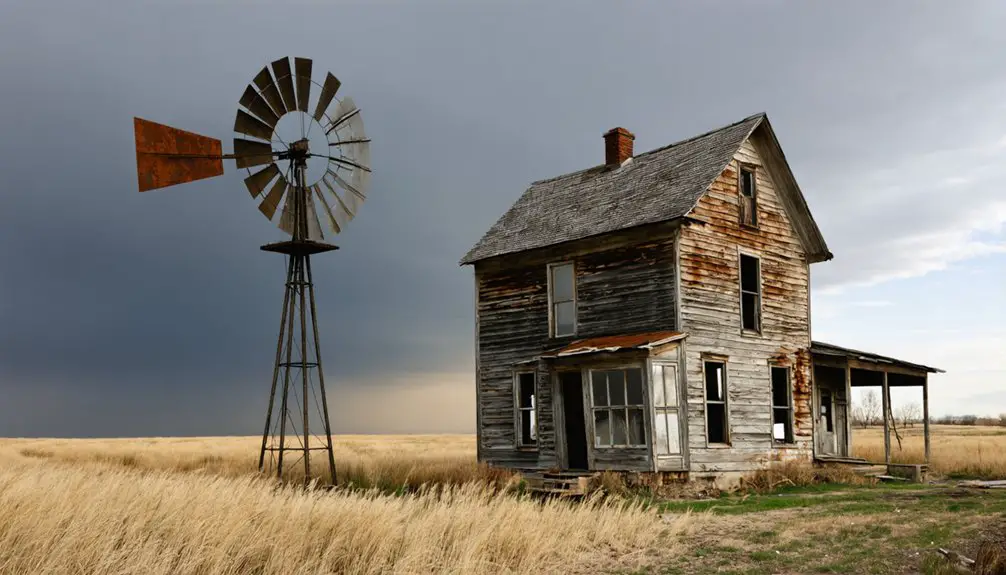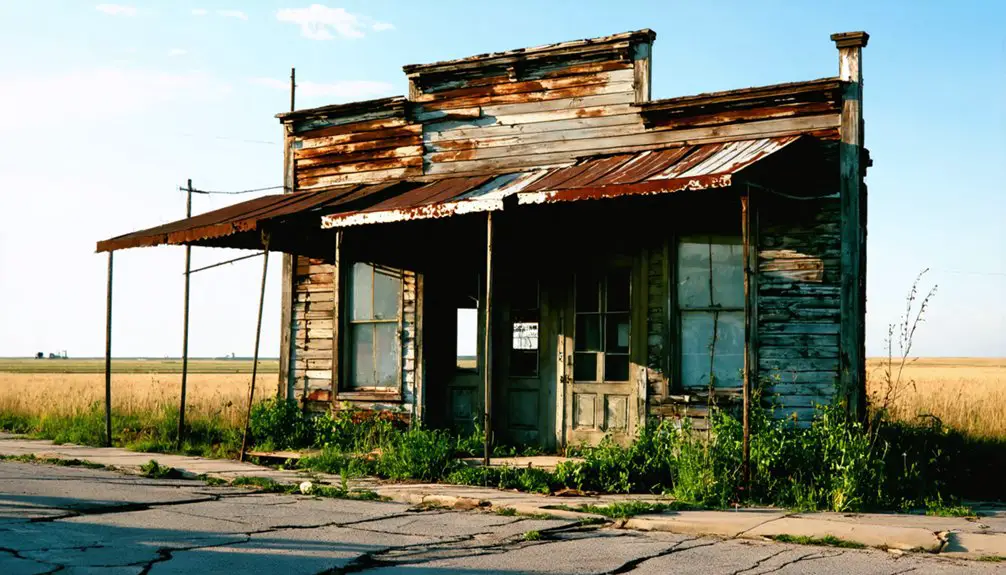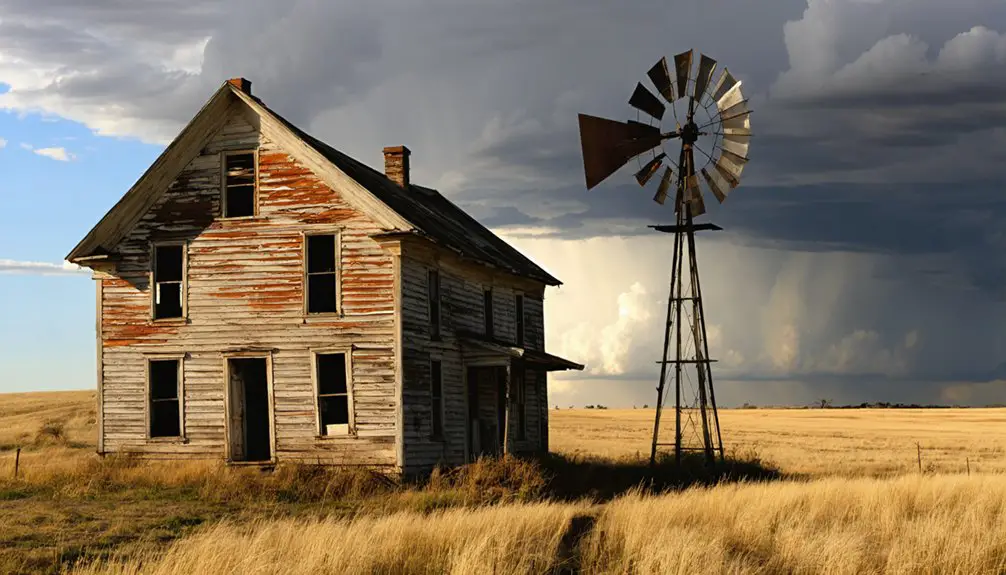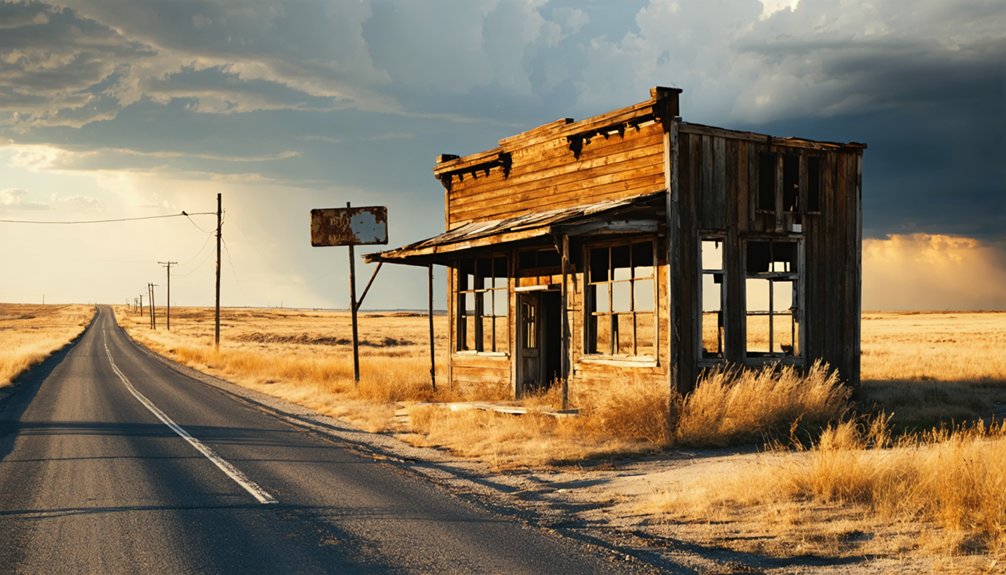
Planning a ghost town road trip to Pleasant Valley, Nebraska, puts you face-to-face with graded streets, crumbling foundations, and tree lines that once shaped a thriving railroad community. You’ll want to visit in spring or fall to avoid brutal summer heat, pack plenty of water, and bring physical maps since GPS isn’t always reliable out here. It’s a quietly haunting destination, and there’s plenty more to uncover before you go.
Key Takeaways
- Pleasant Valley is located in White Pine County, Nevada, approximately 200 miles from the Nebraska border, accessible via historic railroad routes.
- Spring and fall offer the best visiting conditions, with mild weather and ideal lighting for exploring and photographing remnants.
- Visible remains include graded streets, building foundations, tree lines, grain elevators, and cemetery sites from the original railroad community.
- Pack water, layered clothing, sturdy boots, physical maps, and safety gear due to remote terrain and unreliable cell service.
- Nearby Nebraska ghost towns like Gibbon, Loup City, and Milligan make worthwhile additions to enrich your road trip route.
What’s Left to See at Pleasant Valley Today?
Although little remains of Pleasant Valley’s once-bustling railroad community, you’ll still find a handful of compelling remnants scattered across the Nevada landscape. Graded streets still cut through the terrain, shaded by trees the original settlers planted decades ago.
You can spot building foundations and old roadbeds from above, making aerial photographs a powerful tool for uncovering archaeological remains hidden beneath the surface.
Historical artifacts tied to the railroad era occasionally surface for dedicated researchers willing to dig into county records and historic maps.
Isolated grain elevators, cemetery sites, and tree groves mark where daily life once thrived.
If you’re drawn to places that resist being forgotten, Pleasant Valley rewards your curiosity with quiet but undeniable evidence of a community that the railroad built and time slowly swallowed.
How to Get to Pleasant Valley, Nebraska?
Despite its name, Pleasant Valley isn’t in Nebraska—it’s tucked away in White Pine County, Nevada, roughly 200 miles from the Nebraska border. Don’t let the misleading name throw off your route planning.
Despite its name, Pleasant Valley calls Nevada home—not Nebraska. Don’t let the misleading name derail your route planning.
To reach the site, head into rural White Pine County using historic railroad routes as your navigational guide. These old lines trace directly to former settlements, cutting through Nevada’s open terrain with remarkable accuracy.
Grab a copy of a regional railroad map before you leave—it’ll orient you far better than modern GPS alone.
Once you’re close, look for historical markers and subtle landscape features that signal the archaeological site’s preservation zone. Graded streets and tree lines still ghost the terrain, pointing you toward what remains of this remote, forgotten community.
Best Time of Year to Visit Pleasant Valley
White Pine County’s desert climate shapes your visit more than any travel calendar ever could. Spring and fall offer the most forgiving temperatures for exploring historical preservation sites without brutal heat slowing you down.
- Spring (April–May): Wildflowers frame crumbling foundations, making every photograph feel alive with forgotten stories.
- Fall (September–October): Crisp air and golden light reveal graded streets and tree lines planted by original settlers centuries ago.
- Avoid summer: Intense desert heat limits your exploration time and strains whatever minimal visitor amenities exist at remote sites.
You’re free to roam year-round, but extreme winter cold and summer heat punish the unprepared. Pack water, wear layers, and arrive early. The landscape rewards those who respect its terms.
What to Bring for Pleasant Valley’s Remote, Unmarked Terrain?
Reaching Pleasant Valley means trading paved convenience for raw, unmarked terrain where no visitor center stocks forgotten necessities. You’re steering through genuine wilderness, so essential gear isn’t optional — it’s your lifeline.
Pack layered clothing for shifting Nevada temperatures, sturdy boots for uneven ground, and a physical map since cell service vanishes fast. Carry more water than you think you’ll need; White Pine County‘s remote stretches punish underestimation.
Safety precautions mean bringing a first-aid kit, a charged backup battery, and ideally a traveling companion. A compass pairs well with downloaded offline maps.
Toss granola bars, a flashlight, and a multi-tool into your pack — small additions that pay enormous dividends. Freedom out here tastes best when you’ve prepared for it honestly.
More Nebraska Ghost Towns Worth Adding to Your Route
Nebraska’s ghost town circuit rewards curious travelers who push beyond the obvious stops. You’ll uncover historical context that rewrites what you thought you knew about westward expansion, and you’ll shake off geographical misconceptions that keep most tourists on predictable highways.
Add these emotionally charged stops to your route:
- Gibbon — Where abandoned homesteads whisper stories of families who gambled everything on uncertain soil
- Loup City — A faded downtown that still carries the ache of a community that once thrived and then quietly surrendered
- Milligan — Crumbling foundations that force you to confront how completely a place can vanish from living memory
Each stop deepens your understanding of Nebraska’s fragile settlements and reminds you that freedom always carried risk.
Frequently Asked Questions
Is Pleasant Valley, Nebraska Actually Located in Nevada Instead?
Yes, you’ve been misled! Pleasant Valley’s actually in White Pine County, Nevada—not Nebraska. It’s one of history’s great ghost town misconceptions surrounding historical railroad towns. Don’t let the name fool your adventurous spirit!
Was Pleasant Valley Originally Established as a Union Pacific Railroad Station?
Yes, you’ll find Pleasant Valley’s settlement origins tied directly to railroad history — it originally served as a grading station for the Union Pacific Railroad, driving early population growth during the expansive 1870-1890 era of westward expansion.
Why Is Pleasant Valley Frequently Misidentified as a Nebraska Ghost Town?
You’ll find ghost town myths and historical misconceptions mislead you easily—Pleasant Valley sits in Nevada, not Nebraska, yet its phonetic similarity to “Pawnee” tricks researchers, creating widespread geographical confusion that sends curious explorers chasing the wrong state entirely.
When Did Pleasant Valley’s Population Peak Before Its Eventual Abandonment?
You’ll find Pleasant Valley’s population peaked during the late 1880s peak settlement era, but you’d watch population decline set in quickly as agricultural collapse and railroad branch closures stripped the town of its livelihood.
Does the Nebraska State Historical Society Maintain Records About Pleasant Valley?
You’ll find that the Nebraska State Historical Society actively maintains archival records for historical preservation, but since Pleasant Valley’s actually in Nevada, you’d want to explore Nevada’s historical resources for accurate documentation on this site.
References
- https://history.nebraska.gov/wp-content/uploads/2017/12/doc_publications_NH1937GhostTowns.pdf
- http://iagenweb.org/mills/history/ghosttowns/18_wallstreet.htm
- https://en.wikipedia.org/wiki/Pleasant_Valley
- https://history.weld.gov/County-150/Weld-County-Towns/Ghost-Towns-in-Weld-County
- https://dorchestertimes.blogspot.com/2019/12/pleasant-hill-one-of-nebraskas-most.html
- https://cdn.saffire.com/files.ashx?t=fg&rid=DickinsonCVB&f=Current__Ghost_towns_-_A.pdf
- https://history.nebraska.gov/document/nebraska-ghost-towns-ghost-towns-in-cass-county-nebraska-by-g-h-gilmore-ghost-towns-in-otoe-county-by-john-c-miller-solitary-ghosts/
- https://freepages.rootsweb.com/~gtusa/history/usa/ks.htm
- https://en.wikipedia.org/wiki/List_of_ghost_towns_in_Nebraska
- https://www2.ljworld.com/news/2011/apr/15/little-remains-defunct-pawnee-county-ghost-town/