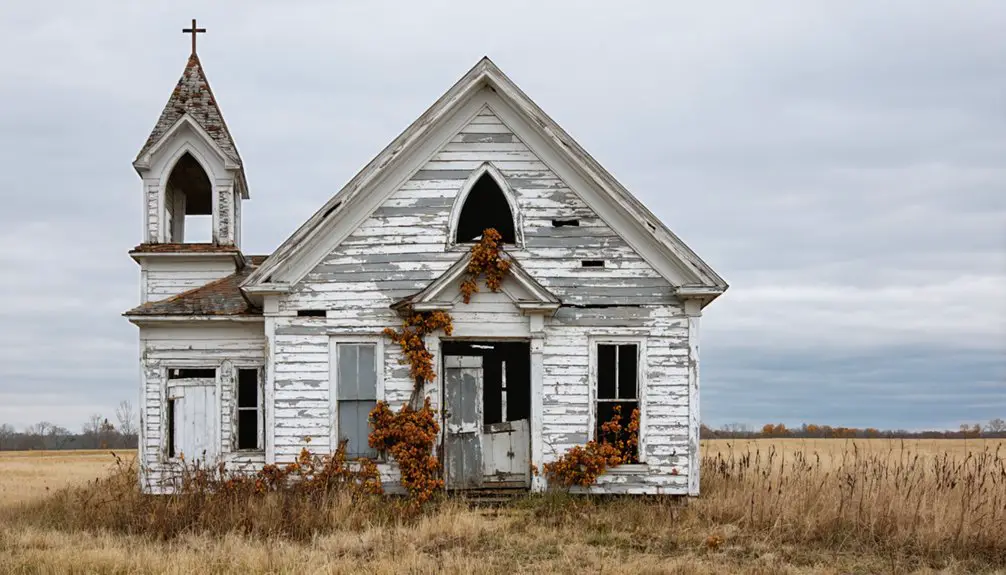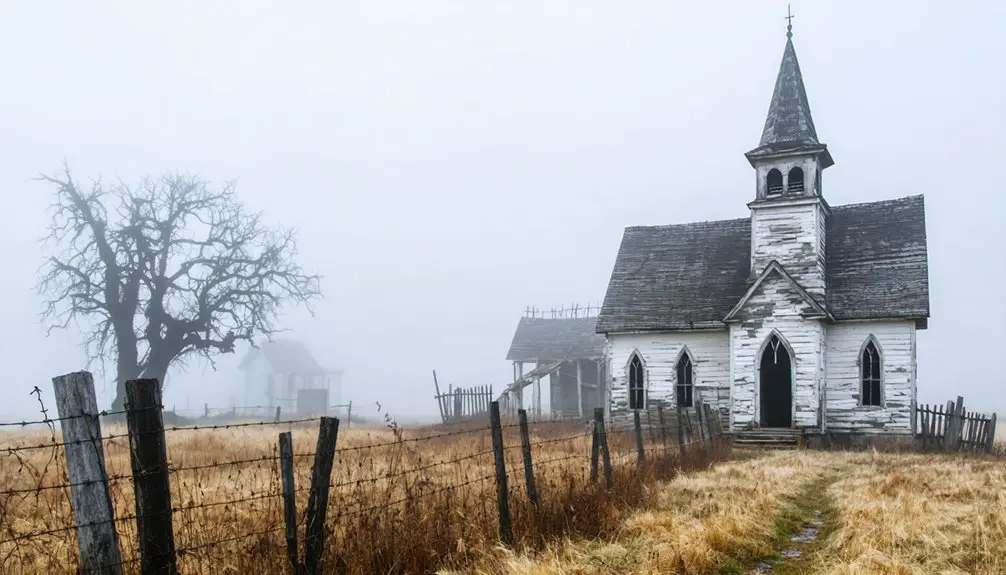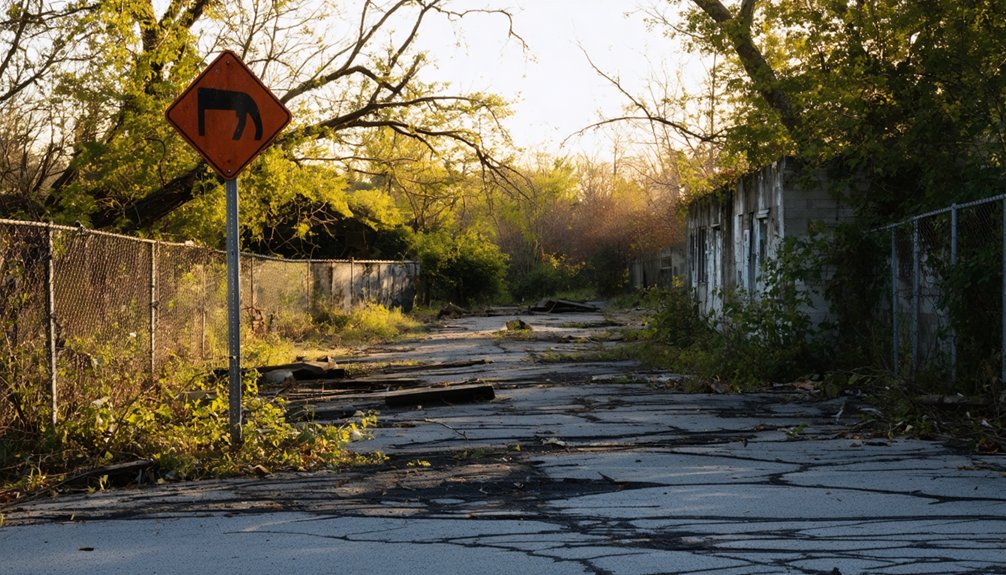
You’ll discover Times Beach’s haunting legacy at Route 66 State Park, where a 1982 dioxin disaster and catastrophic flood erased an entire community of 2,000 residents. Located 17 miles southwest of St. Louis along Interstate 44, the park’s visitor center documents the town’s transformation from a bustling Route 66 resort to America’s most infamous Superfund site. Today’s 419-acre preserve features multi-use trails, Meramec River access, and environmental exhibits chronicling the $200 million remediation that turned contaminated soil into thriving habitat supporting 175 documented bird species and restored ecosystems.
Key Takeaways
- Times Beach no longer exists as a ghost town; the entire community was evacuated and demolished following the 1982 dioxin disaster.
- The former Superfund site is now Route 66 State Park, featuring trails, picnic areas, and a boat ramp along the Meramec River.
- Visit the park’s center to view exhibits documenting Times Beach’s history, dioxin contamination, and successful environmental remediation.
- Explore remnants of the original town including preserved Route 66 pavement sections and the historic Warren Truss bridge spanning the river.
- The 419-acre park offers environmental education programs and wildlife viewing with 175 documented bird species, deer, and wild turkeys.
The Rise and Fall of a Route 66 Resort Town
When the St. Louis Star-Times partnered with Times Beach Development Company in 1925, they created a summer economic boon along the Meramec River. You’ll find this settlement was promoted as an accessible resort—just over an hour from St. Louis on “good roads.” The community built homes on stilts to combat frequent flooding on the river plain.
Route 66’s 1931-1932 realignment through town transformed everything. A 1,009-foot steel Warren deck truss bridge brought commerce directly through the settlement’s southern edge. Gas stations, restaurants, and businesses serving travelers turned it into a bustling resort community. Though the Great Depression slowed growth, the town incorporated and survived as a low-income community with seasonal visitors.
Understanding the Dioxin Disaster That Changed Everything
You’ll find that Times Beach’s fate was sealed when waste oil contaminated with dioxin was sprayed on its unpaved roads from 1971 to 1976, then spread town-wide during the catastrophic 1982 Meramec River flood.
The EPA’s December 1982 soil tests revealed dioxin levels reaching 300 parts per billion—one hundred times above the toxic threshold—prompting the CDC to declare the town uninhabitable within days.
How Contamination Spread Rapidly
Between 1971 and 1976, Russell Bliss sprayed a deadly mixture across Times Beach’s dirt roads—dioxin-contaminated waste from NEPACCO’s Agent Orange production, blended with oil and marketed as dust suppressant. You’ll find documentation showing he treated over 25 locations, unaware the substance contained lethal TCDD concentrations.
The contamination’s reach expanded dramatically when December 1982’s Meramec River flood—rising 14 feet above flood stage—struck just one day after EPA sampling confirmed dioxin levels of 300 ppb. Floodwater dispersal transformed localized road contamination into town-wide crisis, carrying toxic sediment beyond original spray zones into residential areas.
Household contamination became unavoidable as contaminated soil permeated properties throughout the floodplain. CDC’s December 23 recommendation against re-inhabitation documented America’s largest civilian dioxin exposure, affecting over 2,000 residents who’d unknowingly lived amid toxicity for years.
EPA’s Emergency Response
After soil tests in November 1982 revealed dioxin concentrations of 100-300 parts per billion—up to 300 times the EPA’s toxic threshold of 1 ppb—federal agencies launched an unprecedented emergency response across Times Beach. The EPA immediately expanded soil testing throughout Missouri, tracing contamination back to NEPACCO waste sources. Private laboratories confirmed hazardous levels before official verification.
December’s Meramec River flooding complicated contaminant monitoring efforts, raising concerns about toxin migration. The CDC recommended temporary evacuation that month, then advised permanent relocation in February 1983 following joint CDC-EPA assessments. You’ll find that $36 million in Superfund buyouts relocated 2,300-3,000 residents under the extensive Environmental Response, Compensation, and Liability Act—marking one of America’s first complete community evacuations due to environmental contamination.
Health Effects on Residents
While residents awaited relocation decisions in early 1983, health professionals documented a troubling range of symptoms among Times Beach community members exposed to dioxin-contaminated soil. Chloracne appeared within weeks in some individuals, though CDC and Missouri Division of Health studies found no increased disease prevalence.
Cleanup crews reported skin, eye, and respiratory irritation alongside headaches and nausea. Residents experienced severe fatigue, memory impairment, and unexplained anger. Studies revealed sub-clinical hepatic effects with elevated enzyme levels, though these normalized over time.
The persistent health concerns extended beyond immediate symptoms—dioxin’s classification as a known carcinogen raised questions about long-term cancer risks. Long term health monitoring became essential as researchers documented potential reproductive effects, altered immune function, and endocrine disruption in exposed populations.
The 1982 Flood That Sealed Times Beach’s Fate
When record December rains sent the Meramec River cresting 24 feet above normal on December 6, 1982, the floodwaters didn’t just displace 2,500 residents—they transformed a contamination crisis into an environmental catastrophe.
The deluge spread dioxin-laden soil from the town’s roads across the entire community, turning what had been mapped contamination zones into widespread toxic deposits.
You’ll find this classified as a 500-year flood, but it’s the combination of natural disaster and chemical contamination that made Times Beach’s fate irreversible.
Meramec River Overflow
On December 5, 1982, the Meramec River breached its banks and began flooding Times Beach, setting in motion a catastrophe that would seal the town’s fate. The river rose over 14 feet above its 18.5-foot flood stage, cresting at nearly 43 feet on December 6—a 500-year flood event.
You’ll find no flood control measures existed to protect this vulnerable community built on a known flood plain. The torrent submerged the entire town, leaving only one unoccupied restaurant above water. Houses ripped from foundations while the raging current swept structures downstream.
This wasn’t just devastating property damage—the floodwaters spread dioxin contamination beyond the roads throughout Times Beach, amplifying the impact on local environment and making reinhabitation impossible.
Dioxin Spread and Evacuation
Just three weeks after soil sampling confirmed catastrophic dioxin levels throughout Times Beach, the December flood transformed a localized contamination crisis into an environmental disaster of unprecedented scale. When the Meramec River crested 14 feet above flood stage on December 4, 1982, it spread dioxin-contaminated soil beyond the road network throughout the entire community.
You’ll find this marked the largest civilian dioxin exposure in U.S. history—contamination levels reached 100 parts per billion, devastating any hope for community recovery. On December 23, the CDC recommended permanent evacuation. By early 1983, residents fled with nothing, compensated through a $32 million Superfund buyout. Their fears about long term health impacts and discrimination from new neighbors underscored the contamination’s far-reaching consequences beyond environmental damage.
How an Entire Community Vanished Overnight
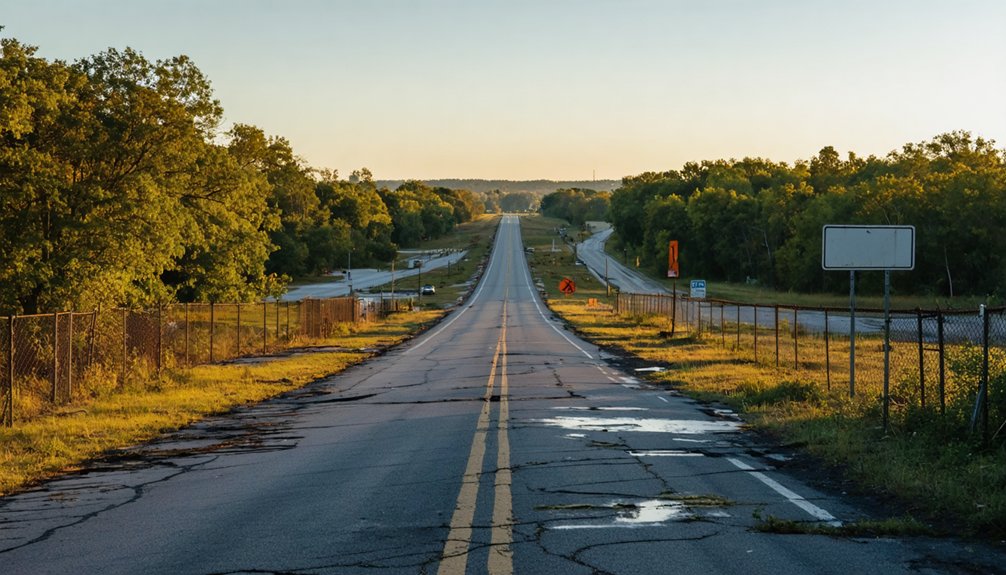
The December 1982 Meramec River flood didn’t just devastate Times Beach—it transformed a public health crisis into a death sentence for the entire town. When floodwaters spread dioxin-contaminated soil throughout every property, EPA officials delivered their verdict on December 23: the entire community was uninhabitable.
Community resilience crumbled as panic replaced holiday celebrations. By February 1983, the federal government announced a $32 million buyout—every home, every business, every dream purchased and condemned. Over 2,000 residents evacuated by 1985, watching their town become America’s most infamous Superfund site.
The political aftermath was swift: Missouri’s governor disincorporated Times Beach entirely. Bulldozers razed homes, burying contaminated structures where they stood. What flood and dioxin started, government action finished—erasing a 60-year-old community from Missouri’s map.
Health Impacts and Environmental Consequences
Before officials understood what was killing livestock and sickening residents, Times Beach’s contamination had already etched itself into the community’s biology. You’ll find documented cases of forty horses dead, followed by cats, dogs, and birds—nature’s first warning system. Children developed new illnesses as dioxin levels reached 100 parts per billion, a hundred times the EPA’s safety threshold of 1 part per billion.
The unknown medical impacts extended beyond immediate symptoms. Miscarriages, immune system dysfunction, and prenatal developmental concerns plagued families for years.
When the Meramec River flooded in December 1982, it carried dioxin-contaminated soil throughout the town, transforming localized road contamination into a community-wide crisis. The wider environmental toll forced federal intervention—2,300 residents evacuated, their town purchased for $32 million, freedom sacrificed to corporate negligence.
From Superfund Site to State Park Transformation
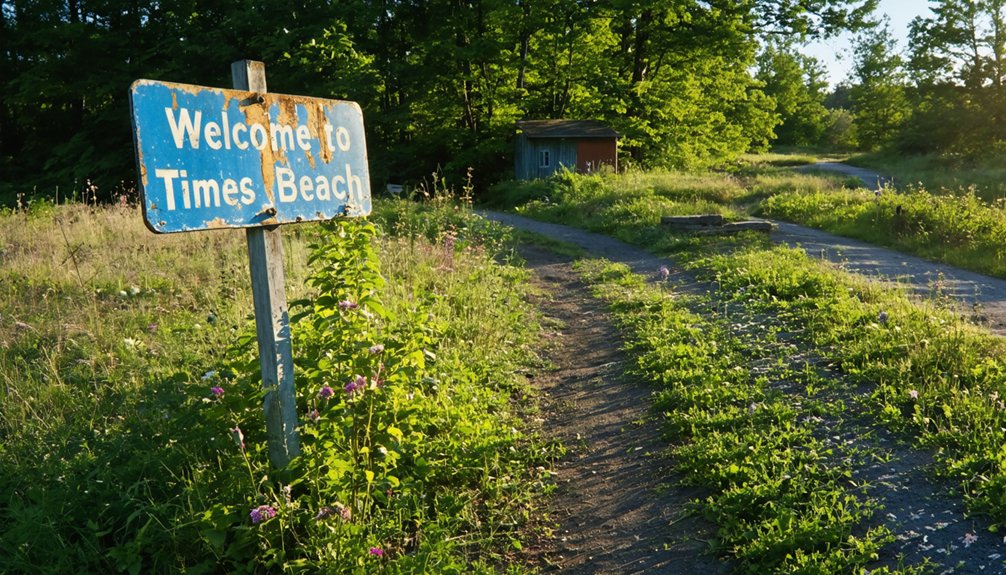
After thirteen years of intensive remediation work, Times Beach emerged from its toxic past through one of America’s most extensive dioxin cleanup operations. The $200 million project addressed long term environmental damage through systematic incineration of contaminated materials and soil removal, ultimately achieving certification for delisting from the National Priorities List in 2001.
Thirteen years and $200 million transformed Times Beach from toxic wasteland to certified clean land through America’s most extensive dioxin remediation.
Revitalization efforts transformed the 419-acre Superfund site into Route 66 State Park, where you’ll find:
- Visitor Center: Features exhibits documenting Times Beach’s history and environmental restoration
- Recreational Trails: Multi-use paths traverse remediated lands along the Meramec River
- Environmental Education: Programs demonstrate successful land reclamation and ecological recovery
You’re now free to explore reclaimed wilderness where contamination once threatened an entire community, proving remediation works.
What You’ll Find at Route 66 State Park Today
Today’s Route 66 State Park preserves both remediated landscapes and authentic roadside Americana within its 419-acre boundaries. You’ll discover multi-use trails connecting through the former town site, with accessibility features accommodating wheelchairs, beginning cyclists, and equestrians. The 1935 Bridgehead Inn now serves as your visitor center, displaying Times Beach memorabilia and Route 66 artifacts from Missouri’s highway era.
Wildlife viewing opportunities abound across oak-hickory forests and river corridors—175 documented bird species, deer herds, and wild turkey populations thrive where contaminated soil once existed. Remnants of the 1,000-foot Warren Truss bridge span the Meramec River, awaiting restoration. You’ll find picnic grounds, boat ramp access, and preserved Route 66 pavement sections throughout. The gift shop stocks hundreds of Mother Road souvenirs. Admission remains free—reclaimed land returned to public use.
Planning Your Visit to the Ghost Town Site
Your visit to this Superfund-turned-state-park requires different preparations than typical Missouri recreational destinations. Understanding site operations means recognizing you’ll walk among burial mounds containing contaminated homes and roadways. The park provides unrestricted access to explore these markers commemorating local history—evidence of America’s largest civilian dioxin exposure. You’re free to photograph documentation of the environmental disaster and federal remediation process.
Essential planning considerations:
- Park encompasses 419 acres located 17 miles southwest of St. Louis along historic Route 66
- Visible mounds throughout the grounds mark original residential and business structures
- Educational materials available explaining the 1972-1976 contamination through 1985 evacuation timeline
No special permits restrict your exploration. The site operates as both memorial landscape and cautionary record to environmental consequences.
Exploring the Historic Route 66 Corridor
When Route 66 received federal designation in 1926, it catalyzed economic transformation across eight states, establishing Times Beach and hundreds of similar communities as essential waypoints in America’s expanding automobile culture.
You’ll discover authentic roadside architecture preservation throughout the corridor, where communities like Depew, Oklahoma maintain historic brick Main Streets and vintage gas stations. Amboy, California’s Roy’s Motel showcases iconic neon signage from the highway’s golden era.
Community revival efforts have transformed Red Oak II, Missouri, where relocated buildings document small-town heritage. Interstate construction after 1958 bypassed these once-thriving hubs, creating the ghost towns you’ll explore today.
Your journey connects you with tangible evidence of America’s transportation evolution and the freedom that defined mid-century cross-country travel.
Frequently Asked Questions
Are There Any Safety Concerns Visiting the Former Contaminated Site Today?
You’ll be thrilled to know there aren’t safety concerns—environmental remediation efforts thoroughly removed contamination by 1997. Current safety regulations confirm the park’s clean status through ongoing EPA monitoring, letting you explore this documented ghost town site freely.
What Happened to the Residents After They Were Evacuated From Times Beach?
Government relocation efforts moved over 2,000 residents through a $33-million federal buyout by 1985. You’ll find long-term health impacts included cancers and birth defects, with 1,200 ex-residents claiming injuries in a $29-million settlement.
Can You Still See Any Original Buildings or Structures From Times Beach?
You’ll find only one architectural remain: the 1935 Bridgehead Inn, now the Visitor Center. Environmental remediation erased everything else—all 800 homes demolished by 1992. The $200 million cleanup left no other original Times Beach structures standing.
How Long Does a Typical Visit to Route 66 State Park Take?
You’ll need two to four hours for an exhaustive visit. Average visitor duration depends on your exploration style—the park amenities overview includes one hour for exhibits, plus trail time. It’s your adventure to customize freely.
Are There Guided Tours Available That Explain the Town’s History?
No guided tours available exist at Route 66 State Park. You’ll explore independently using self-guided trails and visitor center exhibits that provide an extensive historical overview of Times Beach’s contamination, evacuation, and preservation as documented environmental history.