Planning a ghost town road trip to Tip Top, Arizona means heading deep into Yavapai County’s rugged canyon country, roughly three hours north of Phoenix. You’ll need a 4WD high-clearance vehicle to navigate the rough, unpaved roads safely. Visit between October and April to avoid extreme desert heat. Once you arrive, you’ll find nearly two miles of preserved stone buildings, a standing mine door, and a brewery frozen in time. There’s far more to discover ahead.
Key Takeaways
- Tip Top Ghost Town is located in Yavapai County, approximately 2 hours and 53 minutes north of Phoenix, Arizona.
- A 4WD high-clearance vehicle is mandatory, as rough unpaved roads feature steep canyon descents, loose rock, and deep washouts.
- Visit between October and April to avoid extreme heat, with early morning arrivals recommended for optimal desert light.
- The site spans nearly two miles, featuring preserved stone buildings, a brewery, stamp mill foundations, and an intact mine door.
- Check current road and site conditions before visiting, as Tip Top has previously faced temporary closures.
The Silver Boom and Bust That Built Tip Top
When Jack Moore and Bill Corning struck silver in 1875, they unknowingly set the stage for one of central Arizona’s most explosive boomtowns. Within a year, settlers flooded in, and by its peak, Tip Top’s population surpassed 500, making it the largest town in central Arizona.
That silver discovery fueled a thriving economy, pulling dreamers and opportunists into the rugged canyon landscape.
Silver transformed Tip Top’s rugged canyon landscape into a magnet for dreamers chasing fortune and opportunity.
But freedom comes with risk. Declining silver output slashed the population to just 65 by 1890. Then, federal silver demonetization in 1893 rendered the mines virtually worthless, and the post office shuttered in 1895.
Tip Top’s mining legacy didn’t vanish quietly though — a tungsten discovery briefly revived it in 1910 before the town finally surrendered to silence by 1916.
What’s Left to See at Tip Top Ghost Town?
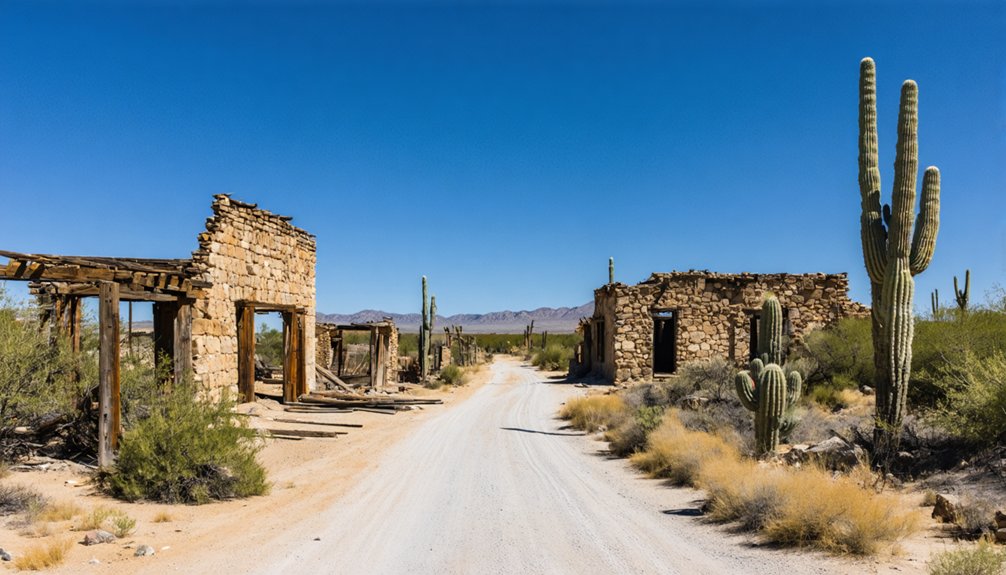
What remains at Tip Top stretches nearly two miles along the canyon, and it’s remarkably well-preserved for a town that’s been silent for over a century.
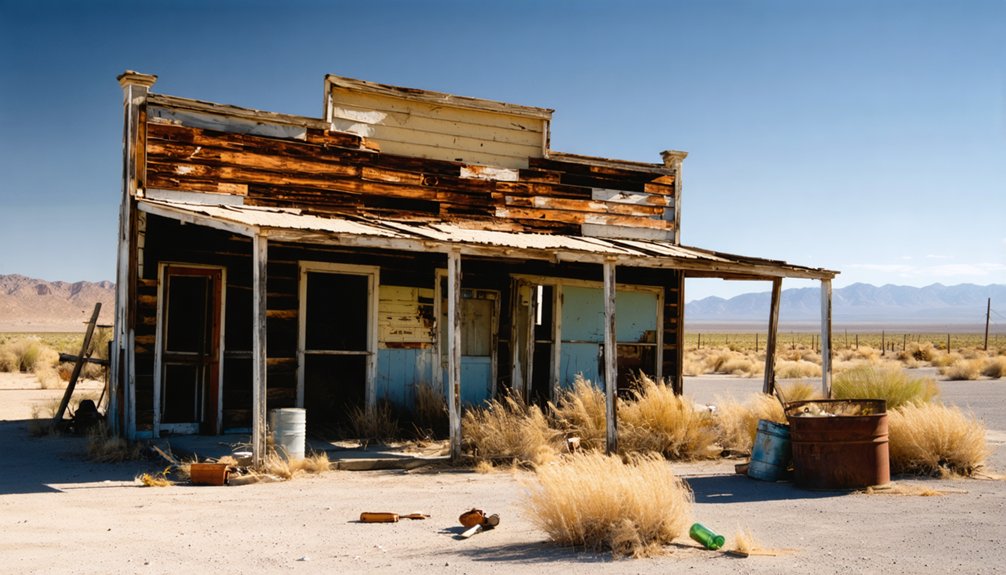
You’ll find abandoned structures including stone buildings, a brewery, restaurant, and beer hall still standing against the desert landscape. Foundations of stamp mills, a mining office, and adobe buildings reveal the town’s historical significance as central Arizona’s largest settlement during its peak.
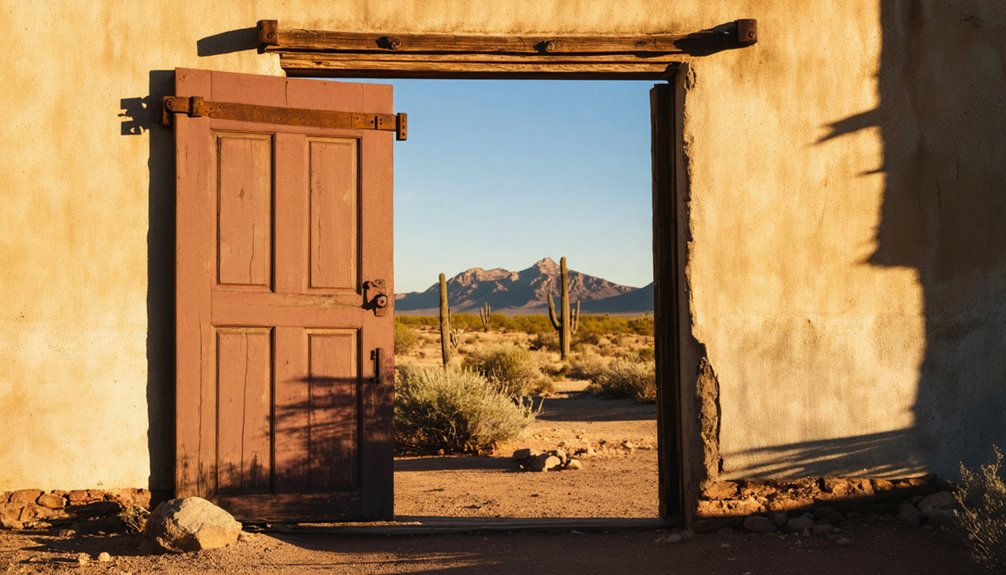
The main mine door remains intact, and scattered stone homes extend across three miles of rugged terrain. Mine shafts and old infrastructure are maintained by the Bureau of Land Management, preserving what silver once built.
Walking these grounds, you’re stepping through a tangible record of boom-and-bust frontier life that few ghost towns deliver this authentically.
How to Get to Tip Top, Arizona?
Reaching those ruins requires serious preparation, because Tip Top doesn’t make itself easy to find. Located in Yavapai County at coordinates 34°03′03″N 112°14′49″W, this site sits roughly 2 hours and 53 minutes north of Phoenix through dramatic canyon terrain.
Your access routes demand a 4WD high-clearance vehicle — standard cars won’t survive the rough, unpaved roads leading to this mining legacy. The Tip Top Mine Trail winds through saguaro forests, creek crossings, and rugged ridges, rewarding determined travelers with breathtaking scenery reflecting the region’s historical significance.
A 4WD high-clearance vehicle is non-negotiable — rugged trails, creek crossings, and saguaro forests await determined adventurers.
Plan your visit during cooler months for the best experience. However, check current conditions carefully, as the site was closed to public access in both April 2019 and October 2020.
Always confirm accessibility before committing to the journey.
Why You Need a 4WD to Reach Tip Top
The trail to Tip Top doesn’t forgive unprepared vehicles. The rough, unpaved road demands serious 4WD capability and high clearance — no exceptions.
Trail challenges include steep canyon descents, loose rock, and narrow passages that’ll swallow a standard sedan whole. If you’re craving freedom on this adventure, you’ve got to respect what the terrain requires.
Here’s what makes 4WD necessity non-negotiable on this route:
- Rocky terrain shifts unpredictably, requiring constant traction control
- Deep ruts and washouts can strand low-clearance vehicles miles from help
- Steep canyon grades demand engine braking power only 4WD provides
Come prepared with a capable rig, recovery gear, and a full tank. The ruins waiting at the end are absolutely worth it — but only if you arrive safely.
Best Time to Visit Tip Top Ghost Town
Timing your visit to Tip Top can mean the difference between a memorable desert adventure and a dangerous ordeal. Arizona’s desert heat turns brutal from May through September, making the trail genuinely hazardous.
Plan your trip between October and April, when cooler temperatures let you explore comfortably and safely.
Winter months offer crisp air, dramatic canyon light, and unobstructed views of the saguaro and mesquite landscape surrounding the ruins. You’ll appreciate the historical significance of this once-thriving silver town far more when you’re not battling scorching conditions.
Spring delivers wildflowers along the creek beds, adding vivid color to the mining heritage scattered across nearly two miles of canyon ruins.
Arrive early morning regardless of season — desert light shifts fast, and so does your window for exploration.
Frequently Asked Questions
Who Originally Discovered the Silver Lode That Founded Tip Top?
Before GPS existed, Jack Moore and Bill Corning struck gold — well, silver! Their 1875 silver discovery launched Tip Top’s mining history, and you’d be amazed how their find shaped central Arizona’s entire frontier legacy.
How Much Silver Was Estimated to Have Been Mined at Tip Top?
You’ll be amazed to know that Tip Top’s silver mining operations yielded an estimated $4,000,000 in total output, cementing its historical significance as one of central Arizona’s most productive and fascinating frontier mining destinations worth exploring.
What Amenities Did Tip Top Offer Residents During Its Peak Years?
During Tip Top’s peak, you’d have enjoyed two hotels, six saloons, a brewery, restaurants, a school, and even a Chinese laundry — rich mining history that makes ghost town tourism here truly fascinating!
Why Did Tip Top’s Population Drastically Decline by 1890?
Like a candle burning its last wax, Tip Top’s population factors crumbled as mining decline drained the silver veins dry. You’d have watched 500 dreamers shrink to 65 by 1890, chasing richer promises elsewhere.
Who Currently Manages and Maintains the Tip Top Mine Shafts?
You’ll find that the Bureau of Land Management handles mine management and shaft maintenance at Tip Top. They’re preserving these historic remnants, so you can explore the rugged, untamed spirit of Arizona’s forgotten silver mining past freely.
References
- https://en.wikipedia.org/wiki/Tip_Top
- https://www.elitevrs.com/arizona-activities/ghost-towns-tip-top-az
- https://kids.kiddle.co/Tip_Top
- http://www.mrquigleyphotography.com/articles/tiptop.htm
- https://azoffroad.net/tip-top-mine
- https://www.dangerousroads.org/north-america/usa/4303-tip-top-trail.html
- https://www.youtube.com/watch?v=4PGDseodRGE
- https://www.apcrp.org/Tip Top/TipTop Master Text II.htm
- https://www.jeeptheusa.com/tip-top-mine-25—35.html