Planning a ghost town road trip to Croft, Kansas means heading 20 miles southwest of Pratt along SW 140th Ave, where two towering grain elevators still pierce the open sky. Stock up on fuel and water in Pratt before you go—Croft has no amenities. Bring sturdy shoes, a camera, and a paper map since cell service is unreliable. Visit in spring or fall for the most comfortable conditions. There’s much more to uncover about this fascinating forgotten railroad town.
Key Takeaways
- Croft is located 20 miles southwest of Pratt along SW 140th Ave, accessible by standard vehicles on rural roads.
- Stock up on water, fuel, and supplies in Pratt before visiting, as Croft offers absolutely no amenities.
- Key attractions include two vacant grain elevators, abandoned houses, and an old schoolhouse perfect for photography.
- Visit during spring or fall, avoiding midsummer heat above 100°F and monitoring forecasts for sudden thunderstorms.
- Combine Croft with nearby ghost towns like Galatia, Clayton, Bloom, Blakeman, and Gem for a fuller Kansas road trip.
What’s Left to See in Croft, Kansas Today?
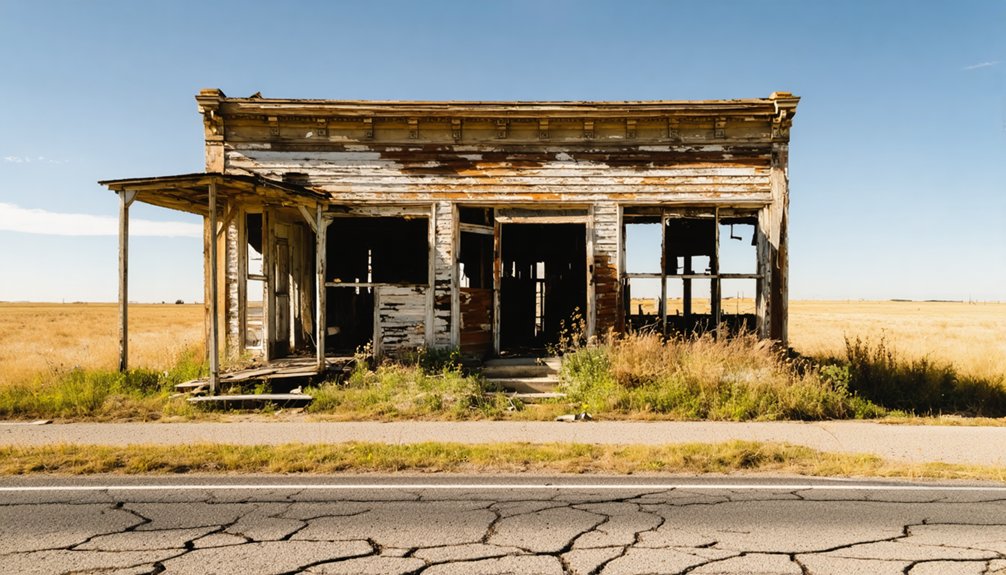
Scattered across the flat Kansas plains, Croft’s remnants tell a quiet story of what once was a thriving railroad shipping point.
You’ll find two vacant grain elevators standing as silent monuments to Croft history, their weathered frames hinting at the commerce that once moved through this community.
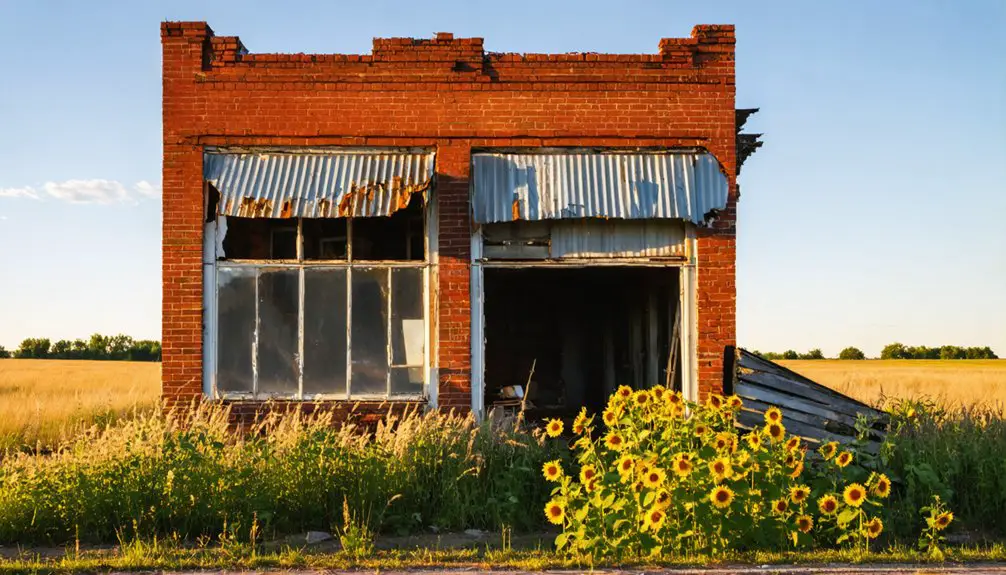
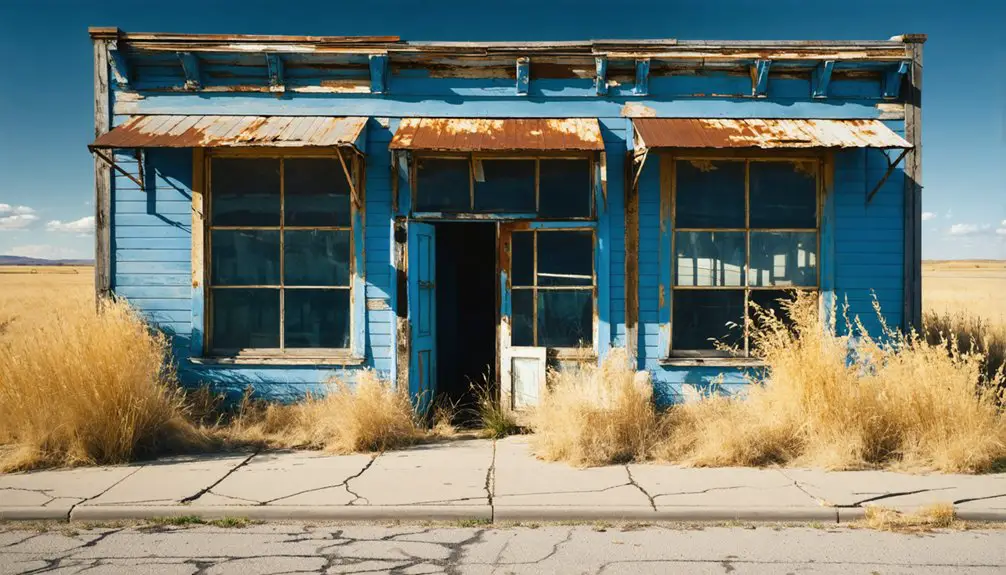
Two abandoned houses and an old schoolhouse remain, each carrying layers of ghost town culture worth absorbing.
Ruins dot the townsite, offering compelling photography opportunities if you’re willing to explore on foot.
Walk carefully, respect any private property boundaries, and take time to soak in the atmosphere.
These structures won’t last forever, making your visit feel genuinely meaningful.
Daylight exploration is your best bet for both safety and capturing the stark beauty of this forgotten Kansas community.
How to Get to Croft From Pratt on Rural Kansas Roads
Once you’ve photographed the last crumbling wall and taken in the grain elevators’ weathered silhouette, you’ll want to know how you got there in the first place.
Getting to Croft means embracing rural navigation on Pratt County’s open plains. Head southwest from Pratt’s city center, covering roughly 20 miles along SW 140th Ave until the ghost town’s remnants emerge from the landscape.
Standard vehicles handle these rural roads without trouble, but check Pratt County’s weather before departing since plains conditions shift fast.
Stock up on supplies and fuel in Pratt beforehand, as nothing’s operating in Croft today. That 20-mile drive carries its own historical significance, tracing the same corridor that once connected this railroad shipping point to the wider world.
Freedom feels real out here.
Where to Stay and Stock Up in Pratt Before Your Visit
Pratt serves as your essential base camp before heading out to Croft, offering lodging, fuel, and supplies you won’t find once you leave town.
Lodging options in Pratt include national chain motels and locally owned spots that give you a comfortable night’s rest before your rural adventure. Book ahead if you’re traveling during peak summer months, since smaller Kansas towns fill up faster than you’d expect.
Hit the grocery stores in Pratt to load your cooler with water, snacks, and road food — there are zero conveniences once you head southwest on those open plains roads.
Fill your gas tank completely before departing, because 20 miles of rural Kansas highway means no second chances if you’re running low.
Pratt keeps it simple, and so should your prep.
What to Bring for Croft’s Remote Plains Townsite
Croft sits 20 miles out on open Kansas plains with nothing to offer once you arrive, so packing smart before you leave Pratt makes or breaks the trip.
Bring enough water for several hours, since the nearest store stays 20 miles back. Pack sturdy walking shoes for exploring the grain elevators, vacant houses, and old school scattered across the townsite. A camera captures Croft’s history better than memory ever will.
Sunscreen and a hat shield you against the relentless plains sun. Keep a paper map handy since cell service gets unreliable fast out here.
Practice ghost town preservation by carrying out everything you bring in. Respect this forgotten landscape, and you’ll leave with something most travelers never find.
When Croft’s Plains Weather Makes or Breaks Your Visit
Spring and fall offer you the most comfortable conditions for exploring Croft’s open townsite, with mild temperatures and manageable winds keeping your visit pleasant.
Summer thunderstorms can roll across Pratt County’s flat plains with little warning, so you’ll want to monitor forecasts closely and head out early to beat afternoon buildup.
Layer your clothing and toss a rain jacket in your pack, since temperatures and conditions can shift dramatically between morning and evening on the Kansas plains.
Best Seasons To Visit
When you visit Croft, Kansas, the season you choose can mean the difference between a memorable ghost town adventure and a miserable slog through punishing plains weather. The best times align with mild conditions that let you roam freely.
- Spring (April–May): Wildflowers brighten the ruins, temperatures stay comfortable, and seasonal activities like photography shine under soft light.
- Fall (September–October): Crisp air and golden plains create dramatic backdrops for the grain elevators and old schoolhouse.
- Avoid midsummer: July and August bring brutal heat exceeding 100°F, making foot exploration exhausting and potentially dangerous.
Winter visits are unpredictable — ice and snow can strand you on rural SW 140th Ave.
Plan smart, stay flexible, and let the seasons work in your favor.
Storms On The Plains
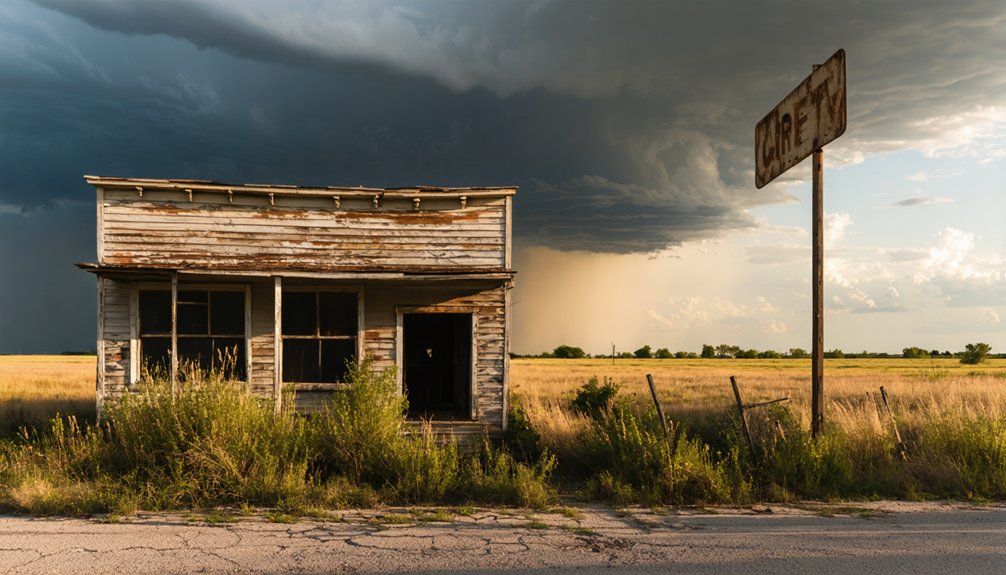
Beyond choosing the right season, you’ll need to reckon with something far less predictable on the Kansas plains — the weather itself. Thunderstorms here build fast, turning a bright afternoon into a dangerous electrical show within minutes. For storm safety, always check forecasts before leaving Pratt and keep emergency supplies in your vehicle.
That said, approaching storm fronts create extraordinary dramatic skies — towering anvil clouds and golden light that elevate plains photography to something breathtaking. Croft’s grain elevators silhouetted against a stormy horizon make compelling shots.
But never let a great photograph override good judgment. If lightning approaches, abandon the open townsite immediately and seek shelter in your vehicle. The plains demand respect.
Packing For Weather Changes
Packing smart for Croft means treating Kansas plains weather as your most unpredictable travel companion. Weather preparedness isn’t optional on these open roads — it’s your freedom pass to explore without interruption.
Shifting conditions can move fast, so your packing essentials should reflect that reality.
Pack these three non-negotiables:
- Layered clothing — mornings run cool, afternoons heat up fast, and storms drop temperatures suddenly.
- Rain gear and sturdy footwear — muddy rural roads and wet ruins demand waterproof boots and a reliable jacket.
- Emergency supplies — water, snacks, a charged phone, and a paper map for areas with weak signal.
You’re 20 miles from Pratt’s nearest supplies, so arriving prepared keeps your ghost town adventure moving forward, not sideways.
Croft’s Railroad History and Why the Town Faded

Croft’s rise as a small but functional community hinged almost entirely on its role as a station along the Atchison, Topeka & Santa Fe Railroad’s Wichita & Englewood division. That railroad significance gave farmers and merchants a reliable way to ship goods outward and pull supplies inward, keeping roughly 30 residents connected to a broader economy around 1910.
A post office operating from 1907 to 1961 reinforced that importance. But as highways expanded and trucking replaced rail freight, Croft’s economic decline became inevitable. Without the railroad driving commerce, businesses disappeared, families relocated, and the post office eventually closed.
What you’ll find today are two vacant grain elevators, empty houses, an old school, and scattered ruins — quiet evidence of a town that the modern world simply bypassed.
Photographing Croft’s Grain Elevators, School, and Ruins
When you arrive at Croft, the two vacant grain elevators dominate the skyline and reward patient photographers who shoot during golden hour, when the weathered wood glows against the open Kansas plains.
The old schoolhouse offers a quieter subject, so frame it through surrounding vegetation to add depth and context to your shots.
As you move through the scattered ruins, document each remnant systematically, keeping a respectful distance from any private property while capturing the slow reclamation of this forgotten town.
Grain Elevator Photography Tips
Scattered across Croft’s abandoned townsite, the two vacant grain elevators, crumbling school, and weathered ruins offer compelling subjects for photography.
You’ll capture stunning images by working strategically with grain elevator angles and vintage textures throughout the site.
Follow these tips for your best shots:
- Shoot grain elevators from low angles to emphasize their towering height against open Kansas skies, creating dramatic perspective.
- Move close to weathered surfaces to capture vintage textures — peeling paint, rusted metal, and cracked wood tell Croft’s story powerfully.
- Visit during golden hour when early morning or late afternoon light casts warm shadows across the school ruins, enhancing depth and mood.
Always stay aware of structural instability near deteriorating buildings, keeping your exploration both productive and safe.
Capturing The Old Schoolhouse
Though time has worn its edges, the old schoolhouse standing amid Croft’s abandoned townsite remains one of the most evocative subjects you’ll find on this ghost town road trip. Its old schoolhouse architecture tells a quiet story of early 20th-century prairie community life, making it rich with historical significance worth documenting carefully.
Position yourself during golden hour to let warm light drag long shadows across weathered walls, revealing texture and depth. Shoot low angles to emphasize the structure against open Kansas sky, reinforcing its isolation.
Move around the building, noting crumbling details, window frames, and structural decay that communicate abandonment honestly. Respect surrounding private property boundaries while composing your shots.
Bring a wide-angle lens to capture the schoolhouse within its desolate landscape context.
Documenting Scattered Ruins
Beyond the schoolhouse, Croft’s scattered ruins offer a broader visual narrative that rewards patient, methodical exploration. Each crumbling structure carries historical significance, connecting you to a community that once thrived along the Santa Fe Railroad.
Maximize your ruin exploration with these focused strategies:
- Frame the grain elevators against the open Kansas sky to emphasize their towering isolation and agricultural legacy.
- Document foundation outlines of vanished buildings, using wide-angle shots to capture the scale of what’s disappeared.
- Photograph texture details — weathered wood, rusted metal, and cracked concrete — to tell intimate stories of slow decay.
Move deliberately through the townsite, respecting surrounding private property.
Morning light sharpens shadows across broken structures, giving your photos dramatic depth and authentic atmosphere.
Ghost Towns Near Croft to Combine on One Drive
While Croft makes for a worthwhile stop on its own, you can stretch the drive into a fuller ghost town circuit by hitting nearby towns across the Kansas plains.
Each destination adds a different layer of ghost town history to your rural exploration.
Galatia in Barton County still holds a small population and a post office that ran until 1966.
Clayton in Norton County offers ruins alongside a handful of remaining residents.
Bloom in Ford County preserves standing buildings and some active life.
Blakeman in Rawlins County has faded to almost nothing, while Gem in Thomas County sits in a semi-ghost state with occupied homes.
Mapping these stops together lets you cover serious Kansas ground without backtracking, turning a single day’s drive into something genuinely unforgettable.
Frequently Asked Questions
Was Croft Ever Officially Incorporated as a Kansas Town or City?
Croft’s history shows it never earned official Town incorporation status. You’ll discover it remained an unincorporated community in Pratt County, Kansas, giving it that raw, free-spirited charm that makes exploring its abandoned remnants so thrilling.
What Township Governed Croft Before Springvale Township Dissolved?
Ironically, the knowledge base only confirms Croft’s historical governance under Springvale Township, leaving township changes before that a mystery you’ll need to dig deeper into local Pratt County historical records to uncover.
Did Croft’s Post Office Ever Relocate Before Permanently Closing in 1961?
The available post office history doesn’t confirm any relocation before its 1961 closure. You’ll find no documented relocation reasons, as Croft’s post office seemingly operated in place, serving this free-spirited community until permanently shutting its doors.
How Many Residents Lived in Croft After Its 1910 Population Peak?
Like a fading ember, Croft’s population decline swept the ghost town nearly empty after its 1910 peak of roughly 30 residents. You won’t find exact later figures, but today you’ll discover only a handful of scattered remnants.
Are There Any Documented Businesses That Operated in Croft Besides Shipping?
Beyond shipping, you’ll find Croft’s historic landmarks hint at a telephone network that connected the community. Local legends suggest the post office and railroad station kept this free-spirited town buzzing with essential services until 1961.
References
- https://legendsofkansas.com/kansas-ghost-town-list/
- https://www.youtube.com/watch?v=alC1wDdSVvg
- https://kids.kiddle.co/Croft
- https://www.youtube.com/watch?v=8dtIPX7pIqI
- https://legendsofkansas.com/pratt-county-extinct-towns/