You’ll need to fly into Sand Point’s airport from Anchorage, then charter a boat for the unpredictable 25-mile crossing to Unga Island. Once there, you’ll discover Alaska’s oldest non-Indigenous settlement—a haunting landscape of moss-covered cannery ruins, cliff-side homes, and the abandoned Apollo Mine, which produced 150,000 ounces of gold before closing in 1922. The island also features a remarkable petrified forest where ancient sequoias turned to stone. Your journey requires careful planning around Aleutian weather patterns and proper expedition gear.
Key Takeaways
- Fly into Sand Point airport from Anchorage, then arrange charter boat transportation as no scheduled service to Unga exists.
- Visit moss-covered ruins including cannery remnants, cliff-side homes, and Alaska’s oldest non-Indigenous settlement from 1833.
- Explore the Apollo Mine site, Alaska’s first hard rock gold operation that produced 150,000 ounces between 1892-1913.
- Hike the 4-mile coastline to see the National Natural Landmark petrified forest with ancient sequoia and metasequoia trees.
- Plan for unpredictable Aleutian weather that dictates departure times and may affect your charter boat schedule from Sand Point.
Understanding Unga’s Remote Location in the Aleutian Islands
Nestled in the windswept Aleutians East Borough of southwestern Alaska, Unga Island commands attention as the largest landmass in the Shumagin Islands—a distinction that ranks it as the 36th largest island in the United States. You’ll find this 15-mile-long expanse positioned approximately two miles west of Sand Point, spanning 170.73 square miles of rugged terrain that rises to 522 feet at its highest point.
The island’s coordinates (55°15′38″N 160°41′42″W) place you firmly in one of America’s most remote regions, where isolation challenges define your journey. Since the last residents departed in 1969, the lack of infrastructure has transformed Unga into a true ghost settlement. Nature now reclaims what civilization built, offering adventurers willing to embrace the wild an unfiltered encounter with Alaska’s untamed frontier.
Getting There: Transportation Options From Sand Point
Reaching Unga’s abandoned shores requires careful planning through Sand Point, your gateway to this ghost settlement two miles across the channel. You’ll fly into Sand Point’s state-owned airport via direct Anchorage flights, landing on the 4,300-foot runway that serves as your entry point to the Aleutians.
From there, transportation limitations become apparent—no scheduled service runs to Unga. You’ll need to charter a boat or arrange private vessel passage across the water separating these islands. Sand Point’s 25-acre harbor, with its 134 slips and marine facilities, serves as your staging ground.
Travel logistics demand flexibility; weather dictates departure times in these unpredictable Aleutian waters. Local fishermen and charter operators become your lifeline to adventure, making independence essential for exploring this forsaken coastline.
What Remains: Exploring the Abandoned Buildings and Ruins
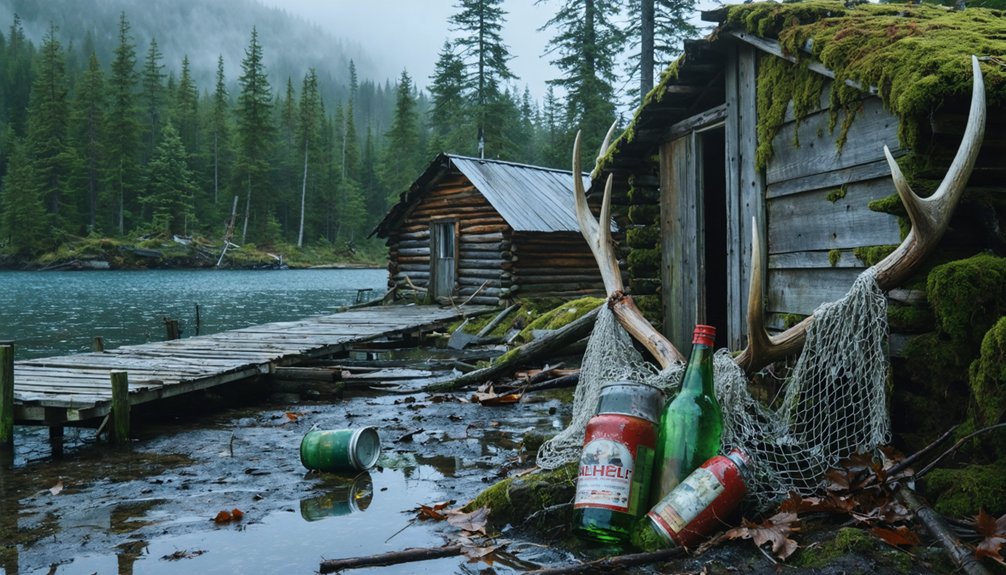
As you step onto Unga Island, you’ll encounter Alaska’s oldest non-Indigenous settlement—a haunting collection of moss-covered wooden structures slowly dissolving into the windswept landscape.
The abandoned buildings stand frozen in time, their weathered walls and collapsed roofs telling stories of a community that vanished after the 1969 exodus. Nature aggressively reclaims what humans left behind, wrapping homes in thick carpets of moss and wild grasses that blur the line between civilization and wilderness.
Moss-Covered Historic Structures
While wild grasses whip across the windswept terrain of Delarof Harbor, moss-covered buildings stand as haunting monuments to Unga’s vanished community. These weathered structures reveal both historical significance and ecological impact since the last family departed in 1969.
You’ll discover three distinct types of moss-draped ruins:
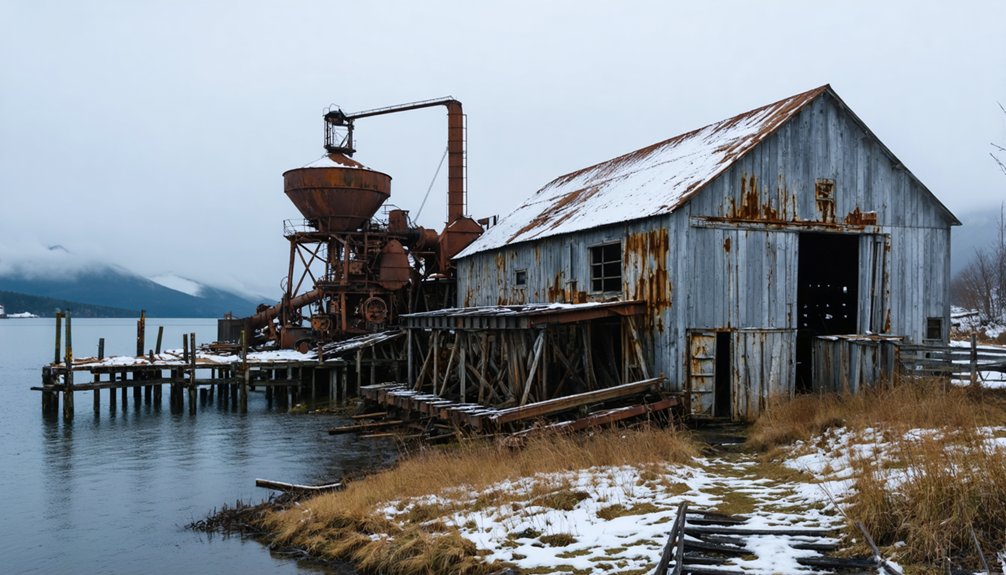
- Cannery remnants from the profitable cod fishing era that replaced gold mining operations
- Wooden cliff-side homes battling relentless Arctic storms and ocean winds
- Gold rush structures dating to the Apollo Mine period before the town’s 1969 evacuation
The moss accelerates deterioration across remaining buildings, transforming Unga’s landscape into an increasingly fragile snapshot of frontier history. You’ll need to trudge through muddy terrain to reach these disintegrating relics, where fog shrouds the ghostly outlines of Alaska’s abandoned past.
Oldest Non-Indigenous Settlement
Beyond these deteriorating relics lies a deeper historical layer that predates Alaska’s gold fever and cannery wealth. You’re standing in Alaska’s oldest non-indigenous settlement, first established in 1833 when Aleut artels arrived to hunt otters.
Originally named Delarov after trader Evstratii Ivanovich Delarov, this community of 116 souls represented a century of native population resilience despite Russian colonization’s devastating impact. The post office, operating from 1883 until 1958, outlasted the Apollo Consolidated Mining Co.’s 1890-1922 operations by decades.
Today’s architectural preservation challenges seem insurmountable—moss-covered structures battle relentless Aleutian weather while semi-subterranean ulax̂ designs slowly return to earth. You’ll find layers of occupation spanning from traditional oval homes (20-26 feet long) to Russian-influenced doorways, each telling stories of adaptation and survival.
Nature Reclaiming the Town
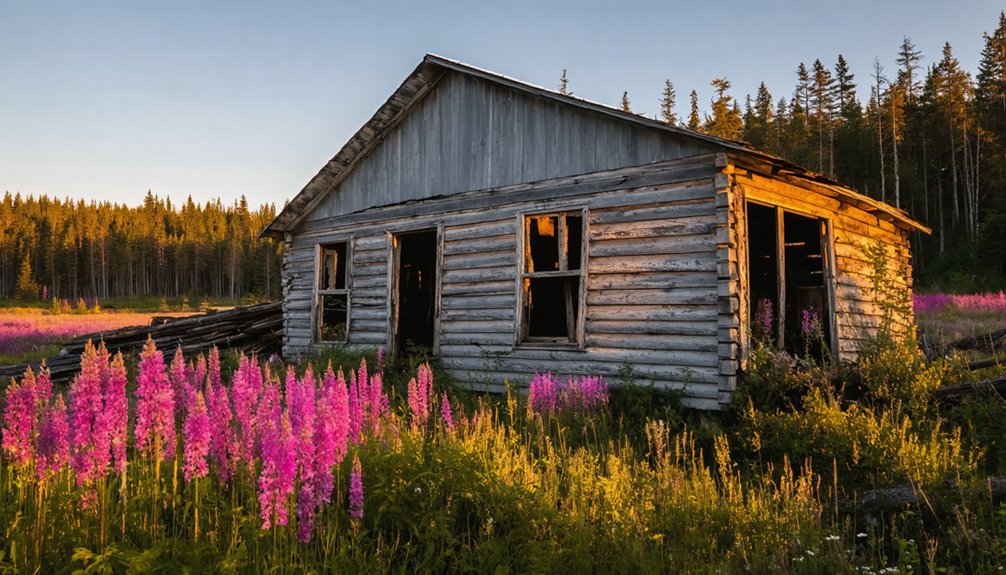
Silver-grey wooden buildings emerge from the fog like weathered monuments to abandonment, their skeletal frames standing sentinel along Unga’s solitary coast. Nature’s gradual encroachment transforms what remains into something hauntingly beautiful—moss blankets roofless ruins while wild grasses and pink louseworts swallow entire structures.
The windswept Aleutian environment accelerates this reclamation, each arctic storm and ocean gust pushing the settlement closer to oblivion.
You’ll find nature’s grip tightening around Unga’s forgotten infrastructure:
- Abandoned industry remnants from the cod processing hub crumble beneath wildflower carpets
- Orthodox church’s onion dome rises above streets where grass has erased former pathways
- 1960s garbage mingles with collapsed walls, creating time capsules of sudden departure
Bring your camera—these explorable structures won’t resist the wilderness forever.
The Rise and Fall of the Apollo Mine
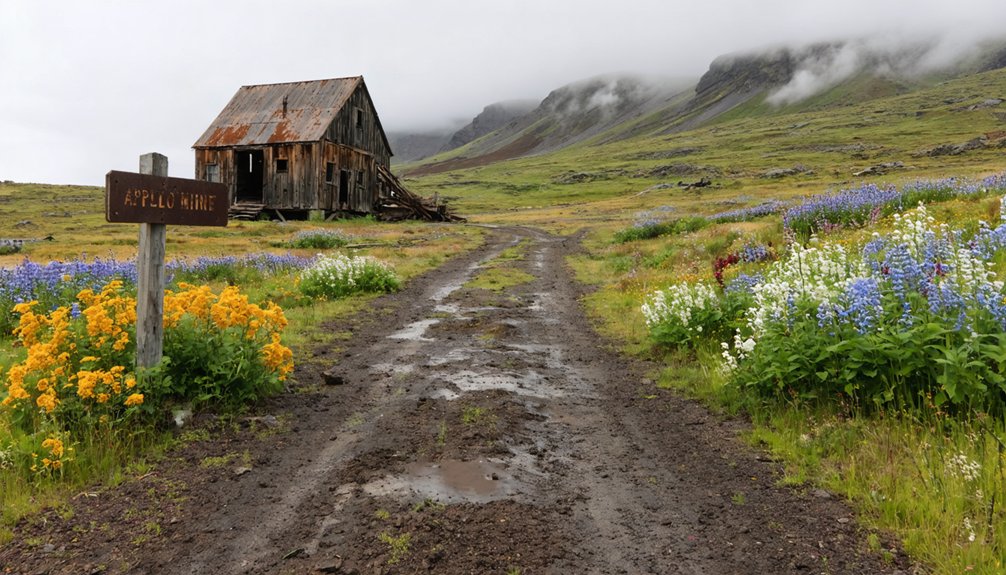
When prospectors struck gold-bearing quartz veins on Unga Island in 1891, they couldn’t have known they were making Alaska history. The Apollo Mine became Alaska’s first hard rock gold operation, triggering a small rush that preceded the legendary Klondike stampede.
Apollo Consolidated Mining Co. built ambitious infrastructure despite remote site access challenges—a three-mile narrow-gauge railroad hauled ore from Apollo Mountain to Delarof Harbor, powered by a Baldwin steam locomotive burning local coal. Precious metal extraction proved phenomenally successful between 1892-1913, yielding 150,000 ounces from high-grade epithermal veins.
But freedom from technological limitations proved elusive. By 1922, deeper sulfide-bound gold required processing methods the company couldn’t master economically. The mine closed permanently, leaving its railroad and buildings to Alaska’s relentless wilderness.
Ancient Forests Frozen in Time: The Petrified Forest Discovery
Long before miners sought gold beneath Unga’s soil, an ancient forest of towering sequoia and metasequoia trees thrived here during the Tertiary Period, only to be entombed by sudden volcanic eruptions millions of years ago. The volcanic ash and debris that buried these giants initiated a remarkable preservation process called permineralization, where silica-rich groundwater gradually replaced organic material with stone, creating fossils that would endure for eons.
You’re standing on what became a National Natural Landmark in 1968—a four-mile stretch of eroding coastline where petrified tree trunks emerge from volcanic breccia, offering a rare window into the deep past of the Aleutian Arc.
Tertiary Period Volcanic Burial
Between 11 and 25 million years ago, catastrophic volcanic eruptions transformed Unga Island’s ancient landscape, burying a thriving forest of sequoia and metasequoia trees beneath successive waves of dacitic ash and volcanic debris. You’ll discover how volcanic processes shaped this Miocene-era graveyard, where sediment deposition occurred both on land and underwater—biotite tuff specifically settled in seawater.
The burial sequence reveals nature’s raw power:
- Initial ash flows from dacitic domes like Bloomer Peak smothered the living forest
- Coarse volcanic breccia entombed tree stumps with fragments ranging from six inches to several feet
- Fine-grained tuffs preserved delicate details through rapid mineralization
This Tertiary Period cataclysm created the fossil record you’ll explore today, where ancient giants stand silicified along windswept shores.
National Natural Landmark Status
The catastrophic forces that entombed this ancient forest earned its recognition as a National Natural Landmark in 1968, cementing Unga Island’s place among America’s most extraordinary geological treasures. This 1968 national designation protected 6,464 acres of petrified sequoia and metasequoia remnants scattered along the island’s northwest shores.
You’ll find stumps measuring up to nine feet in diameter and logs stretching 59 feet long, frozen in blue-black and sand-colored stone. Maritime refuge management by Alaska Maritime National Wildlife Refuge now safeguards these Miocene-era fossils—11 to 25 million years old—that prove species once migrated freely between Asia and America.
The petrified forest represents untamed scientific frontier, offering you direct access to ancient climates and landscapes that flourished long before human boundaries existed.
Best Time to Visit and Weather Considerations
Planning your ghost town adventure to Unga requires strategic timing, as Alaska’s dramatic seasonal shifts will shape every aspect of your journey.
Prime visiting windows:
- Late May through June – You’ll encounter emerging wildflowers carpeting the hillsides, minimal crowds, and 17+ hours of daylight for exploring Unga’s abandoned structures. May’s drier conditions mean clearer skies for photography.
- July through early August – Peak season delivers 50s 60s Fahrenheit temperatures and ideal whale watching opportunities around the Aleutians. The lush emerald landscape reaches maximum vibrancy, though you’ll need advance ferry reservations.
- Late August into September – Frost eliminates mosquitoes, golden foliage frames the ghost town ruins, and you’ll catch potential northern lights displays after dark.
Weather remains unpredictable year-round, so pack layered gear regardless of season.
Essential Gear and Supplies for Your Journey
Surviving Alaska’s unforgiving wilderness demands more than enthusiasm—you’ll need specialized equipment that can withstand relentless coastal winds, sudden temperature drops, and terrain that shifts from boggy tundra to rocky shoreline within minutes.
Alaska’s wilderness doesn’t forgive mistakes—specialized equipment separating survival from catastrophe when coastal winds howl and temperatures plummet without warning.
Your gear recommendations start with waterproof Goretex-lined boots like Asolo models and layered clothing systems—polypropylene base layers, fleece mid-layers, and breathable rain jackets form your defense against hypothermia.
Pack Counter Assault bear spray and a Bear Vault BV500 canister; Unga’s isolation means wildlife encounters happen on nature’s terms.
Essential packing considerations include satellite communications like Garmin inReach, water purification systems, and a thorough first aid kit.
Don’t skimp on navigation tools—GPS devices backed by Silva compasses guarantee you’ll find your way through fog-shrouded coastlines where landmarks vanish like the town’s former residents.
Wildlife and Natural Features of Unga Island
Beyond the weathered structures of this ghost town, you’ll encounter one of Alaska’s most remarkable geological treasures—a 6,464-acre petrified forest preserved within the Alaska Maritime National Wildlife Refuge.
These ancient sequoia stumps and logs jutting from Unga Island’s shores tell the story of a Tertiary Period landscape buried by violent volcanic eruptions from the Aleutian Arc. Designated a National Natural Landmark in 1968, this site offers tangible evidence of prehistoric forests that once connected Asian and American ecosystems millions of years ago.
Ancient Petrified Forest Discovery
Along Unga Island’s eroding northern shore, a prehistoric secret emerges from the volcanic rock—massive petrified stumps and logs that once stood as towering Sequoia trees in a lush forest 20 million years ago. You’ll find these Miocene era fossils embedded in volcanic breccia, their cellular structure preserved through silica permineralization after catastrophic eruptions buried them instantly.
This National Natural Landmark reveals itself during low tide along a four-mile intertidal zone:
- Stumps measure 4 to 9 feet in diameter, dwarfing modern coastal vegetation
- Logs extend beyond 15 feet in length, displaying blue-black and sand-colored mineralization
- Petrified wood preservation showcases ancient Metasequoia, evidence of Alaska’s dramatically different climate
The site’s location 11 miles northwest of Sand Point makes it accessible yet wonderfully remote for adventurous explorers.
Alaska Maritime Wildlife Refuge
Unga Island’s ancient forests may have turned to stone, but the surrounding waters and shores pulse with some of North America’s most spectacular concentrations of living wildlife. You’ll find yourself within the Alaska Maritime National Wildlife Refuge, where 40 million seabirds—representing 80 percent of all North American seabirds—claim their seabird nesting habitat along these remote shores.
Watch endangered Steller sea lions bellow from rocky beaches while sea otters navigate kelp forests offshore. The marine food chain dynamics here are extraordinary: five salmon species surge through coastal streams, fueling an ecosystem that supports everything from rare Asiatic migrants to breeding whales and walrus.
The refuge stretches from the volcanic Aleutians to the Chukchi Sea, offering you unparalleled access to wild, untamed nature.
Tertiary Volcanic Burial Evidence
Beneath your feet, ancient sequoia forests lie frozen in stone—silent witnesses to a catastrophic moment millions of years ago when volcanic fury transformed living wood into mineral monuments. These petrified remnants tell the story of sudden volcanic ash deposition that entombed standing forests during the Tertiary Period.
How Nature Preserved This Ancient Forest:
- Rapid Burial – Volcanic breccia from nearby eruptions instantly covered living trees before decay could begin
- Mineral Replacement – Groundwater dissolved silica from volcanic rocks, infiltrating wood pores through permineralization
- Magmatic Intrusion Processes – Submarine lava flows heated seawater, creating calcite-filled deposits that locked everything in place
Today’s 6,464-acre National Natural Landmark provides rare evidence of species migration between continents and reveals the Aleutian Arc’s pre-human climate.
Photography Tips for Capturing the Ghost Town Atmosphere
The haunting beauty of Unga’s abandoned structures demands more than a casual snapshot—it requires deliberate technique to convey the weight of desertion that permeates every weathered board and collapsed roof.
You’ll find golden hour transforms decaying buildings into dramatic studies of light and shadow, while wide-angle lenses capture entire rooms where sand dunes spill through broken windows. Anchor your camera on a tripod for sharp low-light exposures, and use flashlights to spotlight specific artifacts against the gloom.
Overcoming photographic challenges means working within nature’s constraints—shoot during dawn’s ideal lighting to avoid heat shimmer and footprint contamination. When preserving delicate environments, remove visual distractions from your frame rather than physical objects.
Long exposures with handheld light painting reveal exterior textures while keeping you invisible through continuous movement.
Safety Precautions for Exploring Remote Aleutian Sites
Before you set foot on Unga’s windswept shores, understanding the Aleutian Chain’s unforgiving nature becomes as critical as your camera equipment. This remote landscape demands respect and preparation.
Respect Unga’s unforgiving terrain as much as you value your gear—preparation isn’t optional in the Aleutian Chain.
Essential Safety Protocols:
- Wildlife monitoring protocols require carrying accessible bear spray and making noise while hiking through unsigned trails—never wear headphones that compromise your awareness of surroundings.
- Cultural heritage preservation means respecting the 1/4-mile restricted access area and avoiding unstable structures that threaten both you and these irreplaceable sites.
- Emergency preparedness includes sharing detailed route plans, packing satellite phones, and traveling with companions who match your abilities.
Alaska’s weather changes rapidly here. Turn back when conditions deteriorate—Unga’s mysteries will wait for your return. In this wilderness without immediate help, your judgment becomes your most crucial gear.
Frequently Asked Questions
Are There Any Lodging or Camping Facilities Available on Unga Island?
No lodging or camping facilities exist on Unga Island. You’ll need to arrange accommodations in Unalaska before visiting. Transportation logistics require float planes or boats, with seasonal availability affecting access to this wild, infrastructure-free refuge.
Do I Need Special Permits to Explore the Ghost Town Ruins?
Like wandering through nature’s unmarked trails, you won’t need special permits to explore Unga’s ruins. However, preparedness requirements matter—respect environmental regulations, avoid disturbing structures or wildlife habitats, and practice leave-no-trace principles while discovering this abandoned frontier settlement.
Can I Take Artifacts or Souvenirs From the Abandoned Buildings?
No, you can’t take artifacts or souvenirs from Unga’s abandoned buildings. Federal law prohibits removing items, carrying serious legal implications. Beyond regulations, there are ethical concerns about preserving this fragile historical site for future explorers to experience.
Are Guided Tours Available for Visiting Unga Island?
Yes, you’ll discover guided expedition tours through HX Hurtigruten’s complimentary 1-2 hour excursions. You’ll explore ghost town history among abandoned buildings while spotting local wildlife sightings—seabirds, fur seals, and sea lions along Unga’s untamed shores.
What Is the Cost of Boat Transportation From Sand Point?
Boat transportation costs from Sand Point aren’t publicly listed since there’s no passenger ferry service to Unga. You’ll need to charter private vessels, with pricing varying by boat schedule availability and individual operators—call local fishing charters for quotes.