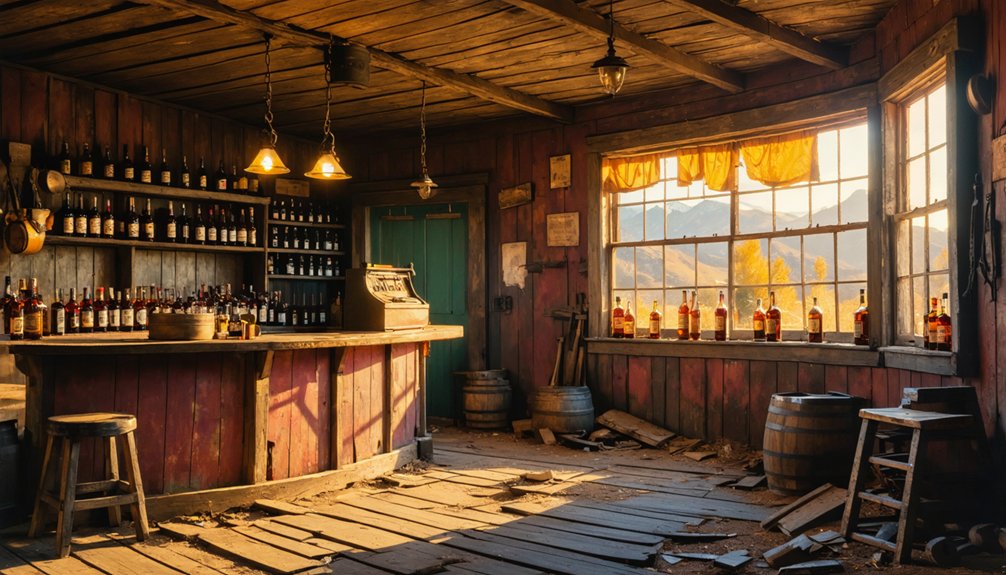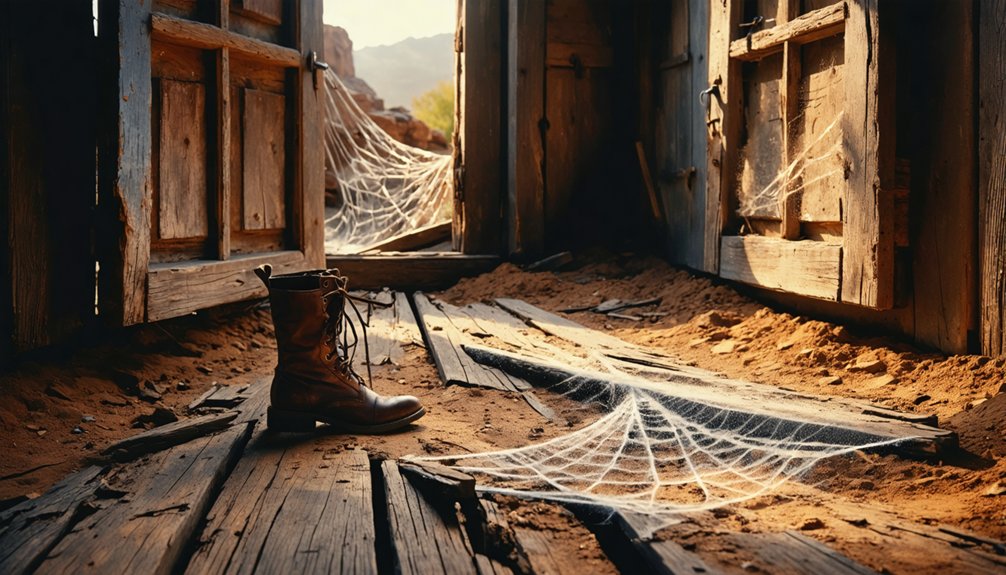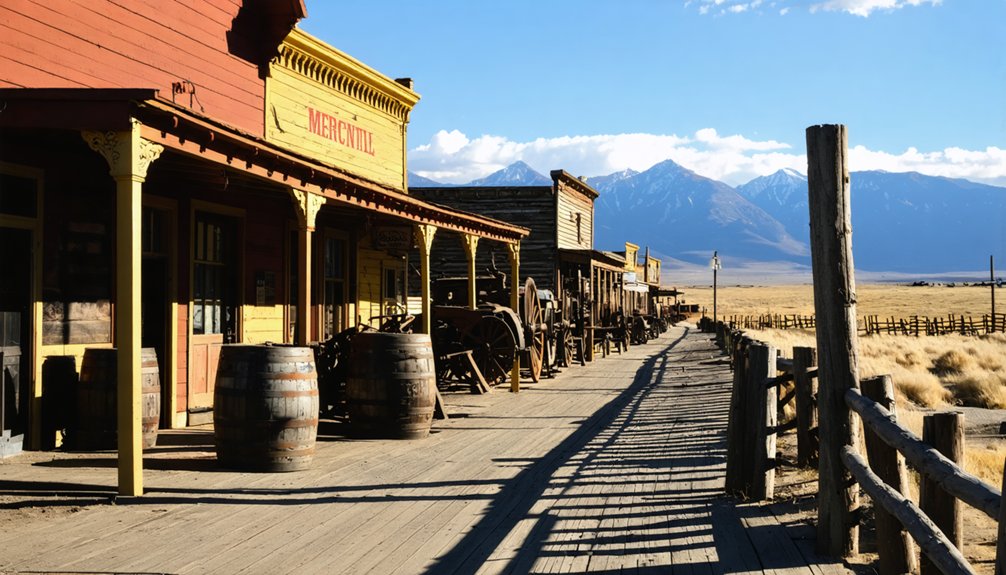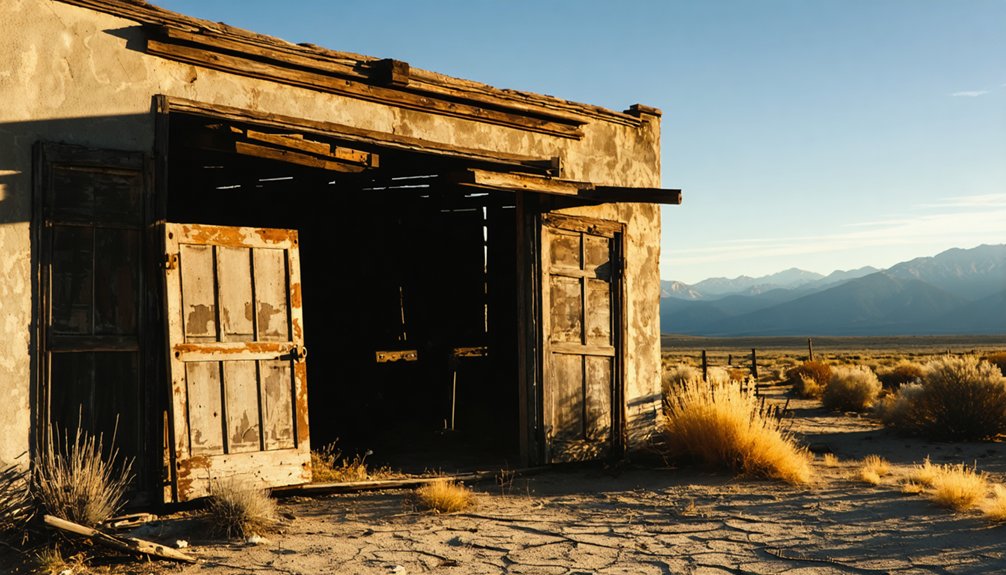
Vallecito’s crumbling adobe ruins and haunted cemetery sit just 90 miles northeast of San Diego, making it one of Southern California’s most compelling ghost town destinations. You’ll follow Interstate 8 east, then Highway S-2 north along the original 1849 Southern Emigrant Trail. The stage station’s dark history includes murder, stagecoach robberies, and restless spirits reportedly still haunting the grounds. Camp overnight at Vallecito County Park and explore after dark — there’s far more to this eerie desert landmark than first meets the eye.
Key Takeaways
- Vallecito is approximately 90 miles northeast of San Diego, reachable via Interstate 8 east, then Highway 78 or scenic S-2 north.
- The historic stage station ruins, pioneer cemetery, and cactus gardens offer visitors a tangible connection to California’s Gold Rush era.
- Vallecito County Park provides campsites near the stage station ruins, offering desert stillness and exceptional stargazing opportunities after dark.
- Pack extra water, warm layers, and a red-lens flashlight, as desert temperatures drop sharply and springs remain unreliable after sunset.
- Ghost legends include the White Lady, a phantom white stallion, and the dueling spirits of two Texas emigrants named Buck and Roland.
Why Vallecito Was Abandoned After the Civil War
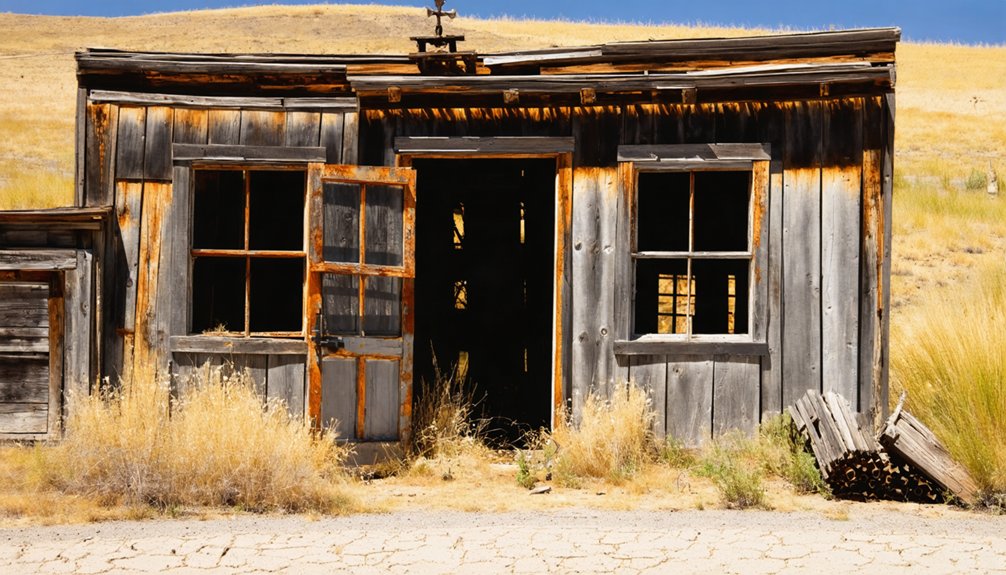
When the Civil War erupted, it severed Vallecito’s lifeline almost overnight. The conflict’s Civil War impact halted stagecoach service along the Butterfield Overland Mail route, triggering Vallecito’s decline almost immediately.
Without steady stage traffic, the economic shifts hit hard — no passengers meant no revenue, no reason to stay.
Transportation changes redirected commerce elsewhere, and population migration followed. Settlers sought opportunity in growing towns rather than clinging to an isolated desert outpost.
Tragedy deepened the wound when James Lassitor was murdered in 1868, and his widow abandoned the property entirely.
What remains carries profound historical significance — a reminder that freedom-seekers once depended on this remote waystation.
Today, Vallecito stands among California’s most compelling abandoned settlements, where silence speaks louder than any history book ever could.
The Dark History Behind Vallecito Stage Station
Beyond the Civil War’s economic devastation, Vallecito Stage Station carries a darker legacy steeped in violence and tragedy.
Vallecito history reveals that James Lassitor, who built the larger station in 1854, was murdered in 1868, forcing his widow to abandon everything they’d built together.
Before that, the stagecoach routes through this remote desert crossing witnessed duels, robberies, and desperate travelers pushed to their limits after surviving the brutal “Journey of Death.”
Stagecoach routes through this desolate crossing bore witness to duels, robberies, and souls broken by the merciless Journey of Death.
Two Texas emigrants, Buck and Roland, famously killed each other in a duel right at the station grounds.
Bandits targeted vulnerable coaches carrying gold rush wealth across isolated desert terrain.
You’re walking ground soaked in hardship, bloodshed, and broken dreams — every crumbling adobe wall silently holding stories that history books rarely capture fully.
Ghost Stories That Still Haunt Vallecito Today
As you wander the crumbling adobe walls of Vallecito Stage Station, you’ll find the silence isn’t quite as empty as it seems — three lingering legends refuse to let the dead stay buried.
Keep your eyes open for the White Lady, a lovesick bride who died aboard a Butterfield Stage in the late 1850s and now drifts the ruins in her wedding dress, still searching for the Sacramento fiancé she never reached.
At midnight, locals say a ghostly white stallion thunders through the surrounding hills, riderless since its bandit owner was shot dead after a stage robbery, while somewhere deeper in the desert, the restless spirits of two Texas duelists — Buck and Roland — allegedly still settle their fatal grudge near the station grounds.
The White Lady Legend
Among the ghost stories that linger around Vallecito’s crumbling adobe walls, none haunts the imagination quite like the legend of the White Lady. In the late 1850s, a woman fell gravely ill aboard a Butterfield Stage, dying before reaching her Sacramento fiancé. She was buried in her white wedding dress, and haunted whispers say she never left.
Visitors report these ghostly encounters near her grave:
- A luminous white figure drifting silently through the ruins after dark
- The faint rustle of a wedding dress brushing against desert scrub
- A searching presence lingering near the on-site cemetery at dusk
You can explore her story firsthand at Vallecito County Park, where the silence feels less like peace and more like something unfinished.
Midnight White Horse Apparition
The White Lady isn’t the only restless spirit said to haunt Vallecito’s moonlit ruins.
Legend holds that a bandit leader, after robbing a stagecoach and shooting his rival, fled on a magnificent white stallion into the surrounding hills — carrying buried loot that was never recovered. Both horse and rider vanished, but locals claim the stallion still roams those hills.
If you’re chasing ghostly encounters, time your visit right. Midnight sightings of the phantom white horse are reported most frequently when the desert falls completely silent and moonlight washes over the ruins.
Step away from your campsite, scan the darkened hillsides, and listen carefully. Some visitors swear they’ve heard hoofbeats echoing across the canyon. You might just witness Vallecito’s most electrifying apparition yourself.
Dueling Texans’ Restless Spirits
Vallecito’s haunted reputation doesn’t rest on a single ghost — Buck and Roland, two Texas emigrants, fought a fatal duel right at the stage station, and neither man seems willing to leave. Their dueling spirits charged this desert ground with a restless energy you can still feel today.
Watch for these signs when you visit:
- Unexplained tension near the station ruins, where the duel reportedly ended both men’s journeys west.
- Shadowy figures moving along the perimeter at dusk, mimicking the movements of armed men.
- Sudden temperature drops in otherwise warm desert air.
You’re walking ground where freedom-seekers turned on each other. That kind of violent history doesn’t just disappear — it lingers, waiting for you to notice.
What Remains at the Vallecito Stage Station Ruins
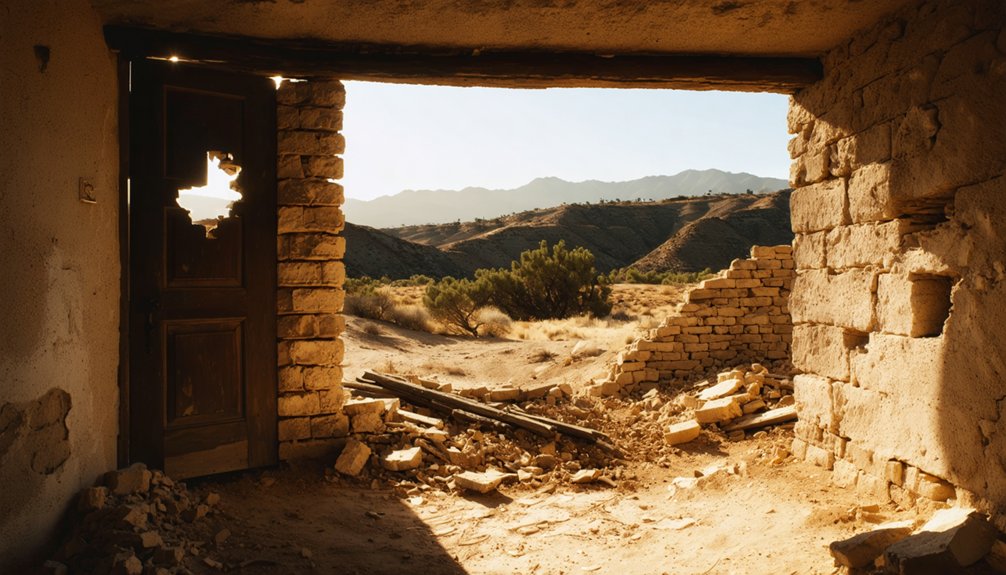
When you arrive at Vallecito Stage Station today, you’ll find adobe ruins still standing as a quiet memorial to the pioneers and stagecoaches that once passed through.
You can wander the on-site pioneer cemetery, where weathered markers tell stories of those who never completed their journeys west.
Between the ruins and the graves, manicured cactus gardens soften the landscape, giving the county park a surprisingly serene atmosphere that contrasts sharply with its haunted past.
Adobe Ruins Still Standing
Standing amid the quiet desert expanse of Anza-Borrego, the adobe ruins of Vallecito Stage Station are a tangible link to California’s Gold Rush era.
The site’s adobe structure preservation reflects both resilience and architectural significance, telling stories no history book fully captures.
When you walk these grounds, you’ll notice:
- Thick adobe walls that once sheltered weary travelers, emigrants, and Butterfield Overland Mail riders.
- Original construction remnants revealing mid-1800s building techniques adapted to harsh desert conditions.
- Restored sections maintained by San Diego County, honoring the station’s irreplaceable historical footprint.
You’re standing where Kit Carson and Kearny’s dragoons once passed.
That weight is real.
Explore freely, photograph everything, and let the desert silence remind you exactly how raw California’s frontier history truly was.
On-Site Pioneer Cemetery
Tucked just beyond the adobe ruins, the on-site pioneer cemetery at Vallecito Stage Station holds what little remains of those who didn’t survive the brutal desert crossing. Each pioneer burial marks a soul who pushed westward, chasing freedom and fortune, only to fall short of the dream.
You’ll feel the weight of that sacrifice standing here, surrounded by desert silence and sun-bleached markers.
The cemetery’s significance goes beyond simple history — it’s a raw reminder of what westward expansion actually cost. These weren’t statistics; they were real people who endured the “Journey of Death” and lost.
Walk slowly through this space, read what markers remain, and let it sink in. Vallecito didn’t just shelter travelers — it buried them.
Manicured Cactus Gardens
Beyond the weathered adobe and sun-bleached grave markers, a surprisingly manicured cactus garden brings an unexpected softness to Vallecito’s rugged landscape.
The desert landscaping offers a curated contrast to the wild Anza-Borrego surroundings, giving you a moment to breathe and observe before exploring further.
Here’s what makes the cactus garden worth your time:
- Diverse cactus varieties — From barrel cacti to towering chollas, the collection showcases the region’s native flora beautifully.
- Intentional desert landscaping — Thoughtful arrangement creates natural pathways, letting you wander freely without losing your bearings.
- Living history — These plants thrive in the same unforgiving conditions that tested every pioneer who stopped here.
You’ll leave with a deeper appreciation for how life stubbornly persists in even the harshest desert corners.
How to Reach Vallecito From San Diego
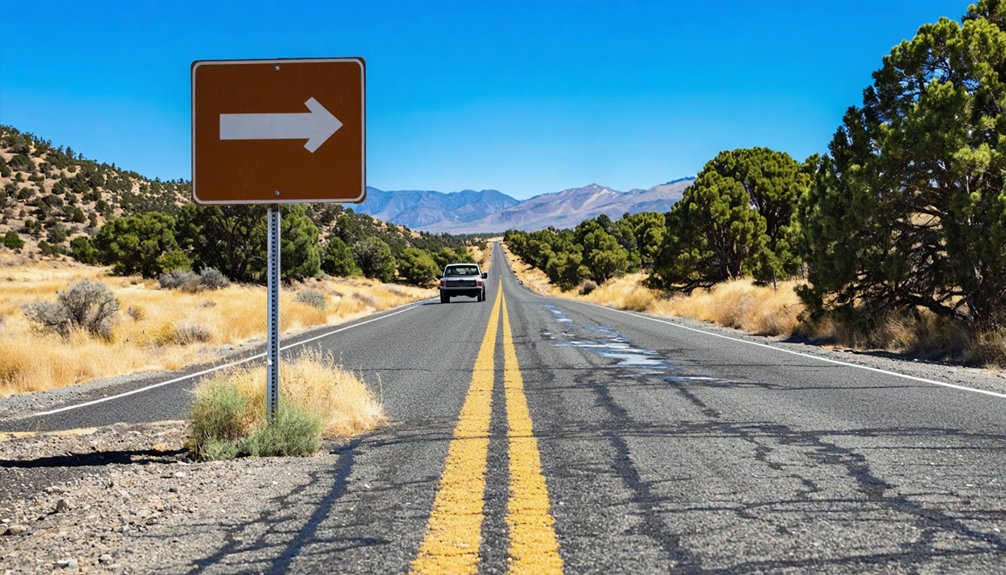
Reaching Vallecito from San Diego takes you on a roughly 90-mile journey northeast through some of Southern California’s most dramatic desert scenery.
Your best route follows Interstate 8 east, then cuts north through the rugged Anza-Borrego Desert via Highway 78 or S-2, both offering excellent Vallecito accessibility with rewarding scenic route options along the way.
Highway S-2, known as the Great Overland Stage Route of 1849, delivers the most historically immersive experience, tracing the original Southern Emigrant Trail through Carrizo Badlands.
You’ll pass sweeping desert vistas before dropping into the quiet Vallecito Valley.
Expect the drive to take roughly two hours. Fuel up beforehand — services disappear once you leave the freeway corridor behind.
Camping and Overnight Tips for Vallecito County Park
Once you’ve made that two-hour drive and pulled into Vallecito County Park, you’ll want to settle in and let the desert stillness wash over you.
After that two-hour drive, Vallecito County Park welcomes you with pure desert stillness worth every mile.
The campsites here sit among manicured cactus gardens, putting you steps away from the historic stage station ruins.
Pack these camping essentials before you arrive:
- Extra water—desert springs aren’t reliable for drinking
- A red-lens flashlight for stargazing tips without ruining your night vision
- Warm layers, since desert temperatures drop sharply after sunset
The park’s remote location delivers genuinely dark skies, making stargazing exceptional.
You’re free to wander the grounds after dark, but stay alert—locals insist the White Lady appears near the cemetery at midnight, searching restlessly for her Sacramento-bound fiancé.
Frequently Asked Questions
What Native American Tribe Originally Lived Near the Vallecito Springs?
Over 1,000 years of Native American history surrounds Vallecito Springs, where the Hawi tribe originally lived. You’ll discover their cultural significance when exploring this sacred land, as Spanish explorer Pedro Fages documented their village in 1782.
Are Pets Allowed at Vallecito County Park Campgrounds?
The provided knowledge doesn’t cover pet regulations or campground amenities specifics. You’ll want to contact San Diego County Parks directly to confirm whether pets are welcome at Vallecito County Park’s campgrounds before planning your adventure.
What Is the Best Time of Year to Visit Vallecito?
Like a desert bloom, spring and fall are your best seasons. You’ll enjoy mild local weather patterns and best seasonal activities, exploring Vallecito’s haunted ruins and cactus gardens without summer’s scorching heat overwhelming you.
Is There an Entrance Fee for Vallecito County Park?
The knowledge doesn’t confirm an entrance fee, but you’ll find Vallecito County Park’s amenities—cactus gardens, a cemetery, and rich Vallecito history—well worth exploring. Check San Diego County Parks for current fee details before you roam free!
Can Visitors Access the Moaning Cave Independently or Need Guides?
While independent exploration sounds freeing, cave safety makes guided tours the smarter choice. You’ll actually gain more freedom inside Moaning Cave with expert guides leading you safely through its eerie, historically rich depths used by Native Americans as a burial ground.
References
- https://www.legendsofamerica.com/ca-vallecito/
- https://www.youtube.com/watch?v=cohlH8yo2KM
- https://roadtrippers.com/magazine/vallecito-county-park-california/
- https://www.sohosandiego.org/adobeu/vallecito_history.htm
- http://cali49.com/hwy49/2013/12/6/vallecito
- https://en.wikipedia.org/wiki/Vallecito
- https://www.calaverashistory.org/vallecito
- https://ohp.parks.ca.gov/ListedResources/Detail/273