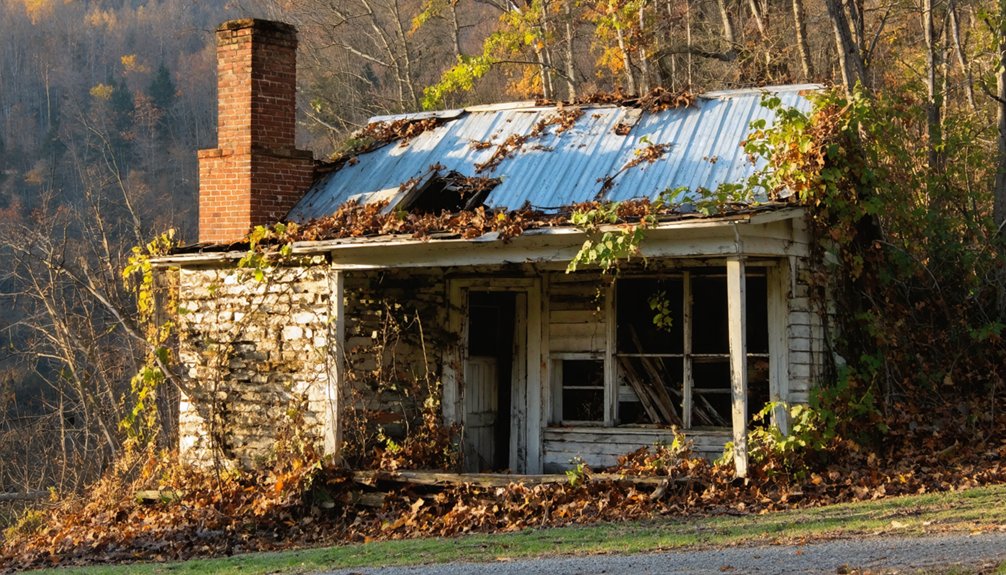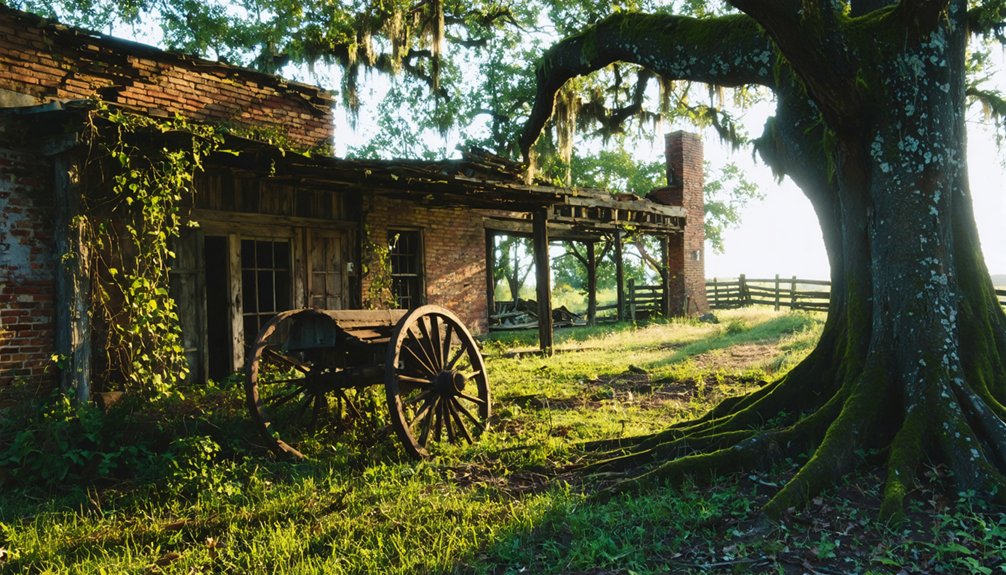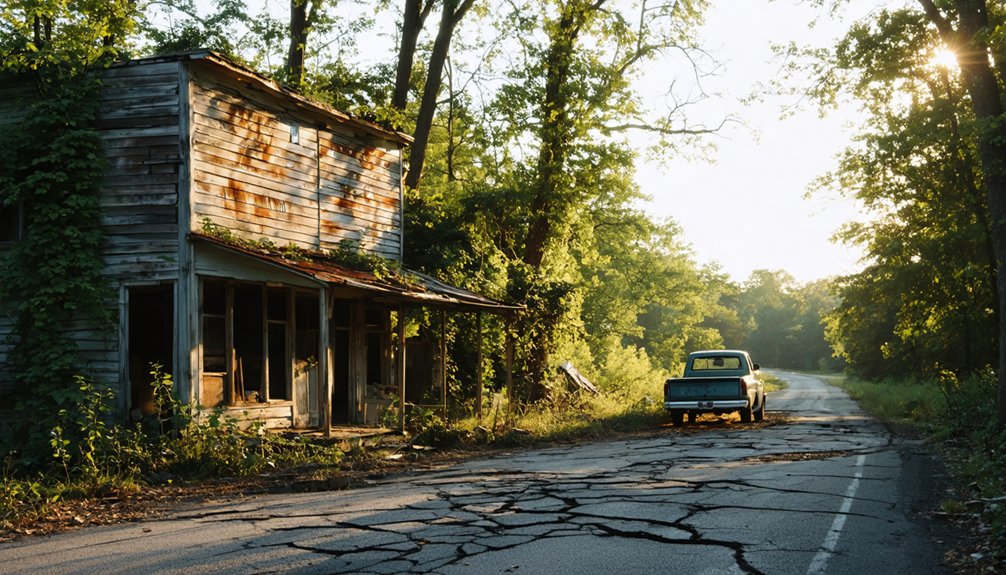
Planning a ghost town road trip to Violett, Arkansas means embracing history without the usual ruins. You won’t find crumbling storefronts or weathered signs — just unmarked ground where a small community once stood after its post office opened in 1876. Visit in spring or fall for the best experience, and pair it with nearby ghost towns like Rush and Zinc. There’s far more to this forgotten corner of Arkansas than you’d expect.
Key Takeaways
- Violett, Arkansas, is a ghost town in Arkansas County with no standing structures, making it a unique historically atmospheric destination.
- Access requires standard 2WD roads; visit in spring for wildflowers or fall for foliage and duck season wildlife viewing.
- Bring local maps, as Violett’s exact coordinates aren’t publicly documented, and rely on community knowledge for navigation.
- Combine your trip with nearby ghost towns like Rush, Zinc, Eros, and Pinnacle Springs for a richer historical experience.
- Explore nearby wetlands and waterways for rewarding wildlife photography and birdwatching opportunities throughout your road trip.
What Is Violett, Arkansas: and What’s Left of It?
Violett, Arkansas is the kind of place that’ll make you question why you drove out there in the first place — and then quietly glad you did. Tucked inside Arkansas County in the northeast corner of the state, Violett carries a stripped-down ghost town significance: no ruins, no structures, no markers. It’s a barren site, plain and simple.
What survives is purely historical. The post office opened in 1876, the same year homestead papers went to John Nelson Carlin. It likely operated as a small store or modest settlement before quietly vanishing from maps entirely.
Violett history lives through documents and memory, not timber and brick. You won’t photograph crumbling walls here. You’ll stand on open ground and feel the weight of something that simply chose to disappear.
How Do You Get to Violett in Northeast Arkansas?
Getting to Violett means accepting a certain degree of mystery before you ever leave the driveway. Exact coordinates aren’t publicly documented, so you’ll need to rely on local maps and regional knowledge to pinpoint this barren site in northeast Arkansas County.
Fortunately, Violett access doesn’t demand a rugged off-road vehicle — standard 2WD roads will get you there. Plan your visit during spring or fall when temperatures cooperate and duck-rich wetlands nearby add unexpected beauty to the journey.
Consider combining this stop with other ghost towns along your route, using Buffalo River corridors to connect Marion County sites like Rush. Freedom lies in the open road, and reaching Violett rewards the curious traveler willing to dig beyond the obvious.
What Will You Actually Find at Violett’s Barren Ghost Town Site?
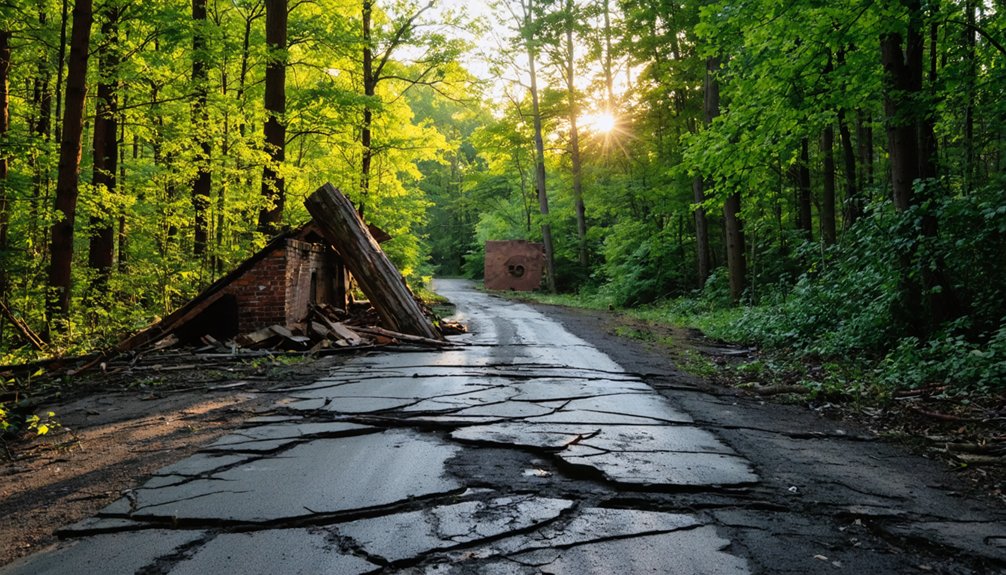
Once you’ve made the journey out to Violett, don’t expect a reward wrapped in crumbling storefronts or rusted signage — there’s nothing left standing. This barren site offers no historical remnants you can photograph or touch.
There’s nothing left standing at Violett — no crumbling storefronts, no rusted signage, no remnants to photograph or touch.
What it does offer is something quieter: the weight of Violett history beneath your feet.
Established in 1876, Violett likely functioned as a small store or rural settlement, its post office serving scattered homesteaders before disappearing entirely from Arkansas maps.
John Nelson Carlin received homestead papers that same year, anchoring the site’s brief existence.
Your Arkansas exploration here becomes purely imaginative. Ghost town significance doesn’t always demand ruins — sometimes it demands presence.
Standing on unmarked ground where a community once breathed is its own raw, unfiltered discovery.
When Is the Best Time to Visit Violett and Northeast Arkansas?
When you visit Violett and northeast Arkansas matters more than you might think. Arkansas summers hit hard with oppressive heat, and winters bring cold snaps that make outdoor exploration miserable.
Your best season falls in spring or fall, when temperatures stay comfortable and the landscape opens up beautifully.
Spring brings wildflowers and mild breezes perfect for wandering barren ghost town sites without breaking a sweat.
Fall delivers crisp air and stunning foliage across the region’s rural backroads.
If you’re drawn to wildlife, fall also aligns with duck season near the wetlands surrounding northeast Arkansas County, adding a bonus to your trip.
Check local events happening in nearby towns before you go, since small communities often host seasonal festivals worth catching along your route.
Arkansas Ghost Towns Near Violett Worth Adding to Your Route
If you’re already making the drive through Arkansas ghost town country, Marion County deserves a serious detour on your route.
Rush, once a bustling zinc mining hub in the early 1900s, offers some of the most tangible ruins you’ll find in the region, with crumbling mine structures scattered along the Buffalo River corridor.
You’ll also want to swing through Zinc and Eros, two rural remnants that round out the area’s layered history of farming and small-scale industry.
Marion County Mining Towns
After leaving the barren site at Violett, you’ll want to swing northwest toward Marion County, where the ghost towns of Rush, Zinc, and Eros deliver something Violett simply can’t—visible ruins, crumbling foundations, and a tangible sense of the communities that once thrived there.
Rush stands as Marion County’s crown jewel of mining heritage, its zinc mine remnants scattered along the Buffalo River telling the story of a boomtown that peaked in the early 1900s before fading after World War II.
Zinc offers a quieter mix of farming and mining history, while Eros preserves an old school, store, and cemetery worth exploring.
These ghost towns collectively paint a vivid picture of Arkansas’s industrial and rural past that no history lover should skip.
Rural Remnants Worth Exploring
Beyond Marion County’s mining relics, Arkansas hides a handful of rural ghost towns that’ll round out your road trip with a compelling mix of resort history and agricultural heritage.
Pinnacle Springs in Faulkner County once drew health-seekers during the 1880s resort boom before fading into foundations and ghost stories. You’ll find its historical significance embedded in crumbling footings worth photographing.
Anderson Flat in Independence County carries quiet community memories and local legends that reward curious explorers. Preservation efforts remain minimal at both sites, so bring your own research.
Exploration tips: arrive early for better photographic opportunities and softer light. Nature encounters are guaranteed, since wildflowers and wildlife reclaim these forgotten spaces.
Each stop deepens your understanding of Arkansas’s layered, overlooked rural past.
How to Build a Full Arkansas Ghost Town Road Trip Starting at Violett
Start your road trip in northeast Arkansas County at Violett’s barren site, where the history lives in the land rather than standing structures.
From there, you’ll head northwest toward Marion County, hitting Rush’s zinc mine ruins along the Buffalo River before swinging through Zinc and Eros for a look at rural remnants.
If you’ve got extra time, a detour south to Faulkner County’s Pinnacle Springs foundations rounds out the loop with a resort-era ghost town that contrasts sharply with the mining and farming sites you’ve already covered.
Mapping Your Route
Though Violett leaves nothing standing to greet you, it’s the perfect launching point for one of Arkansas’s most rewarding ghost town loops.
Start in northeast Arkansas County, absorbing the historical significance of this quiet, barren site before heading northwest toward Marion County.
There, Rush delivers zinc mine ruins along the Buffalo River, where local legends of boom-and-bust still echo through rusted infrastructure.
Continue to Zinc and Eros for rural remnants like old cemeteries and crumbling foundations.
Swing through Faulkner County to walk Pinnacle Springs, once a thriving resort.
Two-wheel-drive roads handle most of the route, so you don’t need a specialized vehicle.
Plan your drive for spring or fall, when weather stays cooperative and the landscape rewards every mile you cover.
Key Stops Along The Way
Once you’ve absorbed the quiet, barren significance of Violett, Rush becomes your first major destination, drawing you northwest into Marion County with its weathered zinc mine ruins scattered along the Buffalo River.
These historical landmarks offer striking photographic opportunities among crumbling structures reclaimed by nature trails and dense Ozark woodland.
Continue to Zinc and Eros, where community stories and local legends still echo through standing cemeteries and scattered footings worth documenting.
Ghost town preservation varies site to site, so respect what remains.
Pinnacle Springs in Faulkner County adds resort-era cultural heritage to your route, contrasting rural mining stops.
Throughout your journey, wildlife viewing stays rewarding, especially near waterways.
Pack exploration tips from locals, stay flexible, and let Arkansas’s forgotten settlements reveal themselves honestly and completely.
Frequently Asked Questions
Who Submitted the Historical Note About Violett’s Founding and Settlement?
Loretta Carlin Brewer submitted the historical note, connecting you to Violett’s historical significance through local folklore. You’ll discover her family’s deep roots, as John Nelson Carlin received homestead papers there in 1876, shaping this forgotten settlement’s story.
What Type of Vehicle Roads Lead to the Violett Ghost Town Site?
You’ll reach Violett’s scenic routes in standard vehicle types — 2WD roads grant you easy access, so you don’t need a rugged 4WD. Embrace the freedom of exploring this ghost town without specialized equipment!
Was Violett Ever Connected to Mining or Major Industrial Activity?
Don’t bark up the wrong tree—Violett’s mining history draws a blank. You’ll find no industrial significance here. It likely thrived as a small store or settlement, making its quiet, agrarian past its most fascinating story.
What Year Were Homestead Papers Sent to John Nelson Carlin?
In 1876, you’ll find that homestead papers were sent to John Nelson Carlin, marking a pivotal moment in Homestead history. The Carlin legacy began quietly, shaping Violett’s small but freedom-filled frontier settlement story.
Is Violett Still Marked on Current Arkansas County Maps Today?
Ironically, you won’t find Violett on current Arkansas County maps — it’s vanished completely. Yet its ghost town significance and local folklore live on, beckoning free-spirited explorers like you to uncover its forgotten, mapless story.
References
- https://www.ghosttowns.com/states/ar/violett.html
- https://arkansasfrontier.com/ghost-towns-in-arkansas/303766/
- https://aymag.com/arkansas-backstories-ghost-towns/
- https://en.wikipedia.org/wiki/List_of_ghost_towns_in_Arkansas
- https://www.youtube.com/watch?v=U4kJjjbcnMM