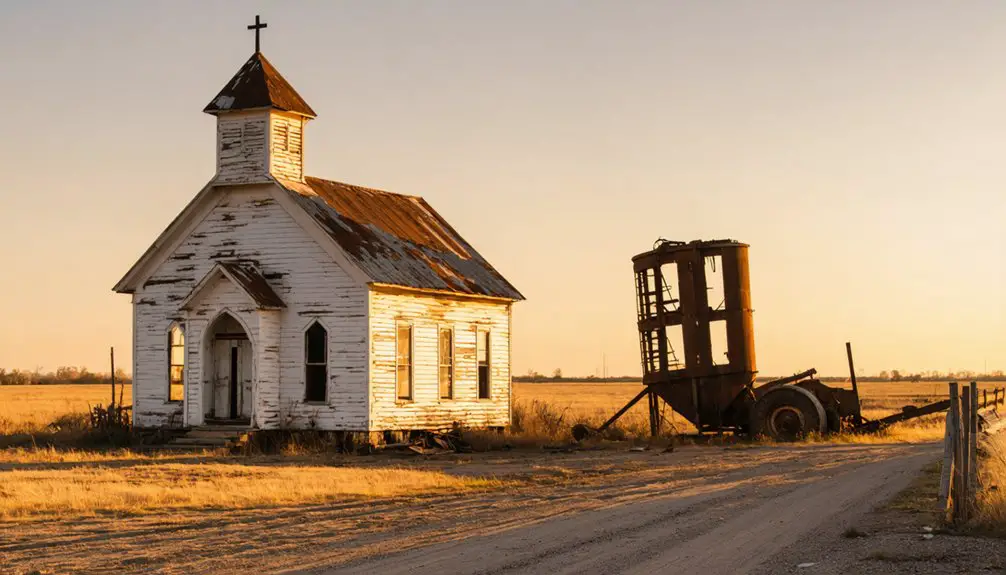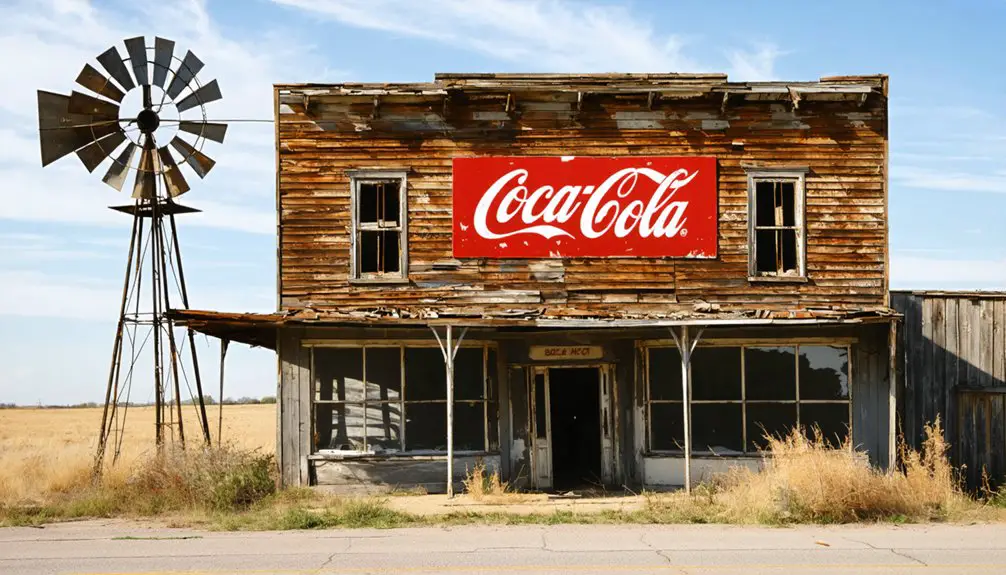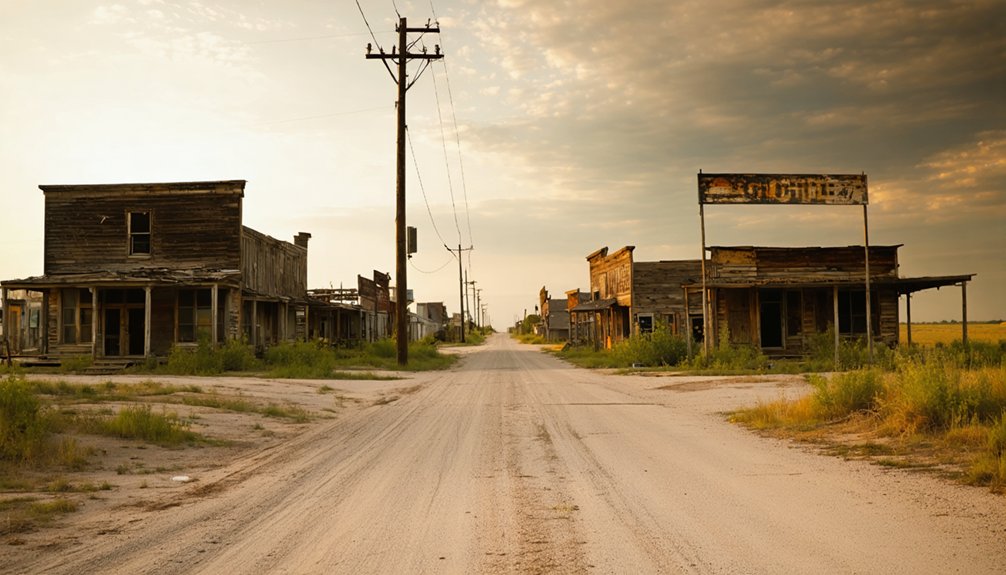
To plan your ghost town road trip to Mineral, Oklahoma, start by approaching from Tulsa via US-60 East — it’s roughly a two-hour drive. You’ll want a high-clearance vehicle, water, and a paper map since cell service fades fast. Visit in spring or fall for the best conditions and golden-hour photography. Mineral doesn’t announce itself; it simply waits. Everything you need to explore it safely and meaningfully is just ahead.
Key Takeaways
- Mineral, Oklahoma, is roughly 90 miles northeast of Tulsa, accessible via US-60 East, with gravel roads requiring a high-clearance vehicle.
- Spring and fall offer the best visiting conditions, with mild temperatures and golden light ideal for photography.
- Structural hazards like rotted floors, collapsed roofs, and hidden wells make caution essential when exploring abandoned buildings.
- Limited cell service requires informing someone of your route and packing water, a paper map, and extra fuel.
- Nearby ghost towns like Picher, Ingalls, and Texola can be combined into a broader Oklahoma road trip itinerary.
Mineral, Oklahoma: What Survives and What the Ruins Tell You
Although Mineral, Oklahoma has largely faded from maps and memory, the bones of the town still speak — crumbling foundations, overgrown lots, and the occasional standing wall tell you more about boom-and-bust frontier life than any museum exhibit could.
Mineral, Oklahoma has faded from maps, but its crumbling foundations still speak louder than any museum ever could.
This is ghost town history written in weathered timber and broken brick, and it rewards those willing to read it carefully.
As you walk the site, urban exploration becomes something deeper than curiosity. You’re tracing the outline of lives once fully lived — storefronts, homes, ambitions.
The prairie has reclaimed most of it, but fragments remain stubbornly visible. Pay attention to what the land shows you.
Every collapsed structure marks a moment when promise ran dry. Mineral didn’t just disappear — it surrendered, slowly, to forces larger than itself.
Driving to Mineral From Tulsa, OKC, and Other Major Cities
Whether you’re heading out from Tulsa or Oklahoma City, the drive to Mineral carries you through the layered history of northeastern Oklahoma’s old lead and zinc country, where the landscape itself begins telling the story before you ever arrive.
From Tulsa, you’ll travel roughly northeast on US-69, cutting through the Tri-State Mining District‘s shadow in under two hours.
OKC travelers can pick up I-44 East before merging onto US-69 North, trading the capital’s skyline for the quiet, weathered stretches of Ottawa County.
Driving From Tulsa
Tucked away in the northeastern corner of Oklahoma, Mineral sits roughly 90 miles from Tulsa — an easy two-hour drive that takes you through the rolling Ozark foothills and past the quiet towns that once thrived alongside the region’s booming lead and zinc industry.
Take US-60 East toward Miami, then head north toward the old mining corridor. You’ll feel the ghost town history seeping through the landscape long before you arrive — abandoned headframes dot the horizon, and the land carries the weight of a century’s worth of boom-and-bust cycles.
Bring your camera early; morning light hits the scarred terrain with a golden softness that’s ideal for photography tips you’ll actually use. The drive itself tells the story before Mineral ever comes into view.
Driving From Oklahoma City
From Oklahoma City, the drive to Mineral stretches roughly 270 miles northeast — about four hours through the flat central plains before the landscape buckles and rises into Ozark hill country.
Take US-270 East through McAlester, then wind north toward the Kansas border. The route itself carries historical significance — you’re cutting through land that witnessed the Five Civilized Tribes‘ forced resettlement, mining booms, and eventual collapse.
As you climb into the northeastern corner of the state, the terrain shifts noticeably. The air feels older somehow.
Nearest Highway Routes
Three main highways funnel travelers into Mineral’s forgotten corner of northeastern Oklahoma, each carrying its own brand of history and scenery. Your highway options depend on where you’re starting.
From Tulsa, US-60 West delivers you through rolling Osage country, its scenic routes threading past ranch land that hasn’t changed much in a century.
From Oklahoma City, US-270 Northeast cuts through small-town Oklahoma, where roadside diners still outnumber chain restaurants.
From Kansas, US-69 South drops you through the old mining corridor, where the landscape itself tells the story before you arrive.
Whichever road you choose, you’ll pass through communities that once thrived on zinc and lead money. That context sharpens everything you’ll see once Mineral’s quiet streets finally come into view.
The Best Season to Visit Oklahoma Ghost Towns Like Mineral
Timing your visit to Oklahoma ghost towns like Mineral can mean the difference between a memorable road trip and a miserable one.
Spring and fall offer the sweetest windows — mild temperatures let you wander freely without summer’s brutal heat crushing your spirit or your camera lens fogging from humidity.
Spring and fall unlock the best of Oklahoma ghost towns — comfortable temperatures, clear skies, and freedom to roam.
If ghost town history is your compass, autumn’s golden light transforms crumbling facades into haunting, painterly scenes perfect for photography tips you’ll actually use: shoot during golden hour, embrace long shadows, and let decay tell its story naturally.
Winter visits carry their own stark poetry — stripped trees reveal hidden foundations and forgotten structures.
Avoid July and August unless you’re genuinely built for Oklahoma’s suffocating heat. Your freedom to roam deserves comfortable conditions to match.
Road Access, Entry Points, and What to Bring With You
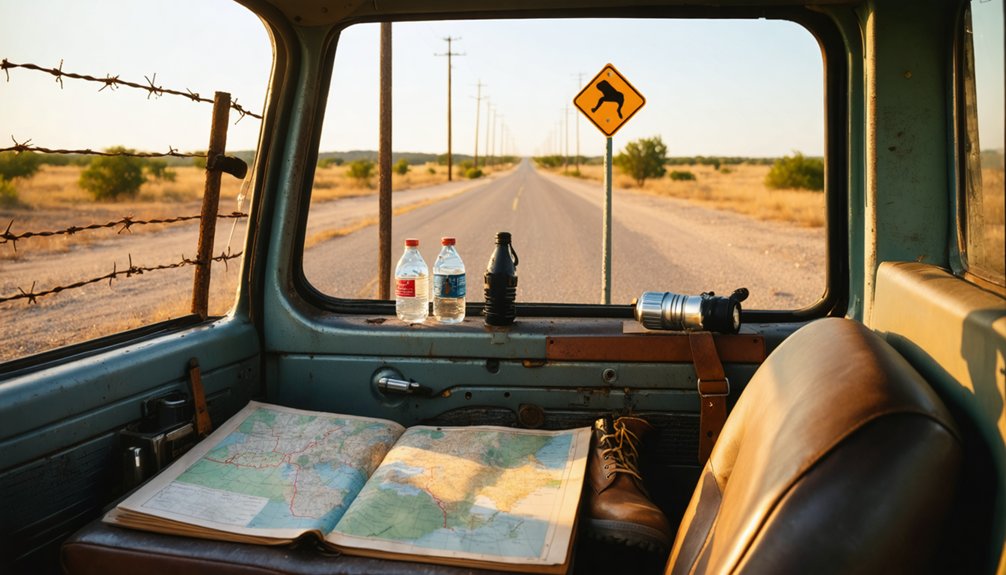
Reaching Mineral demands some deliberate navigation — paved roads give way to gravel stretches that reward patience and punish city cars with low clearance.
You’ll want a high-clearance vehicle, sturdy boots, and a reverence for ghost town history that keeps you moving carefully through forgotten ground.
Pack water, a paper map, and extra fuel — cell service thins out here, and the nearest station won’t forgive the unprepared.
For photography tips, arrive in early morning when low-angle light carves shadow and texture into collapsed structures, making every weathered board tell its story.
Bring a wide-angle lens for establishing context and a prime for intimate decay.
Entry points shift with seasonal road conditions, so check locally before you roll.
Freedom out here is earned, not assumed.
Other Oklahoma Ghost Towns That Belong on the Same Trip
While Mineral deserves its own slow afternoon, Oklahoma’s ghost town circuit rewards the curious traveler who keeps driving. These abandoned places carry ghost town culture that no museum can replicate — only open roads and honest exploration reveal it.
- Picher — a toxic mining ruin frozen in environmental tragedy, hauntingly preserved.
- Ingalls — where outlaws and lawmen exchanged gunfire in 1893, blood soaking the dirt streets.
- Texola — Route 66’s forgotten edge, straddling the Texas border with peeling paint and quiet defiance.
- Elmore City — small, faded, and carrying a surprisingly stubborn spirit beneath the silence.
Each stop deepens your understanding of what Oklahoma once was — and what ambition, disaster, and time eventually reclaim.
The Closest Towns to Mineral for Food, Fuel, and Lodging
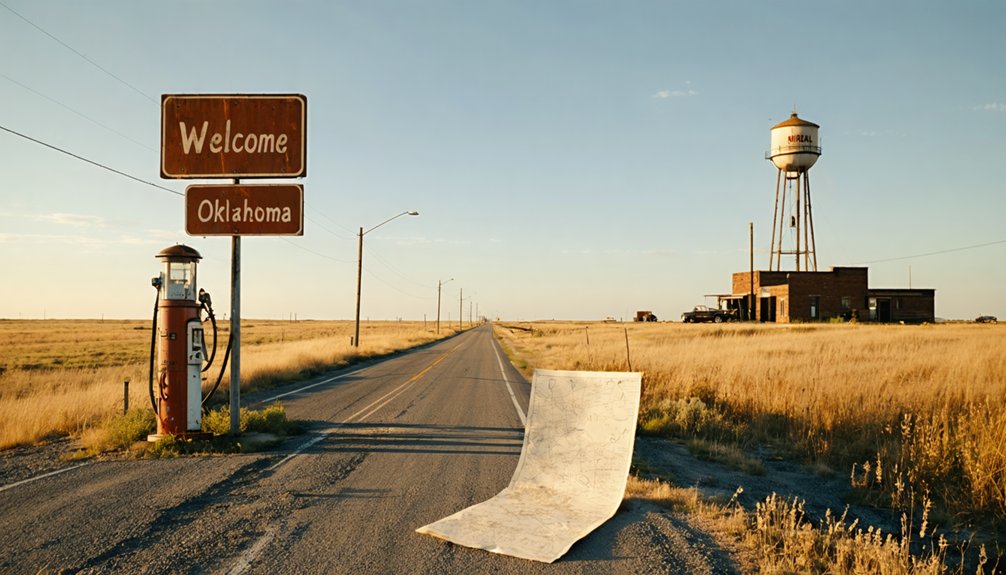
Visiting a ghost town means planning for the silence — Mineral offers no gas pumps, no diners, no motel signs flickering at dusk.
You’ll want to fuel up and eat before you arrive. Nearby Coalgate, roughly twenty miles out, gives you your best options: working gas stations, local diners serving ghost town cuisine rooted in coal-country tradition, and modest lodging that carries its own quiet history.
Coalgate, twenty miles out, offers gas, hot food, and a bed — everything Mineral quietly refuses to provide.
Ada sits further west, offering more choices without surrendering that regional character. Locals there still trade in local folklore about the surrounding abandoned communities — conversations worth having over a plate of chicken-fried steak.
Stock your cooler, top off your tank, and treat these supply towns as part of the journey, not interruptions to it.
Structural Hazards, Trespassing Laws, and Real Risks to Know
Once you’ve stocked up in Coalgate and pointed your car toward Mineral, the mood shifts — and so should your mindset. Freedom doesn’t mean reckless. These forgotten places carry real dangers, and respecting them keeps you alive and out of trouble.
Know before you walk:
- Structural safety fails silently — rotted floors, collapsed roofs, and unstable walls give little warning before giving way.
- Legal considerations matter here; trespassing on private land carries fines and possible arrest, even in ghost towns.
- Abandoned wells hide beneath overgrown grass, invisible until you’re falling.
- No cell signal means no quick rescue — tell someone your route before you leave.
Mineral rewards the curious, not the careless. Walk lightly, stay alert, and let history speak without letting it swallow you whole.
How to Photograph Mineral’s Abandoned Structures in Any Light
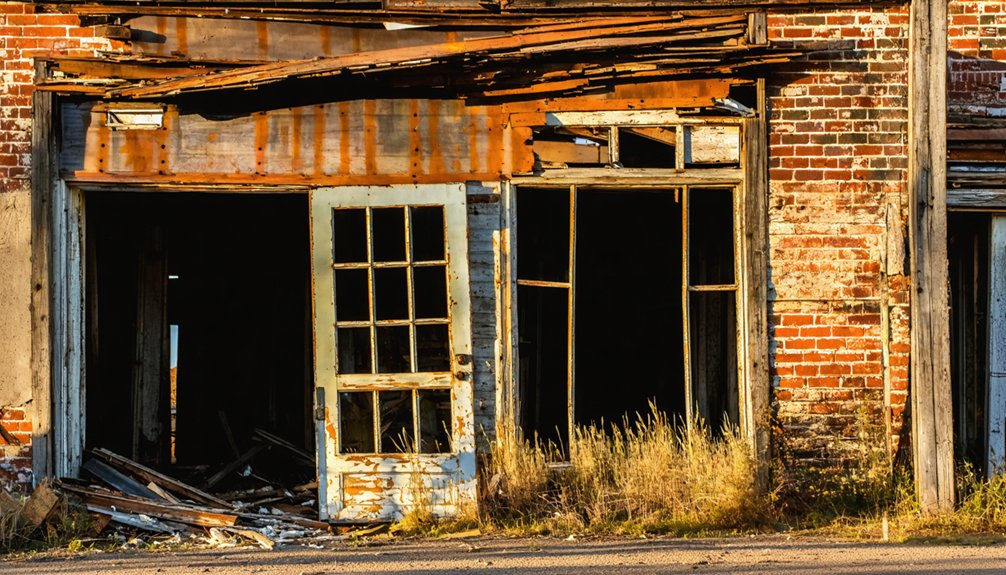
When you arrive at Mineral’s weathered storefronts and collapsed homesteads, natural light becomes your most honest collaborator — golden-hour sun raking across fractured wood grain tells the story of decades better than any filter ever could.
You’ll find that shooting in the flat midday light reveals texture and decay in ways that feel almost documentary, grounding your images in the town’s hard agricultural history.
But when the sun drops and shadows pool inside doorways and broken windows, mastering low-light photography lets you capture something rawer — the kind of darkness that reminds you people once lit these rooms with lanterns and lived whole lives within these now-silent walls.
Shooting In Natural Light
Natural light transforms Mineral’s abandoned structures into something almost painterly — harsh midday sun bleeds through collapsed rooftlines, casting sharp geometric shadows across warped floorboards, while the golden hours before dusk soften every rusted edge into warm amber.
Master these natural light photography techniques to capture what time forgot:
- Shoot during golden hour — arrive 30 minutes before sunrise or sunset for warm, dimensional light
- Embrace harsh midday shadows — they reveal structural decay with dramatic geometric contrast
- Use overcast skies as a softbox — diffused light eliminates blown-out highlights on reflective metal
- Position yourself with backlight — silhouetting broken doorframes creates haunting, freedom-evoking compositions
You’re not just taking photographs here — you’re preserving whispers of lives once fully lived.
Mastering Low-Light Photography
As the last amber light drains from Mineral’s broken skyline, your golden hour window closes — but your best shots might still be ahead.
Low-light urban exploration demands patience and preparation. Mount your camera on a sturdy tripod, slow your shutter speed, and let abandoned interiors reveal themselves gradually — rust, shadow, and forgotten architecture telling stories daylight masks.
Bump your ISO carefully; noise can add texture, but too much destroys detail. A wide aperture pulls in available moonlight or distant street glow, transforming derelict structures into haunting tableaux.
These photography techniques reward photographers willing to linger after crowds leave and comfort fades. Mineral’s darkened ruins don’t disappear at sunset — they transform, offering a rawer, more atmospheric record of what this community once was.
Frequently Asked Questions
Is Mineral, Oklahoma Listed on Any Official Historical Preservation Registers?
You won’t find Mineral, Oklahoma’s historical significance confirmed on official preservation registers yet, but don’t let that stop you — preservation efforts for forgotten towns like this often depend on passionate explorers like you rediscovering them.
Are Guided Ghost Town Tours Available for Visitors Exploring Mineral?
“The best stories aren’t found — they’re lived.” You won’t find official guided tours in Mineral, but you’ll uncover ghost town history and local legends by wandering freely, letting curiosity lead your own unforgettable journey.
Can Children Safely Accompany Adults on Visits to Mineral?
You can bring children to this ghost town, but prioritize child safety carefully. Unstable structures and hidden hazards demand your vigilant supervision. Mineral’s haunting, forgotten streets whisper history’s lessons best experienced through watchful, adventurous eyes seeking freedom together.
Has Mineral, Oklahoma Appeared in Any Films or Documentaries?
You’ll find Mineral, Oklahoma hasn’t prominently featured in major film locations or documentary features yet, but its haunting, forgotten streets carry a raw, untold story that’s practically begging for a filmmaker’s lens to capture its freedom.
Are Metal Detecting or Artifact Collecting Activities Permitted in Mineral?
Metal detecting and artifact preservation laws stretch a thousand miles wide here — you’ll want to check Oklahoma’s strict regulations before you dig, as collecting on protected or private land can carry serious legal consequences.
References
- https://www.youtube.com/watch?v=dbLyYkx_Kc4
- https://en.wikipedia.org/wiki/Picher
- https://fromcommonground.com/a-ghost-town-revival/
- https://www.okhistory.org/publications/enc/entry?entry=PI002