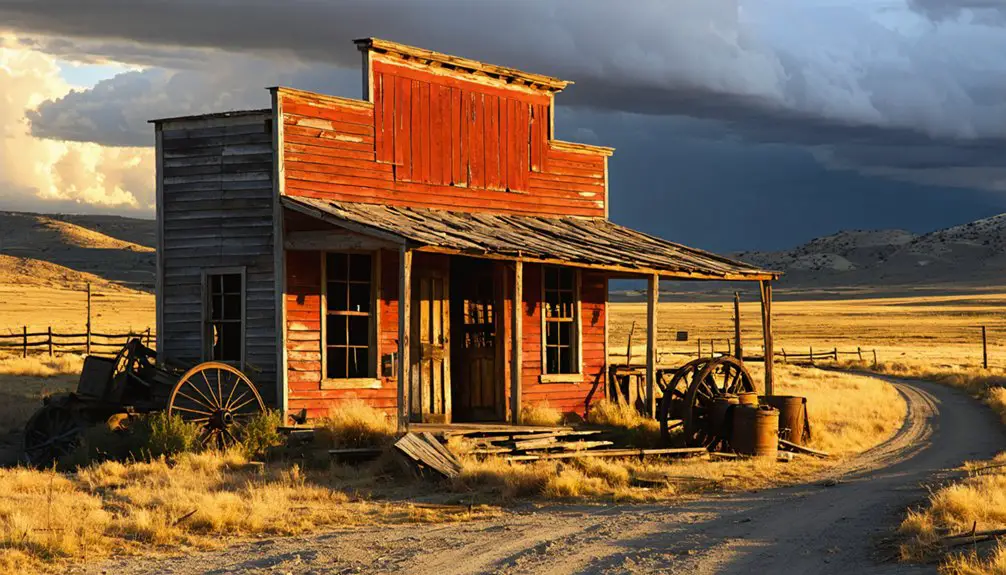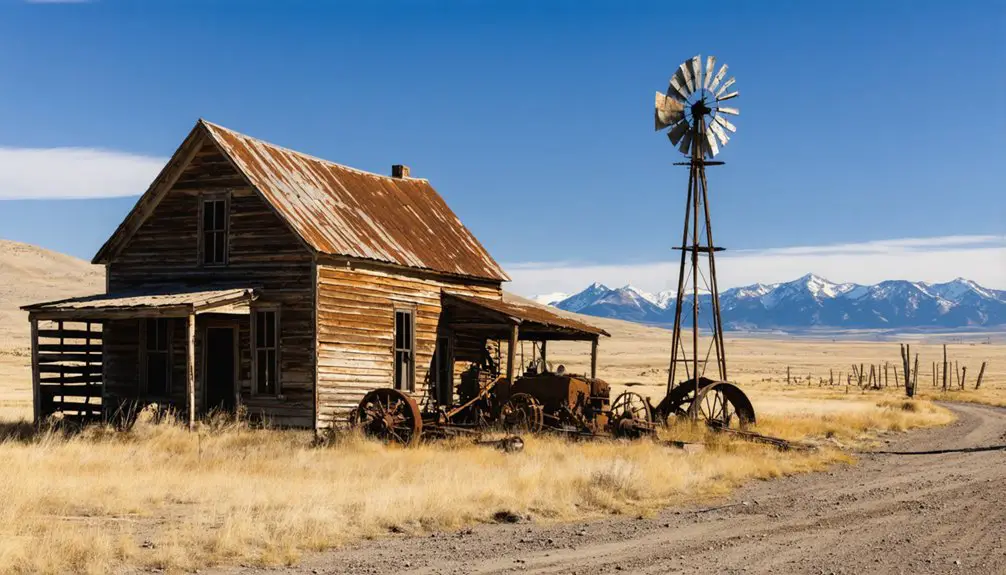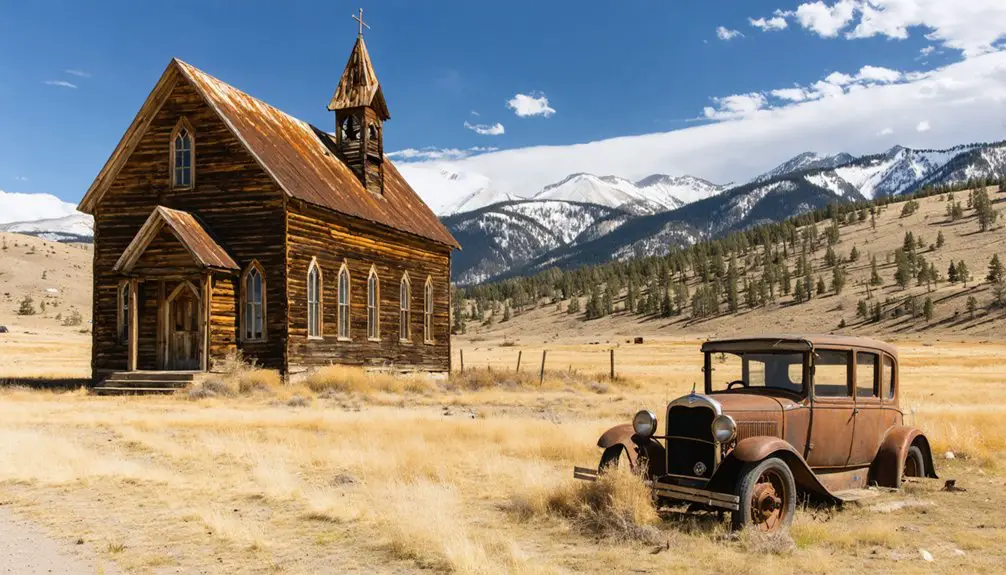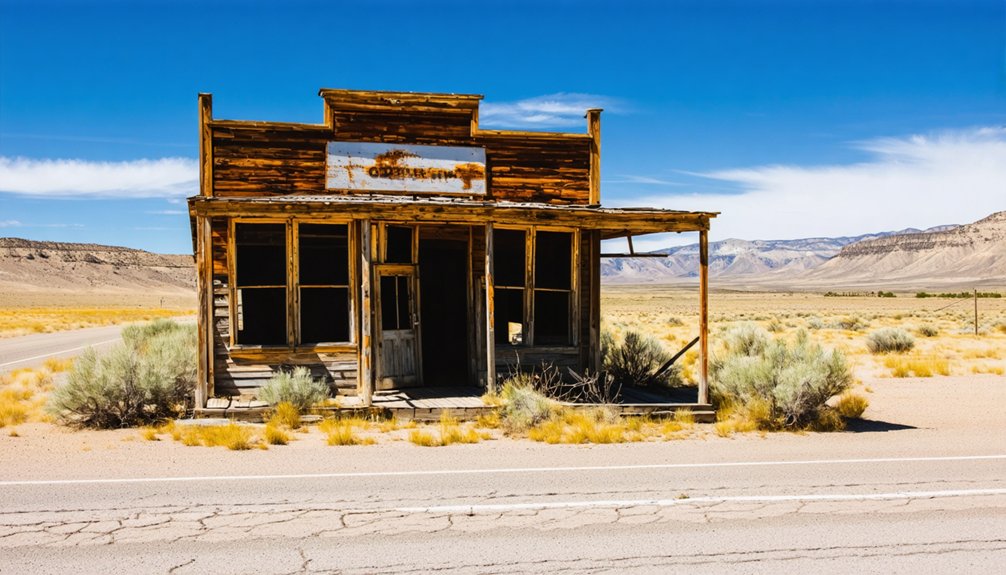
Planning a ghost town road trip to Walcott, Wyoming means embracing raw history over polished attractions. You’ll find this Carbon County site along Interstate 80, where railroad-era boom-and-bust economics shaped its rise and eventual decline. Almost nothing remains standing, so you’re exploring a historical landscape rather than a preserved destination. Pack water, check road conditions, and respect private property boundaries before you go. Stick around to uncover everything you need to make this frontier adventure worthwhile.
Key Takeaways
- Walcott, Wyoming, located along Interstate 80 in Carbon County, offers a raw ghost town experience without polished tourist infrastructure.
- The town’s decline stemmed from railroad route changes, reflecting how transportation decisions shaped frontier community boom-and-bust economics.
- No visitor centers or guided tours exist, making Walcott a self-guided exploration through faded infrastructure and open terrain.
- Check road conditions beforehand, pack sufficient water, and verify access routes to avoid Union Pacific property or private land restrictions.
- Nearby ghost towns Carbon, Benton, and South Pass City complement a Walcott visit, enriching the Carbon County frontier history experience.
What Makes Walcott, Wyoming a Ghost Town Worth Visiting?
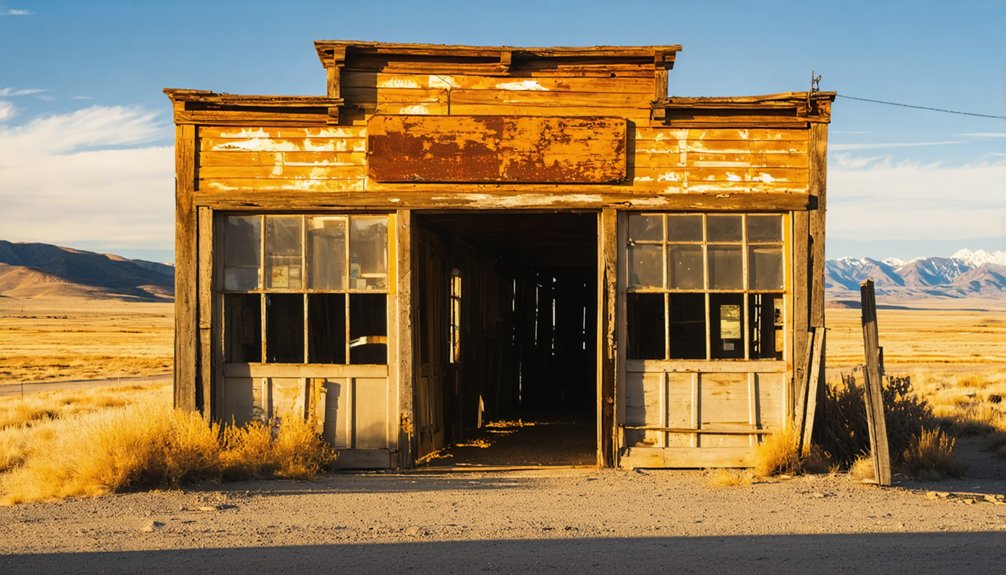
Why visit a town that’s barely there? Because Walcott’s significance lies precisely in its near-disappearance. Tucked along Interstate 80 in Carbon County, Wyoming, Walcott once thrived on railroad-era transportation routes before fading into the landscape. That ghost town allure pulls travelers who crave authentic history over polished tourist traps.
You’ll find no visitor center or manicured exhibits here. Instead, you get fragmented infrastructure, open terrain, and the quiet story of a frontier community that boom-and-bust economics ultimately swallowed.
The contrast between modern highway speed and this forgotten roadside settlement makes the stop unexpectedly powerful.
Walcott fits perfectly into a broader Carbon County ghost-town itinerary, offering a genuine historical detour without demanding your entire day. It rewards curiosity, independence, and a willingness to read the landscape.
Where Walcott Is and Why That Location Mattered
Walcott sits in Carbon County, south-central Wyoming, tucked along Interstate 80 near the town of Sinclair and the community of Elk Mountain. Its location significance wasn’t accidental — transportation impact shaped everything about this town’s rise and eventual fade.
When railroad-era routes defined survival, being on or off the main corridor meant everything.
Walcott’s story captures that tension perfectly:
- You can almost feel the momentum of a town that nearly made it, then watched opportunity drift elsewhere.
- The highway corridor that once promised growth eventually bypassed the heart of the settlement.
- Standing near the site, you sense what it meant to be one route-realignment away from obscurity.
That geography still tells the story today — raw, honest, and completely unfiltered by modern development.
The Railroad History Behind Walcott’s Ghost Town Status
When you trace Walcott’s origins, you’ll find the town’s early growth tied directly to railroad-era development in Carbon County, where transportation routes shaped which settlements survived and which ones faded.
The Union Pacific Railroad drove much of the region’s early boom, pulling towns into existence almost overnight to support coal supply and westward expansion.
Walcott’s decline followed a familiar pattern — once route alignment shifted and the railroad’s influence waned, the town lost the economic engine that had given it purpose.
Railroad Roots And Origins
Like many Wyoming settlements that flickered and faded, Walcott’s story begins with the railroad. Carbon County became a critical corridor during railroad expansion, drawing workers, suppliers, and dreamers westward. Towns like Walcott emerged as transportation hubs, briefly thriving before shifting routes left them behind.
You can still feel that tension when you stand here — the promise of movement frozen in place. Consider what shaped Walcott’s rise and eventual silence:
- Union Pacific’s 1868 coal operations fueled nearby Carbon County communities overnight
- Railroad alignments decided which towns flourished and which ones quietly disappeared
- Walcott never secured a permanent Lincoln Highway listing until 1918, signaling its marginal position
That railroad energy built something real here. It also made Walcott vulnerable the moment the tracks stopped mattering.
Route Alignment Shaped Decline
Route alignment wasn’t just a logistical decision — it was a death sentence or a lifeline for frontier towns. Walcott’s decline proves that point sharply. When route significance shifted away from the town, so did everything else — commerce, population, and purpose.
You can see the transportation impact written across Walcott’s landscape today. The Lincoln Highway never passed directly through the townsite, and the Complete Official Road Guide didn’t even list Walcott until its 1918 third edition. That delayed recognition signals just how disconnected the town was from the main corridor.
When travelers could move freely along better-aligned routes, smaller stops like Walcott got bypassed and forgotten. The road chose its path, and Walcott wasn’t on it.
That’s the brutal simplicity behind its ghost-town status.
What You’ll Actually Find at Walcott Now
Arriving at Walcott today, you’ll find almost nothing left of the town that once anchored this stretch of Carbon County. The landscape speaks louder than any standing structure could.
Historical remnants surface through subtle clues — faded infrastructure, worn access roads, and terrain shaped by human activity long since abandoned. Local legends fill the silence that buildings no longer can.
The ground remembers what the buildings forgot — faded roads, shaped earth, and legends doing the heavy lifting.
What you’ll actually encounter here includes:
- A quiet, open stretch where frontier ambition once drove real decisions
- Access roads that cross Union Pacific property, reminding you who ultimately held power
- A landscape that rewards the curious traveler willing to read between the lines
Walcott won’t hand you a visitor center or a guided tour.
It’ll hand you solitude, history, and room to think freely.
How to Reach the Walcott Ghost Town Site Today
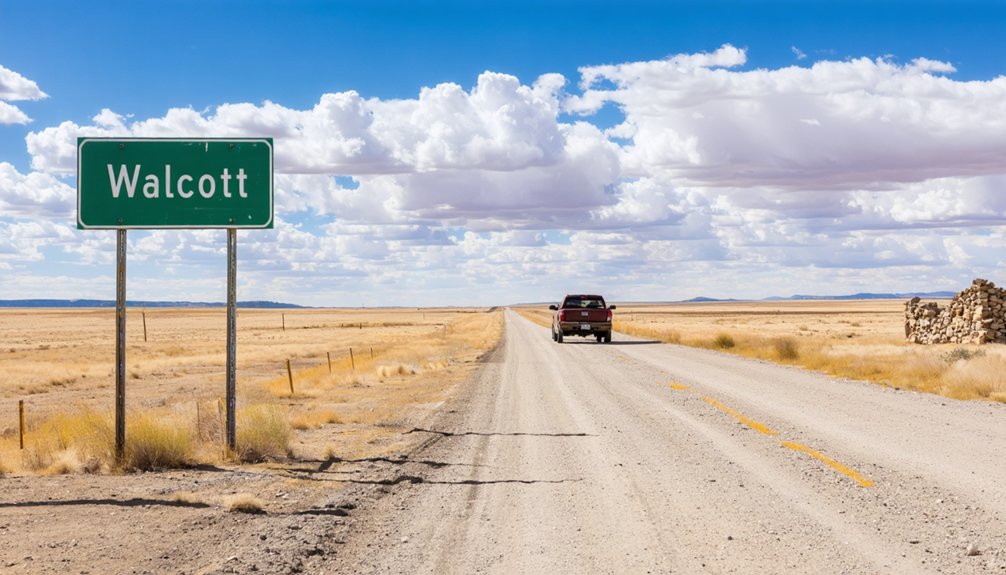
Getting to Walcott is straightforward if you’re already traveling Interstate 80 through south-central Wyoming. You’ll find the exit near Sinclair and Elk Mountain in Carbon County, putting you within easy reach of the original townsite.
However, don’t expect polished road access — some routes crossing the area run over Union Pacific property, so check your path before heading off the main corridor.
Bring a reliable map or GPS, since signage won’t guide you the way a developed attraction would. The drive itself adds valuable historical context, revealing how railroad corridors and highway alignments shaped which towns survived and which disappeared.
Treat the journey as part of the experience. Walcott rewards travelers who arrive curious, not those expecting a formal destination.
Other Carbon County Ghost Towns Worth the Detour
Once you’ve added Walcott to your itinerary, Carbon County gives you several more ghost towns worth steering toward. Wyoming’s historic routes connect frontier settlement after frontier settlement, each carrying its own mining history and local legends across the open landscape.
Add these scenic stops to your travel itinerary:
- Carbon – Founded by Union Pacific in 1868 as a coal-supply town, it represents the raw ambition that once fueled westward expansion.
- Benton – One of Wyoming’s earliest ghost towns, it burned bright and collapsed fast, leaving behind little more than wind and memory.
- South Pass City – A gold rush landmark preserved well enough to walk through living history firsthand.
Carbon County rewards the curious traveler who refuses to stick only to the interstate.
Plan a Full Day: Walcott, Carbon, Benton, and South Pass City
Stringing these four stops together into a single day puts the full sweep of Carbon County’s ghost-town history within reach.
Start at Walcott for a quick landscape read, then push toward Carbon, where Union Pacific’s 1868 coal town launched the region’s ghost town heritage.
Begin at Walcott, then push toward Carbon, where Union Pacific’s 1868 coal town first shaped the region’s ghost-town story.
Benton follows with its raw, compressed boom-and-bust energy from 1898.
End your day at South Pass City, where gold discoveries and preservation efforts give you the deepest historical significance of the four stops.
You’ll cover faded railroad corridors, mining camps, and frontier settlement patterns all in one drive.
Check road conditions before you head out, because access to some sites runs across private or Union Pacific property.
Pack water, fuel up early, and move freely through Carbon County’s layered past.
What to Know Before Driving Out to Walcott
Before you point the car toward Walcott, there are a few practical details worth knowing so you don’t waste time or end up stuck at a locked gate.
Access roads leading to the historical remnants aren’t well maintained, and some routes cross Union Pacific property. Check conditions before leaving the interstate.
Keep these realities in mind as you pursue ghost town legends across Carbon County:
- No visitor center exists — you’re traversing raw landscape and faded infrastructure on your own terms.
- Road access can disappear fast — rutted paths and private property boundaries can stop your momentum cold.
- Nothing is guaranteed standing — what remains exists as fragments, not a preserved streetscape.
Treat Walcott as a historical landscape stop, not a developed attraction, and you’ll leave satisfied.
Frequently Asked Questions
Is Walcott, Wyoming Recognized Officially as a Historic Landmark or Heritage Site?
Walcott history hasn’t quite blossomed into official landmark status, but don’t let that dim your spirit! You’ll find ghost town preservation lives through Carbon County’s rich archives, landscape clues, and local memory keeping Walcott’s legacy beautifully alive.
Are There Any Guided Ghost Town Tours Available in Carbon County?
No dedicated guided tours exist, but you’ll find Carbon County’s ghost town sites like Carbon, Benton, and South Pass City are easy to explore independently, giving you the freedom to craft your own unforgettable adventure.
What Is the Best Time of Year to Visit Walcott?
You’ll find the best weather for exploring Walcott during late spring or early fall, when conditions are mild and comfortable. These seasons also align with Carbon County’s seasonal events, making your ghost-town adventure even more rewarding!
Can You Camp Overnight Near the Walcott Ghost Town Site?
You’ll want to check local camping regulations before settling in near Walcott’s ghost town site. Dispersed camping options may exist nearby, and you can explore Carbon County’s rich nearby attractions while embracing Wyoming’s wide-open freedom.
Are There Any Books Specifically Written About Walcott’s History?
You won’t find dedicated Walcott history books or focused ghost town literature on this faded Wyoming settlement. Instead, you’ll discover its story scattered through Carbon County archives, regional history collections, and Wyoming frontier research materials.
References
- https://historicwyoming.org/profiles/category/ghost-towns/
- https://caspercollege.cvlcollections.org/items/show/9927
- https://www.wyomingcarboncounty.com/things-to-do/?id=123:5-ghost-towns-to-explore
- https://www.youtube.com/watch?v=ErvYfYCW0qk
- https://sites.rootsweb.com/~wytttp/ghosttowns.htm
- https://travelwyoming.com/blog/stories/post/wy-hidden-histories-pioneers-ghost-towns/
- https://www.youtube.com/watch?v=sMDFPdq-dFM
- https://historicwyoming.org/profiles/walcott/
- https://www.susantregoning.com/p/south-pass-city-wyoming-historic-site
- https://www.facebook.com/groups/724014077717936/posts/9941390479313537/