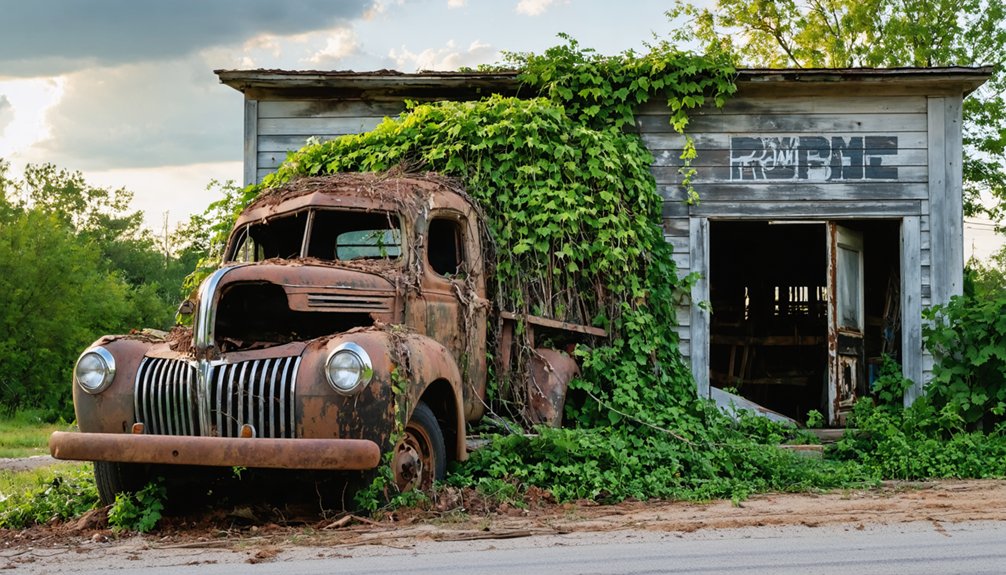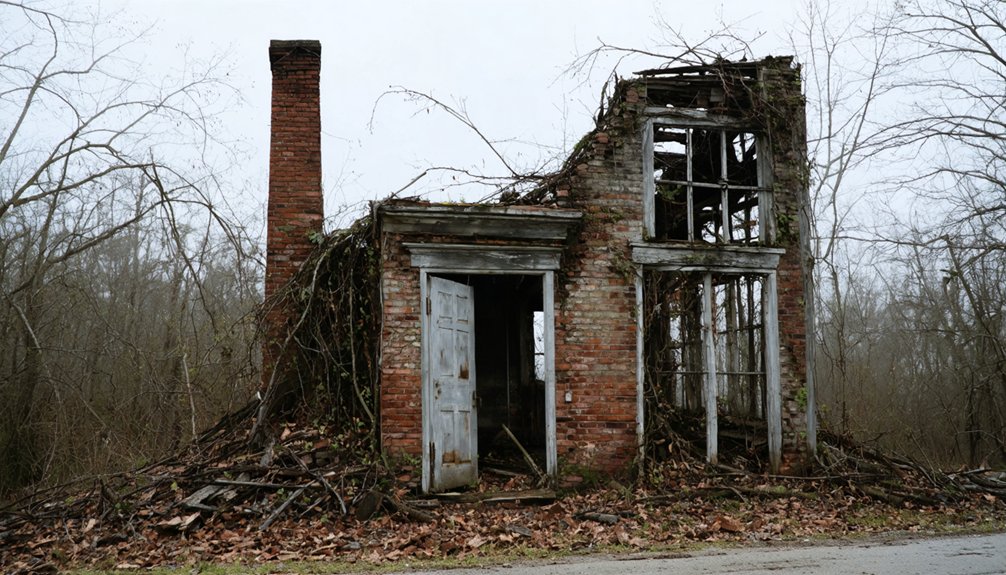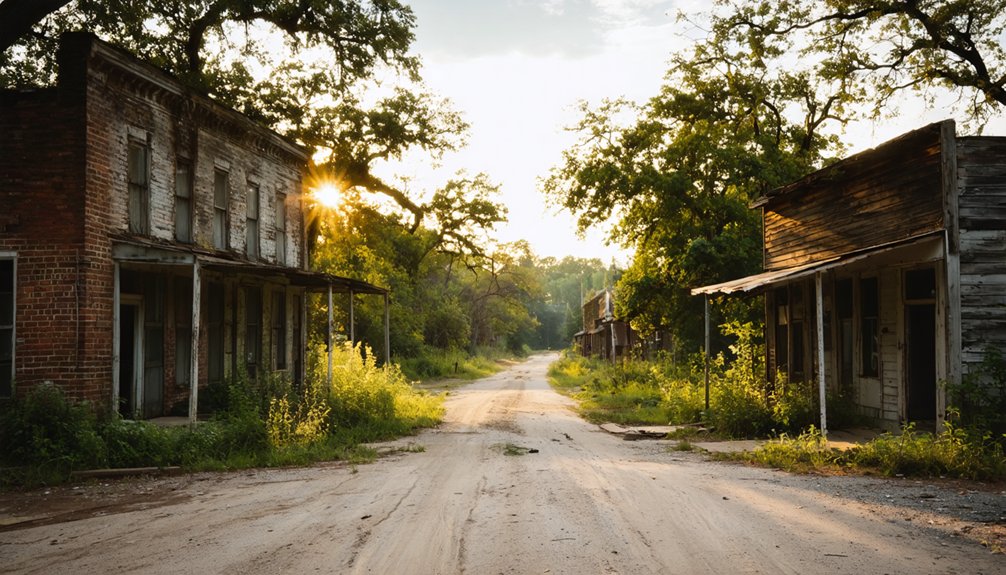
Washington, Alabama sits on the north bank of the Alabama River, where Autauga Creek meets history head-on. It was Alabama’s early county seat, thriving from 1819 to 1830 before fading into ghost town silence. You’ll find remnants of a courthouse, jail, and a community that once buzzed with frontier life. It anchors a 709-mile ghost town circuit connecting five forgotten settlements. Keep going—there’s a full road trip waiting to be mapped.
Key Takeaways
- Washington, Alabama, founded in 1817, sits on the Alabama River’s north bank at GPS coordinates 32°24’29″N 86°27’32″W.
- The ghost town once served as Autauga County’s seat, featuring a courthouse, jail, hotel, post office, and pillory.
- A 709-mile ghost town circuit connects five forgotten settlements, with an estimated driving time of 13 hours and 31 minutes.
- Book accommodations early, carry cash, and download offline maps due to spotty cell coverage in rural areas.
- Refuel along Highway 31 and Interstate 65, and explore Prattville’s historic downtown to enrich your road trip experience.
What Makes Washington, Alabama Worth the Drive?
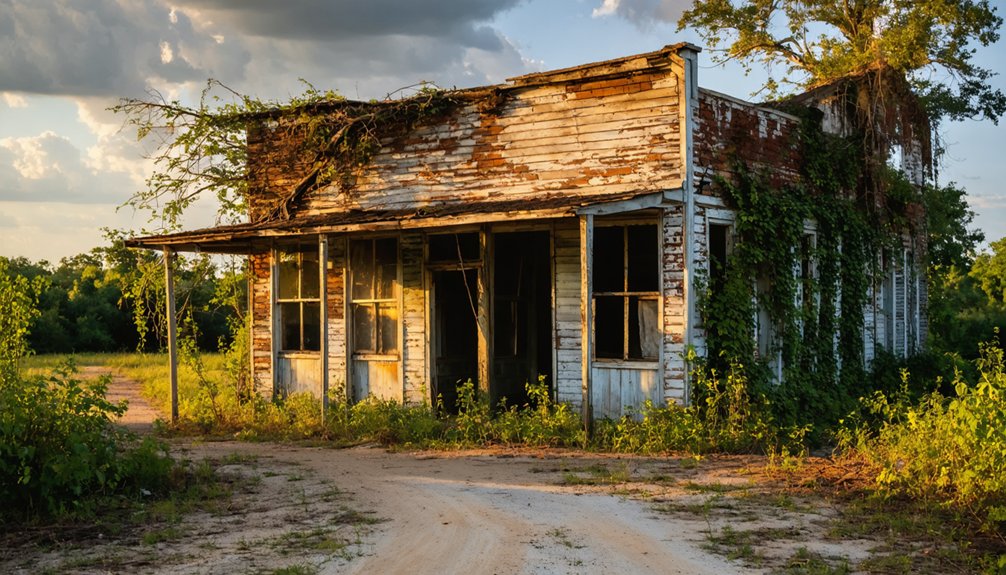
Washington, Alabama isn’t your typical ghost town—it carries the weight of genuine history beneath its quiet exterior. Founded in 1817 by European American settlers, it honors George Washington while standing on the ancient Autauga Indian town of Atagi. That layered past gives the site real historical significance you won’t find in manufactured tourist destinations.
You’re stepping onto ground where a functioning county seat once operated, complete with a courthouse, hotel, jail, and post office.
Washington served Autauga County’s government from 1819 to 1830 before gradually emptying out. That cultural heritage makes every quiet acre feel purposeful rather than forgotten.
If you value authentic exploration over scripted experiences, Washington delivers something rare—a place where history happened organically and the landscape still holds its story.
The Rise and Fall of a Lost Alabama County Seat
When you trace Washington’s origins back to 1817, you’ll find European American settlers building a town on the former Autauga Indian site of Atagi, strategically positioned on the north bank of the Alabama River near the mouth of Autauga Creek and named in honor of George Washington.
By November 22, 1819, the settlement had earned enough prominence to become Autauga County’s seat, a status it held for roughly 11 years before losing that designation in 1830.
Once the county seat relocated, Washington’s economic and administrative heartbeat faded, and the town that once housed a courthouse, hotel, jail, post office, and pillory gradually slipped into the quiet obscurity of a ghost town.
Washington’s Founding And Establishment
Nestled on the north bank of the Alabama River, just west of the mouth of Autauga Creek, the town of Washington came to life in 1817 when European American settlers established it on the grounds of a former Autauga Indian town called Atagi.
This layered settlement history gives the location a profound cultural significance that stretches far beyond its relatively brief existence. Settlers named the town in honor of George Washington, reflecting the patriotic spirit driving westward expansion across the young nation.
Its strategic riverside position offered economic promise and practical accessibility, making it an attractive hub for early Alabama Territory residents.
Within just two years of its founding, Washington earned enough prominence to become the official county seat of Autauga County on November 22, 1819.
County Seat Years
But Washington’s authority wasn’t built to last. By 1830, the town lost its county seat designation, and with it, the population incentive that had sustained growth.
The historical significance of those eleven years, however, remains undeniable. Washington represented early territorial governance at its most raw and ambitious — a fleeting seat of power that ultimately surrendered its influence to shifting regional development.
Decline Into Ghost Town
Once Washington lost its county seat status in 1830, the town’s fate was effectively sealed. The courthouse, hotel, jail, post office, and pillory that once defined civic life became relics of a fading past.
Without governmental authority anchoring residents and commerce, economic decline followed swiftly and inevitably.
You can trace this ghost town history back to a simple truth: people follow opportunity. When administrative functions relocated elsewhere, Washington’s strategic position on the Alabama River’s north bank couldn’t compensate for lost political relevance.
Businesses shuttered, residents departed, and the settlement that once governed Autauga County quietly surrendered to time.
What remains today is a compelling reminder that even purposefully founded communities can vanish when the institutional forces sustaining them disappear.
Washington didn’t die dramatically — it simply emptied out.
How to Find Washington, Alabama on Your Own
If you’re ready to track down this forgotten county seat, you’ll want to plug in coordinates 32°24’29″N 86°27’32″W into your GPS or mapping app.
Washington sits on the north bank of the Alabama River in Autauga County, just west of where Autauga Creek meets the river — a geographic detail that’ll help you confirm you’ve reached the right spot.
These natural landmarks once made the town strategically valuable, and today they serve as your best navigational anchors when modern roads fall short.
Navigating To Washington’s Location
Finding Washington, Alabama requires a bit of navigational patience, but the coordinates 32°24’29″N 86°27’32″W will get you exactly where you need to be. This ghost town carries tremendous historical significance, sitting on the north bank of the Alabama River, just west of Autauga Creek’s mouth.
Use these travel tips to navigate successfully:
- Plug 32°24’29″N 86°27’32″W directly into your GPS or mapping app before departing.
- Reference Autauga County’s road maps to identify nearby landmarks along the Alabama River.
- Approach from the river’s north bank, keeping Autauga Creek’s mouth as your eastern reference point.
You’re exploring a place where early American territorial governance once thrived, so embrace the journey. The remoteness is part of Washington’s authentic, untamed appeal.
Key Landmarks And Coordinates
Now that you’ve got the coordinates locked in, identifying Washington’s key landmarks will sharpen your sense of exactly where this ghost town sits within the broader landscape.
The site’s landmark significance centers on two defining geographic features: the Alabama River’s north bank and the mouth of Autauga Creek, which converges just east of the settlement. These natural boundaries aren’t coincidental — early settlers deliberately chose this confluence for strategic access and economic advantage.
Position yourself at coordinates 32°24’29″N 86°27’32″W, and you’ll stand within Autauga County where a courthouse, hotel, jail, post office, and pillory once defined daily life.
These geographic features act as your navigational anchors, grounding an otherwise vanished town within a landscape that still carries traces of its early 19th-century past.
What’s Left on the Ground: Buildings and Remnants Still Standing
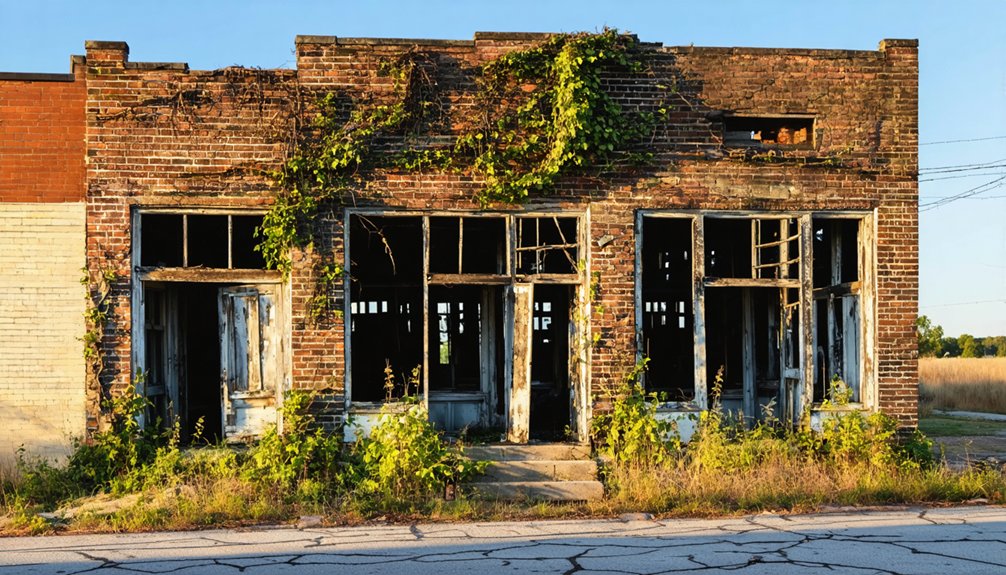
Walking through Washington today, you’ll find yourself searching for echoes of a town that once buzzed with civic life. The ghostly architecture and historical remnants paint a picture of early Alabama governance.
During its active years, Washington supported essential civic infrastructure:
- A courthouse serving Autauga County’s governmental needs
- A hotel, jail, and post office supporting daily community operations
- A pillory symbolizing the town’s commitment to public order
These structures defined Washington’s identity as a functioning county seat from 1819 to 1830.
Today, the landscape tells a quieter story. The Alabama River’s north bank still anchors the site geographically, letting you stand exactly where settlers once built something from nothing — and where time eventually reclaimed it.
Five Alabama Ghost Towns Worth Adding to Your Washington Road Trip
Washington doesn’t have to be your only stop. Alabama’s back roads connect you to a fascinating network of forgotten settlements, each carrying its own historical significance.
You’re looking at a 709-mile circuit that strings together five ghost towns into one unforgettable weekend adventure — roughly 13 hours and 31 minutes of driving through the heart of Alabama’s past.
A 709-mile circuit. Five ghost towns. One weekend to drive through everything Alabama’s past left behind.
These towns share Washington’s story: early promise, brief prosperity, then abandonment once economic opportunities shifted elsewhere.
That pattern repeats across the state, giving you a richer understanding of how frontier Alabama rose and fell town by town.
Pack light, fuel up, and map your route before leaving.
Each stop adds another layer to the same compelling narrative Washington started telling you first.
How Washington, Alabama Fits Into the 709-Mile Ghost Town Circuit
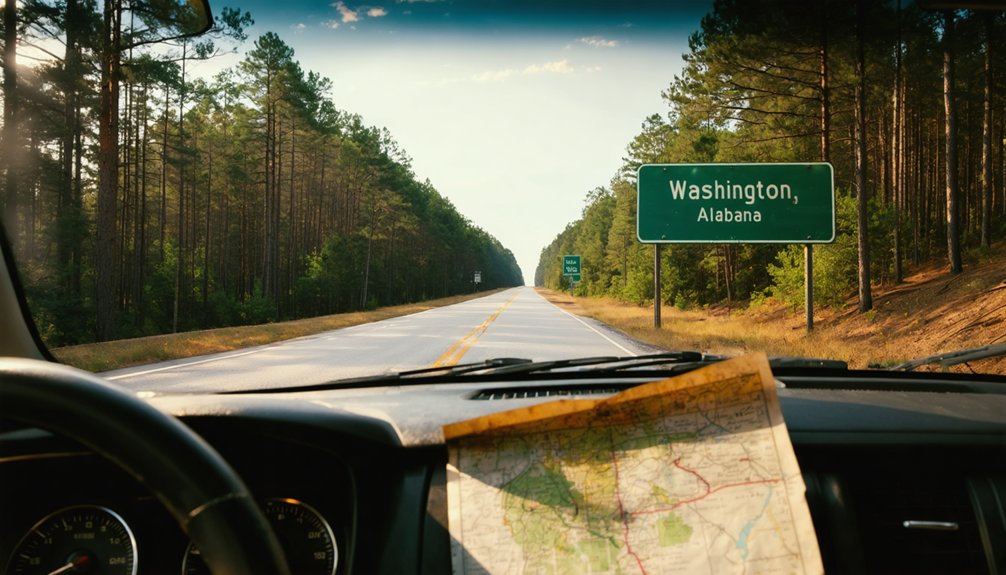
Anchoring the western edge of the circuit, this former county seat sits on the north bank of the Alabama River, just west of Autauga Creek’s mouth — a geographic position that once made it a natural administrative and commercial hub.
Washington connects seamlessly into the 709-mile ghost town circuit, giving you a structured framework for exploration without sacrificing spontaneity.
Here’s why it anchors the route so effectively:
- Its river location once drove regional commerce, layering the site with historical legends worth investigating.
- Ghost stories surrounding its abandoned courthouse and jail add atmospheric depth to your visit.
- Its western positioning makes it a logical starting or ending point, keeping your driving efficient.
You’ll leave with more than miles behind you — you’ll leave with stories.
Where to Sleep, Eat, and Refuel on the Alabama Ghost Town Loop
Once you’ve mapped out your 709-mile Alabama ghost town loop, the practical details — where to sleep, eat, and fill your tank — deserve as much attention as the haunted history itself.
Autauga County offers solid sleep options, including budget motels and charming bed-and-breakfasts near Prattville. For dining choices, hit local diners serving Southern staples — biscuits, catfish, and slow-cooked barbecue keep road-weary travelers energized.
Refueling stations appear regularly along Highway 31 and Interstate 65, so range anxiety stays minimal. Weave in local attractions like Prattville’s historic downtown to break up long stretches behind the wheel.
Smart travel tips: book accommodations early on weekends, carry cash for rural stops, and download offline maps since cell coverage gets spotty near river-bottom ghost town sites.
Frequently Asked Questions
Was Washington, Alabama Ever Considered for the State Capital?
There’s no record of Washington, Alabama having capital aspirations. However, its historical significance as a county seat from 1819–1830 shows you’re exploring a town that once held real territorial administrative power.
What Indian Tribe Originally Inhabited the Atagi Town Site?
You’ll discover that the Autauga Indians originally inhabited the Atagi town site, carrying deep Native American roots and historical significance before European American settlers founded Washington, Alabama on their ancestral lands in 1817.
Why Was the County Seat Moved Away From Washington in 1830?
Ironically, Washington’s historical significance sealed its fate — county development simply outgrew it. You’ll find the records don’t specify the exact reason, but shifting economic opportunities and regional growth drove the county seat’s relocation in 1830.
Are There Any Guided Tours Available Specifically for Washington, Alabama?
The knowledge doesn’t mention guided history tours specifically for Washington, Alabama. You’ll want to contact Autauga County’s local attractions and tourism office directly to discover what’s currently available for exploring this fascinating ghost town.
What Is the Best Time of Year to Visit Washington, Alabama?
Spring and fall offer the best season to explore Washington, Alabama, as you’ll enjoy mild weather conditions perfect for outdoor exploration. You’ll avoid summer’s intense heat and winter’s unpredictable chill during these comfortable months.
References
- https://seattlerefined.com/lifestyle/ghost-town-road-trip-7-locations-8-hours
- https://en.wikipedia.org/wiki/Washington
- https://thebamabuzz.com/5-alabama-ghost-towns-to-put-on-your-bucket-list/
- https://www.onlyinyourstate.com/trip-ideas/alabama/ghost-towns-road-trip-al
- https://www.youtube.com/watch?v=hTe8F-_3-hY
- https://www.youtube.com/watch?v=U1qeHqY5HV0