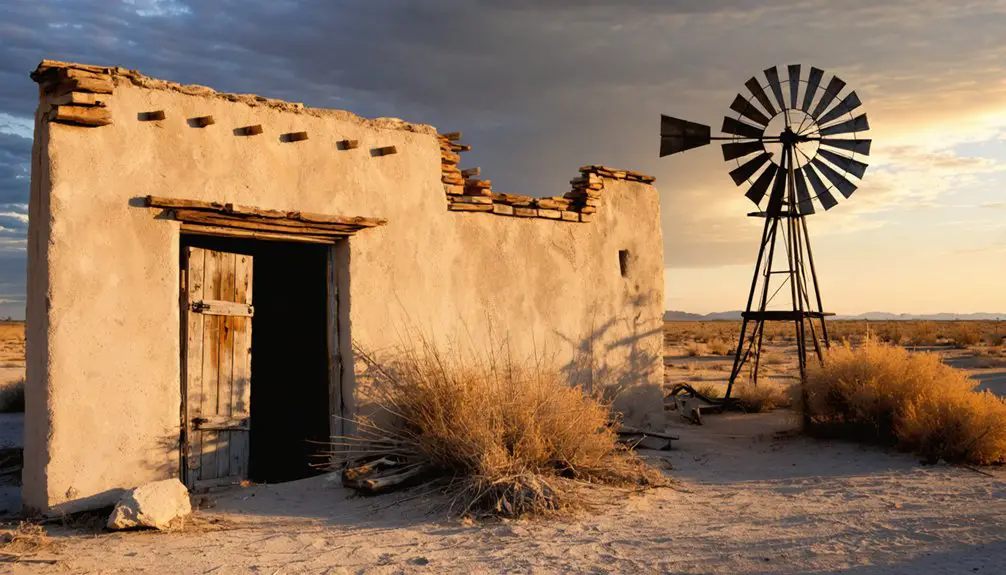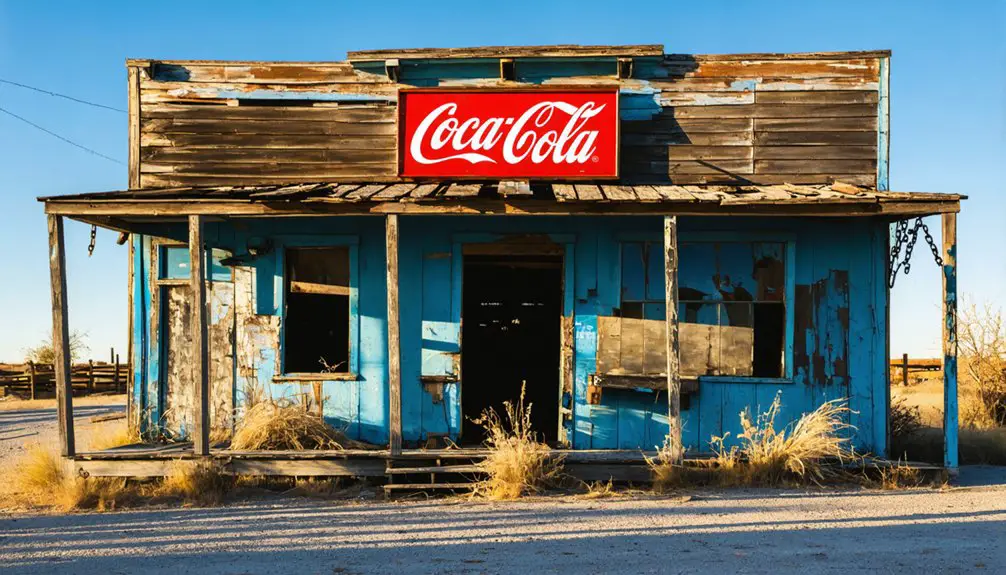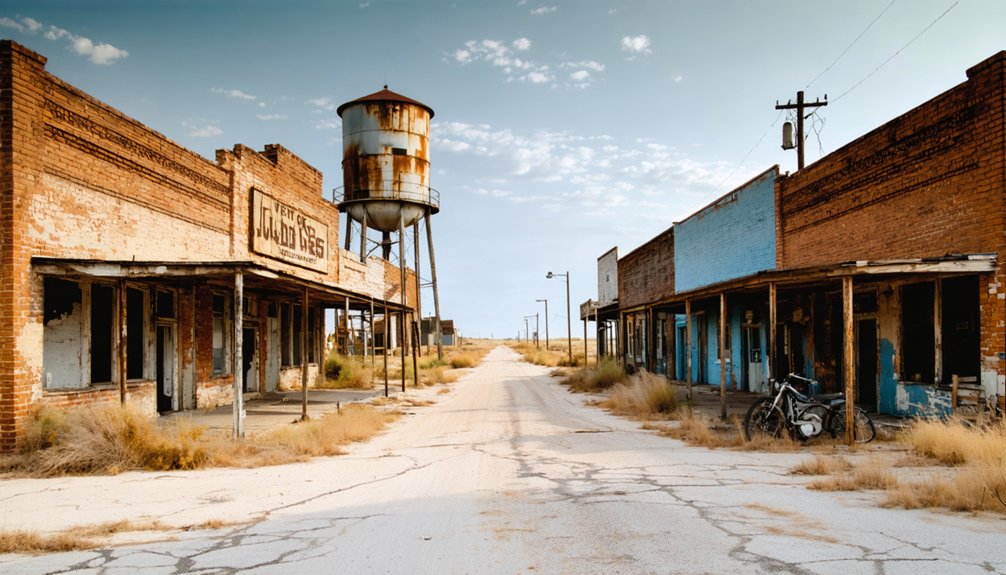
Planning a ghost town road trip to Jud, Texas starts with heading west on I-20 to Abilene, then north on US-277 toward Haskell, about five to six hours from Dallas. You’ll want to stock up on fuel and supplies in Haskell before venturing the final stretch on Highway 222. Bring water, a camera, and offline maps since services vanish completely once you’re out there. There’s far more to discover about Jud’s haunting landmarks, history, and nearby ghost towns ahead.
Key Takeaways
- Jud, Texas, established in 1907, features landmarks like the Jud Baptist Church ruins, an abandoned schoolhouse, and a Pioneer Cemetery dating to the 1910s.
- From Dallas, drive I-20 west to Abilene, then US-277 north to Haskell; Jud is approximately 70 miles from Abilene.
- No services exist in Jud, so stock up on fuel, water, snacks, and emergency supplies in Haskell before arriving.
- Visit between October and April to avoid extreme summer heat exceeding 100°F, and begin exploring before 10 AM.
- Extend your trip by visiting nearby ghost towns Sagerton and Weinert, ending at the Haskell County Museum for historical context.
How Jud, Texas Went From Thriving Cotton Hub to Ghost Town
Once a bustling cotton hub in northwest Texas, Jud earned its place on the map in 1907 as a railroad siding on the Kansas City, Mexico and Orient Railway, drawing settlers, farmers, and ranchers keen to stake their claim on the plains.
The railroads’ impact transformed this small community into a productive agricultural center, with cotton history shaping nearly every aspect of daily life. By the 1930s, Jud’s population peaked near 400 residents.
Then the Dust Bowl hit hard, and post-World War II mechanization accelerated the town’s decline. Agricultural consolidation stripped away livelihoods, businesses shuttered throughout the 1970s, and the school merged with Haskell ISD.
Today, you’ll find scattered farms housing only 25-50 residents among weathered ruins — quiet reminder of a community that once thrived freely.
What’s Left of Jud, Texas: Its Most Memorable Landmarks
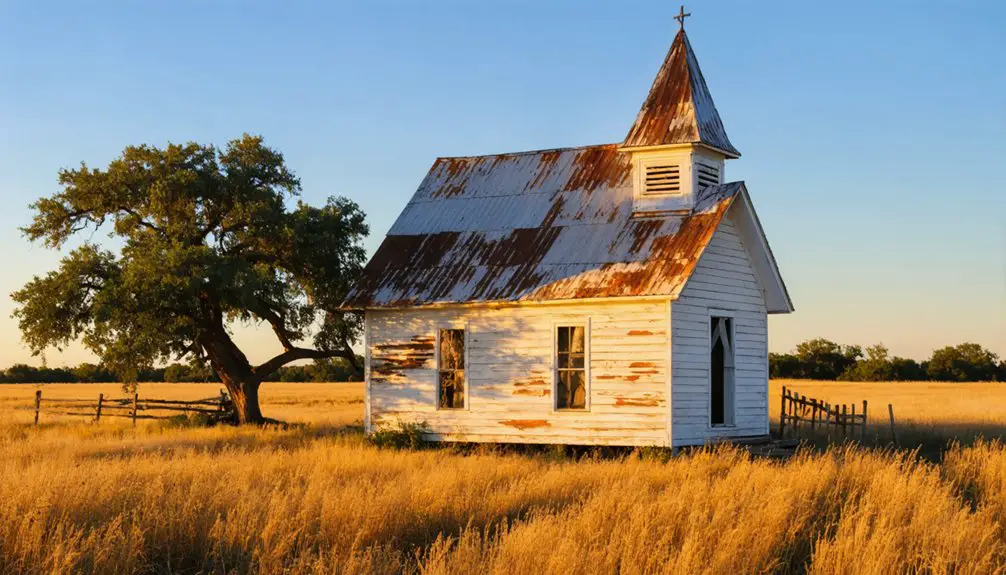
As you explore what remains of Jud, you’ll find the 1920s Jud Baptist Church standing as the town’s most striking ruin, its weathered steeple still piercing the West Texas sky.
Just nearby, the abandoned one-room schoolhouse quietly recalls the community’s early determination to educate its children on the plains.
Round out your visit at the pioneer cemetery, where graves dating to the 1910s tell the personal stories behind Jud’s rise and fall.
Jud Baptist Church Ruins
Standing since the 1920s, the Jud Baptist Church is the ghost town‘s most striking remnant, its weathered steeple still piercing the flat northwest Texas sky.
The structure carries deep Baptist Church history, serving generations of farming and ranching families who built their community around its wooden walls. You’ll immediately notice its architectural significance — the simple frontier craftsmanship reflects an era when rural Texans constructed lasting buildings with minimal resources.
As you approach, cracked timber and faded paint tell a quiet story of perseverance and eventual abandonment.
The walls still stand with surprising dignity despite decades of harsh West Texas weather. Respect the privately owned property and observe from the road, but don’t let that stop you from absorbing the powerful atmosphere this forgotten sanctuary radiates.
Abandoned Schoolhouse Remains
Just a short walk from the Baptist Church ruins, the abandoned schoolhouse stands as another powerful chapter in Jud’s quietly fading story. This single-room structure carries deep historical significance, representing generations of children who once filled its walls with learning and laughter.
Standing here, you’ll feel the weight of abandoned education pressing against your chest.
- Weathered wooden desks still visible inside speak to ordinary lives interrupted by forces beyond anyone’s control.
- The collapsed teacherage nearby reminds you that real people built entire lives around this community.
- Faded chalkboard remnants hint at lessons never finished, dreams never fully realized.
You’re free to wander these county roads and absorb what progress left behind — raw, unfiltered American history standing quietly under open Texas skies.
Pioneer Cemetery Grounds
A few hundred yards from the schoolhouse ruins, the pioneer cemetery grounds offer what’s perhaps Jud’s most quietly affecting landmark — a small, wind-swept plot where the town’s earliest settlers rest beneath weathered headstones dating back to the 1910s.
Walking among these markers, you’ll feel the weight of pioneer history pressing in from every direction. The inscriptions, though faded by decades of harsh Texas weather, still tell real stories — families who carved lives from unforgiving plains, then watched drought and hardship erase everything they’d built.
Cemetery symbolism runs deep here: these stones mark not just individual lives but an entire community’s rise and fall. You don’t need a guided tour to understand Jud’s legacy — this quiet plot says everything worth knowing.
What Makes Jud, Texas Worth the Drive?
Few ghost towns in Texas pack the kind of raw, windswept atmosphere that Jud delivers the moment you turn off the highway onto its gravel roads.
Jud history runs deep, and rural exploration here rewards anyone craving authentic, unfiltered discovery far from crowded tourist trails.
Jud’s layered history rewards the curious traveler willing to trade tourist traps for something genuinely untouched.
Three reasons Jud earns the drive:
- Emotional weight — Standing beside the weathered Baptist Church steeple connects you to families who built everything from nothing.
- Absolute freedom — No fences, no crowds, no schedules dictate your pace across these open plains.
- Rare authenticity — Collapsed cotton gins and pioneer graves tell honest stories that polished museums can’t replicate.
You won’t find gift shops or guided tours here — just honest Texas landscape and the quiet satisfaction of finding something real.
How to Get to Jud, Texas From Dallas or Abilene
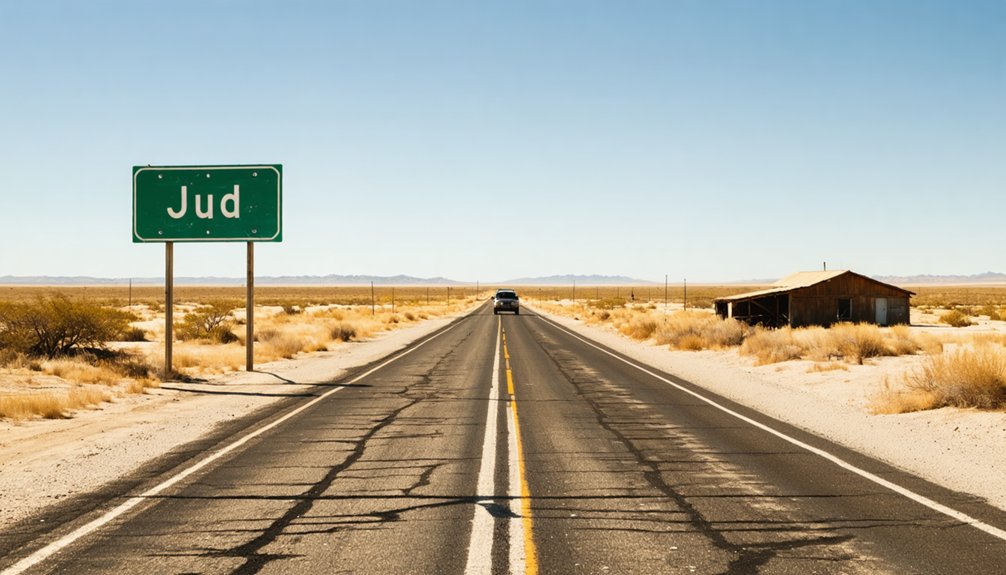
Once you’ve decided Jud is worth your time, getting there’s straightforward — provided you plan ahead for the empty miles ahead. From Dallas, take I-20 west to Abilene, then head north on US-277 toward Haskell — a clean 5-6 hour drive through open Texas plains.
From Abilene, you’re just 70 miles out, making it an easy afternoon launch into rural exploration.
Once you reach Haskell, fuel up. Seriously. No services exist in Jud, so carry water, snacks, and a charged phone.
From Haskell, Texas State Highway 222 and FM 600 deliver you directly into ghost town history — weathered structures, forgotten roads, and wide silence stretching every direction.
The emptiness isn’t a drawback. For the freedom-seeking traveler, it’s the entire point.
Best Time to Visit Jud, Texas and What to Bring
You’ll want to plan your visit between October and April, when temperatures stay manageable and won’t push past the brutal 100°F highs that make summer exploration miserable.
Since Jud offers zero services, you’ll need to load up on water, snacks, a first aid kit, and a full tank of gas before leaving Haskell.
Pack sun protection and sturdy boots regardless of season, as the rugged terrain and exposed ruins demand both comfort and caution.
Ideal Visiting Seasons
When planning your visit to Jud, Texas, timing matters more than you might expect. Seasonal weather can make or break your experience, and local wildlife thrives during cooler months, adding unexpected life to this desolate landscape.
October through April offers the best conditions for exploration:
- Fall (October–November) – Crisp air carries the scent of dry grass, and golden light transforms crumbling structures into haunting artwork.
- Winter (December–February) – Quiet solitude wraps the plains in stillness, making abandoned ruins feel genuinely frozen in time.
- Spring (March–April) – Wildflowers push through cracked foundations, reminding you that life refuses to quit, even here.
Avoid summer entirely. Temperatures routinely exceed 100°F, turning your free-spirited adventure into an exhausting survival test.
Essential Supplies Checklist
Packing smart separates a memorable ghost town adventure from a miserable one, and Jud offers zero safety nets once you leave Haskell’s fuel pumps behind.
You’re venturing into genuine rural exploration territory, where the nearest help sits 20 miles away.
Fill your vehicle with fuel before departing Haskell. Pack at least two gallons of water per person, sunscreen, a first-aid kit, and snacks.
Sturdy boots protect your feet across uneven terrain around collapsed structures. Bring a camera to document ghost town history before light fades, since afternoon shadows shift quickly across weathered ruins.
Download offline maps, because cell coverage disappears unpredictably on FM 600. Toss in a flashlight, insect repellent, and emergency roadside supplies.
Respect posted boundaries, carry out everything you bring in, and you’ll leave Jud exactly as you found it.
Weather and Heat Warnings
Northwest Texas doesn’t forgive heat-related mistakes, and Jud sits squarely in a region where summer temperatures routinely climb past 100°F across open, shadeless plains.
Understanding local weather patterns keeps your freedom intact — a heat-related emergency ends your adventure fast.
Plan your visit between October and April to avoid dangerous conditions.
Follow these heat precautions before stepping onto those gravel roads:
- Carry at least one gallon of water per person — dehydration hits harder under relentless plains sun than you’d expect.
- Check forecasts 48 hours ahead — sudden spring storms roll across flat terrain with almost no warning.
- Start exploring before 10 AM — afternoon heat transforms a thrilling ghost town walk into a dangerous ordeal.
Your adventure depends on respecting this unforgiving landscape.
What Ghost Towns Near Jud, Texas Can You Add to the Same Day Trip?
Jud sits in a stretch of northwest Texas where ghost towns cluster close enough together to string into a single rewarding day trip. A 20-mile loop connects Jud with Sagerton, another faded railroad community worth exploring for its ghost town attractions and quiet historical significance.
Both towns share roots in the same cotton-farming era, so moving between them feels like turning pages in the same story. From Sagerton, you can swing through Weinert before heading back toward Haskell.
Cap the trip with a stop at the Haskell County Museum, where artifacts from these vanished communities add context to everything you’ve just seen firsthand.
Plan your route before leaving; cell service gets spotty fast once you’re deep into Haskell County’s open plains.
How to Explore Jud, Texas Safely Without Getting Into Trouble
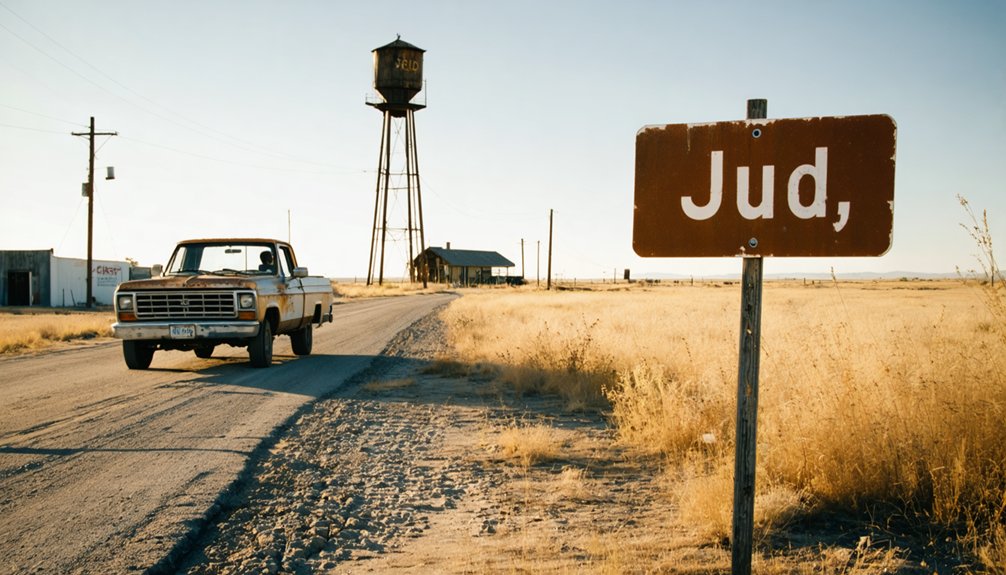
Once you’ve mapped your ghost town loop, knowing how to move through Jud responsibly keeps the trip rewarding and trouble-free. These safety precautions and exploring etiquette guidelines protect both you and this irreplaceable slice of Texas history.
- Honor the boundaries — Privately owned ruins dot Jud’s landscape. Respecting No Trespassing signs isn’t just legal obligation; it’s how these weathered walls survive for future wanderers.
- Carry your own lifeline — No services exist here. Pack water, emergency supplies, and a charged phone because the nearest help sits 20 miles away in Haskell.
- Leave everything untouched — That collapsed cotton gin, that crumbling steeple — they belong to the land.
Taking or disturbing anything steals someone else’s chance to discover it.
Frequently Asked Questions
Is There Cell Phone Signal or Wi-Fi Available Near Jud, Texas?
Don’t count on reliable cell service availability or internet access options near Jud. You’ll find spotty coverage at best in this remote rural area, so download offline maps and embrace the liberating, disconnected freedom of true ghost town exploration!
Are Pets Allowed When Exploring the Jud, Texas Ghost Town Area?
Like an open prairie wind, you’re free to bring pets, but ghost town etiquette demands responsibility. Pet friendly policies aren’t posted, so you’ll keep animals leashed, respecting privately owned ruins and fellow explorers throughout Jud.
Can You Legally Metal Detect or Collect Artifacts Around Jud, Texas?
You’ll need permission from landowners before metal detecting, as most ruins are privately owned. Respect artifact preservation laws and metal detecting regulations — removing historical items without authorization can result in serious legal consequences.
Has Jud, Texas Ever Appeared in Any Films or Television Productions?
No confirmed film history or television appearances exist for Jud, Texas. You won’t find it on any production credits, but its hauntingly abandoned landscape practically begs filmmakers to discover its raw, cinematic ghost town beauty.
Are There Any Overnight Camping Options Close to Jud, Texas?
Under vast, star-filled Texas skies, you’ll find camping amenities at nearby parks like Haskell’s Lake Stamford, roughly 30 miles away, offering lakeside sites perfect for freedom-seekers exploring Jud’s haunting ghost town landscapes.
References
- https://mix941kmxj.com/texas-ghost-town-visit/
- https://www.youtube.com/watch?v=IECzqQ-jIEM
- https://www.traveltexas.com/articles/post/spooky-roadtrip/
- https://www.tripadvisor.com/Attractions-g28964-Activities-c47-t14-Texas.html
- https://myfamilytravels.com/the-spookiest-road-trips-in-texas-with-abandoned-landmarks
- https://texashighways.com/travel/the-quest-to-resurrect-a-ghost-town/
- https://www.texasescapes.com/TexasTowns/Jud-Texas.htm