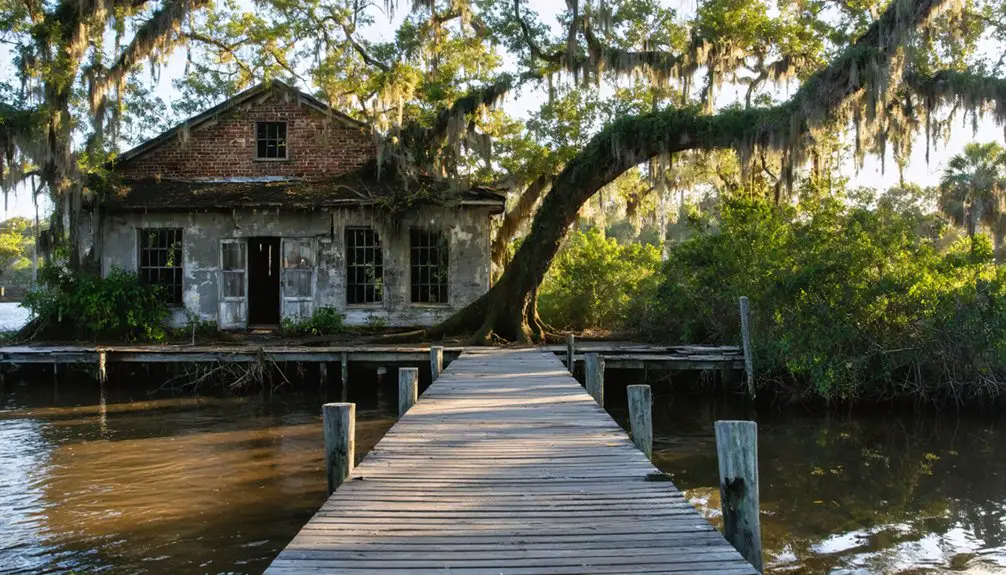
Planning a ghost town road trip to Waterbury, Florida means heading to Bay County, where County Road 388 leads you to a community that time left behind. You’ll find old roads swallowed by vegetation and ruins that once thrived around a working railroad. Bring sturdy boots, plenty of water, and a charged GPS — signage is sparse out here. There’s more to this forgotten corner of Florida than you’d expect.
Key Takeaways
- Waterbury, Florida, is a ghost town in Bay County accessible via State Road 77 and County Road 388, near Little River settlement.
- The town’s history revolves around an abandoned railroad that once supported over 100 residents before being reclaimed by vegetation.
- Nearby landmarks like Rodman Reservoir, Lake CER, and Lake George enhance the road trip with scenic and historical exploration opportunities.
- Pack sturdy boots, water, a GPS device, flashlight, and first aid kit, as Waterbury has no on-site infrastructure.
- Respect site regulations by leaving artifacts undisturbed, as removing them is illegal and undermines preservation for future visitors.
What Makes Waterbury Florida Worth the Drive?

Tucked away near the intersection of State Road 77 and County Road 388 in Bay County, Waterbury, Florida, is a ghost town that rewards curious travelers with a rare glimpse into a forgotten past.
Once home to over 100 residents, this thriving community relied on a railroad that later vanished, taking the town’s liveliness with it.
Today, its historical significance lies in what remains — old roads etched into the landscape and the quiet weight of history beneath reclaimed vegetation.
The ghost town allure is undeniable; you’re stepping somewhere most people never bother to find.
If you crave authentic exploration away from crowded tourist traps, Waterbury delivers something raw and real — a place where Florida’s overlooked history speaks loudly through its silence.
What’s Left to See at the Waterbury Ruins?
Although little remains standing at Waterbury, what you’ll find there carries a quiet power that more polished destinations can’t replicate.
Ruins exploration here means walking ground where over 100 residents once built their lives around a working railroad. That railroad is gone now, but old roads still cut through the landscape like faint signatures of the past.
Vegetation has reclaimed most of the town, wrapping what’s left in dense Florida growth. You’ll notice how nature and history compete for the same space, which only adds to the site’s raw atmosphere.
Nature doesn’t wait. At Waterbury, it has moved in completely, turning history into something you have to push through to find.
The historical significance of Waterbury isn’t housed in a museum — it’s beneath your feet and around every overgrown corner. Come ready to observe, interpret, and appreciate what survival and abandonment look like side by side.
Landmarks Near Waterbury That Pair Well With a Ghost Town Visit
Waterbury doesn’t exist in isolation — several compelling landmarks sit close enough to round out a full day of exploration.
Rodman Reservoir offers striking scenery and boating access, making it a natural complement to your ghost town experiences. If you’re craving more water, Lake CER sits nearby as another peaceful stop worth visiting.
Head toward Highway 316, and you’ll find the Morehead boat ramp, perfect for anyone wanting to get out on the water between historic landmarks.
Lake George, one of Florida’s largest lakes, looms a short distance away and delivers breathtaking views that contrast beautifully with Waterbury‘s haunting stillness.
Stringing these stops together transforms your trip from a single ruins visit into a rich, layered adventure through Bay County’s forgotten and enduring history.
How to Get to Waterbury Ghost Town
To reach Waterbury, you’ll want to take State Road 77 toward the Little River settlement area in Bay County, where County Road 388 will guide you directly to the site.
Highway 316 intersects with local roads near the ghost town, giving you additional routing options depending on your starting point.
Use Rodman Reservoir or Lake CER as reliable landmarks to confirm you’re closing in on the right location.
Nearby Roads and Highways
Several key roads make reaching Waterbury’s ghost town surprisingly straightforward. State Road 77 serves as your primary route, connecting you to the area from neighboring towns with minimal hassle.
From there, County Road 388 branches off, leading directly into the Little River settlement where Waterbury’s remnants quietly wait.
Check local maps before you head out, since signage in rural Bay County can be sparse and unreliable. Road conditions vary depending on the season, so a vehicle with decent clearance handles the terrain far better than a standard sedan.
Highway 316 intersects with local roads near the site, giving you an additional approach option. Keep Rodman Reservoir in your sights as a reliable landmark — it’ll confirm you’re heading in exactly the right direction.
Landmarks for Navigation
Once you’re off the main roads and exploring Bay County’s quieter stretches, landmarks become your best friends.
For solid navigational tips, watch for Rodman Reservoir — it’s one of the most recognizable nearby attractions and anchors your bearings heading into the Little River settlement area.
Lake CER sits close to the site and confirms you’re approaching Waterbury’s grounds.
If you’re coming from the east, Lake George serves as a broader geographic marker worth noting on your map.
The Morehead boat ramp, accessible via Highway 316, also signals you’re within striking distance of the ghost town.
These natural and recreational landmarks aren’t just helpful reference points — they’re reminders that Waterbury sits within a genuinely scenic corner of Florida worth exploring slowly and deliberately.
What to Pack Before You Visit Waterbury
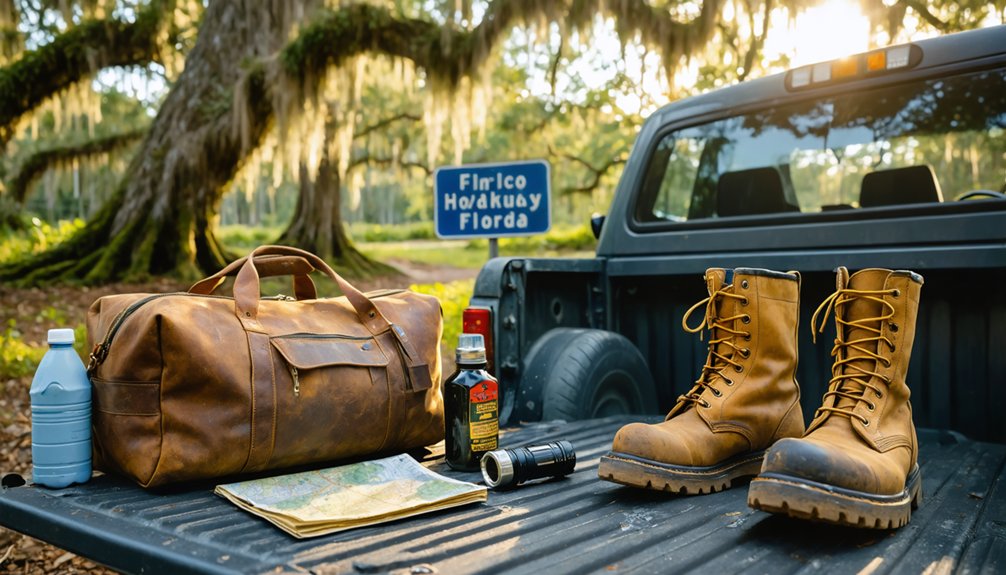
Before you head out to Waterbury’s overgrown ruins, packing the right gear can make or break your visit.
You’ll want sturdy, closed-toe boots and weather-appropriate clothing to handle uneven terrain and dense Florida vegetation.
Don’t forget to toss essential safety supplies into your bag — water, a first aid kit, and a fully charged phone are non-negotiables when you’re exploring a remote, undeveloped site.
Essential Gear To Bring
Packing the right gear can make or break your visit to Waterbury’s overgrown ruins. You’re stepping into an untamed landscape where vegetation has swallowed most structures, so your exploration gear needs to match the terrain.
Wear sturdy, closed-toe boots and long pants to protect against rough ground and thick brush. Bring plenty of water since there’s no infrastructure on-site. A fully charged phone or GPS device keeps you oriented near the State Road 77 and County Road 388 intersection.
Essential tools like a flashlight and a basic first aid kit prepare you for unexpected situations among unstable structures. Pack a camera to document the crumbling history you’ll encounter.
Travel light, stay alert, and you’ll move through Waterbury’s forgotten streets with confidence and ease.
Clothing And Footwear Tips
Choosing the right clothing for Waterbury’s overgrown terrain comes down to 3 core priorities: protection, comfort, and mobility. Florida’s heat can shift quickly, so weather considerations matter more than you’d expect.
Pack appropriate layers — a breathable base layer handles humidity, while a lightweight outer layer shields you from unexpected rain or cooler evening temperatures.
Wear long pants and long sleeves to guard against sharp vegetation, insect bites, and sun exposure. Light, moisture-wicking fabrics keep you moving without overheating. Avoid loose clothing that snags on branches or debris scattered across the ruins.
For footwear, lace up sturdy, closed-toe boots with ankle support. The uneven ground and hidden obstacles demand grip and stability. Flip-flops and sneakers aren’t options here — they’re liabilities on unstable terrain.
Safety Supplies To Pack
Exploring a ghost town like Waterbury means stepping into territory with no modern infrastructure, so what you carry determines how safe your visit stays.
Pack smart, and you’ll move through the ruins with confidence.
- Water and hydration supplies – Florida heat is relentless. Prioritize water safety by carrying at least two liters per person, plus electrolyte packets for extended exploration.
- First aid kit – Unstable structures and overgrown terrain create real hazards. Bandages, antiseptic wipes, and tweezers handle most minor injuries on-site.
- Navigation tools – Cell service is unreliable here. A downloaded offline map and a compass keep you oriented without depending on a signal.
Following exploration etiquette means leaving the site undisturbed while keeping yourself protected throughout your visit.
What to Know Before You Wander the Waterbury Ruins

Before you wander the Waterbury ruins, you’ll want to keep a few key things in mind. Exploring history here means stepping into a space where nature has reclaimed what humans once built.
Vegetation covers former town grounds, making traversing ruins both an adventure and a challenge.
Watch your step around any remaining structures — unstable surfaces can catch you off guard. Bring everything you need because there’s no modern infrastructure on-site. Water, sturdy footwear, and a charged phone are non-negotiables.
Unstable ground and zero amenities demand respect — pack smart, step carefully, and never arrive unprepared.
Respect the site by leaving everything as you find it. Removing artifacts is illegal and strips away history for future visitors.
Waterbury’s story deserves to be experienced, not dismantled. Come curious, stay aware, and let the ghost town speak for itself.
Frequently Asked Questions
Is There an Admission Fee to Visit Waterbury Ghost Town?
Once home to 100+ residents, Waterbury’s ghost town history is yours to explore freely—there’s no admission fee! For visiting tips, you’ll just need curiosity, proper gear, and respect for this hauntingly beautiful, abandoned Florida treasure.
Are Pets Allowed When Exploring the Waterbury Ghost Town Ruins?
The knowledge doesn’t confirm specific pet-friendly policies for Waterbury, so check local regulations before visiting. When exploring, you’ll want to follow ghost town etiquette, keeping pets controlled to respect the site’s delicate, historically significant ruins.
What County Is the Waterbury Ghost Town Officially Located In?
You’ll find Waterbury’s historical significance resting peacefully in Bay County, Florida. This forgotten gem carries local legends that’ll ignite your free spirit, beckoning you to uncover its mysterious, untamed past waiting just beyond civilization’s edge.
Is Overnight Camping Permitted at the Waterbury Ghost Town Site?
The knowledge doesn’t confirm overnight camping’s permitted at Waterbury. Since ghost town amenities are nonexistent and camping regulations aren’t documented here, you’ll want to check with Bay County authorities before pitching your tent at this fascinating site.
Are Guided Tours Available for Visiting the Waterbury Ghost Town?
No official guided tour options exist for Waterbury, so you’ll explore its ghost town history independently. You’re free to roam the atmospheric ruins, uncovering forgotten stories at your own adventurous pace—true freedom awaits!
References
- https://www.youtube.com/watch?v=x2KTR34RLSg
- https://www.youtube.com/watch?v=OtKF4m3MNFI&vl=en-US
- https://www.youtube.com/watch?v=jpTHxhsQIUM
- https://www.reddit.com/r/Paranormal/comments/1dkfu12/abandoned_town_in_florida/
- https://www.youtube.com/watch?v=DHpp5BcRxkU
- https://www.vtcng.com/stowetoday/spotlight/visit-the-ruins-of-waterburys-little-river-settlement/article_458ccd5a-7d3e-11df-8114-001cc4c03286.html
- https://www.ghosttowns.com/states/fl/fl.html
- https://www.youtube.com/watch?v=oiS5w2an3sI
- https://www.youtube.com/watch?v=bNjqcQ5SMwg
- https://en.wikipedia.org/wiki/List_of_ghost_towns_in_Florida