Planning a ghost town road trip to Wauconda, Washington means heading to the Okanogan Highlands, about 284 miles northeast of Seattle or 150 miles northwest of Spokane via Highway 20. You’ll find abandoned shacks, weathered historical plaques, and the crumbling Pflug mansion waiting to tell their stories. Gas up in Republic or Tonasket, pack your own food, and download offline maps before you go. There’s far more to this forgotten gold rush town than first meets the eye.
Key Takeaways
- Wauconda is located 284 miles northeast of Seattle via Highway 20, or 150 miles northwest of Spokane via Highway 395 connecting to Highway 20.
- Gas up in Republic or Tonasket before arrival, bring cash, and download offline maps due to spotty cell service in the area.
- Key attractions include abandoned shacks, the Pflug mansion, historical plaques, and former mining spots offering an open-air museum experience.
- Summer and fall are ideal visiting seasons, offering dry roads, warm weather, and dramatic golden scenery for exploring ruins.
- Pack all food and supplies before leaving nearby towns, as Wauconda’s general store is permanently closed with no local eateries available.
What Makes Wauconda Washington Worth the Drive?
Tucked away in northern-central Washington between Republic and Tonasket, Wauconda sits roughly 284 miles northeast of Seattle — a long drive, but one that rewards curious travelers with a rare slice of forgotten American history.
This ghost town pulls you in with its raw, unfiltered past rooted in gold rush mining history. You’ll find abandoned shacks, historical plaques, and the haunting Pflug mansion — a German-style structure that’s stood unfinished and uninhabited for over a century.
Unlike commercialized tourist destinations, Wauconda doesn’t dress itself up. It’s authentic, quiet, and unapologetically remote.
If you crave open roads, wide skies, and stories written in crumbling wood and rusted nails, this overlooked corner of Washington delivers exactly that kind of freedom.
Wauconda’s Boom-and-Bust History in Plain English
Everything about Wauconda’s history moves fast — from boom to bust in just a few years. Three brothers from Wauconda, Illinois, discovered gold and quartz in 1898, named the town after their hometown, and sparked an instant rush.
Within three years, over 1,000 people called it home, with saloons, hotels, a general store, and a post office all operating at full tilt.
Then the mines dried up. That mining legacy collapsed almost as quickly as it had built itself, and the population vanished just as fast.
When Highway 20 bypassed the original site in 1929, the town relocated four miles away — but never recovered.
Today, you can walk through what remains of that ghost town and feel exactly how abruptly everything stopped.
How to Get to Wauconda From Seattle and Spokane
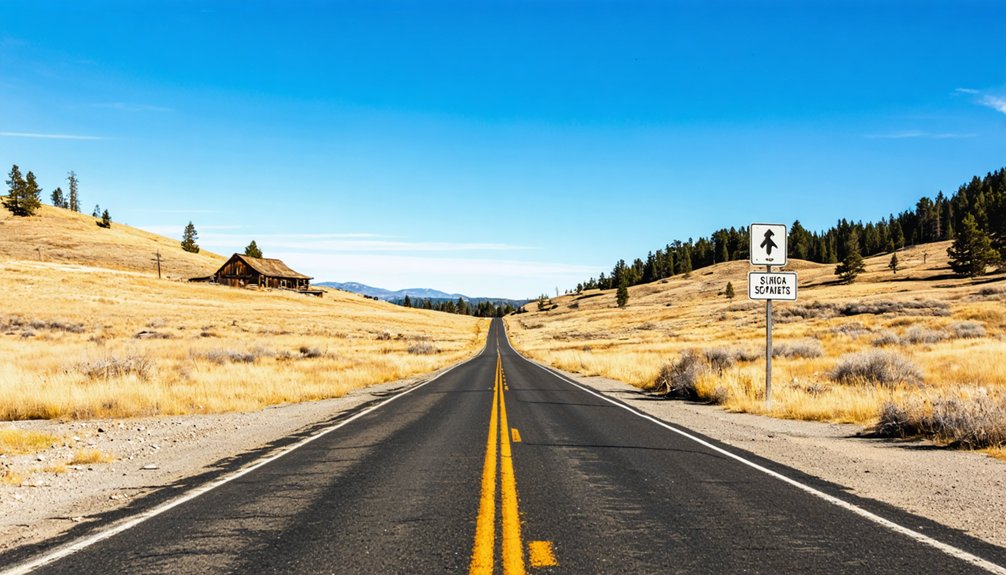
If you’re coming from Seattle, you’ll travel roughly 284 miles northeast, following Highway 20 through the Cascades directly into Wauconda.
From Spokane, head northwest on Highway 395 before connecting to Highway 20 west, covering about 150 miles through rolling ranch country.
Either way, pack snacks and fuel up before the final stretch — services thin out dramatically as you approach this remote corner of northern-central Washington.
Seattle Route Details
Getting to Wauconda from Seattle takes you on a 284-mile journey northeast through some of Washington’s most stunning landscapes.
Leave behind Seattle attractions like Pike Place Market and head east on US-2, cutting through the Cascades via Stevens Pass. You’ll climb through alpine forests before descending into the drier eastern valleys where ponderosa pines replace Douglas firs.
From there, connect to Highway 20, your direct gateway into Okanogan County’s open rangeland. You’ll pass several scenic viewpoints where rolling wheat fields stretch toward distant ridgelines — a dramatic contrast to Seattle’s urban density.
The drive typically takes around five hours, depending on stops.
As you approach Wauconda, yellow hills frame both sides of the road, signaling you’re entering territory where history sits quietly alongside the highway.
Spokane Route Details
Traveling from Spokane cuts your drive to Wauconda down to roughly 150 miles, making it the more practical launch point if you’re already in eastern Washington.
Head north on Highway 395, then connect to Highway 20 heading west through the Okanogan Highlands. Unlike the long Seattle haul, this route delivers you into genuine frontier territory fairly quickly.
You’ll pass scenic viewpoints overlooking rolling wheat fields and pine-covered ridgelines that signal you’re leaving civilization behind.
Before departing, spend a morning exploring Spokane attractions like Riverfront Park or the historic downtown district to fuel your road trip mindset.
The drive into Wauconda feels increasingly remote as you approach, perfectly setting the mood for discovering a genuine ghost town waiting quietly off the highway.
Road Trip Tips
Whether you’re rolling out of Spokane or making the full trek from Seattle, a few practical tips will help you arrive at Wauconda without unnecessary headaches.
Pack your road trip essentials before leaving — gas up in Republic or Tonasket, since services thin out dramatically near Wauconda.
Cell service gets spotty through the Okanogan Highlands, so download offline maps beforehand.
Both routes deliver stunning scenic stops, particularly along Highway 20’s mountain passes, so build extra time into your schedule.
Bring cash, since card readers aren’t guaranteed at the few remaining businesses.
Wauconda sits 284 miles northeast of Seattle and roughly 130 miles from Spokane, making it a genuine commitment either way — but that remoteness is exactly the point.
What’s Left of Old Wauconda Today
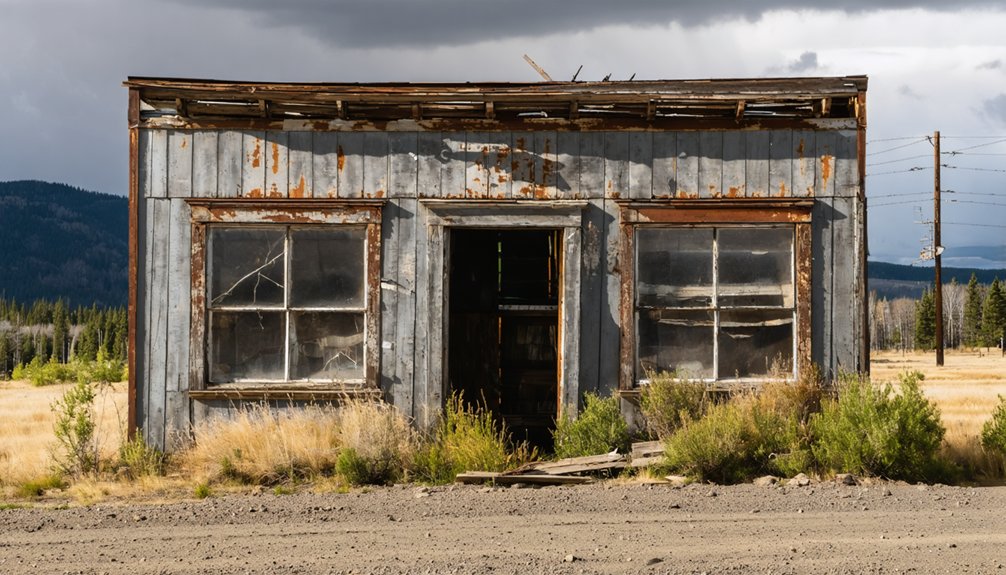
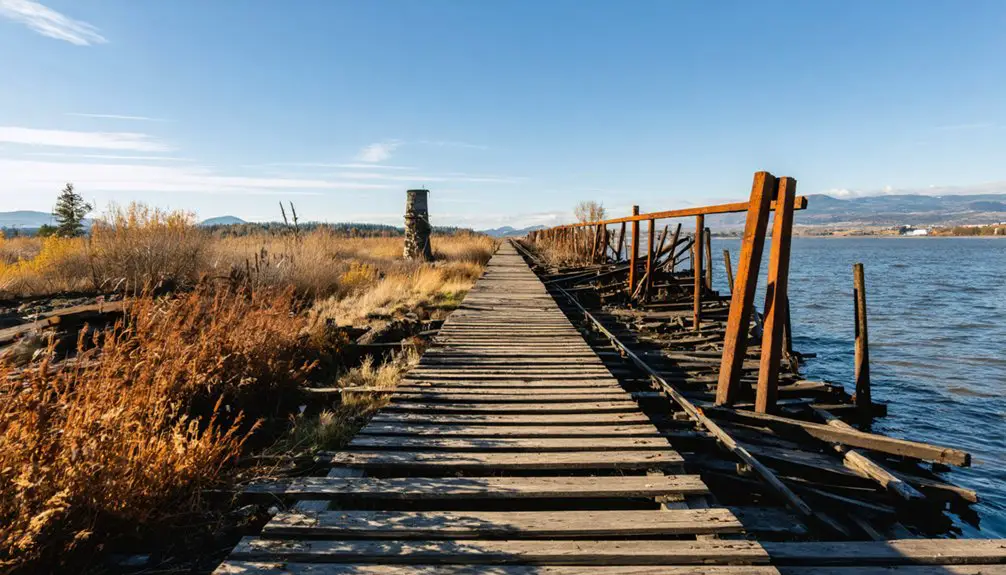
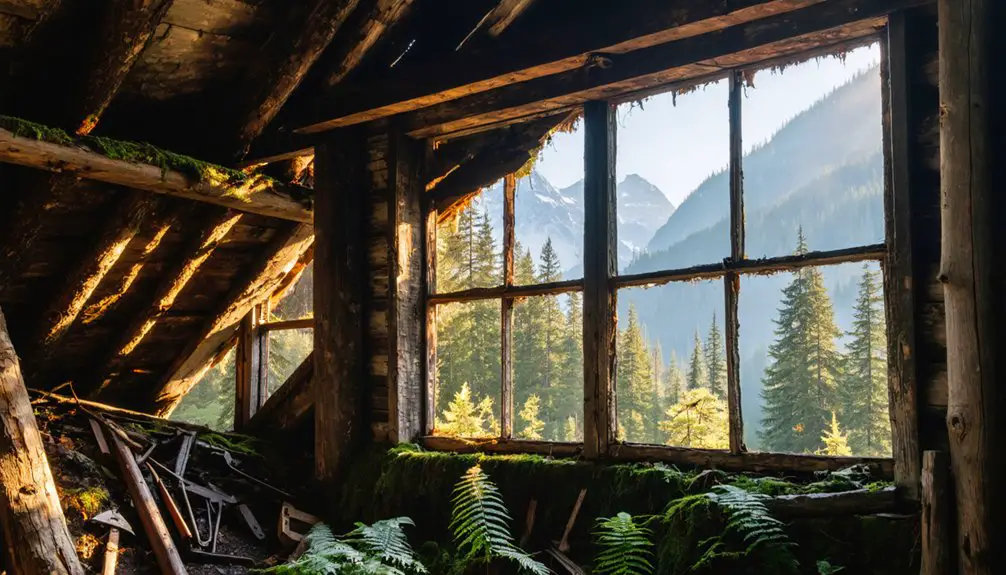
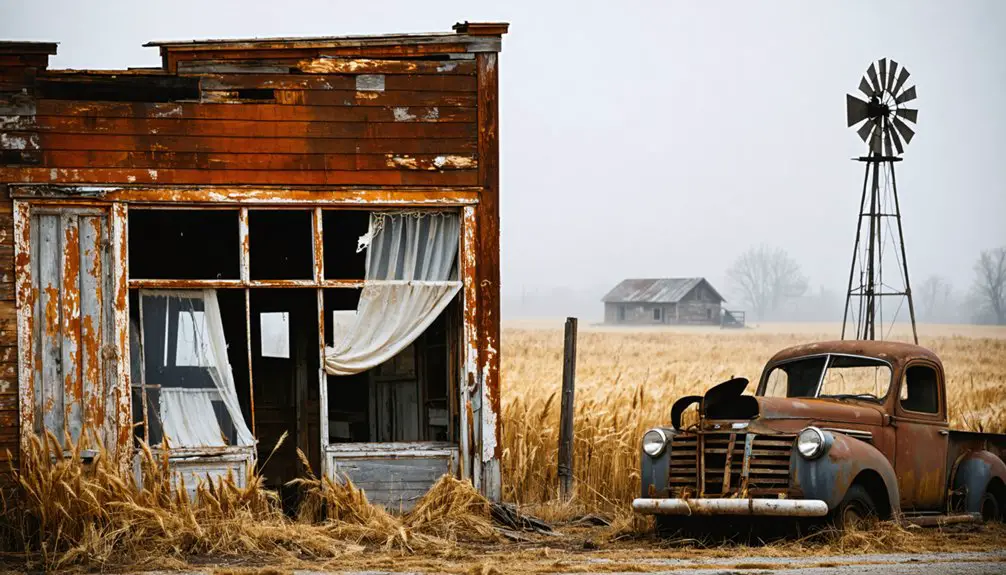
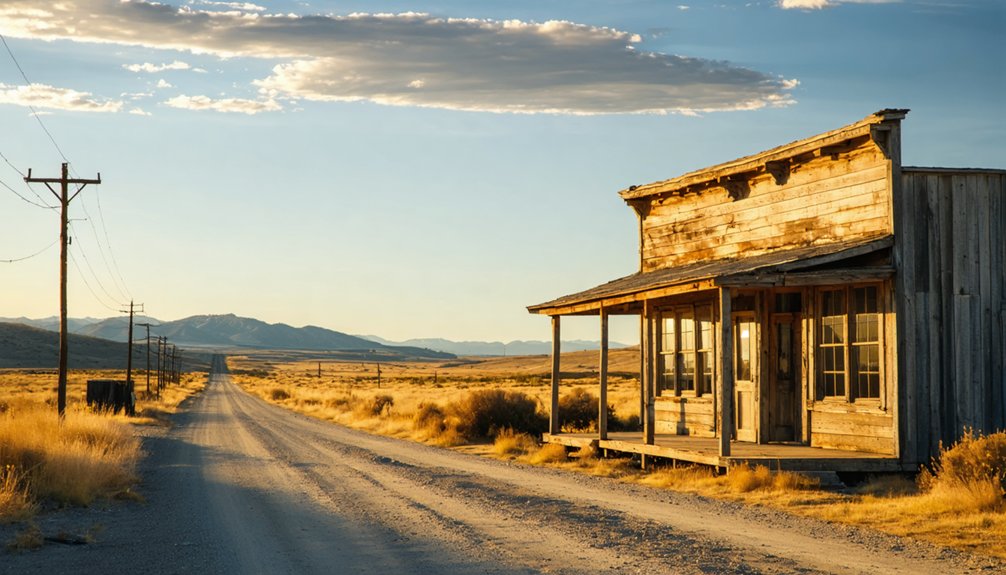
When you pull off the main highway to explore Old Wauconda, you’ll find spooky, weathered shacks scattered across empty fields, along with the eerie Pflug mansion—a German-style structure that’s sat unfinished and uninhabited for over 100 years.
Historical plaques placed throughout the site give you context for what once thrived here, marking the spots where miners, saloon-keepers, and hotel operators built a boomtown from scratch.
You can also stumble across former mining spots hidden throughout the territory, making the whole place feel like an open-air museum frozen in time.
Abandoned Structures Still Standing
Stepping off the highway and into Old Wauconda feels like walking through a place time forgot. Spooky shacks lean against the wind across empty fields, their weathered frames somehow still standing after more than a century.
The unfinished Pflug mansion dominates the landscape — a German-style structure that’s sat uninhabited for over 100 years, its hollow windows watching every visitor who wanders close. Historical plaques dot the grounds, giving context to the ghost town allure that draws road-trippers off the beaten path.
Former mining spots hide throughout the territory, rewarding curious explorers willing to look beyond the obvious. These abandoned buildings aren’t just ruins — they’re physical proof of a community that once housed over 1,000 people and collapsed almost as quickly as it rose.
Historical Plaques And Markers
Among the crumbling shacks and the looming Pflug mansion, historical plaques stand as Old Wauconda‘s most deliberate attempt to speak to visitors. These ghost town markers transform an otherwise silent landscape into an open-air history lesson, giving you context for what once thrived here.
The plaques highlight the town’s historical significance across key moments:
- 1898 – Discovery of quartz and gold that sparked Wauconda’s founding
- 1901 – Peak population exceeding 1,000 residents with a functioning post office
- 1901 – Mine depletion signals the beginning of inevitable decline
- 1929 – Highway 20 construction forces a four-mile relocation attempt
Walk the empty fields slowly. Each marker rewards your curiosity with a story that no building left standing can fully tell anymore.
The Pflug Mansion and Ghost Town Ruins at Old Wauconda
Just off the main highway, Old Wauconda sits frozen in time, its crumbling shacks and overgrown lots telling the story of a town that once bustled with over a thousand miners.
You’ll find yourself wandering through empty fields where spooky shacks still stand, their weathered wood barely holding together after more than a century of abandonment.
The ghost town’s most striking landmark is the Pflug Mansion, a German-style structure that’s sat unfinished and uninhabited for over 100 years.
Standing incomplete for over a century, the Pflug Mansion looms as Wauconda’s most hauntingly ambitious landmark.
It’s a haunting reminder of ambitions that never quite materialized. Hidden throughout the property, former mining spots quietly mark where fortunes were once sought.
Explore freely, but let the historical plaques guide your understanding of what life here truly looked like during Wauconda’s remarkable, if fleeting, peak.
The Best Time of Year to Visit Wauconda
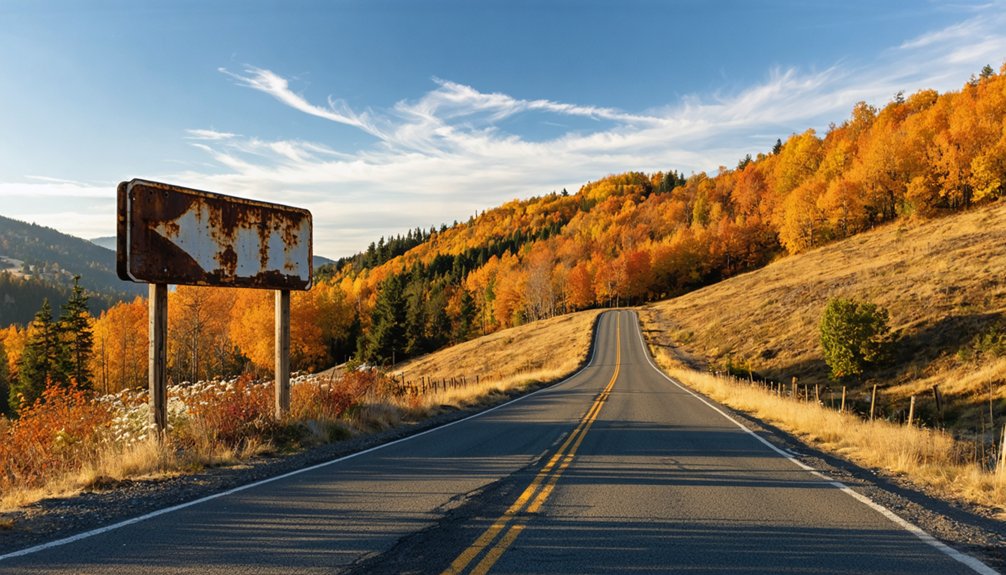
While Wauconda’s remote location makes it a year-round destination for the truly adventurous, summer offers the most rewarding experience for ghost town exploration. Among the best seasons, summer and early fall deliver prime conditions for traversing Old Wauconda’s scattered ruins and attending local events at the community hall.
Here’s what each season offers:
- Summer – Long daylight hours, dry roads, and warm temperatures make exploring the Pflug mansion and mining sites ideal.
- Fall – Golden hills and crisp air create dramatic scenery perfect for photography.
- Winter – Snow-covered ruins offer an eerie, atmospheric experience for bold travelers.
- Spring – Wildflowers bloom across the fields, softening the ghost town’s haunting landscape.
Pack accordingly, embrace the isolation, and arrive with a full gas tank.
Food and Lodging Options for Your Wauconda Day Trip
Planning your visit around Wauconda’s food and lodging realities is just as important as timing your arrival for the right season.
The town’s general store is permanently closed, so don’t count on grabbing supplies locally. Local eateries are practically nonexistent within Wauconda itself, meaning you’ll want to stock up before leaving Republic or Tonasket. Both towns sit within reasonable driving distance and offer solid meal options.
Wauconda’s general store is gone for good — stock up in Republic or Tonasket before heading out.
For lodging, you’re looking at camping options as your most adventurous and practical choice. The surrounding Okanogan Highlands offer open, rugged terrain perfect for those craving freedom under wide skies.
Alternatively, Republic and Tonasket provide basic motel accommodations. Treat Wauconda as a day trip destination, pack your own food, and embrace the raw, self-sufficient spirit this ghost town demands.
Frequently Asked Questions
Was Wauconda Ever Privately Owned and Sold as a Single Property?
Yes, Wauconda’s been through fascinating private ownership and historical transactions! Daphne Fletcher once owned the entire town, then you’d be amazed to learn she sold it on eBay for $360,000 in 2008.
What Community Events and Activities Do Wauconda Residents Currently Participate In?
You’ll find Wauconda’s community hall buzzing with vibrant community gatherings, including family movie potlucks, pie auctions, and town hall meetings. Residents also celebrate local festivals like the spirited annual Flag Day, keeping their small-town connection alive.
Who Originally Founded Wauconda and Where Did They Come From?
Three brothers from Wauconda, Illinois, shaped the Founding History of this remote Washington town in 1898. As Early Settlers, they’ve left their hometown’s name behind, giving you a fascinating gold-rush legacy to explore today!
How Many People Lived in Wauconda During Its Peak Population Period?
You’d think a gold rush town would last forever, right? At its peak in 1901, Wauconda’s population hit 1,000+ residents — a number with real historical significance before rapid population decline turned it into today’s ghost town.
When Did the Original Wauconda Mines Show Signs of Depletion?
By 1901, you’d have watched Wauconda’s mining history take a dark turn as the mines showed depletion signs, revealing poor resource management. Shortly after, they closed, triggering the town’s heartbreaking decline from its once-thriving, freedom-filled peak.
References
- https://97rockonline.com/wauconda-washington-exists/
- https://www.islands.com/2040908/wauconda-washington-tiny-village-quiet-escape-nature-abandoned-ghost-town-explore/
- http://www.ghosttownsusa.com/wac.htm
- https://www.youtube.com/watch?v=wV7U5UbMKLg
- https://washingtonstate.fandom.com/wiki/Wauconda
- https://www.ghosttowns.com/states/wa/wauconda.html