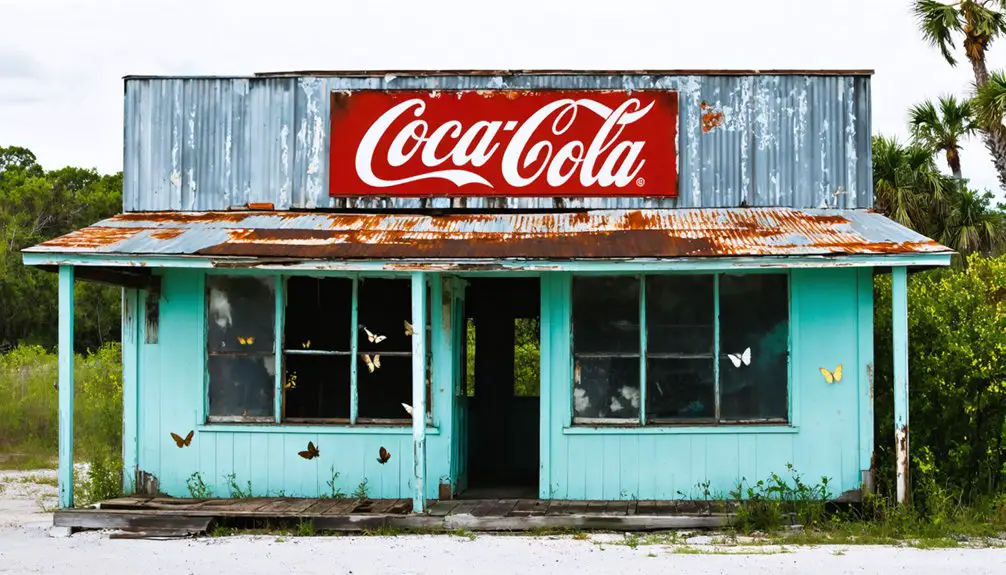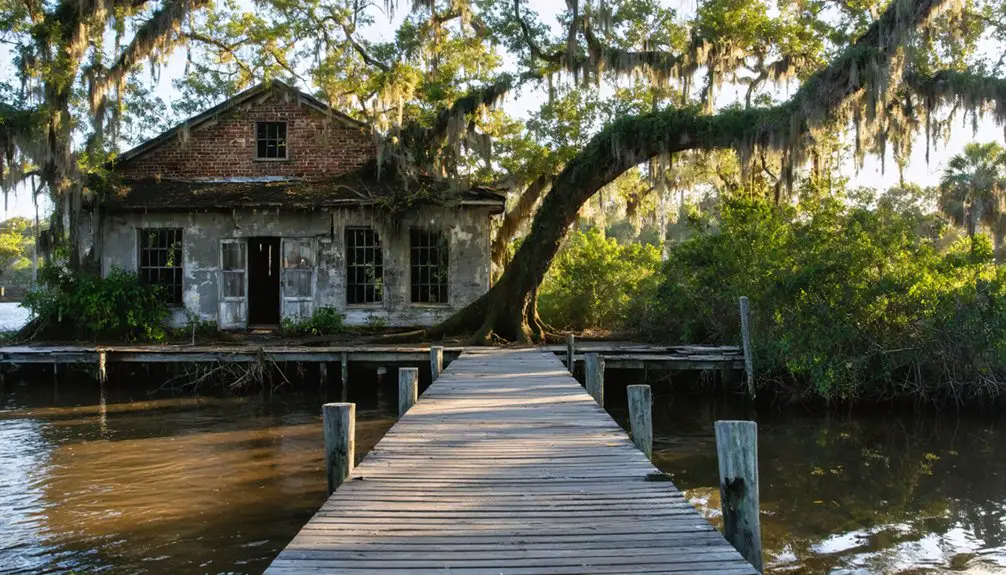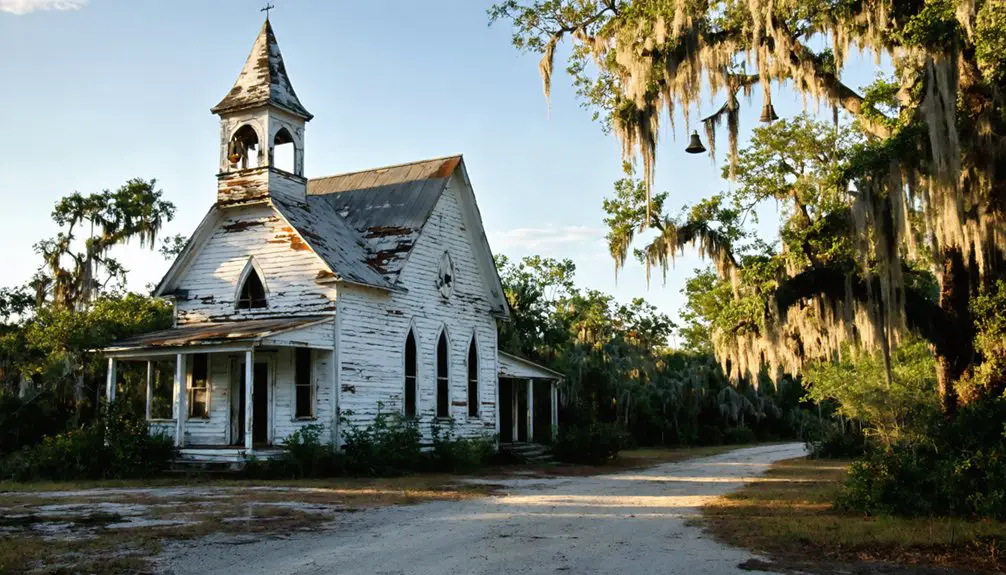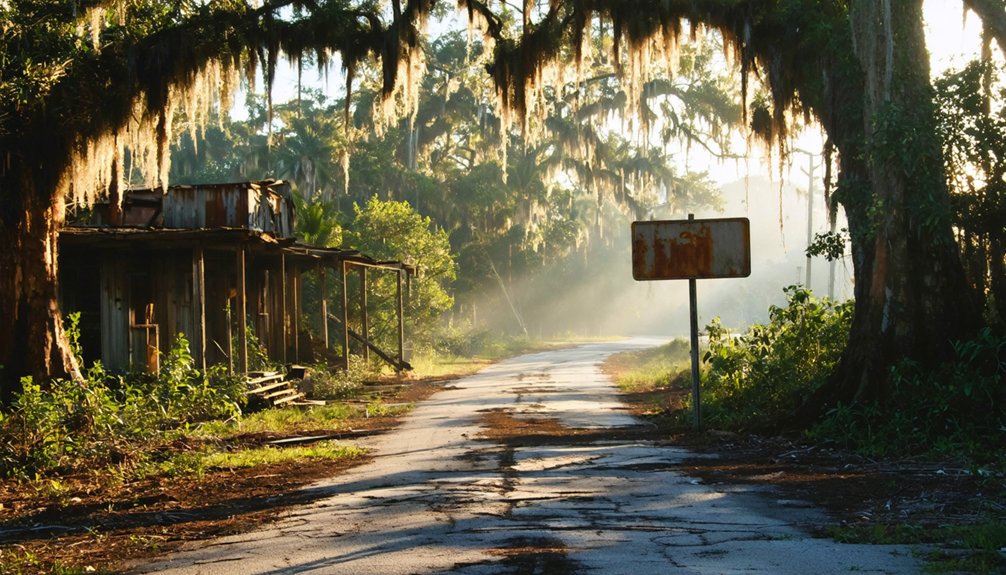
Waveland, Florida is a ghost town that vanished from maps by the 1920s, but you can still track it down on a road trip today. This small Scandinavian-settled community once thrived near Sewall’s Point in Martin County, supported by sawmills and turpentine industries. Your best bet for finding it is the historic marker off Sewall’s Point Road near SR 714. Stick around, because there’s more to uncover about this forgotten coastal community than you’d expect.
Key Takeaways
- Waveland, Florida, a ghost town settled in 1892 by Scandinavian immigrants, thrived briefly before fading from maps by the 1920s.
- The community was located on Sewall’s Point peninsula, covering parts of Rio and Jensen Beach near Warner Creek.
- A historic marker off Sewall’s Point Road near SR 714 is the only remaining physical trace of Waveland.
- Nearby nature preserves, historical sites, and scenic coastal access offer additional stops to enrich your road trip experience.
- No tourist infrastructure exists, so bring water, wear comfortable shoes, and deliberately pull over to find the marker.
What Was Waveland, Florida?
Tucked along the shores of Sewall’s Point in Martin County, Waveland was a small but thriving Florida community that flourished in the late 19th and early 20th centuries. Settled in 1892, this coastal town stretched across parts of Rio east of Warner Creek and extended into Jensen Beach south of N.E. Center Street.
Waveland history tells a familiar frontier story — sawmills hummed, turpentine industries boomed, and Scandinavian immigrants built lives along Florida’s warm Atlantic coast. You’d have found a genuine working community here, not just a seasonal retreat.
But community decline followed as industrial activity faded. By the 1920s, Waveland was disappearing from Florida maps entirely, leaving behind little more than a historic marker off Sewall’s Point Road near SR 714 to mark its existence.
Where Exactly Was Waveland Located?
Where did Waveland sit on Florida’s map? You’ll find its footprint on Sewall’s Point in Martin County, a coastal peninsula hugging the Atlantic.
Waveland’s geography covered parts of Rio lying east of Warner Creek, stretching into Jensen Beach south of N.E. Center Street.
Waveland stretched east of Warner Creek, reaching into Jensen Beach south of N.E. Center Street.
This placement gives the area its historical significance — positioned between waterways and coastline, early settlers leveraged both the Atlantic Ocean and Warner Creek for commerce and survival.
The community’s boundaries weren’t rigid, but rather fluid, blending into neighboring settlements as industry ebbed and flowed.
Today, you can pinpoint the general area by locating the historic marker off Sewall’s Point Road near SR 714.
Stand there, and you’re standing exactly where Waveland once carved its identity into Florida’s landscape.
How to Find the Waveland Historic Marker
Finding the Waveland historic marker takes just one turn off Sewall’s Point Road near SR 714, where a quiet roadside stop holds the last physical trace of a vanished community.
Pull over, step out, and let the coastal breeze remind you that freedom has always drawn people to this stretch of Florida.
The Martin County Historical Society maintains the marker, preserving its significance against time and neglect.
You’ll find it understated, almost easy to miss, yet it anchors local legends about Scandinavian settlers, sawmill smoke, and a town that simply faded after the 1920s.
No crowds, no admission fee, no guided tours — just you, an open road, and a small sign standing where an entire community once lived, worked, and eventually disappeared.
What Survives Near the Waveland Ghost Town Site Today?
Beyond the historic marker, a few quiet landmarks survive to reward curious travelers who venture deeper into the Sewall’s Point area.
You’ll discover remnants of Waveland’s era through three key experiences:
- Nature Preserve Exploration – Warner Creek and surrounding wilderness shelter diverse local wildlife, offering you an unfiltered glimpse into Florida’s coastal ecosystem as early settlers once experienced it.
- Historical Preservation Sites – The Martin County Historical Society maintains records and markers connecting you directly to Waveland’s 1892 settlement roots.
- Scenic Coastal Access – The Atlantic shoreline near Sewall’s Point delivers that same breezy freedom early Scandinavian immigrants sought when they first arrived.
These surviving elements transform your road trip from a simple drive into genuine historical immersion, letting you piece together Waveland’s forgotten story on your own terms.
What to Know Before Visiting the Waveland Historic Marker
Before you head out, knowing exactly where to look saves you from missing the marker entirely — it sits off Sewall’s Point Road near SR 714, easy to pass without a second glance if you’re not watching for it.
Pull over deliberately and give yourself time to absorb the ghost town history etched into that modest sign. The Martin County Historical Society drives the preservation efforts keeping Waveland’s memory alive, so respect the site when you arrive.
Bring water, wear comfortable shoes, and check conditions beforehand since the surrounding area features a nature preserve with uneven terrain.
There’s no grand entrance or tourist infrastructure here — just open road, coastal breeze, and a quiet marker standing where a real community once thrived. That rawness is exactly the point.
Before You Go: Safety at Abandoned Sites
Ghost town structures have stood without maintenance for decades. Floors, stairs and roof timbers fail without warning, and a building that looks solid from outside may not hold your weight. Stay out of standing structures unless the site is actively maintained and open to visitors.
Mine workings are the more serious hazard. Vertical shafts can be hundreds of feet deep, are often unfenced, and may be hidden by brush or capped with rotted boards. Never enter an adit, tunnel or shaft: abandoned workings can hold oxygen-poor or toxic air that gives no warning before you lose consciousness.
Enclosed spaces with rodent droppings carry a risk of hantavirus, which is contracted by breathing contaminated dust. Do not sweep or stir up dust inside old cabins and outbuildings.
Cell coverage at these sites is usually poor or absent. Tell someone your route and expected return time, and carry more water than you think you need.
Frequently Asked Questions
What Industries Caused Waveland to Decline After the 1920S?
Once thriving with sawmill and turpentine industries, Waveland’s economic downturns hit hard after the 1920s. As these industries faded, you’d witness population decline reshape this once-bustling community into the quiet, hauntingly beautiful ghost town it’s become.
Who Were the Scandinavian Immigrants That Originally Settled Waveland in 1892?
The records don’t name the specific Scandinavian immigrants who shaped Waveland’s Scandinavian heritage alongside Major B. in 1892. You’ll find their immigrant experiences woven into Martin County’s historical archives, waiting for your discovery.
Are There Guided Historical Tours Available Near the Waveland Ghost Town Site?
Like a treasure map waiting to be followed, guided tours aren’t officially confirmed at Waveland’s site, but you’ll find the Martin County Historical Society actively preserving its historical significance and can connect you with local experts.
What Other Ghost Towns Can Be Visited Near Waveland, Florida?
You’ll find nearby ghost towns like Eldora and Eau Gallie, where you can explore abandoned structures steeped in local legends. These forgotten Florida communities offer adventurous souls an evocative journey through untamed history and boundless, liberating wilderness.
Is the Waveland Historic Marker Accessible to Visitors With Disabilities?
The knowledge doesn’t confirm specific accessible facilities at the Waveland historic marker. You’ll want to contact the Martin County Historical Society directly to guarantee your visitor experiences meet your accessibility needs before making the trip.
References
- http://ingenweb.org/inmontgomery/a-history-of-waveland.html
- https://www.ghosttowns.com/states/fl/waveland.html
- https://en.wikipedia.org/wiki/Waveland
- https://en.wikipedia.org/wiki/List_of_ghost_towns_in_Florida
- https://freepages.history.rootsweb.com/~gtusa/usa/fl.htm
- https://www.journaloffloridastudies.org/0102ghosttowns.html
- https://www.keeneland.com/sites/default/files/Waveland.pdf
- https://www.youtube.com/watch?v=Lv9sIPn3NgU
- https://freepages.rootsweb.com/~gtusa/history/usa/fl.htm
- https://fdc.com/blog/ghost-towns-in-florida/