West Waterford, Vermont isn’t an official ghost town, but its abandoned farmsteads, crumbling stone walls, and silent back roads tell a different story. You’ll find it tucked into Caledonia County’s dense forests and rolling farmland, far from tourist infrastructure and highway noise. Visit in fall or winter for the most atmospheric experience, and plan your first stop around Hastings Road’s weathered structures. There’s far more to this haunting corner of Vermont than most travelers ever discover.
Key Takeaways
- West Waterford, Vermont, offers abandoned structures, dense forests, and historic farmsteads like West View Farm, creating an authentic ghost town atmosphere without official designation.
- Fall and winter provide the most atmospheric visits, with bare trees, sharp shadows, and isolating conditions that enhance the area’s eerie mystique.
- Hastings Road features weathered fence lines, stone foundations, and overgrown fields, making it a essential stop for experiencing rural deterioration firsthand.
- Combining West Waterford with Glastenbury, Vermont’s true zero-population ghost town, creates a comprehensive road trip through the state’s disappearing past.
- Pack sturdy boots, layered clothing, a physical map, and a power bank, as cell service and infrastructure are minimal throughout the region.
What Is West Waterford, and Why Does It Feel Like a Ghost Town?
West Waterford isn’t an officially designated ghost town, but once you drive through this quiet corner of Caledonia County, Vermont, you’ll understand why it carries that feeling — sparse settlement, historic farmsteads, and a landscape that seems frozen somewhere between past and present.
West Waterford isn’t officially a ghost town — but drive through once, and you’ll understand why it feels like one.
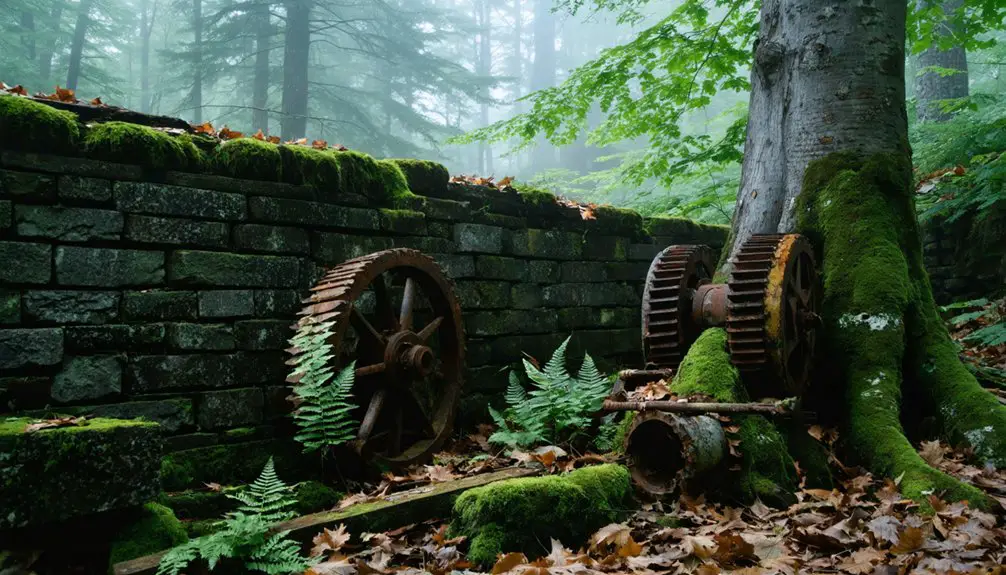
You’ll notice how the roads narrow, the houses thin out, and the silence deepens. Historical ruins and abandoned structures dot the surrounding countryside, hinting at communities that once thrived here during Vermont’s agricultural and logging eras.
The town of Waterford itself recorded just 1,268 residents in the 2020 census, reinforcing how dramatically this area has quieted over generations.
West View Farm on Hastings Road stands as a tangible anchor to that rural past, giving you a real place to stop, look, and feel history pressing through the landscape.
Where West Waterford Sits in Vermont’s Rural Northeast
Tucked into Vermont’s northeastern corner, Caledonia County holds West Waterford within a landscape shaped by dense forest, rolling farmland, and roads that feel deliberately unhurried. You’re steering through territory where rural scenery isn’t a backdrop—it’s the whole point.
The region sits far enough from major highways that arriving here feels intentional, almost earned.
Waterford anchors the area with a 2020 population of just 1,268, which tells you immediately what kind of place this is. Properties like West View Farm on Hastings Road stand as working examples of historical preservation, where Vermont’s agricultural past remains visible rather than replaced.
You won’t find tourist infrastructure crowding the roadside. What you’ll find instead is open land, quiet intersections, and a corner of New England that still moves at its own pace.
When To Drive This Vermont Ghost Town Route
Timing your drive through this corner of Caledonia County changes everything about what you’ll see and feel out on those roads. Fall strips the trees down to bare bones, and that skeletal landscape sharpens every shadow, making the area feel perfectly suited for the urban legends locals still whisper about.
Fall strips the trees to bare bones, and every shadow sharpens — perfect conditions for the legends locals still whisper about.
Spring thaw softens the mood but reveals crumbling stone walls and forgotten fence lines that tell their own quiet stories.
Summer keeps roads accessible and daylight generous, though you’ll lose some of that eerie atmosphere.
Winter is raw and isolating — ideal if you want those ghostly tales to actually land.
Whatever season you choose, arrive before dusk. The light fades fast out here, and West Waterford earns its mystique after dark.
Top Stops on This Vermont Ghost Town Road Trip
Cap your drive with research into Glastenbury, Vermont‘s true zero-population ghost town, which offers a sharp contrast to Waterford’s living but fading character.
Together, these stops build a complete picture of Vermont’s vanishing past.
Why West View Farm Is Waterford’s Most Haunting Landmark
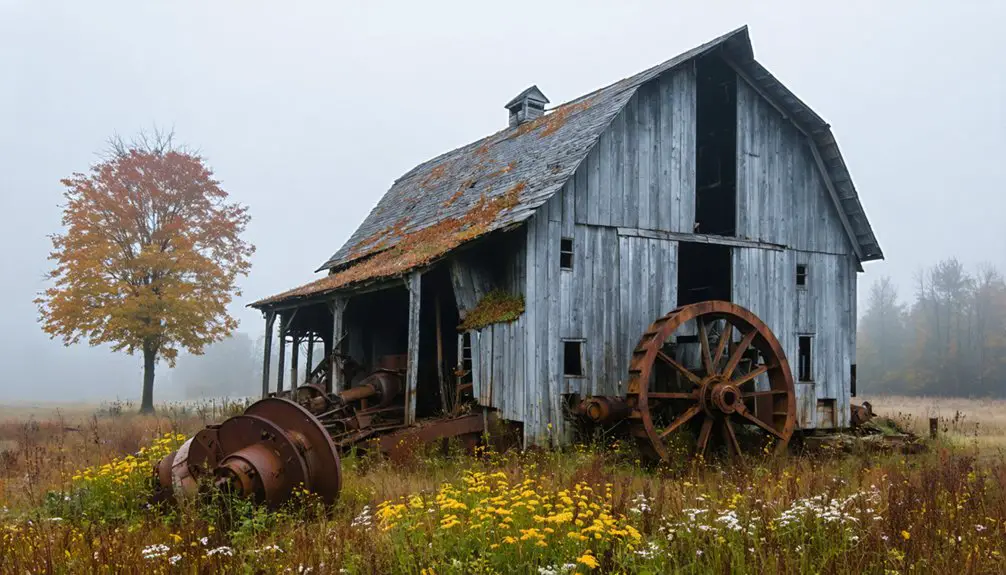
When you turn onto Hastings Road, you’ll feel the weight of West View Farm’s agricultural past pressing in around you. Its weathered structures stand as quiet testament to generations of Vermont farming life.
The historic property anchors the landscape with a haunting stillness that no modern roadside attraction can replicate. You’re not just passing a field here — you’re reading the physical record of a rural economy that shaped this corner of Caledonia County.
Farm’s Haunting Agricultural Legacy
Though it’s easy to drive past old farmland without a second glance, West View Farm on Hastings Road stops you cold. The property carries the unmistakable weight of Vermont’s agricultural past, where generations worked the same soil until the land eventually outlasted them.
You’ll notice the quiet immediately. Abandoned machinery rusts along field edges, frozen mid-task like time simply quit moving. The structures echo the broader Vermont pattern of haunted farmhouses that once hummed with daily labor but now stand as silent monuments to a fading way of life.
This isn’t staged atmosphere — it’s genuine history you can read in weathered wood and overgrown fence lines. West View Farm reminds you that freedom once meant working your own land, and that legacy doesn’t vanish easily.
Historic Hastings Road Atmosphere
How a single road can shift your entire sense of time becomes clear the moment you turn onto Hastings Road. The pavement gives way to a quieter Vermont, where weathered fence lines and overgrown fields replace any trace of modern sprawl.
You’re moving through agricultural history that hasn’t been cleaned up for tourists.
West View Farm anchors this stretch with a weight you can feel. Unlike urban decay found in cities, this rural deterioration is slower, subtler — abandoned structures reclaimed by seasons rather than vandals. Wooden boards gray under decades of northeastern winters. Stone foundations sink into meadow grass.
Hastings Road doesn’t announce its significance. It simply holds it, letting you piece together what farming life once demanded here and what quietly disappeared when that demand faded.
Other Vermont Ghost Towns Worth Adding to Your Route
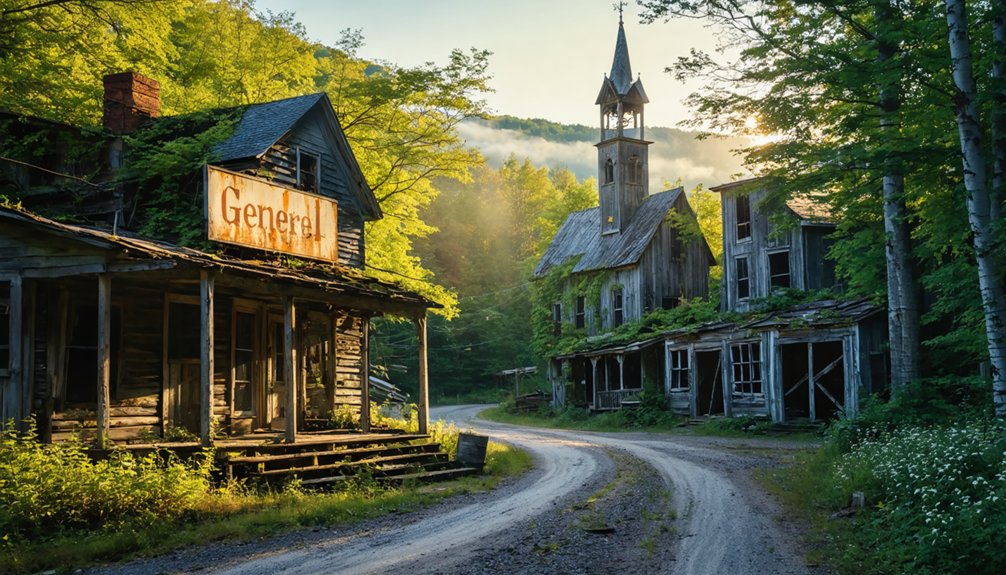
While West Waterford anchors your route, Vermont hides several other forgotten places worth steering toward. Glastenbury stands out immediately — a true ghost town with a population of zero, swallowed by dense wilderness and reachable only on foot. You’ll find urban decay written across its remaining abandoned structures, nature steadily reclaiming what settlers once built.
Further east, former logging communities scattered across the Northeast Kingdom tell similar stories of rapid growth and quiet collapse. These aren’t tourist-polished stops; they’re raw, unfiltered slices of Vermont’s past.
Adding one or two of these sites stretches your road trip into something richer than a single destination drive. You’re not just passing through history — you’re reading it firsthand, mile by mile, through silence and crumbling evidence left behind.
What To Bring on a Vermont Ghost Town Road Trip

Knowing where to go is only half the equation — showing up prepared makes the difference between a memorable trip and a frustrating one. Pack sturdy hiking boots, layered clothing, and rain gear, since Vermont’s rural back roads and woodland edges shift weather fast.
Showing up prepared transforms a frustrating trip into an unforgettable one — pack smart, dress in layers, and expect fast weather.
Bring a physical map alongside your phone — cell service disappears in Caledonia County’s quieter corners.
For photography tips, carry a wide-angle lens to capture overgrown farmsteads and weathered barns in their full context, and shoot during golden hour for dramatic natural light.
A fully charged power bank keeps your camera and GPS alive between stops.
Don’t overlook themed souvenirs — local general stores near Waterford often stock Vermont-made goods that connect you to the region’s authentic agricultural heritage long after you’ve returned home.
Frequently Asked Questions
Is West Waterford Officially Recognized as a Ghost Town by Vermont?
Vermont doesn’t officially recognize West Waterford as a ghost town, but you’ll discover fascinating historical landmarks and enthralling local legends that breathe an unmistakable abandoned-settlement spirit into this hauntingly rural, freedom-inviting corner of Caledonia County.
What Is the Current Population of Waterford, Vermont Today?
You’ll find Waterford, Vermont’s current population sits at 1,268 as of 2020. It’s a small, living community where historical landmarks like West View Farm and enthralling local legends reward your free-spirited exploration beautifully.
Are There Any Guided Ghost Town Tours Available Near Waterford?
Like a buried treasure map, guided ghost town tours near Waterford aren’t officially confirmed, but you can freely explore haunted legends and historic landmarks independently, carving your own untamed path through Vermont’s rural, atmospheric backroads.
Can You Access West Waterford by Public Transportation or Bus?
You’ll find that public transit options are extremely limited here—bus schedules don’t reach West Waterford’s rural roads. You’re better off embracing the freedom of your own vehicle to explore this isolated Vermont countryside independently.
Are There Overnight Accommodations Close to West Waterford, Vermont?
With Waterford’s population at just 1,268, you’ll find intimate lodging options nearby. You can stay at charming inns close to historic landmarks, explore local dining, and wake up ready for your next rural Vermont adventure.
References
- https://www.youtube.com/watch?v=fvSqxI3Qf5k
- https://en.wikipedia.org/wiki/Waterford
- https://www.youtube.com/watch?v=Mf7cQUCM3hI
- https://en.wikipedia.org/wiki/West_View_Farm