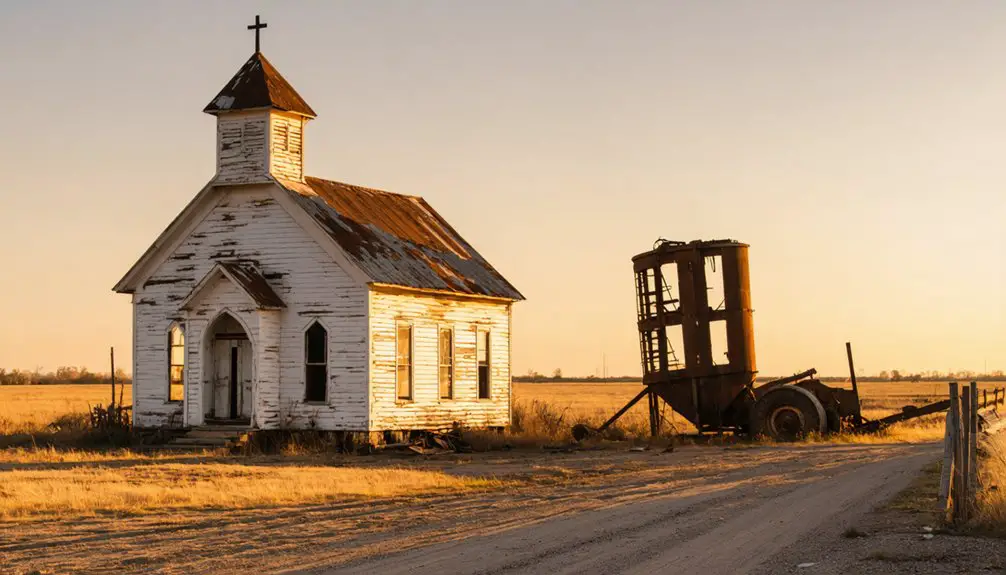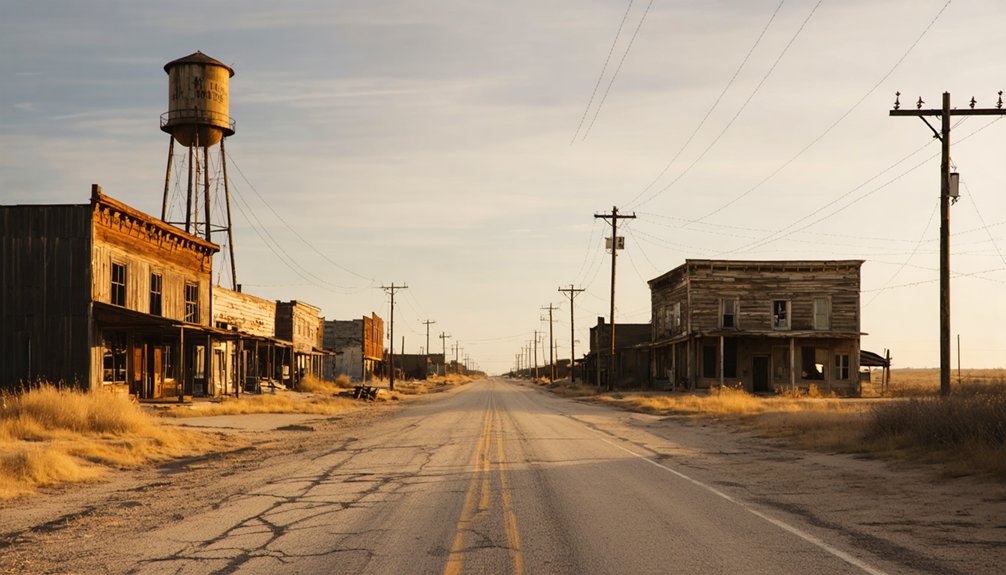
Planning a ghost town road trip to Marina, Oklahoma means heading to Ottawa County in the state’s northeastern corner, about 20 minutes from Miami or 30 minutes from Joplin, Missouri. You’ll find crumbling foundations, massive chat piles, and abandoned structures frozen in time. Bring sturdy boots, a camera, and a paper map since cell service is spotty. Spring and fall offer the best conditions—and there’s far more to uncover once you know where to look.
Key Takeaways
- Marina, Oklahoma, located in Ottawa County, is best reached from Miami (20 minutes), Joplin (30 minutes), or Tulsa (two hours) via US-69.
- Visit during spring or fall for the best weather conditions, avoiding winter due to frozen and impassable rural roads.
- Explore remnants like crumbling foundations, collapsed mine shafts, and massive chat piles that reflect the region’s industrial mining history.
- Bring sturdy boots, a first-aid kit, a physical map, and a camera, as cell service is limited in rural areas.
- Respect property boundaries, check access restrictions, and exercise caution around unstable structures to ensure a safe, responsible visit.
What Makes Marina, Oklahoma a Ghost Town Worth Visiting?
Though little remains of Marina, Oklahoma, that absence is precisely what makes it compelling — ghost towns don’t draw visitors with comfort or convenience, but with the raw, unfiltered evidence of lives once lived and suddenly stopped. You’ll find a place stripped of pretense, where urban legends circulate freely among locals and curious travelers alike.
Stories of abandoned families, sudden departures, and unexplained silence add a layer of mystery that no curated tourist site can replicate. Bring your camera because the photography tips you’ll actually use here involve natural light filtering through broken structures and wide-angle shots capturing vast, empty landscapes.
Marina rewards those who crave unscripted discovery over packaged experience — the kind of freedom that only truly forgotten places can offer.
How to Get to Marina, Oklahoma From Nearby Towns
Marina, Oklahoma sits in the heart of northeastern Oklahoma’s Ottawa County, making it most accessible from nearby towns like Miami, Oklahoma, which lies roughly within driving distance along rural state highways.
You’ll want to map your route in advance since back roads in this region can be unpredictable, especially after wet weather.
Whether you’re coming from Tulsa to the southwest or from the Kansas border to the north, budget extra travel time to account for the winding, rural terrain between stops.
Nearest Towns And Routes
How you reach Marina, Oklahoma depends largely on where you’re starting, but the surrounding stretch of northeastern Oklahoma makes for a surprisingly scenic drive through Ottawa County‘s rural backroads. From Miami, Oklahoma, you’re looking at a short drive northeast, making it a natural first stop before heading deeper into ghost town territory.
Joplin, Missouri sits close enough to the state line that crossing into Ottawa County feels seamless. Picher, a confirmed ghost town nearby, serves as a reliable geographic anchor when you’re orienting your route.
Locals passionate about preservation efforts and local folklore often point travelers toward these forgotten corridors, so don’t hesitate to ask around. Stick to state routes where possible, and expect narrow roads lined with remnants of a region that once thrived.
Driving Distance And Time
Getting to Marina, Oklahoma from nearby towns is straightforward once you know your starting point. From Miami, Oklahoma, you’re looking at roughly a 20-minute drive heading northeast.
If you’re coming from Joplin, Missouri, expect about 30 minutes on clear rural roads.
Picher, the region’s most recognized ghost town, sits close by and makes a natural first stop — you’ll absorb local folklore before you even reach Marina.
From Tulsa, budget around two hours heading northeast on US-69.
Road conditions vary seasonally, so check current routes before leaving.
These communities have benefited from quiet preservation efforts, meaning some remnants remain visible along the way.
Travel light, keep your map handy, and embrace the freedom of exploring Oklahoma’s forgotten corners on your own schedule.
What Ghost Town Remnants Survive in Ottawa County
When you explore Ottawa County, you’ll find that several ghost town remnants still stand as quiet affirmations to the region’s boom-and-bust past, from crumbling foundations to weathered structures frozen in time.
You can walk through abandoned buildings that once housed families, businesses, and civic life, though you’ll want to check access rules before stepping onto any private or restricted property.
Historical markers scattered across the county also help you piece together the stories behind the silence, giving context to everything you see.
Visible Ruins Still Standing
Although time has worn down much of Ottawa County’s former mining settlements, you’ll still find haunting remnants scattered across the landscape that make the drive worthwhile. Local legends breathe life into crumbling structures, and ongoing preservation efforts keep select sites accessible for curious travelers like you.
Watch for these striking survivals as you explore:
- Collapsed mine shaft frameworks rising from overgrown fields, their weathered timber silhouettes cutting against open sky
- Abandoned building foundations half-reclaimed by vegetation, outlining streets that once bustled with miners and merchants
- Chat piles — massive mounds of lead and zinc mining waste — dominating the horizon as eerie industrial monuments
Each remnant tells a fragment of the region’s boom-and-bust story, rewarding anyone willing to slow down and look closely.
Abandoned Structures Worth Exploring
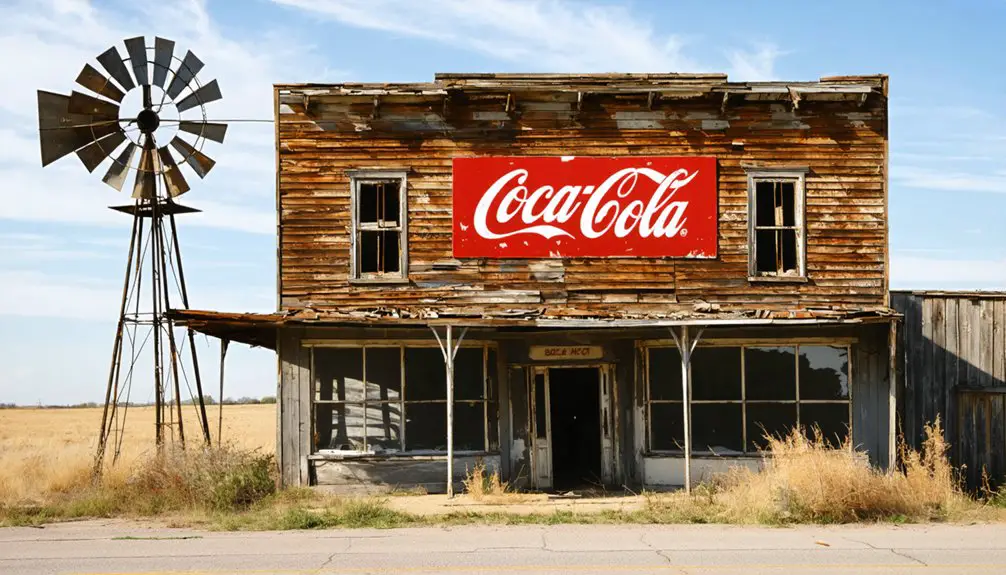
Because Ottawa County’s ghost town remnants aren’t cordoned off behind museum glass, you can walk directly through what remains — and what remains is striking. Collapsed storefronts, rusted framework, and crumbling foundations tell the region’s boom-and-bust story without a single tour guide.
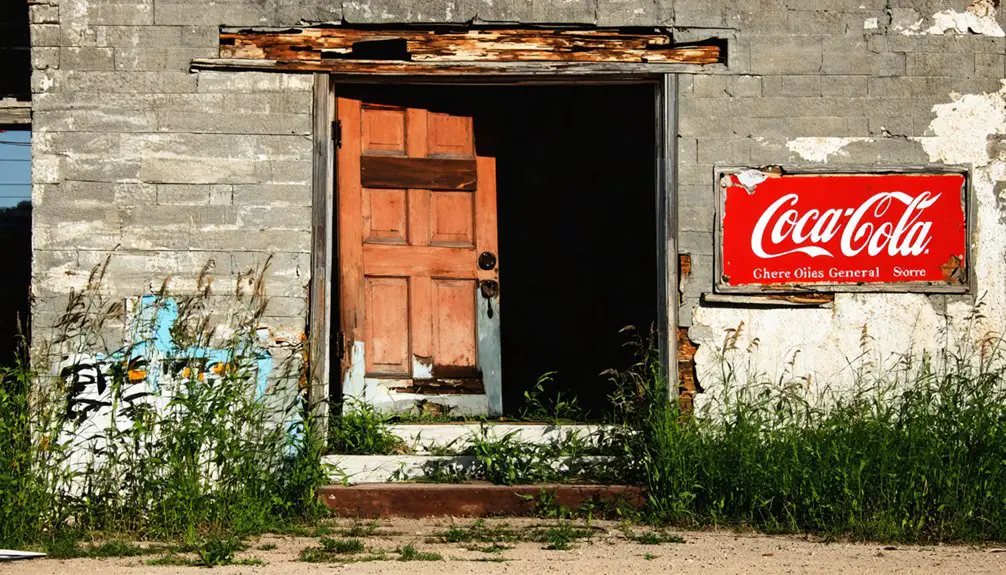
You’ll find structures that local folklore has transformed into something larger than their physical shells — buildings that carry whispered urban legends about former residents who never quite left. Some walls still bear faded signage. Others lean at angles that suggest the next hard wind will finish what decades started.
Bring a camera, wear sturdy boots, and move carefully through unstable ground. These structures reward the curious traveler who respects both the history embedded in the wreckage and the real physical risks that come with exploring it.
Historical Markers And Sites
While collapsed walls and rusted steel grab most of the attention, Ottawa County’s historical markers anchor the broader story in ways that raw wreckage can’t. These sites carry historical narratives that connect you directly to the people who built, worked, and eventually abandoned these communities.
Preservation efforts have kept several key reference points accessible for independent travelers like you:
- Picher’s memorial markers document the mining boom that shaped the entire region
- Ottawa County historical signage traces settlement patterns across multiple ghost town sites
- Roadside plaques identify former town boundaries where structures no longer stand
Stop at each marker deliberately. Read them. They transform an ordinary drive into something that actually means something, giving you context that no photograph alone can deliver.
Can You Access Marina Safely? Rules, Roads, and Restrictions
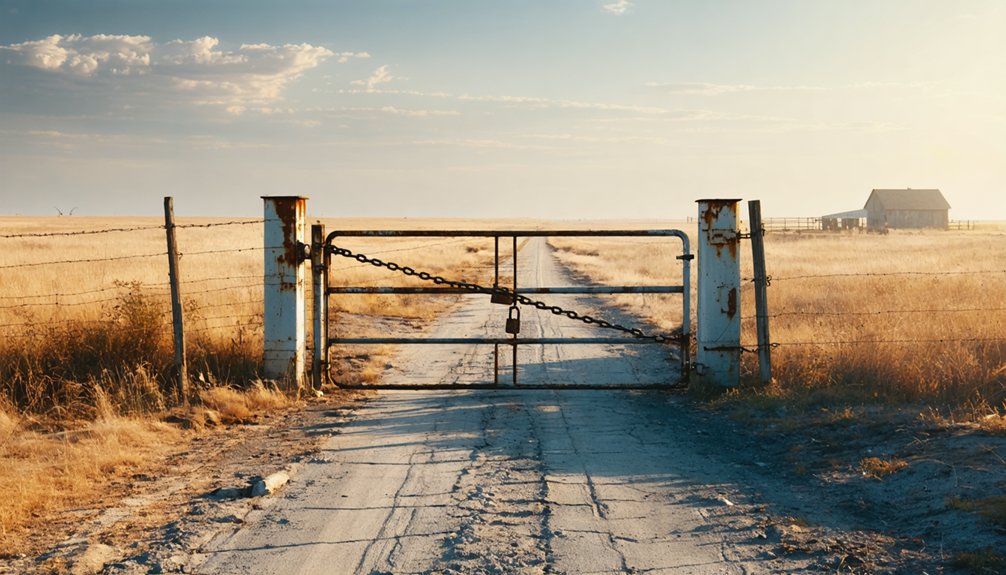
Before you load up the car and head toward Marina, you’ll want to know what you’re getting into — ghost towns don’t always roll out the welcome mat. Access restrictions vary by site, and what looks like open land on a map might be privately owned or posted with no-trespassing signs.
Check local regulations before you arrive. Some abandoned Oklahoma towns sit on private property, and entering without permission can mean fines or worse.
Rural roads leading to former mining communities are often unpaved, poorly maintained, or seasonally impassable, so a capable vehicle matters.
Bring a physical map as a backup since cell service gets spotty fast out here. Respecting boundaries keeps the trip legal and preserves these sites for every traveler who follows behind you.
Best Ghost Towns Near Marina to Add to Your Route
Once you’ve mapped Marina into your itinerary, the surrounding region rewards you with several ghost towns worth folding into the same trip. Northeastern Oklahoma’s Ottawa County holds layers of abandoned history that pair naturally with any Marina excursion.
Consider adding these stops:
- Picher, Oklahoma – A former city swallowed by mining collapse, carrying deep historical significance and striking visual remnants of its industrial past.
- Quapaw – A small community near former lead and zinc operations, where preservation efforts have kept cultural heritage visible.
- Commerce – Known beyond Route 66 lore, it offers context for the region’s boom-and-bust cycles.
Each stop expands your understanding of how entire communities vanished. Plan your driving order carefully, confirm road conditions beforehand, and you’ll move through this corridor with real purpose.
The Right Season and Gear for an Oklahoma Ghost Town Trip
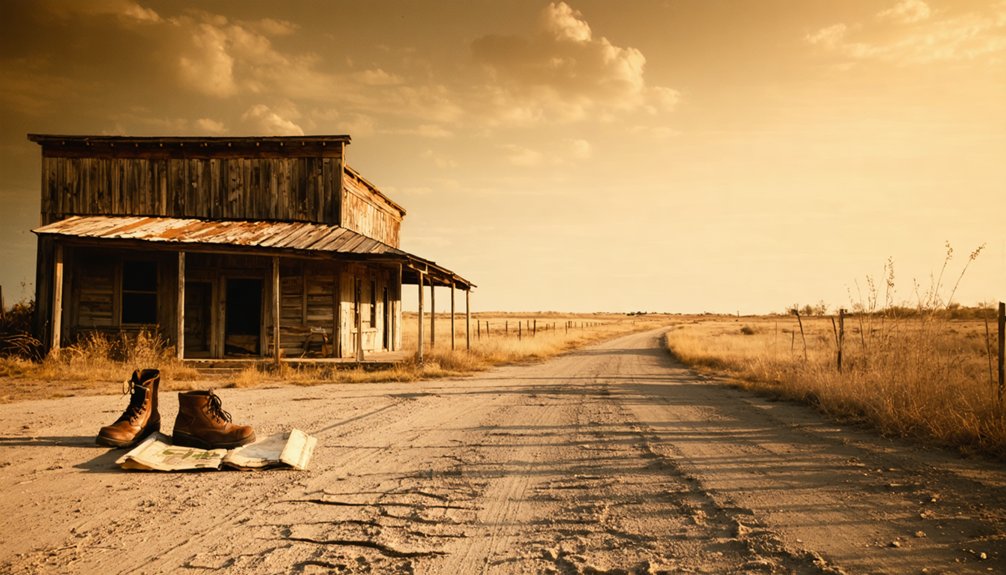
Timing your visit to northeastern Oklahoma’s ghost town corridor makes a genuine difference in what you’ll see and how comfortable you’ll be on the ground. Spring delivers wildflower blooms across abandoned lots and cracked foundations, softening the landscape’s harder edges while temperatures stay manageable. Fall offers similar comfort with rich color contrast against weathered structures.
Summer festivals occasionally pop up in surrounding Ottawa County towns, giving you cultural context between stops, though midday heat demands extra water and sun protection. Avoid January through February if possible — frozen rural roads limit access and cut exploration time short.
Pack sturdy boots, a first-aid kit, a paper map as backup, and a camera. Lightweight layers adapt quickly to Oklahoma’s unpredictable weather swings throughout the day.
Frequently Asked Questions
Is Photography Permitted at Abandoned Structures in Ottawa County Ghost Towns?
Like a key opening history’s door, you’ll find photography restrictions vary. Always check abandoned structure rules before shooting, since some Ottawa County sites have private ownership or access limits that could restrict your creative freedom.
Are There Guided Ghost Town Tours Available in Northeastern Oklahoma?
You’ll find guided ghost town tours in northeastern Oklahoma that weave historical preservation efforts with chilling local legends. Check with Ottawa County tourism offices, as local guides actively lead explorers through abandoned mining communities like Picher.
What Is the Best Budget Accommodation Near Marina, Oklahoma?
Since Marina, Oklahoma isn’t fully verified, you’ll want to explore affordable lodging in nearby Miami or Joplin. These towns offer budget-friendly stays like motels and inns, giving you freedom to roam northeastern Oklahoma’s fascinating ghost town landscapes affordably.
Do Any Ghost Towns in Ottawa County Host Annual Historical Events?
You’ll find thousands of haunted legends and vintage relics come alive at Ottawa County’s annual ghost town events! Local historical societies regularly host commemorations, tours, and festivals celebrating the region’s abandoned mining communities, giving you unforgettable freedom to explore the past.
Can Children Safely Participate in a Ghost Town Road Trip Here?
Yes, children can join you! Prioritize family safety by researching site conditions before you go. Ghost towns support historical preservation awareness, making them engaging, educational stops where you’ll spark kids’ curiosity about Oklahoma’s fascinating past.
References
- https://en.wikipedia.org/wiki/Picher
- https://en.wikipedia.org/wiki/List_of_ghost_towns_in_Oklahoma