To plan your ghost town road trip to Westwater, Utah, start near the Utah-Colorado border and approach through Ruby Canyon’s dramatic red sandstone walls. You’ll find sparse foundations and canyon silence where a forgotten settlement once stood. Pair it with nearby Cisco’s rusted relics for a fuller Eastern Utah experience. Travel in spring or fall, carry extra water, and bring a paper map. There’s far more to discover along this forgotten corridor.
Key Takeaways
- Westwater sits near the Utah-Colorado border, accessible via Interstate 70 or U.S. Route 128 through scenic red sandstone canyon country.
- Expect sparse foundations and open canyon scenery rather than preserved buildings, as the landscape itself tells the historical story.
- Pair Westwater with nearby ghost towns like Cisco and Grafton to maximize your road trip without unnecessary backtracking.
- Visit during spring or fall to avoid extreme summer heat on exposed desert roads, and always carry extra water.
- Bring paper maps, offline navigation, a full fuel tank, and high-clearance vehicle readiness for remote backroad segments near Westwater.
Why Westwater Is Worth the Drive Into Ruby Canyon
Even if you’ve seen plenty of desert scenery, the drive into Ruby Canyon toward Westwater carries a different kind of weight — you’re tracing a corridor that once pulled settlers, railroad crews, and river travelers west along the Colorado, and the ghost town at the far end of that push is the quiet proof of what they left behind.
Westwater history isn’t loud or theatrical. There are no grand museum displays or reconstructed storefronts. Instead, you get canyon scenery that frames everything — raw red walls, open sky, and the river still running where it always has.
That landscape tells the story better than any sign could. The drive earns its destination, and Westwater earns your attention precisely because it demands something from you to reach it.
How to Get to Westwater, Utah
Getting to Westwater means committing to eastern Utah’s open distances, and there’s really only one practical approach: head for the Colorado River corridor near the Utah-Colorado border, about eight miles west of the state line in Grand County.
Your access routes funnel through Interstate 70 or U.S. Route 128, both cutting through canyon country where the desert opens wide and the river runs red below sandstone walls.
Canyon country swallows the road whole — sandstone walls rising, the river burning red somewhere below.
These roads aren’t just logistics — they’re part of the journey itself, loaded with scenic highlights that connect you to the same frontier corridors settlers and railroad workers once traveled.
Come prepared with a full tank, a paper map backup, and the mindset that distance out here isn’t an obstacle — it’s the whole point.
What You’ll Actually See at the Westwater Site
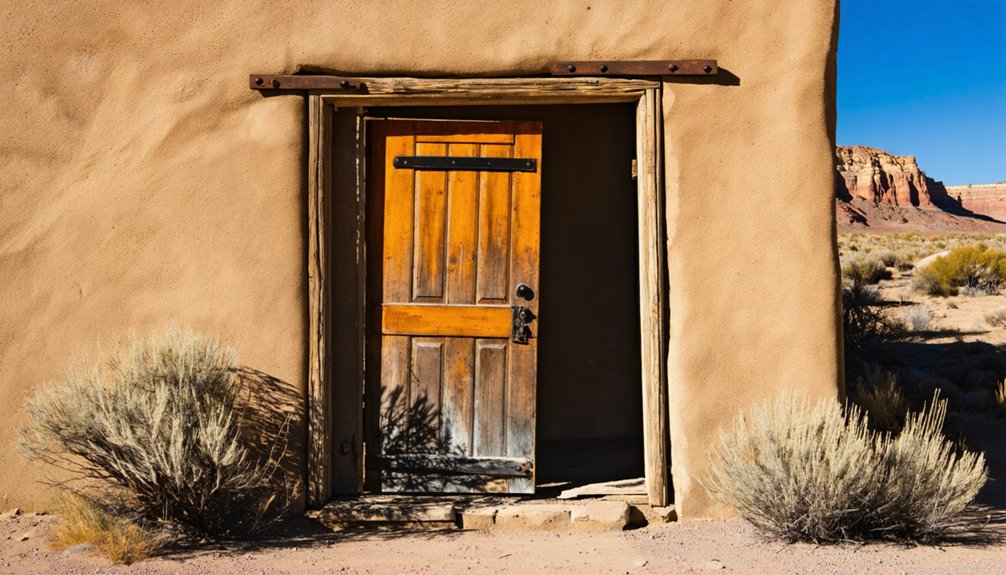
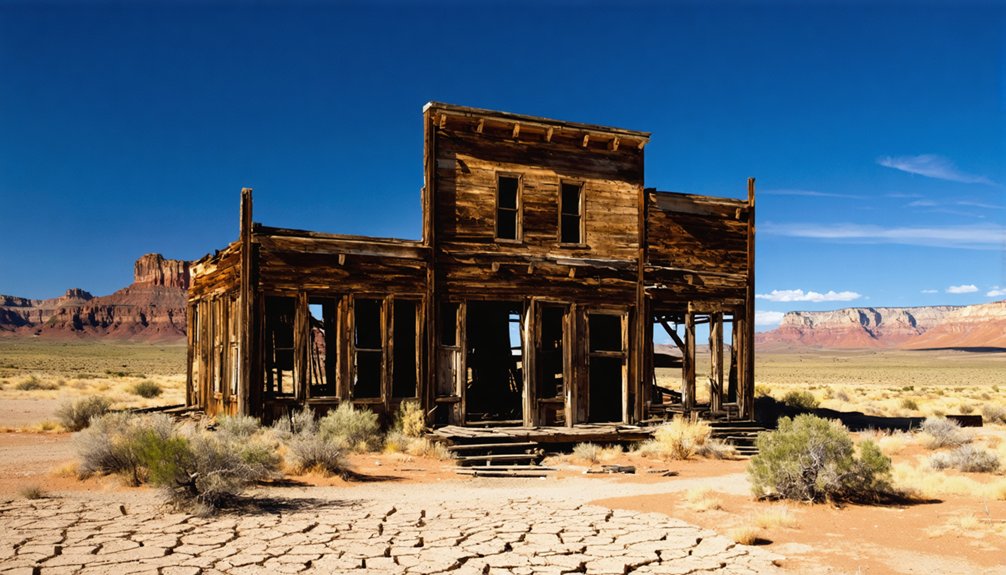
When you arrive at Westwater, don’t expect a movie-set ghost town packed with crumbling storefronts and rusting relics — what’s left is sparse.
The original structures have largely vanished, claimed by time, weather, and the indifferent desert, leaving the surrounding canyon landscape to do most of the storytelling.
You’re standing where frontier settlement, river travel, and western expansion once converged, and that historical weight carries more power than any standing wall could.
Limited Ruins Remain
If you arrive at Westwater expecting a preserved frontier streetscape, the site will quickly reset those expectations. Most abandoned structures are gone, leaving raw desert landscape as your primary reward. That landscape, however, earns its own respect.
Here’s what you’ll actually encounter:
- Sparse remnants — foundations and scattered debris hint at former settlement
- Open canyon scenery — the Colorado River corridor frames every angle
- Scenic photography opportunities — dramatic light, red rock, and solitude reward patient shooters
- Historical silence — the emptiness itself tells the story of abandonment
You’re not walking through a museum here. You’re reading a landscape that swallowed a town whole.
Come with curiosity, a full tank, and a camera ready to capture what frontier erasure actually looks like.
Landscape Over Architecture
Though the name “Westwater” still appears on maps, the town itself surrendered long ago to wind, heat, and river time. What you’ll find here isn’t a preserved street of storefronts — it’s raw canyon country doing what it’s always done: commanding your full attention.
The Colorado River cuts through this corridor with quiet authority, and the surrounding desert cliffs reward landscape photography far more than any crumbling foundation could.
You’re standing inside one of the West’s great scenic drives, where geology tells the real story of settlement, survival, and disappearance.
Let the absence of architecture work on you. Westwater’s power lives in its openness — the red rock, the river light, the vast silence that once swallowed a whole community. That’s worth the drive.
Other Ghost Towns to Add to Your Eastern Utah Route
If you’re already tracing ghost-town routes through eastern Utah, adding Cisco to your drive makes obvious sense—it’s a hauntingly photogenic ruin of rusted vehicles and crumbling buildings sitting right along the same Colorado River corridor.
Push your route south and you’ll reach Grafton, where restored pioneer structures and a weathered cemetery offer a more intact window into frontier-era settlement.
Round out your itinerary with Silver Reef, a former silver-mining boomtown north of St. George that carries some of the most layered mining history in the state.
Cisco Ghost Town Stop
Few ghost towns in eastern Utah match the raw, eerie atmosphere of Cisco, a crumbling railroad settlement that sits just off Interstate 70 before you reach the Colorado border.
Cisco history runs deep, shaped by rail lines that once made it essential and an economy that eventually collapsed entirely. Today, abandoned structures rust and decay across the open desert floor.
When you stop here, you’ll find:
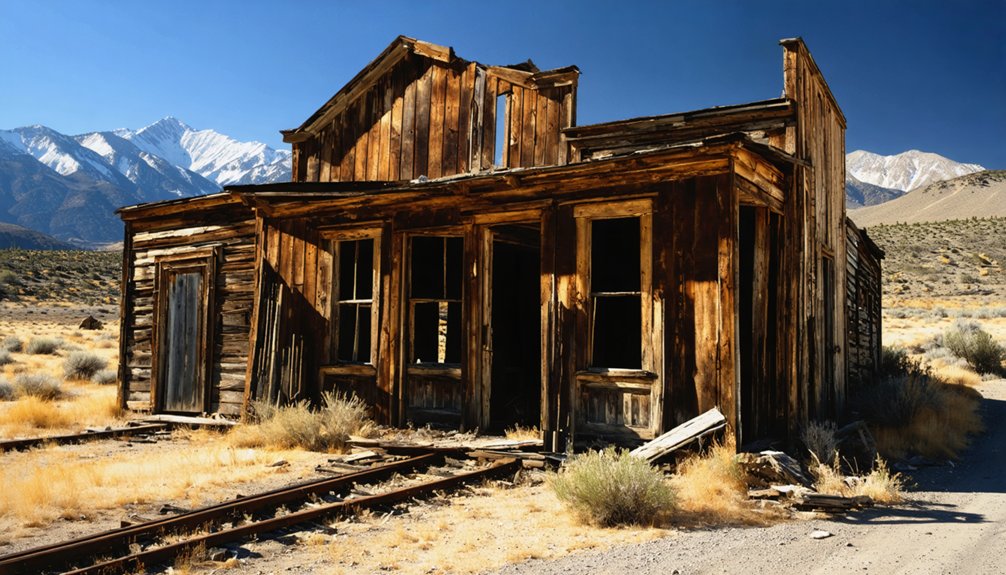
- Collapsed buildings slowly surrendering to wind and sun
- Rusting vehicles frozen mid-abandonment across the landscape
- Railroad remnants echoing Cisco’s former industrial identity
- Wide-open solitude with no crowds competing for your attention
Cisco rewards the curious traveler willing to wander freely through forgotten history before pushing west toward Westwater along the Colorado River corridor.
Grafton’s Preserved Buildings
Once you’ve pulled yourself away from Cisco’s decay and pointed your vehicle southwest, another ghost town beckons from Utah’s opposite corner — Grafton, where time stopped more gently.
Unlike Cisco’s rusted collapse, Grafton architecture actually survived. You’ll find restored adobe and stone buildings standing defiantly against the Virgin River backdrop, their walls whispering frontier-era struggles.
Grafton history runs deep — settlers abandoned the town repeatedly due to floods and conflicts before finally leaving for good in the early 1900s. The cemetery tells its own quiet story.
You’re not walking through rubble here; you’re walking through something rare — a ghost town that retained its bones. Bring your camera, respect the grounds, and let Grafton’s preserved silence remind you why this road trip matters.
Silver Reef Mining History
Silver Reef breaks every rule Utah ghost towns seem to follow — no railroad, no river crossing, just a stubborn silver strike buried inside sandstone that geologists swore couldn’t hold ore.
Here’s why Silver Reef deserves a detour:
- Mining techniques here defied convention — miners extracted silver directly from sandstone formations, shocking the industry.
- Economic impact peaked in the 1870s and 1880s, producing millions in silver and drawing thousands of workers.
- Abandoned structures like the Wells Fargo building still stand, carrying serious historical significance.
- Preservation efforts protect the site today, while local folklore about hidden veins and desperate miners keeps the ghost town atmosphere electric.
You’ll leave Silver Reef questioning everything you thought frontier settlement looked like.
How to Time and Route Your Westwater Road Trip
Planning your Westwater road trip around eastern Utah’s long distances and remote stretches makes all the difference between a satisfying adventure and a frustrating scramble.
Pair your stop with scenic routes like Byway 128, which traces the Colorado River through canyon country with the kind of raw beauty that rewards those chasing frontier history.
Timing considerations matter here — spring and fall offer manageable temperatures and longer usable daylight. Summer heat can punish unprepared travelers on exposed desert roads.
Start early, carry extra water, and verify road conditions before leaving pavement behind.
Combine Westwater with nearby Cisco to maximize your drive without backtracking. This corridor rewards deliberate planning, giving you the freedom to move through history at your own pace without racing the clock.
What to Bring for Driving the Eastern Utah Canyon Corridor
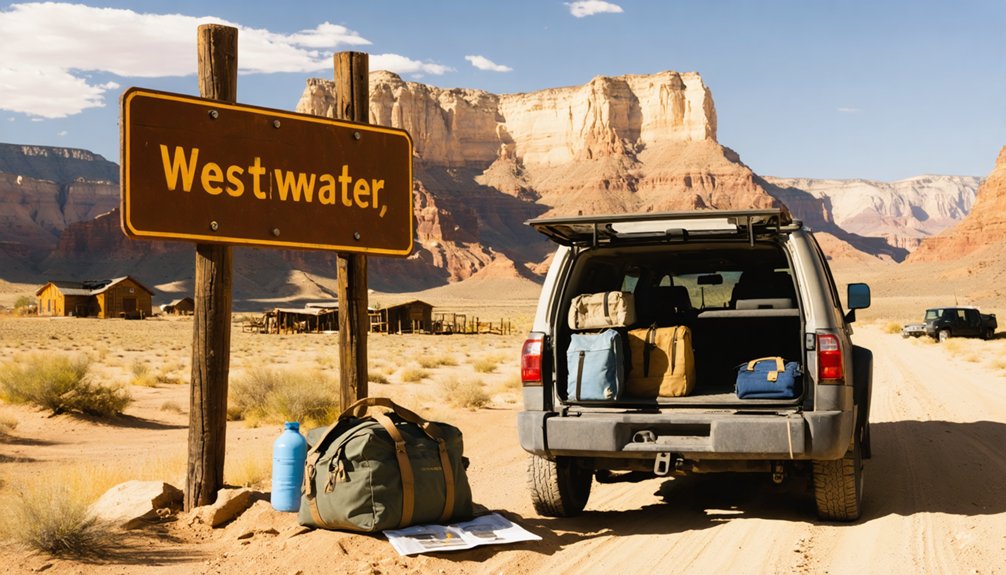
Knowing your route is only half the work — what you load into your vehicle before leaving can determine whether the trip unfolds smoothly or stalls somewhere between canyon walls and nowhere.
Eastern Utah’s canyon corridor demands respect, so pack smart before chasing frontier history.
These driving essentials keep your journey moving:
- Water and food — Services disappear fast; carry more than you think you’ll need.
- High-clearance readiness — Backroad segments near Westwater reward prepared vehicles.
- Canyon photography gear — Wide-angle lenses and extra batteries capture dramatic desert light beautifully.
- Paper maps and offline navigation — Cell service drops without warning in remote canyon stretches.
The frontier asked everything of travelers who came before you.
Match their grit with better preparation.
Frequently Asked Questions
Is Westwater Ghost Town Located on Public or Private Land?
The knowledge doesn’t confirm Westwater’s exact land ownership, so you’ll want to verify before you go. Research ghost town history and land ownership details in advance to guarantee you’re exploring freely and legally.
What Is the Best Time of Year to Visit Westwater?
“Make hay while the sun shines” — you’ll find the best season is spring or fall. You’ll dodge brutal heat, enjoy open roads, watch for local events, and feel the freedom of eastern Utah’s wild canyon country.
Are There Any Guided Tours Available at the Westwater Site?
You won’t find formal guided experiences at Westwater, but don’t let that stop you. Embrace the freedom of self-guided exploration, uncover local history independently, and let the canyon’s raw, untamed spirit speak directly to your adventurous soul.
Has Westwater Ghost Town Been Officially Recognized as a Historic Site?
Over 700 Utah ghost towns exist, yet official recognition remains rare. Westwater’s ghost town history lacks confirmed historic designation, but preservation efforts continue shaping its legacy. You’ll discover a raw, untamed site where frontier spirit still breathes freely.
Are Campgrounds or Overnight Facilities Available Near Westwater Ghost Town?
You’ll find limited camping options near Westwater, so plan ahead. The remote Colorado River corridor rewards adventurous spirits drawn to local attractions, canyon freedom, and frontier solitude — but bring your own supplies and verify access before you go.
References
- https://www.tripadvisor.com/Attraction_Review-g56952-d7037904-Reviews-or10-Cisco_Ghosttown-Cisco_Utah.html
- https://www.youtube.com/watch?v=JDIhYM_i-vU
- https://www.youtube.com/watch?v=Fpa2FZ7J46g
- https://www.onlyinyourstate.com/trip-ideas/utah/road-trip-ut-ghost-towns
- https://jacobbarlow.com/2016/05/03/westwater-utah/
- https://www.visitutah.com/things-to-do/history-culture/ghost-towns
- https://backroadsandotherstories.com/2018/09/22/ghost-town-cisco-utah/
- https://www.placesthatwere.com/2016/02/spending-night-in-abandoned-ghost-town.html
- http://www.expeditionutah.com/forum/index.php?threads/ghost-town-westwater-grand-county-utah.4617/
- https://www.facebook.com/groups/864060180303556/posts/7333038746738968/