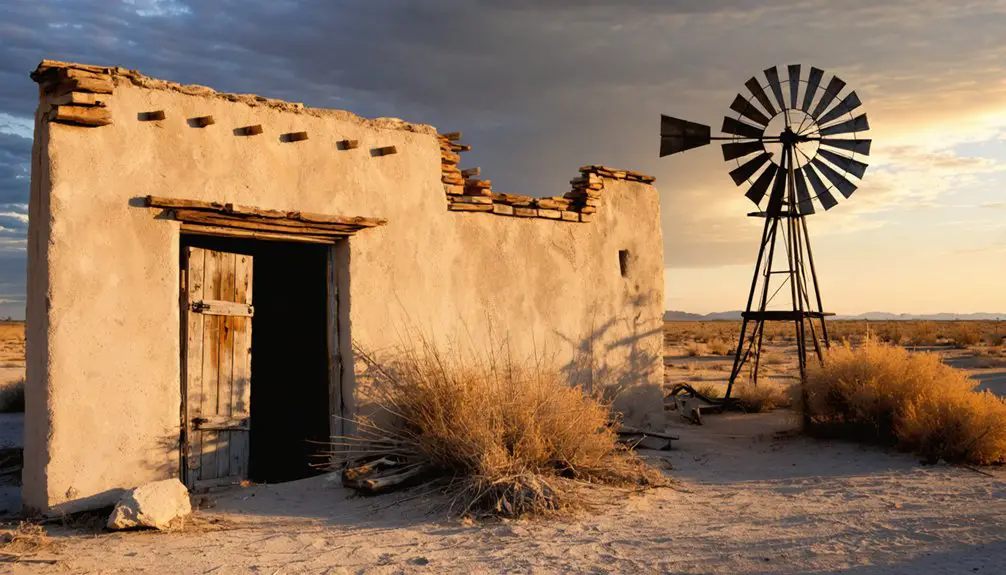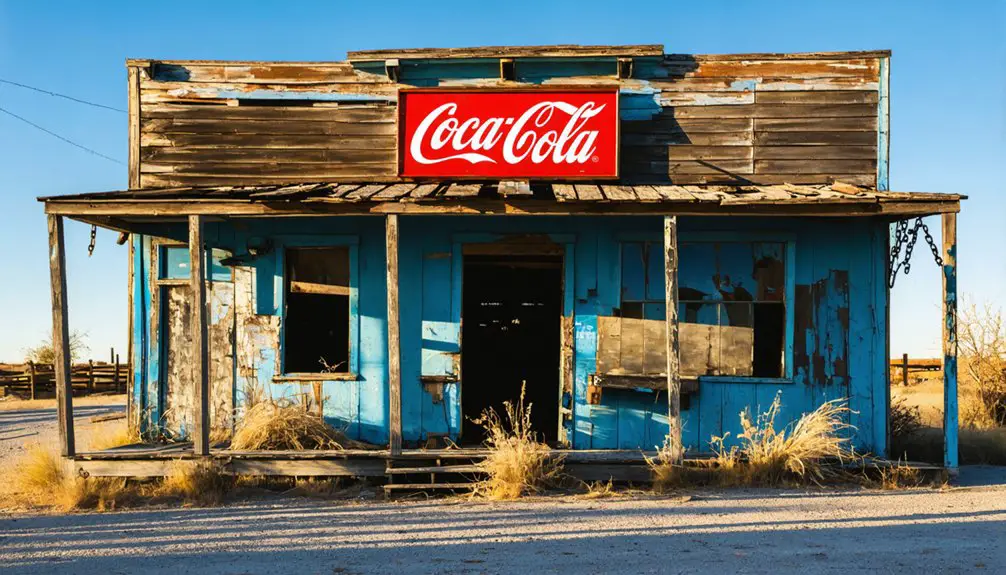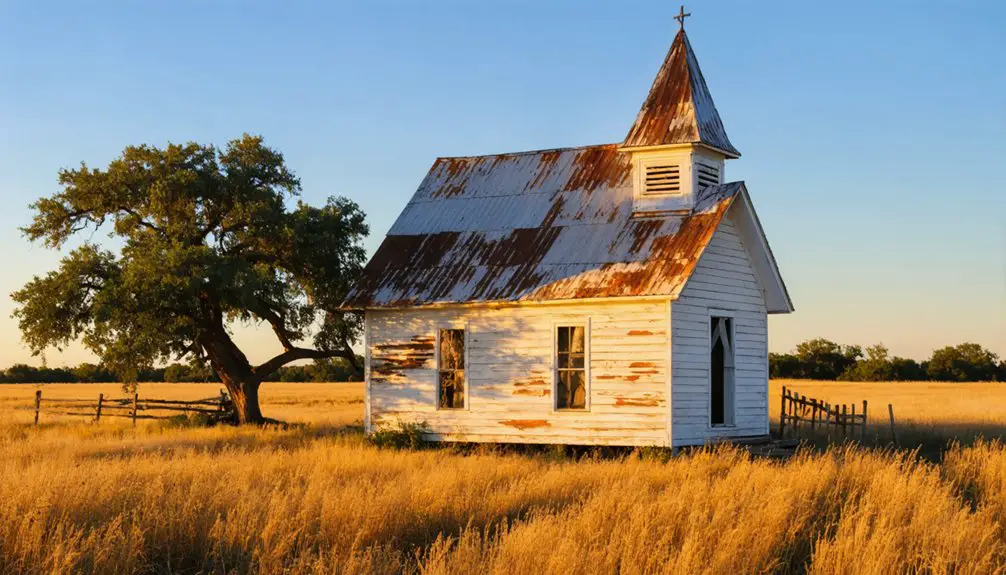
You’ll find Winkleman four miles east of Brenham along Highway 290, where 150 rescued historic buildings stand frozen in time since Ray Winkelmann’s 1986 financial collapse. Plug coordinates 30.137948, -96.317644 into your GPS, but remember you’re limited to roadside viewing—the California owners enforce strict no-trespassing rules. Plan your visit during March and April when bluebonnets frame the weathered facades, and choose midweek mornings for solitude among these abandoned dreams that once employed ninety workers before vanishing into Texas prairie legend.
Key Takeaways
- Located 4 miles east of Brenham on Highway 290 West; use GPS coordinates 30.137948, -96.317644 for easy navigation.
- Visit mid-March through April during bluebonnet season for scenic views; plan midweek trips to avoid weekend crowds.
- Property is privately owned with strict no trespassing enforcement; view historic structures only from the highway’s edge.
- Accessible by 2WD vehicles along the Highway 290 corridor between Austin and Houston in rural Central Texas.
- Former living history museum features 150 rescued historic buildings, though only 19 were restored before 1986 foreclosure.
The Rise and Fall of a Texas Dream Village
In the early 1980s, Ray Winkelmann surveyed a quiet five-acre stretch along Highway 290 and envisioned something extraordinary—a living museum where Texas history wouldn’t just be preserved but experienced. His planned development vision rescued 150 historic buildings from demolition, breathing new life into forgotten schoolhouses, plantation homes, and weathered saloons.
By 1983, nineteen restored structures welcomed wanderers seeking refuge from modern monotony. The Jezebel saloon poured drinks while cafes served road-weary travelers between Austin and Houston. At its peak, ninety workers kept the dream alive, their livelihoods woven into this manufactured past.
But the mid-1980s economic slowdown proved merciless. Within three years, financial collapse struck. The lost local economic impacts reverberated through Brenham when Washington County State Bank foreclosed in 1986, scattering both vision and prosperity.
Finding Winkleman: Location and Access Details
You’ll find Winkleman’s weathered remains four miles east of Brenham along Highway 290 West, where the ghost town sits tucked off Jozwiak Road in the rolling prairie between Washington and Waller Counties. The coordinates 30.137948, -96.317644 will guide your GPS directly to this forgotten settlement, visible from the highway’s south side as you travel the historic Houston-to-Brenham corridor.
Though any 2WD vehicle can navigate these roads with ease, bold “No Trespassing” signs guard the California-owned property, forcing you to experience this eerie destination from the highway’s edge rather than wandering its abandoned grounds.
Geographic Position Near Brenham
The ghost town of Winkleman emerges from the Texas landscape just four miles east of Brenham, nestled along the stretch of Highway 290 that connects Austin to Houston through Washington County‘s gently rolling terrain. You’ll find this abandoned collection of historic structures where the Hill Country begins its gentle fade into coastal plains, a rural central Texas community that exists now only in weathered timber and fading memories.
As you explore the region, you might be intrigued by other ghost towns near Kirkland, Texas, each with their own stories etched into the dusty ground. The remnants of these once-thriving communities serve as a poignant reminder of the people and events that shaped this part of the state. Journeying through these forgotten places can evoke a sense of wonder and nostalgia for a time long past.
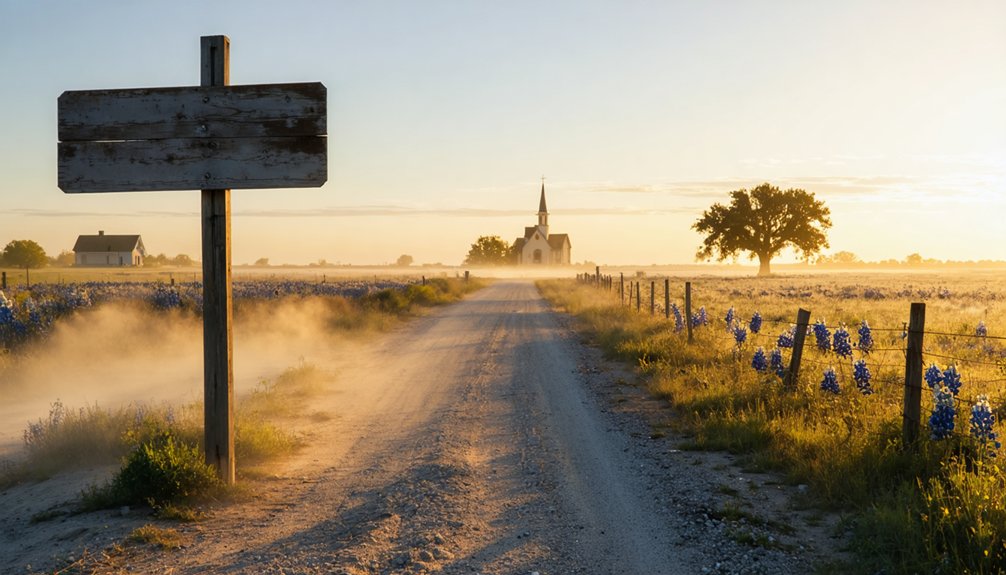
The site’s regional ties to Brenham remain evident in its proximity—close enough to glimpse from the highway, yet isolated enough to feel genuinely forgotten. Your journey takes you through open country where antique shops and historic preservation meet modern abandonment. The signpost still marks the spot along 290W, beckoning travelers who crave stories the ordinary world has left behind.
Highway Access Routes
Finding Winkleman requires nothing more than westbound travel along US Highway 290, where the ghost town materializes roughly four miles east of Brenham between the historic markers of Chappell Hill and the Washington County seat. Your 2WD vehicle handles this journey perfectly along the busy Austin-Houston corridor, where directional markers guide you toward Washington County’s vanished settlement. The electrified signpost still stands sentinel beside the asphalt, visible from your windshield as you cruise past.
You’ll spot the remnants from scenic overlooks along the highway—no specialized equipment needed, just eyes trained for history’s fragments. Spring’s bluebonnet season offers ideal viewing conditions, though the site remains accessible year-round. Security lighting illuminates what’s left after dark, a ghostly beacon along this well-traveled route where freedom-seekers once built their dreams.
Private Property Viewing Restrictions
Before you venture off Highway 290’s shoulder, understand that Winkleman’s five acres belong to California-based owners who’ve erected multiple “No Trespassing” signs across the property—warnings that carry genuine legal weight under Texas statutes.
The land’s fragmented into parcels with property title inconsistencies stemming from its 1986 bank foreclosure and subsequent 1989 auction, making rightful access nearly impossible to determine. You’ll find no clear owner contact procedures posted on-site, leaving curious explorers in legal limbo.
Possible squatters inhabit remnants of the lone surviving building, adding another layer of unpredictability to unauthorized visits. Your freedom to explore ends where private property begins—respect those boundaries or risk genuine legal consequences that’ll dampen any ghost town adventure before it starts.
What Remains to See Today
Very little remains of Winkleman’s once-ambitious vision along Jozwiak Road today. You’ll spot a solitary building and weathered restaurant sign through the fence—mere shadows of the nineteen historic structures that once stood here. The property’s California-based owners keep the five-acre site locked down tight, leaving you to wonder about rumored demolition plans versus any future restoration prospects.
What you’re viewing isn’t a naturally abandoned settlement but a fabricated ghost town that’s become genuinely ghostly through neglect. The deterioration that began in 1994 has nearly completed its work. From Highway 290, you can glimpse these skeletal remains of a developer’s dream that housed 150 structures and employed 93 people before economic reality intervened in the mid-1980s.
Best Times to Visit for Bluebonnets and Weather
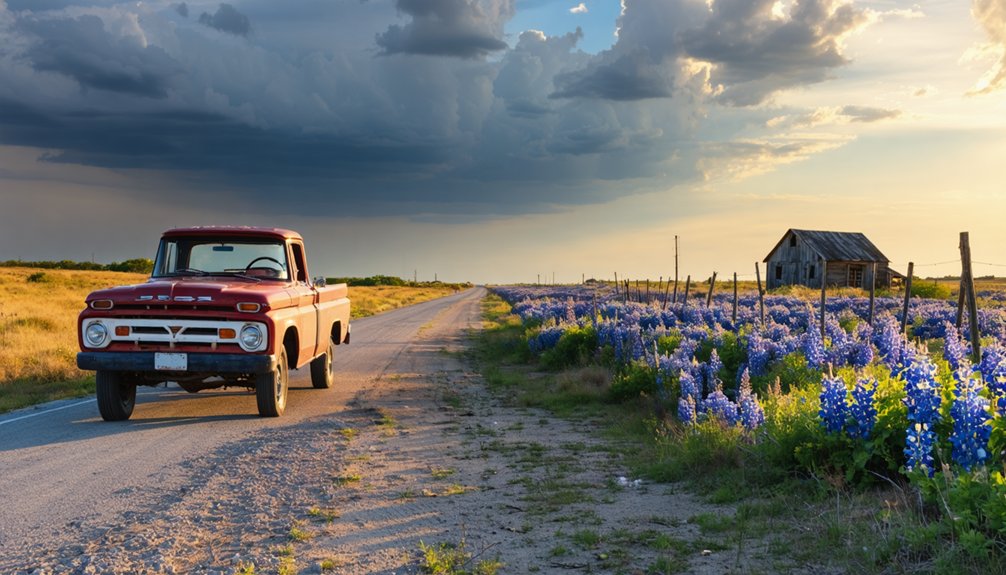
Texas bluebonnets transform the landscape surrounding Winkleman into a sea of indigo from mid-March through April, though Mother Nature doesn’t always cooperate with your travel plans. Peak blooming periods depend heavily on fall rainfall—October and November moisture determines whether you’ll encounter sprawling wildflower fields or sparse patches. Recent drought conditions have created unpredictable displays across Central Texas, so you’ll want to monitor local bloom trackers before hitting the road.
For ideal viewing conditions, aim for midweek visits when you’ll have these forgotten backroads to yourself. The flowers typically last two to four weeks after flowering begins. Plan flexibly around spring weather patterns, keeping your schedule loose enough to chase the best shows when they emerge unexpectedly across different microclimates.
Important Legal Considerations for Visitors
While the romance of abandoned buildings and forgotten homesteads beckons explorers off Highway 290, Winkleman exists behind locked gates and “No Trespassing” signs—this isn’t public land waiting for discovery. California-based owners actively enforce property owner rights, and unauthorized entry risks criminal trespassing charges under Texas law. You’ll find boarded structures, occupied residences, and surveillance measures protecting what remains.
Before your cameras click or boots touch gravel, contact the owners directly for written permission. The weathered boards and crumbling stone you’re drawn to come with legal boundaries that respect private ownership. Even documentary photographers face prosecution without authorization. Progressive deterioration means unstable floors and collapsing walls compound your liability beyond legal consequences.
Freedom-seekers understand that genuine exploration honors boundaries—arrange legitimate access through special events or documented permission first.
Exploring Nearby Brenham and Chappell Hill Attractions
Since Winkleman’s locked gates may redirect your journey, downtown Brenham awaits just fifteen miles south—a National Register Historic District where antique storefronts line brick-paved streets and outdoor murals splash color across century-old walls. Historic preservation efforts shine through restored buildings housing the local artisan community’s galleries and craft shops.
You’ll discover Blue Bell Creameries‘ production tours, the Antique Rose Emporium‘s eight acres of blooming gardens, and the 1866 underground cistern at Toubin Park—Texas’s oldest public utility system.
Beyond Brenham, Chappell Hill’s historic churches and restored Providence Baptist Church parsonage reveal post-Civil War Freedom Colonies through interactive exhibits. The Fire Museum’s antique engines and Swearingen folk art collections await exploration without admission fees—just authentic Texas heritage unfolding at your own pace.
Frequently Asked Questions
What Types of Historic Buildings Did Ray Winkelmann Originally Collect and Restore?
You’ll discover Ray Winkleman’s passion for historic artifact preservation through relocated plantation houses, schoolhouses, and commercial buildings—rescued wooden structures that sparked rural community revitalization. He transformed approximately 150 endangered Texas buildings into romanticized retreats and authentic gathering spaces.
Why Did Local Businesses Choose to Lease Space in Winkleman Village?
You’d think affordable rent and tourist destination appeal were irresistible—imagine avid customers streaming off Highway 290, wallets open. But local businesses never quite bought Ray’s vision, leaving him hiring his own staff instead of welcoming neighboring entrepreneurs.
How Many Employees Worked at Winkleman During Its Peak Operations?
You’d have witnessed 93 employees bustling through Winkleman’s streets during peak production levels in the early 1980s. This number of employees kept multiple restaurants, stores, and the Jezebel saloon thriving before freedom-seeking visitors vanished.
What Happened to the 150 Historic Buildings Winkelmann Collected?
Of Winkelmann’s 150 historic Texas buildings, only 19-25 reached his Brenham site. The fate of original buildings proved tragic—foreclosure, economic decline, and neglect sealed their demise. By 2020, demolition erased nearly everything, leaving just ruins and faded dreams.
Are Any Original Structures Safe to Photograph From Public Roads?
You can safely photograph remaining structures from Highway 290’s shoulder, where accessibility of public viewpoints lets you capture weathered facades without trespassing. Safety precautions for photography include staying roadside, respecting posted boundaries, and watching for traffic while shooting these haunting remnants.