Planning a road trip to York, Alaska requires serious preparation for one of America’s most remote ghost towns. You’ll fly into Nome, then arrange overland transport across 70 miles of tundra and lava fields to reach this haunting 1899 tin mining settlement. Visit during late May or early September for ideal conditions, and pack satellite communication devices, survival gear, and Arctic-rated clothing. The white crosses marking Spanish flu victims demand respectful silence. Your journey into this isolated corner of the Seward Peninsula will reveal layers of tragedy and resilience few travelers ever witness.
Key Takeaways
- York is 70 miles west of Nome on the Seward Peninsula, accessible only by unpaved roads or off-road vehicles.
- Visit weathered 1899 mining structures and white crosses marking graves from the 1918 Spanish flu epidemic that killed all residents.
- Plan travel for late May or early September for ideal weather, fewer crowds, accessible roads, and potential northern lights.
- Bring GPS units, satellite phones, survival kits, Arctic clothing, and first aid supplies for this remote, self-reliant journey.
- Consider hiring local guides with off-road vehicles to navigate the challenging terrain across lowlands and lava fields.
Getting to York on the Remote Seward Peninsula
The ghost town of York lies tucked against the south coast of the Seward Peninsula at coordinates 65° 29′ 39.998″ N, 167° 14′ 16.001″ W, where the York Mountains rise 1,709 feet above sea level. You’ll fly into Nome first—it’s the closest airport, roughly 70 miles east. From there, you’ll face serious access challenges since no paved highways reach York.
Your overland transportation options include unpaved roads, historical trails threading through glacially carved terrain, or hiring local guides with off-road vehicles. The journey crosses broad lowlands and unvegetated lava fields, remnants of the ancient Bering land bridge. Teller sits 25 miles southeast, while Cape Prince of Wales marks the westernmost point 20 miles northwest. This isn’t a destination for casual travelers—it demands preparation and self-reliance.
What Remains of the 1899 Tin Mining Settlement
When you finally reach York, you’ll find a haunting landscape of weathered wooden structures clinging to the tundra, their skeletal frames memorial to over a century of Arctic storms.
The most poignant remnants are the white crosses marking graves from the devastating 1918 Spanish flu epidemic that decimated the community. Between collapsing cabins and rusted mining equipment, these monuments stand as stark reminders that York’s story encompasses both industrial ambition and profound human tragedy.
Standing Structures and Ruins
Scattered across the windswept tundra near Alaska’s westernmost edge, York’s remnants tell a story of ambition frozen in time. You’ll find abandoned structures gradually surrendering to the elements—weathered timber frames, collapsed roofs, and foundation stones marking where miners once chased tin fortunes.
The settlement’s exact architectural inventory remains elusive due to lost historical records and decades of harsh Arctic conditions that’ve erased much evidence of the 1899 boom.
What survives depends largely on when you visit and what recent storms have claimed. Some buildings stand as skeletal silhouettes against endless skies, while others exist only as depressions in the permafrost.
You’re free to explore these unguarded ruins, walking among tangible connections to Alaska’s mining heritage without ropes or restrictions limiting your discovery.
Spanish Flu Memorial Sites
Among York’s weathered ruins lies one of Alaska’s most haunting pandemic memorials—a settlement where the 1918 Spanish flu didn’t just devastate a community but erased it entirely. You’ll walk through a ghost town with profound historical significance, where every collapsed structure testifies to complete annihilation.
The virus followed mail carriers’ routes from Nome that October, arriving via steamship from Seattle and spreading through dog sled teams across the Seward Peninsula.
The site’s cultural impact resonates beyond York’s boundaries—it represents the 750 lives claimed on the peninsula and the 82% of Alaska Territory flu deaths suffered by Alaska Natives. While strict quarantines saved neighboring villages like Council and Shishmaref, York recorded zero survivors, making these tin mining ruins a sobering monument to 1918’s Arctic toll.
The Tragic Story of the 1918 Spanish Flu Outbreak
In October 1918, a steamship docked at Nome carrying what locals called “the Purple Death”—the Spanish flu arrived in Alaska with devastating force.
York, a small Inupiaq village near the Bering Strait, suffered complete annihilation when the disease swept through in November, killing every single resident within days. The virus didn’t stop there; survivors and mail carriers unknowingly spread it to neighboring Wales, where entire families perished in their homes with no one left to bury them.
“The Purple Death” Arrives
The steamship S.S. Victoria docked at Nome on October 20, 1918, carrying more than mail—it brought death itself. Despite pre-boarding health checks, the virus slipped through, earning its grim nickname “The Purple Death” as victims’ skin turned dark from oxygen deprivation.
You’ll find York’s story mirrors countless Native communities: supply men loaded dog sleds in Nome, mail carriers followed their routes, and the flu raced across the Seward Peninsula faster than any quarantine could stop it. Between November 15-20, nearby Brevig Mission lost 72 of 80 residents.
The cultural impact devastated Alaska Natives, who suffered 82% of deaths despite their smaller numbers. Yet community resilience emerged—some villages like Council survived through strict isolation, preserving their independence against impossible odds.
Complete Population Loss
When that boy from York died and his father carried the small body along the frozen trail to Wales for burial, he unknowingly delivered a death sentence to both communities. The grieving father fell ill shortly after burying his son, triggering an unstoppable epidemic.
Within days, every single resident of York perished—a complete extinction that earned it the grim distinction of total population loss during the 1918 pandemic.
Today, you’ll find no descendants mourning the loss, no oral histories passed down, no last residents’ stories to uncover. The proximity of the Wales trail facilitated the virus’s merciless spread, transforming York from a living community into Alaska’s most haunting ghost town. Every soul vanished, leaving only abandoned structures as silent witnesses.
Disease Spreads to Wales
As York’s population breathed its last, the virus had already hitched a ride seventy miles southeast to Wales, carried by the grieving father who’d sought a proper burial for his son.
What followed mirrored patterns devastating Wales across the Atlantic—death rates soaring 30–40% higher in these remote settlements than surrounding rural areas. The social impacts of spanish flu devastated tight-knit communities where everyone depended on everyone else. Within weeks, Wales lost nearly its entire population of seventy-eight souls.
You’ll find the long term economic consequences still echo through Alaska’s abandoned infrastructure—rotting docks, collapsed stores, silent mining equipment. The pandemic’s preference for younger, healthier individuals meant entire working populations vanished, leaving no one to rebuild what isolation and disease destroyed together.
Best Time to Visit and Weather Considerations
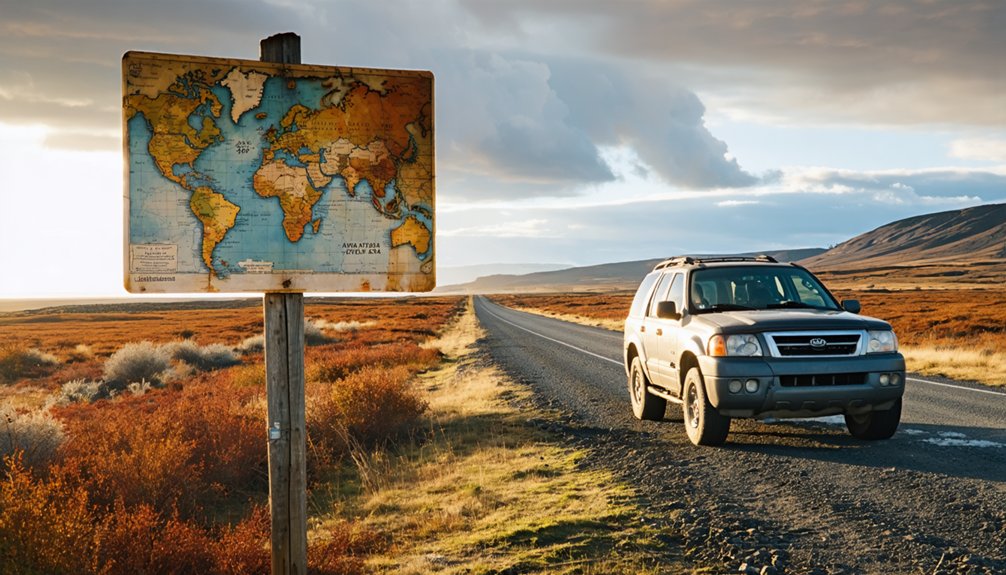
Planning your ghost town road trip to York, Alaska requires careful consideration of the state’s dramatic seasonal shifts and how they’ll shape your experience. Summer’s peak season weather patterns deliver mild 62°F-65°F temperatures and endless daylight from June through August, though you’ll encounter maximum crowds and higher costs.
In addition to York, there are numerous ghost towns to visit in Alaska that offer a glimpse into the state’s rich history and allure. Exploring these sites can provide a unique perspective on life in the far north, particularly during the quieter shoulder seasons in spring and fall. Each town has its own story, making them fascinating destinations for adventurers seeking something off the beaten path.
The shoulder season advantages shine in May and September, when you’ll find fewer tourists, reduced prices, and still-accessible roads to remote areas. September offers spectacular fall foliage and potential northern lights viewing—a rare combination.
Winter transforms York into an isolated, aurora-lit destination from October through March, but extreme cold and minimal daylight present serious challenges. For ideal access and solitude, target late May or early September when roads remain navigable yet crowds thin considerably.
Essential Supplies and Safety Precautions for Remote Travel
Before you venture into York’s isolated wilderness, you’ll need to assemble extensive survival gear that goes far beyond typical road trip supplies. Pack backcountry communication devices including GPS units, satellite phones, and SPOT communicators—cell service won’t reach these remote corners. Your survival kit demands first aid supplies, fire-starters, flares, extra batteries, and emergency food rations.
Bear country requires specific preparations: carry deterrent spray with proper bear repellent storage accessible on your belt, never buried in your pack. Include personal flotation devices for water crossings, winter survival equipment, and a complete vehicle emergency kit following Alaska guidelines. File a detailed travel plan with emergency contacts before departing, and guarantee someone tracks your daily progress through this unforgiving frontier territory.
Nearby Points of Interest and the Village of Wales
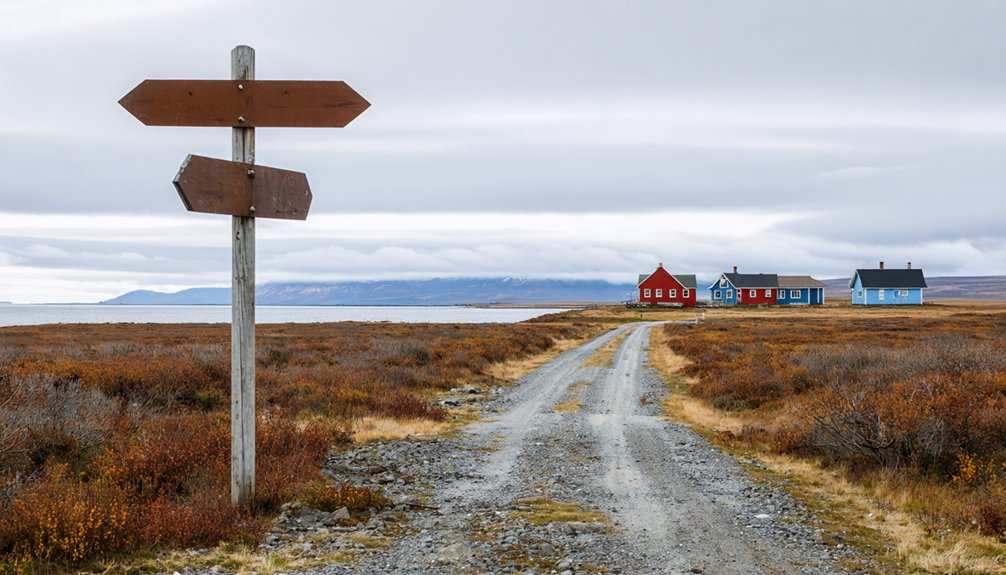
While York stands abandoned along the coast, the nearby village of Wales maintains its ancient heritage as one of Alaska’s most historically significant Inupiaq communities. Perched at the westernmost point of North America, Wales offers adventurers remarkable connections to both past and present.
Notable features include:
- Archaeological excavations at Kurigitavik and Hillside sites revealing Birnirk culture dating to 500 A.D.
- Wales Sites National Historic Landmark protecting burial mounds and cultural heritage preservation areas
- Lopp Lagoon’s rich salmon and waterfowl hunting grounds
- Panoramic views across 68 miles of Bering Strait to Russia’s mainland
- Diomede Islands visible 27 miles northwest, marking the international boundary
You’ll discover a living community where Kingikmiut people still honor traditions spanning 1,500 years at this strategic crossroads of two continents.
Respecting the Historical Site and Inupiat Heritage
Standing before York’s weathered remnants requires more than curiosity—it demands reverence for the lives lost and cultures forever altered. You’re walking through a landscape where Inupiats thrived for millennia before European settlement disrupted their ancestral practices.
The 1918 pandemic didn’t discriminate, claiming every soul in York—miners, Native residents, families—leaving behind empty structures as monuments to tragedy.
Approaching this site means honoring native perspectives that recognize this land’s deeper history beyond the mining boom. Cultural sensitivities matter here: photograph respectfully, leave artifacts untouched, and acknowledge that indigenous communities bore disproportionate suffering during this era.
You’re not just visiting ruins; you’re bearing witness to forcible displacement, pandemic devastation, and the fragility of frontier communities. Let that weight inform your exploration.
Frequently Asked Questions
Are There Any Guided Tours Available to Visit York Ghost Town?
No guided tours reach York’s abandoned dredges—you’ll chart your own path like prospectors once did. Local tour guides don’t venture here; self-guided tours require private boats or floatplanes. True freedom means exploring this wilderness ghost town independently.
Can I Camp Overnight at the York Settlement Site?
Overnight camping policies at York aren’t formally established since it’s abandoned land. You’ll find accessibility considerations challenging due to remote terrain, but dispersed camping follows standard BLM guidelines—camp responsibly, leave no trace, and embrace true Alaskan wilderness freedom.
What Photography Equipment Works Best in York’s Arctic Conditions?
You’ll need mechanical SLR cameras like the Olympus OM1, telephoto lenses (70-200mm), and polarizing filters for York’s extreme cold. Bring backup batteries in warm pockets, consider drone photography for aerial perspectives, and adjust low light settings for arctic conditions.
Do I Need Special Permits to Explore York’s Abandoned Structures?
You’ll likely need permits from the local Alaska Native corporation due to private property concerns—York sits on Native lands. Beyond paperwork, take safety precautions seriously: these structures are dangerously deteriorated, making exploration risky without proper preparation.
Are There Any Local Legends or Ghost Stories About York?
York doesn’t have widely documented ghost stories like Alaska’s famous haunted hotels, but you’ll find local folklore woven into traditional customs of nearby Inupiat communities, where shape-shifter legends and tales of mysterious disappearances echo the region’s isolated, windswept character.