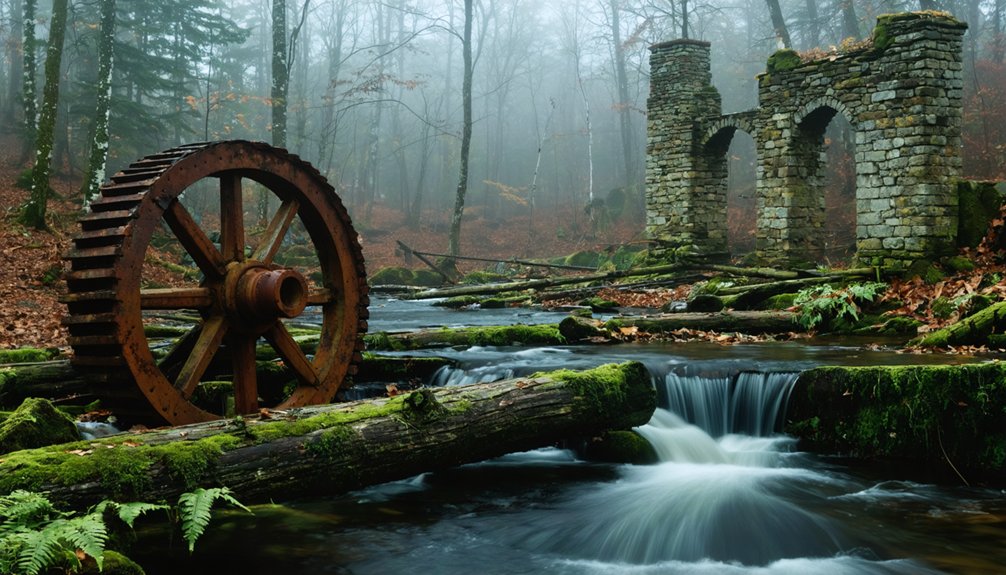
Start your ghost town adventure at Zealand Road trailhead (44.2061763°N, 71.4820231°W), where you’ll follow an old logging railroad bed 2.5 miles into history. J.E. Henry’s 1880s timber empire once stripped 100,000 acres bare here, but catastrophic fires and resource depletion reduced Zealand to ash by 1900. Today, you’ll discover scattered cellar holes, charcoal kilns, and stone foundations hidden beneath reclaimed White Mountain forest—nature’s secrets that reward sharp-eyed explorers willing to trace the whispers of this vanished industrial powerhouse.
Key Takeaways
- Zealand trailhead starts at 44.2061763°N, 71.4820231°W, elevation 2,388 feet, following a 2.5-mile former logging railroad bed.
- The town emerged in 1880 with 250 workers but vanished by 1900 after catastrophic fires and timber depletion.
- Remaining ruins include cellar holes, stone foundations, charcoal kilns, and a granite railroad underpass near Route 302.
- Zealand Trail features seventeen bridges, beaver-pond boardwalks, and a steep final scramble to Zealand Falls Hut.
- Sharp observation skills are essential as the reclaimed forest has nearly erased evidence of the industrial past.
The Rise and Fall of a Timber Empire in Zealand Valley
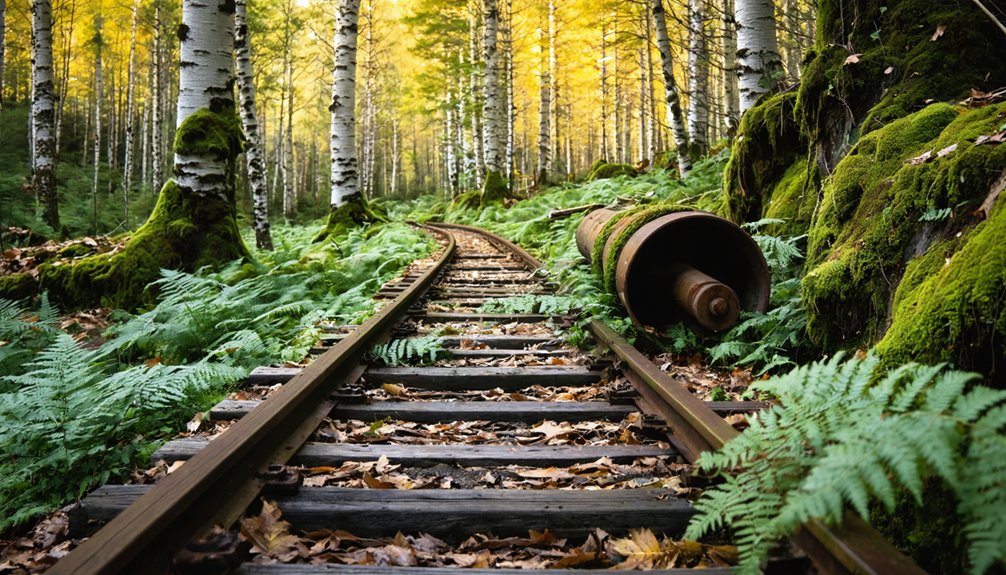
Deep in New Hampshire’s White Mountains, where dense forest now blankets the valley floor, a bustling company town once thrived on the bones of virgin timber. J.E. Henry’s Zealand emerged in 1880 as an industrial powerhouse—a 200-horsepower sawmill, 500 miles of logging railroads, and a population supporting 250 men who systematically clear-cut 100,000 acres.
You’ll find little trace of their work today, but the timber depletion impact was staggering. By 1892, they’d stripped the Zealand Valley bare and moved operations south. The ecological devastation consequences followed swiftly: dry slash sparked catastrophic fires in 1886, destroying what little remained.
When Van Dyke’s crew exhausted the final stands by 1900, Zealand simply disappeared—a cautionary tale written in ash and stumps.
Finding Zealand: Directions and Coordinates for Your Visit
Though Zealand vanished over a century ago, you’ll find its ghost easier to track than most abandoned settlements. Your journey begins where Zealand Road ends at the trailhead (44.2061763°N, 71.4820231°W), elevation 2,388 feet. From here, Zealand Trail follows the old logging railroad bed 2.5 miles into the valley’s heart.
Key waypoints marking Zealand’s former domain:
- Zealand Falls Hut (44.19583°N, 71.49431°W) at 2,630 feet—where loggers once dwelled
- Zealand Notch (44.1974°N, 71.4913°W) through regenerated wildlife habitats
- Mount Zealand’s ridge offering trail connectivity to the Appalachian Trail’s Twinway section
The White Mountain National Forest has reclaimed what timber barons stripped bare. Today’s wilderness represents nature’s defiant resurrection, accessible to anyone willing to walk where rails once carried fortunes.
What Remains: Exploring the Ghost Town Ruins
Unlike most ghost towns that crumble into picturesque decay, Zealand performed a vanishing act so complete it challenges you to prove it ever existed. J.E. Henry dismantled everything—buildings, rails, equipment—and hauled it to Lincoln in 1897, leaving only whispers in the forest.
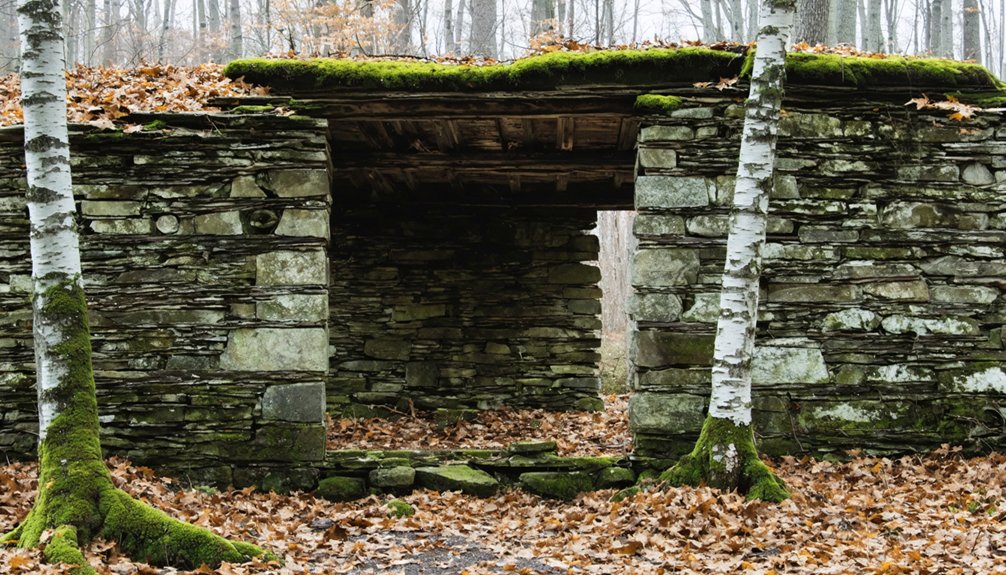
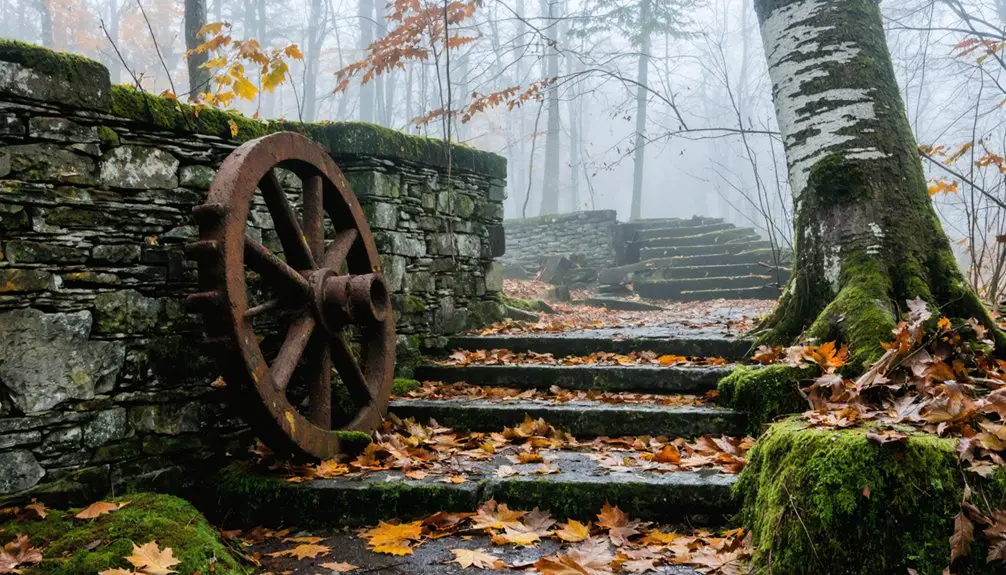
Your treasure hunt begins at cellar holes and stone foundations of former buildings hidden beneath regenerated woodland. Stonewalls emerge from fern beds, mill foundations peek through moss, and beaver ponds now flood old rail corridors. You’ll need sharp eyes to spot these traces among 600+ documented sites across the White Mountains.
Wildlife reclaiming the site has nearly completed nature’s erasure. Moose browse where loggers once lived, black bears den in collapsed root cellars. The forest guards its secrets jealously.
Hiking Through History: Trail Details and Difficulty
The Zealand Trail performs double duty as both woodland hike and history lesson, letting you retrace the exact route where steam locomotives once hauled freshly-cut timber through Zealand Notch. You’ll cover 2.8 miles to Zealand Falls Hut, gaining just 650 feet—perfect for history buffs who’d rather explore than suffer.
Trail conditions shift dramatically throughout your journey:
- First mile: Smooth railroad bed gives way to rocky terrain and exposed roots
- Mid-section: Seventeen bridges carry you over brooks and beaver-pond boardwalks
- Final quarter-mile: Steep, rocky scramble tests your resolve before reaching the hut
Most hikers’ experiences range from 1-3 hours one-way. The A-Z Trail junction at 2.3 miles offers connections to deeper wilderness if you’re craving more adventure beyond Zealand’s logging legacy.
Best Seasons and Times to Visit Zealand
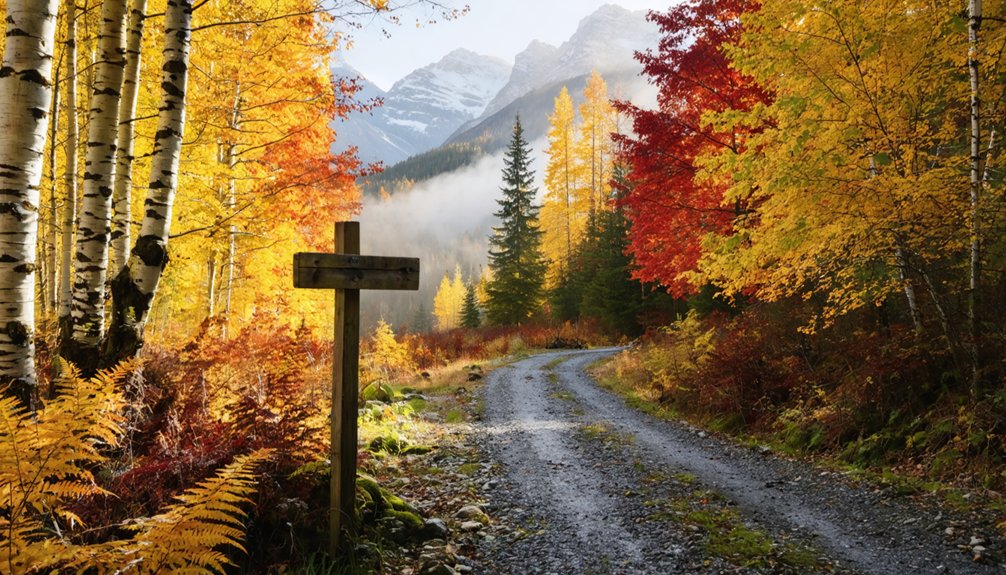
Planning your Zealand visit around New England’s seasons transforms a simple hike into something extraordinary. Summer brings crowds but rewards you with accessible trails and local seasonal events like county fairs.
I’ve found fall’s September-October window ideal—fewer hikers, crisp mountain air, and explosive foliage that’ll make your ghost town exploration unforgettable. Winter demands serious preparation; Zealand Road closes, requiring snowshoes or skis for the journey in.
Spring offers muddy trails but solitude and budgeting accommodation tips become relevant as rates drop considerably. The Zealand Falls Hut operates May through October, providing bunks without advance booking nightmares.
For maximum freedom, visit mid-week during shoulder seasons—you’ll dodge weekend warriors while enjoying predictable weather. October’s particularly magical when autumn colors frame the abandoned settlement’s weathered foundations.
Notable Features: Charcoal Kilns, Cellar Holes, and Railroad Remnants
Scattered along Zealand Road’s weathered path, remnants of J.E. Henry’s logging empire tell stories of vanished local industries. You’ll discover tangible evidence of the 250 souls who once called this wilderness home.
Walking Zealand Road today means stepping through layers of history written in stone, earth, and rusted iron.
Key Sites You Can Explore:
- Charcoal kilns on the river’s south side—massive stone structures that fueled Henry’s operations from 1880 until the town’s 1897 abandonment
- Cellar holes north of Route 302, including a large boarding house foundation that housed workers who shaped the region’s cultural impacts
- Maine Central Railroad bed with its rare granite underpass, now partially submerged beneath beaver ponds
The railroad stations that once connected two major lines are gone, relocated to Lincoln when timber ran out. These scattered foundations and rail beds are your passport to understanding how company towns rose and fell with resource extraction.
Zealand Falls Hut and Nearby White Mountain Attractions
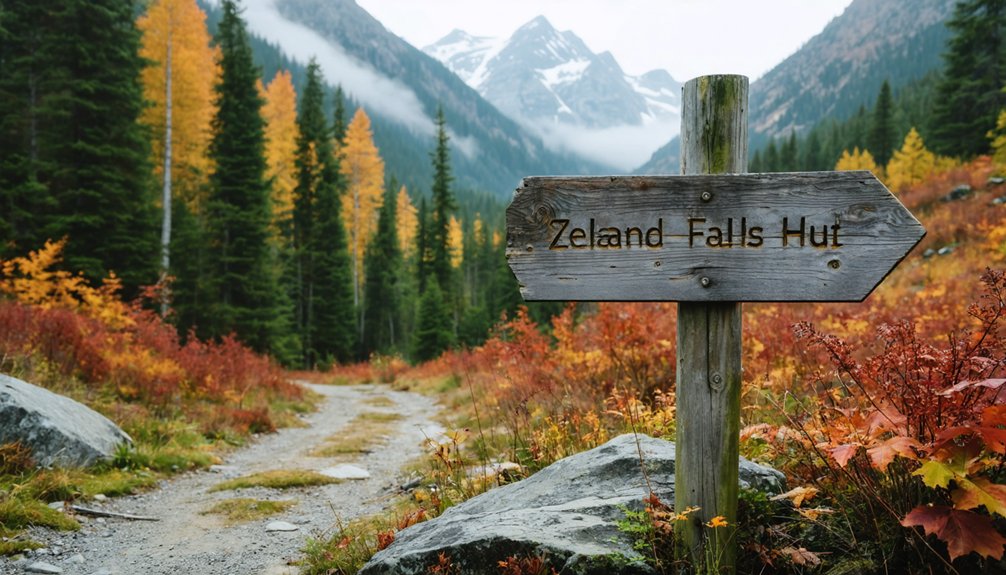
After leaving behind the ghost town’s skeletal remains, you’ll find Zealand Falls Hut perched beside the thundering cascade of Whitewall Brook—a mountain refuge that’s stood since 1932 as part of Joe Dodge’s ambitious hut construction plan. At 2.8 miles from the trailhead with only 600 feet of elevation gain, it’s the shortest hike to any AMC hut—perfect for adventurers seeking wilderness without the grind.
The hut amenities include meals, hot drinks, and bunks during full-service season (June through mid-October). But here’s what sets Zealand apart: winter operations started in 1972, making it the first AMC hut offering snowy-season stays. From your lofty perch overlooking the Pemigewasset Wilderness, you’ll spot the Bonds and Mount Carrigain stretching endlessly across two notches.
Other Abandoned Towns Worth Exploring in New Hampshire
New Zealand’s whispers of timber barons and rail workers barely scratch the surface of New Hampshire’s ghost town legacy. You’ll find colonial settlement foundations at Monson Center, where 17,000 acres preserve thirty years of failed farming dreams from the 1700s. Hand-drawn maps guide you through stone walls and cellar holes.
Compelling destinations beyond Zealand:
- Livermore – Brick structures and residents’ personal belongings like glass shards, horseshoes, and metal pipes scatter across this flood-ravaged mill town
- Madame Sherri’s ruins – Chesterfield’s decadent 1930s party palace where glamorous remnants haunt the forest
- Thornton Gore – White Mountain homesteads reclaimed by wilderness, with preserved graves at Wildcat Cemetery
Each site offers unregulated exploration through authentic remnants. You’re free to wander these forgotten places where New Hampshire’s independent spirits once thrived.
Frequently Asked Questions
Are There Any Entrance Fees to Visit the Zealand Ghost Town Site?
There’s no entrance fee for Zealand ghost town itself, though you’ll pay $3 for trailhead parking. You’re free to explore the ruins while enjoying nearby hiking trails, but check seasonal weather conditions before venturing out.
The history of happy valley ghost town is fascinating, revealing stories of its former residents and the challenges they faced. As you walk through the remnants of the past, you’ll uncover intriguing details about the town’s rise and decline. Be sure to take your time and immerse yourself in the area’s rich heritage.
Is Camping Allowed Near the Zealand Ruins or Along Zealand Road?
Like a wanderer finding shelter beneath ancient pines, you’ll discover Zealand Campground’s eleven first-come sites along Zealand Road. No camping’s permitted at the ruins themselves, but nearby campgrounds offer scenic viewpoints along road access to this forgotten settlement.
Can I Bring My Dog to Explore the Zealand Ghost Town Area?
You can bring your leashed dog to Zealand’s ghost town ruins. While pet friendly amenities don’t exist here, packing pet essentials like water and waste bags lets you explore these wilderness trails freely with your four-legged companion.
Are Guided Tours Available for the Zealand Ghost Town and Ruins?
No guided tours exist for Zealand’s ruins—you’ll embrace self-guided experiences along the 2.5-mile trail. The remote location presents accessibility concerns, but that isolation offers freedom to explore these haunting remnants at your own pace.
What Safety Precautions Should I Take When Exploring the Old Structures?
Wear protective gear like sturdy boots and long sleeves before venturing near Zealand’s remnants. You’ll want to avoid unstable structures entirely—rotted floors and crumbling walls won’t support your weight. Stay on marked paths where the ground’s been tested by countless adventurers before you.