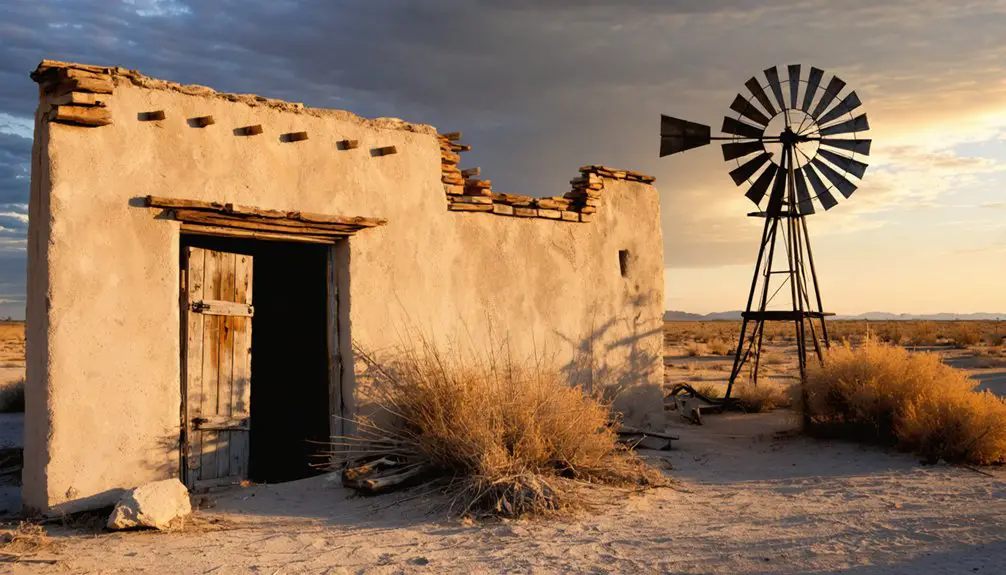
You’ll find Zella six miles north of Fowlerton along Texas State Highway 97, where a 1968 historical marker stands amid empty ranchland that once held 189 blocks of ambitious dreams. This McMullen County ghost town vanished within four years of its 1913 founding, done in by drought and broken irrigation promises. Since it’s on private ranch property, you’ll need permission to explore what little remains of Hotel Zella and scattered foundations—but the journey through sparse cattle country reveals why some frontier towns simply couldn’t survive.
Key Takeaways
- Located six miles north of Fowlerton on Texas State Highway 97 in McMullen County at coordinates 28°33′47″N 98°47′35″W.
- Visit during winter, spring, or fall for comfortable temperatures; avoid sweltering summer heat in the arid landscape.
- Virtually nothing remains except open ranchland and a 1968 historical marker; Hotel Zella survived until 1985.
- Access requires landowner permission as the site sits on private ranch property with no tourist infrastructure or amenities.
- Expect rugged roads, untamed landscape, and genuine ruins without parking lots, gift shops, or reconstructed attractions.
Getting to Zella: Location and Directions
Nestled in the sparse ranchlands of McMullen County, Zella sits six miles north of Fowlerton along Texas State Highway 97, where cattle outnumber people and the horizon stretches unbroken for miles. You’ll find this ghost town at coordinates 28°33′47″N 98°47′35″W, elevated 374 feet above sea level.
The drive couldn’t be simpler—just follow Highway 97 through northwestern Texas’s open country, where maintained asphalt replaces the rough trails early settlers traveled. Your GPS will guide you straight there, though you won’t find much signage announcing your arrival.
The historic Zella Hotel stands as your landmark, now operating as a modern day hunting lodge. Pack provisions before leaving civilization—limited local services mean you’re entering territory where self-reliance matters and the nearest amenities require backtracking.
The Rise and Fall of a Railroad Town
When the San Antonio, Uvalde & Gulf Railroad pushed through McMullen County’s rangeland in 1913, three enterprising men—C. A. Nelson, Howard Bland, and R. B. Pumphrey—seized opportunity. Their business partnerships formed the Zella Townsite Company, laying out 189 blocks named for Bland’s daughter. They built everything freedom-seekers needed: depot, store-post office, schoolhouse, hotel, and water well.
For a brief moment, Zella thrived. Cattle drovers used it as a shipping point, achieving economic diversification through ranching and agriculture. The post office opened in 1914, connecting settlers to distant markets.
But war, the brutal 1917 drought, and lack of irrigation crushed these dreams. The post office closed in 1916. Lots remained unsold. By 1959, only cattle shipping continued, and even that ended, leaving Zella to the mesquite and memories.
What Caused Zella’s Abandonment
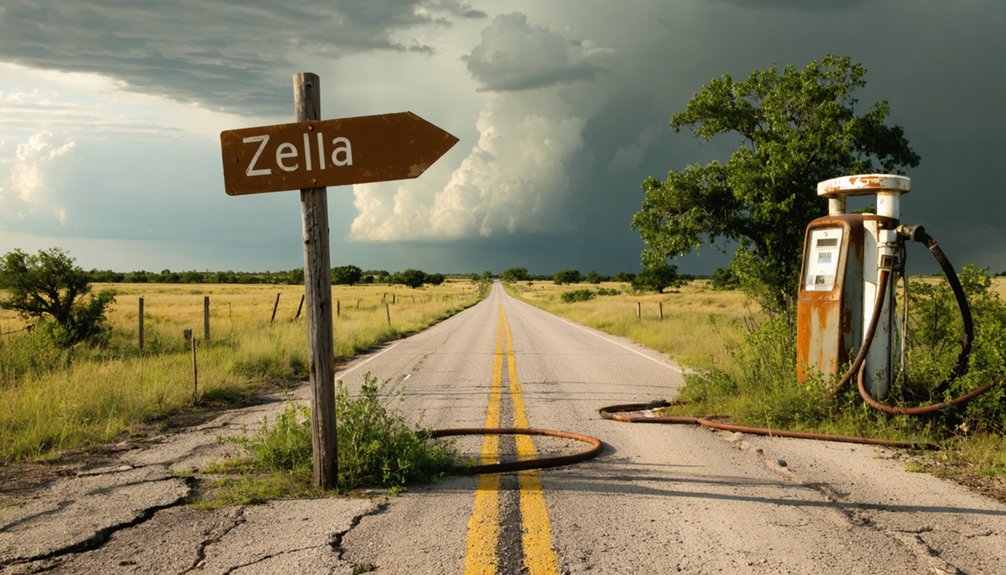
You’ll discover that Zella’s demise wasn’t a slow fade but a swift collapse triggered by merciless drought that strangled the settlers’ hopes. The promised irrigation systems never materialized, leaving families stranded in an arid landscape where crops withered and livestock died.
Severe Drought Conditions
Within just three years of its founding, Zella transformed from a promoted settlement opportunity into a cautionary tale of frontier ambition meeting environmental reality. The severe drought that hammered South Texas in the early 1910s exposed the settlement’s fatal vulnerability: groundwater scarcity in McMullen County’s arid zone.
You’ll find no evidence of drought mitigation efforts here—settlers who’d trusted promotional brochures promising adequate water discovered the harsh truth too late. At 374 feet elevation along coordinates 28°33′47″N 98°47′35″W, the location offered zero natural advantages against prolonged dry spells.
Failed Irrigation Promises
Behind Zella’s collapse lay a textbook land promotion scheme that promised irrigation infrastructure the developers couldn’t deliver. You’ll discover that promoters launched this ambitious townsite in 1912, selling thousands of rangeland acres to hopeful farmers with grand visions of agricultural prosperity. They built the visible pieces—a two-story hotel, schoolhouse, general store, and post office—creating an illusion of permanence across 189 city blocks.
But here’s where capital deficiency destroyed everything. The large-scale irrigation system, the lifeblood these agricultural lands desperately needed, never materialized beyond infrastructure promises. Without adequate funding to complete water delivery, the developers’ assurances rang hollow. By 1917, discouraged settlers recognized the truth: they’d bought into a mirage. The absence of working irrigation doomed Zella before it truly began.
Rapid Resident Exodus
The 1917 drought delivered the final blow that scattered Zella’s remaining residents like tumbleweeds across the South Texas plains. You’ll discover a community that collapsed within just four years of its founding, strangled by economic hardship and insufficient infrastructure that couldn’t sustain frontier dreams.
The exodus unfolded with devastating speed:
- Post office closed in 1916, signaling the town’s death throes before the drought even struck
- Schoolhouse shuttered shortly after, leaving families no reason to stay
- Remaining settlers fled when promised irrigation never materialized and water sources evaporated
Without the capital to deliver the irrigation system that promoters had dangled before hopeful farmers, Zella couldn’t survive. You’re looking at a settlement that barely existed before vanishing—a cautionary tale etched into McMullen County’s unforgiving landscape.
Exploring the Remaining Structures
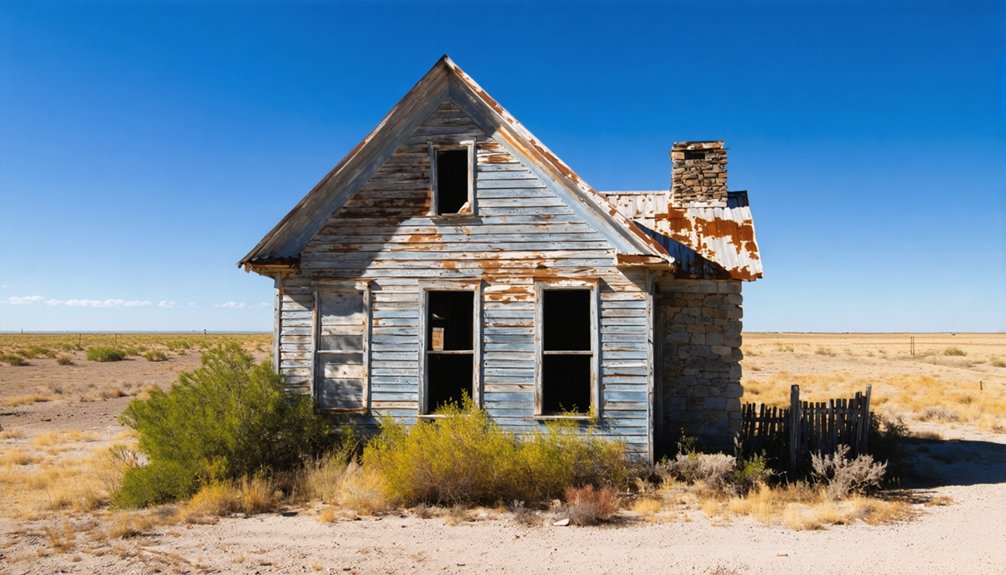
You’ll find virtually nothing left at Zella except open ranchland and the 1968 historical marker that marks where this ambitious townsite once stood. Hotel Zella remarkably survived until at least 1985, outlasting the depot that was razed in 1945, though no structures remain visible today.
Before you make the 15-mile journey west from Tilden on Highway 72, understand that you’re visiting private ranch property where even the cattle guard signals you’re entering working land with strict access limitations.
Historic Hotel Still Standing
Standing defiantly against the South Texas wind, Hotel Zella once served as the crown jewel of this ambitious railroad town that never quite materialized. The historic hotel’s operation continued remarkably into 1985, long after most settlers abandoned their dreams. You’ll find the hotel’s architectural details speak to frontier optimism—a substantial structure built for prosperity that never arrived.
The hotel transformed through necessity:
- Shipping headquarters for regional cattle operations after townsite abandonment
- Community anchor when depot, store, and other buildings disappeared
- Working establishment maintaining operations seven decades beyond the town’s demise
Today, you can stand where this survivor once welcomed travelers, though ghost town databases now classify it as vanished. The hotel outlasted Zella itself—a record of stubborn perseverance against isolation.
Private Property Access Rules
Before you venture toward those weathered structures marking Zella’s location, understand that modern property law governs these historical remnants. Ghost towns like Zella typically belong to private owners who’ve purchased parcels as real estate—sometimes entire settlements sell for under $100k. You’ll need explicit permission before exploring any buildings, as trespassing brings criminal charges and potential jail time in Texas.
Don’t romanticize squatting rights either. Adverse possession rules require ten continuous years of exclusive, visible occupation—not weekend visits. You’d need permanent residency, property maintenance, tax payments, and color of title processes through a real estate attorney. The owner’s brief reappearance resets everything.
Respect the boundaries. These aren’t lawless frontiers anymore, though the freedom to explore exists through proper channels and landowner consent.
Best Time to Visit and What to Expect
Since Zella sits in the heart of South Texas’s arid landscape, timing your visit can mean the difference between an enjoyable exploration and a sweltering ordeal. Winter and spring offer the most comfortable conditions for wandering among weathered buildings that tell stories of population loss and abandoned dreams.
Optimal visiting windows:
- Winter months deliver mild temperatures perfect for photographing the remnants
- Spring season provides moderate weather ideal for extended exploration
- Fall days grant comfortable conditions without summer’s brutal heat
You’ll find the hotel structure still standing, now serving deer hunters during season. The townsite sprawls across several hundred acres where 189 city blocks once promised prosperity. Remember, summer’s extreme heat makes exploration grueling—plan accordingly for maximum freedom to roam this Texas ghost town.
Zella’s Legacy as a Cattle Shipping Point
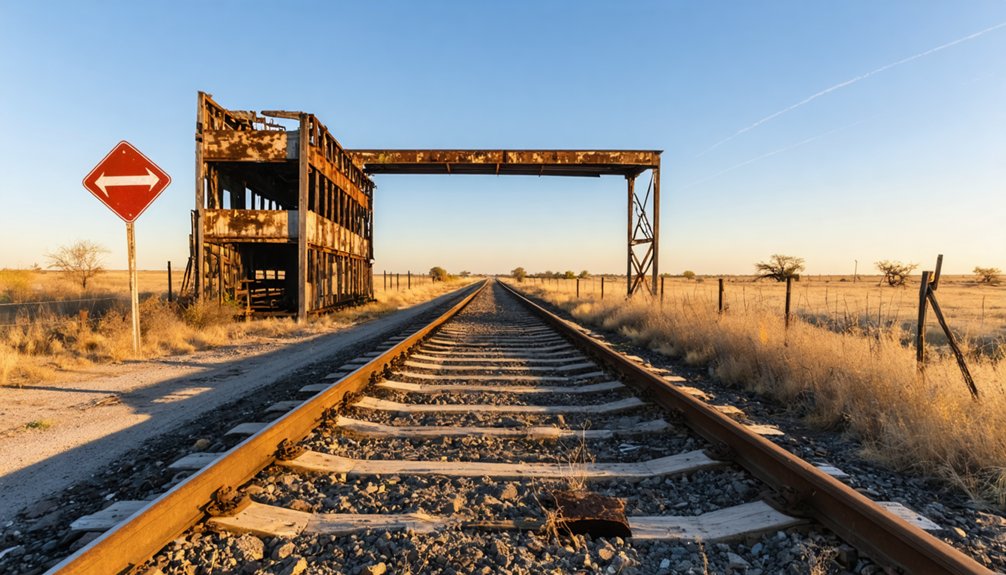
When the San Antonio, Uvalde and Gulf Railroad pushed through this remote stretch of South Texas in 1913, Zella emerged as a pivotal link in the evolving cattle industry. You’re standing where drovers once ended their journey, replacing weeks-long cattle drives before mechanization with efficient rail transport to distant markets.
The role of railroad infrastructure transformed how ranchers moved livestock—no more dusty trails to Kansas. Instead, cattle loaded directly onto trains at Zella’s depot, bound for meatpacking centers. For 46 years until 1959, this shipping point represented freedom from the old ways, bridging frontier traditions with modern commerce.
Those corrals and loading chutes processed thousands of head, making Zella essential to South Texas ranching operations when railroad connections meant survival.
Tips for Visiting This Texas Ghost Town
Reaching Zella requires commitment—this isn’t a roadside attraction with parking lots and gift shops. You’ll navigate State Highway 97 through McMullen County’s untamed terrain, where scenic countryside views reward your determination.
Zella belongs to adventurers, not sightseers—expect rugged roads, untamed landscape, and zero tourist infrastructure on this remote Texas journey.
The abandoned depot, school, and post office remnants stand as mementoes to failed ambitions, though sparse infrastructure means you’re exploring genuine ruins, not reconstructed tourist sites.
Essential preparations for your journey:
- Contact McMullen County historical societies for current road conditions and site accessibility
- Pack provisions—nearby amenities don’t exist in this isolated corner of Texas
- Research historic preservation efforts through the Texas State Historical Association archives before departing
Plan around south-central Texas weather patterns, and embrace the solitude. This ghost town belongs to those willing to venture beyond comfort zones.
One of the most intriguing options includes exploring ghost town adventures in Neighborsville, where the remnants of history linger in the stillness. Each abandoned building tells a story, inviting curious minds to uncover the secrets of a bygone era. As the sun sets, the haunting beauty of the landscape is sure to leave an unforgettable impression.
Frequently Asked Questions
Are There Any Guided Tours Available for Zella Ghost Town?
I cannot verify guided tours available for Zella, Texas, as this location doesn’t appear in established ghost town records. You’ll find private tours organized at verified destinations like Terlingua instead, where authentic ruins and pioneer history await your independent exploration.
What Wildlife Might I Encounter While Exploring Zella?
You’ll encounter diverse wildlife habitats around Zella, including white-tailed deer, rock squirrels, and various lizards. The area’s abundant small game like quail and rabbits roam freely, while hawks circle overhead through Texas’s untamed backcountry.
Can I Camp Overnight Near the Zella Ghost Town Site?
You won’t find primitive campsites directly at Zella’s ghost town site. Despite its historical significance, McMullen County lacks camping infrastructure. You’ll need to travel over 100 miles to nearby state parks or alternative camping options for overnight stays.
Are There Nearby Ghost Towns to Visit in Mcmullen County?
Cross Ghost Town stands as McMullen County’s other abandoned settlement, just eight miles north of Tilden. You’ll discover these rural settlements and historic homesteads represent the county’s complete ghost town collection—two forgotten places waiting for your exploration.
What Photography Equipment Works Best for Ghost Town Exploration?
You’ll want weatherproof equipment to handle Texas elements—think mirrorless cameras like Sony A7 III for low-light shots, wide-angle lenses for expansive ruins, sturdy tripods for long exposures, and drone cameras to capture sweeping aerial perspectives of abandoned landscapes.