Planning a ghost town road trip to Zodiac, Texas puts you 4 miles southeast of Fredericksburg in the heart of the Hill Country, where Mormon settlers built a thriving frontier community along the Pedernales River in 1847. There’s nothing left standing today, but a Texas Historic Landmark marker near Schmidtzinsky Road still honors the site. You’ll want to respect private property boundaries during your visit. Keep going to uncover everything this forgotten settlement still has to tell.
Key Takeaways
- Zodiac, Texas, a ghost town 4 miles southeast of Fredericksburg, was a Mormon settlement founded in 1847 and abandoned after devastating floods.
- No visible structures remain at Zodiac, but a Texas Historic Landmark marker near Schmidtzinsky Road commemorates the settlement’s historical significance.
- Base your road trip in Fredericksburg, which offers accommodations and serves as a convenient hub for exploring Zodiac and nearby ghost towns.
- Extend your trip by visiting related sites like Mormon Mill in Burnet County and Mormon Camp in Bandera County, tracing Wight’s group’s journey.
- Respect private property when visiting Zodiac, as the site is privately owned, and prepare for off-main road exploration throughout your trip.
What Was Zodiac, Texas?
Deep in the Texas Hill Country, about 4 miles southeast of Fredericksburg, a Mormon settlement once stood along the banks of the Pedernales River. Founded in 1847 by Lyman Wight, Zodiac was part of a broader Mormon migration through Texas during the 1840s.
Wight led roughly 150 to 200 settlers to the site after securing permission from German colonizer John Meusebach. The community built mills and established frontier life along the river.
Zodiac history, however, ended abruptly when devastating floods in the early 1850s destroyed those mills, forcing the settlers to abandon everything they’d built.
Today, the site sits on private property with no visible remains, but a Texas Historic Landmark marker off Schmidtzinsky Road still acknowledges what once existed there.
How Lyman Wight Built the Zodiac Settlement From Scratch
When you look into how Zodiac came to be, you can’t ignore the outsized role Lyman Wight played in turning raw Hill Country land into a functioning frontier community.
He led his group of roughly 150 to 200 Mormon settlers to the banks of the Pedernales River and pushed them to build mills and other practical infrastructure almost immediately after arriving in 1847.
Wight also secured cooperation from German settlers in the Fredericksburg area, including permission from John Meusebach, which gave the colony the footing it needed to grow.
Wight’s Leadership Role
Lyman Wight’s determination shaped Zodiac from bare riverbank into a functioning frontier community. He wasn’t just a figurehead — he made decisions, directed labor, and kept roughly 150 to 200 settlers focused on survival and growth.
Wight’s vision drove every major development, from negotiating land access with John Meusebach to organizing the construction of mills along the Pedernales River.
Community dynamics under Wight reflected a balance between religious loyalty and practical frontier cooperation. Settlers trusted his judgment because he delivered results. He secured relationships with neighboring German colonists, turning potential rivalry into mutual benefit.
When flooding eventually destroyed the mills in the early 1850s, his leadership guided the group toward relocation rather than collapse. You can still feel that stubborn resilience echoing across the quiet Hill Country landscape today.
Building Frontier Infrastructure
Building a settlement from nothing demanded more than vision — it demanded tools, timber, and a willingness to do brutal physical work. Wight’s settlers tackled frontier challenges head-on, turning raw Texas Hill Country land into a functioning community along the Pedernales River.
They built:
- Grist mills to grind grain for food independence
- Sawmills to produce lumber for homes and structures
- River-access points supporting trade with nearby German settlers
- Communal systems reflecting strong community resilience
- Frontier workshops supplying tools and repairs on-site
You’re looking at people who carved real infrastructure from wilderness without modern equipment.
Every structure represented hard-won freedom from dependency.
Unfortunately, flooding in the early 1850s destroyed the mills, forcing the settlers to abandon what they’d sacrificed so much to build.
Cooperation With German Settlers
Settling in the Texas Hill Country wasn’t a solo endeavor — Wight’s Mormon community built something rare on the frontier: a genuine working relationship with the German settlers already establishing themselves around Fredericksburg.
John Meusebach, the pragmatic leader of the German colonists, granted the Mormons permission to settle along the Pedernales River. That handshake moment opened the door to meaningful German collaboration that helped both communities survive isolation and hardship.
You can imagine two distinct cultures — one rooted in European tradition, the other driven by religious conviction — finding common ground through trade, shared labor, and mutual respect.
This cultural exchange wasn’t accidental. It reflected a deliberate choice by independent-minded people who understood that frontier survival demanded cooperation over competition.
What Ended the Zodiac Settlement for Good?
What wiped Zodiac off the map wasn’t conflict or disease — it was water. Flood damage from the Pedernales River in the early 1850s destroyed the mills the settlers had built, triggering swift community decline.
Without those mills, survival became impossible.
Here’s what brought Zodiac down:
- The Pedernales River flooded and destroyed critical mill infrastructure
- Flood damage eliminated the settlement’s economic foundation
- Community decline followed almost immediately after the flooding
- Lyman Wight’s group relocated to Mormon Mill in Burnet County
- A final move eventually landed them in Bandera County
You won’t find ruins or restored buildings waiting for you — just quiet land along the river where a determined frontier community once stood before nature made the final call.
Where Lyman Wight’s Group Went After Leaving Zodiac
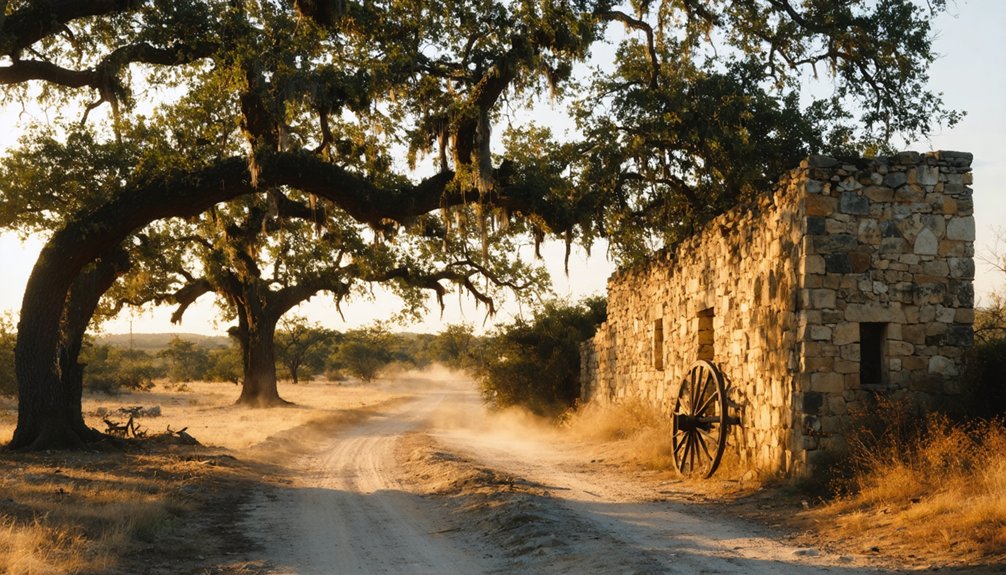
After the floods wrecked Zodiac, Lyman Wight’s group didn’t stay put — they pushed on to Mormon Mill in Burnet County, where they tried once more to build a working frontier community.
That effort also ran its course, and the group made one final move to Mormon Camp in Bandera County.
You’re tracing a trail of resilience each time you follow these relocations across the Texas Hill Country.
Relocation To Mormon Mill
When flooding wrecked Zodiac’s mills and forced Lyman Wight’s group out, they didn’t simply scatter — they pushed deeper into Texas and resettled at Mormon Mill in Burnet County.
This Mormon migration shows a community refusing to quit despite brutal frontier challenges.
Here’s what defined their move to Mormon Mill:
- They rebuilt milling operations, proving their determination to stay self-sufficient.
- Burnet County offered fresh resources and new opportunities on the frontier.
- The group maintained its tight-knit identity through every relocation.
- Wight continued leading with the same independent spirit that drove them out of Missouri.
- Their persistence shaped the broader story of Mormon settlement across Texas.
You’re tracing people who kept moving forward, no matter what the land threw at them.
Final Move To Bandera
Lyman Wight’s group didn’t stop at Mormon Mill — they pushed on one final time, landing in Bandera County at a site now known as Mormon Camp. This final relocation marked the last chapter of a remarkable, restless journey that had carried these settlers across multiple Texas counties in search of a place to plant roots.
When you trace their path on a map, the determination becomes striking. From Zodiac’s flooded riverbanks to the hills of Bandera County, Wight’s followers kept moving, kept building, and kept believing.
Wight himself died in 1858, closing the era entirely. Today, Mormon Camp stands as a quiet footnote to that perseverance — one more stop worth adding if you’re building a deeper Hill Country ghost town route.
How to Find the Zodiac Ghost Town Site Today
Few ghost towns in Texas are as elusive as Zodiac, and that’s part of what makes tracking it down such a rewarding experience.
Few ghost towns vanish as completely as Zodiac — and fewer still make the search feel worth every mile.
For serious ghost town exploration, knowing where to look is everything.
Start your search using these key navigation points:
- Base yourself in Fredericksburg, roughly 4 miles northwest of the site
- Take US 90 East out of Fredericksburg toward the Pedernales River corridor
- Watch for Schmidtzinsky Road, your closest public reference point
- Respect private property boundaries — the site sits on restricted land
- Look for the 1936 Texas historical marker titled *Site of Zodiac*
Texas history rewards those willing to dig deeper.
No structures remain, but standing near that marker connects you directly to one of the state’s most fascinating lost communities.
The Historical Marker and Cemetery: What’s Left of Zodiac
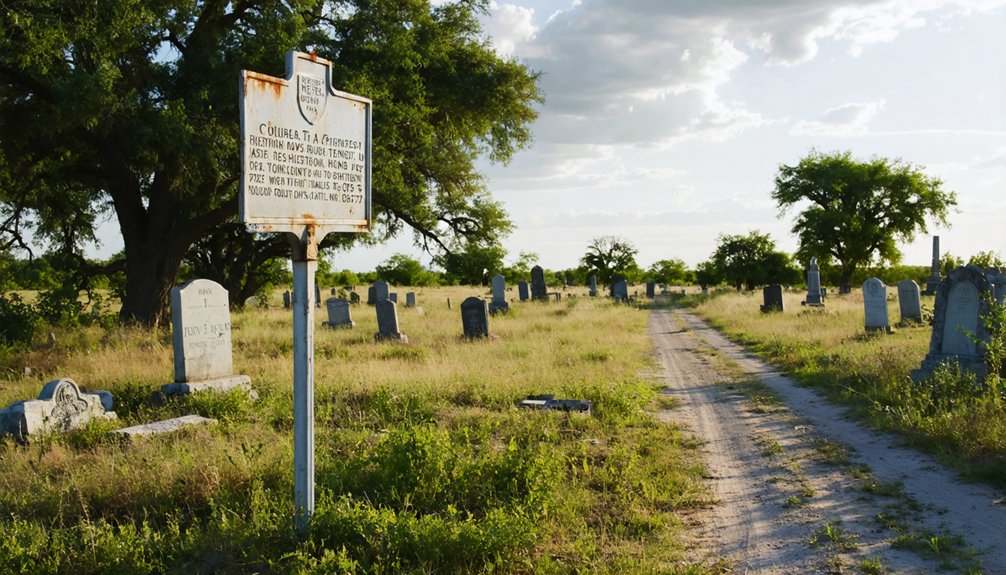
Two tangible remnants survive from Zodiac’s brief but remarkable history: a 1936 Texas Historical Marker and a cemetery that the Mormon community held onto long after the settlement itself disappeared.
The marker, located off Schmidtzinsky Road, identifies the site’s historical significance as a frontier Mormon settlement and gives you a concrete connection to what once stood here. It’s a quiet but meaningful anchor point on your road trip.
The cemetery carries an even deeper community legacy. Lyman Wight, the leader who built Zodiac from nothing, was buried here in 1858, years after the floods forced everyone out. His grave reminds you that the people who shaped this place never fully let it go.
Both remnants sit on private property, so respect boundaries and appreciate what’s visible from the road.
Three Hill Country Ghost Towns Near Zodiac Worth the Detour
Once you’ve explored what remains of Zodiac, three nearby Hill Country ghost towns make the detour worthwhile and round out the story of frontier life in this region.
Each stop adds a different layer to your understanding of what settlers faced here.
Consider adding these Hill Country ghost towns to your route:
- Mormon Mill, Burnet County – where Wight’s group relocated after Zodiac’s flooding
- Mormon Camp, Bandera County – the final settlement chapter for Wight’s followers
- Luckenbach – a preserved German-era village with deep roots in Hill Country culture
- Grapetown – a quiet vanished community tucked along nearby back roads
- Kerrville-area settlements – offer frontier-era context just a short drive away
Each ghost town rewards the curious traveler willing to leave the main road behind.
Frequently Asked Questions
Was Zodiac, Texas Ever Officially Incorporated as a Town?
Zodiac history reveals it never achieved official Town status. You’re looking at a frontier Mormon settlement that thrived briefly, built mills, then vanished after devastating floods—leaving behind only memories and a historic marker.
How Many Graves Are Still Present in the Zodiac Cemetery Today?
Coincidentally, the exact number of graves isn’t documented in available records. You won’t find clear grave maintenance logs or complete burial history data, but Lyman Wight’s 1858 burial confirms the cemetery’s lasting Mormon significance.
Did Lyman Wight Ever Reconcile With Brigham Young Before Dying?
No, Lyman Wight never reconciled with Brigham Young. You’ll find that Wight defiantly rejected Young’s authority, boldly charting his own independent path through Texas until his death in 1858, forever remaining a spiritual maverick.
Can Visitors Legally Access the Zodiac Cemetery on Private Property?
You can’t assume open cemetery access—property rights restrict your visit. Respect the land, respect the rules, and contact the property owner before you plan any trip to Zodiac’s historic grounds.
Are There Any Surviving Photographs or Drawings of the Original Settlement?
You won’t find surviving photographs or drawings of Zodiac’s original settlement, but you can explore its historical significance through written records and local legends that vividly paint this vanished Mormon frontier community along the Pedernales River.
References
- https://en.wikipedia.org/wiki/Zodiac
- https://www.lonestarheritage.org/post/the-mormon-town-of-zodiac-in-fredericksburg-texas
- https://www.historictexas.net/city/zodiac-texas
- https://kids.kiddle.co/Zodiac
- https://atlas.thc.texas.gov/Details/5171010133/print
- https://www.facebook.com/61559442702423/photos/d41d8cd9/122199256256314756/
- https://www.allacrosstexas.com/texas-ghost-town.php?city=Zodiac
- https://www.texasescapes.com/TexasHillCountryTowns/Zodiac-Texas.htm
- https://texashistory.unt.edu/ark:/67531/metapth61101/
- http://www.texasescapes.com/TexasHillCountryTowns/Zodiac-Texas.htm